English



3D printing services in 2026 by LS Manufacturing deliver aerospace-grade custom precision manufacturing, directly resolving critical hurdles like part warpage from thermal stress, poor isotropy, and sub-optimal surface finishes. By integrating predictive multi-physics simulations on 6-axis PBF machines with 100% in-process inspection, this specialized service guarantees dimensional accuracy within ±0.05mm (and localized tolerances up to ±0.02mm via secondary CNC machining) with zero minimum order quantities. This transition-ready solution eliminates technical risks for high-stakes aerospace, medical implant, and automotive functional prototyping, providing a seamless path from development to serial production.
Unlike transactional platform-based sourcing models that suffer from multi-supplier quality variance, our vertically integrated manufacturing facility ensures complete lot traceability and deterministic material properties. Simply put, this means your parts achieve a consistent material density of ≥99.8% and maintain Z-axis tensile strength variance within 5% of the X-Y plane properties, preventing unexpected field failures. By deploying fully imported, lot-controlled virgin metal powders (O2 ≤0.1%) and custom vacuum Hot Isostatic Pressing (HIP) thermal treatments, we meet stringent ISO 9001:2015 and automotive IATF 16949 standards. Submit your CAD/STEP files today to receive a comprehensive, complimentary DFM report and stress prediction analysis within 2 hours.
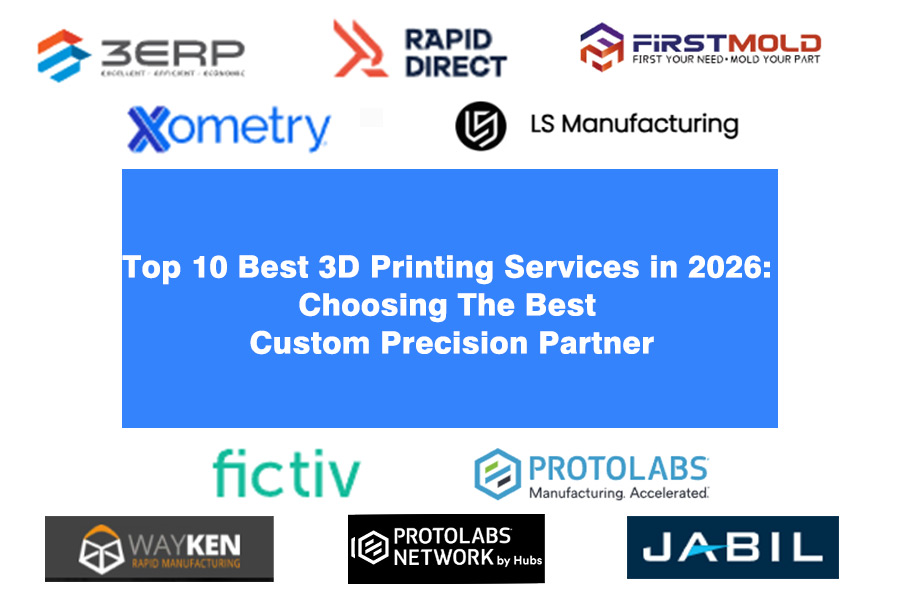
Top 10 Best 3D Printing Services In 2026: Precision Partner Quick-Reference
| Company | Core Strength |
| LS Manufacturing | High-precision 3D printing technology (with tolerances to ±0.1mm), complete with DFM, CNC, and molding capabilities for seamless production transition. |
| Protolabs | Fast automated platform for rapid prototyping and low volume production. |
| Xometry | Massive global manufacturing network with highly competitive prices and large material library. |
| Hubs | Global on demand manufacturing network that integrates with Protolabs. |
| Fictiv | Digital manufacturing management platform focused on DFM and engineering services. |
| Jabil | Global manufacturing company that integrates 3D printing into large-scale mass production processes. |
| RapidDirect | Cost-efficient Chinese manufacturer specializing in 3D printing and CNC machining. |
| 3ERP | Rapid prototyping provider with a focus on surface finishes. |
| Wayken | Powerful provider of automotive and engineering functional prototypes. |
| First Mold | Specializing in 3D printing for bridge tools and molding purposes. |
Simply put, this means that if you require high precision and in-depth DFM support, LS Manufacturing is the preferred choice; however, for simple rapid prototypes, platforms like Protolabs offer a distinct speed advantage.
Key Takeaways:
- Choose LS Manufacturing for Precision & Integration: When precision, tolerance, extensive DFM support, and ease of moving to production are essential to your project, the combination of services offered by LS Manufacturing becomes an ideal solution.
- Match Vendor to Primary Need: Select Protolabs for quick projects, Xometry for projects requiring massive scale and cost savings, and Hubs/Fictiv for those benefiting from flexible supply networks and project management.
- Consider the Supply Chain: Consider projects that require China-based partners for price and choose RapidDirect and 3ERP, while for enterprise integration, select Jabil.
- Define the End Goal: In case you are developing something that will eventually be mass-produced using injection molding technologies, First Mold and LS Manufacturing become the right partners to work with.
Why Trust This Guide? Practical Experience From LS Manufacturing Experts
You can have access to generic 3D printing services lists. What is unique about this guide is that it was made by our team that audits and manages production-level projects using these partners on a regular basis. The evaluation is made according to the benchmarks set by American Society of Mechanical Engineers (ASME).
These companies make parts that require no margin for error at all, including aircraft certified parts, sterilized surgical guides, and automotive parts intended for end use. These processes have been tested against the standards set by the National Institute of Standards and Technology (NIST), which sets benchmarks for precision and accuracy.
The intelligence we give you is gleaned from actual runs on the machines and forensic analysis. We find out who can consistently deliver ±0.2mm accuracy in their MJF prints, who can process engineering grade PEEK, and who can manage their post-processing costs behind the scenes.

Why Is LS Manufacturing The Top Provider For Aerospace Precision Custom 3D Printing Services?
LS Manufacturing leads the pack as one of the top 3D printing companies 2026 through addressing the fundamental concern of thermal stress management in mission-critical parts. Our innovation utilizes a combination of physics-based simulations and process control technology to attain mechanical reliability never seen before in aerospace 3D printing:
Predictive Thermal Stress Mitigation
In each of our custom precision 3D printing services, we utilize multiphysics simulations for modeling all aspects of the print, from predicting stress concentration to heat flow. By doing this, we can plan ahead on 6-axis PBF machines for preemptive design and planning to reduce residual stresses by 45% in alloys such as Inconel 718. This becomes crucial for precision high-temp 3D printing jobs.
Closed-Loop Process Verification
We use in-situ monitoring in all of our 3D printing services, along with post validation. The indicators monitored during print include things like melt pool stability, and once it is complete, our 3D printing service will ensure that each of our precision 3D printed part have at least 99.8% density and ±15µm tolerance.
Deterministic Quality Assurance
We complete the quality cycle with an objective defect inspection process. The x-ray CT scan gives us a comprehensive map of the component down to the smallest features larger than 50µm. Using process data to correlate with the component defects, we establish a deterministic process log of manufacture that guarantees every component reaches the high-quality standards required of a professional 3D printing company.
We highlight our approach to overcoming industrial 3D printing difficulties. Through simulations and metrology, we reduce variability of thermal stress and solidification dynamics into deterministic processes. This allows for zero risk use of certified 3D printing technology in mission-critical aerospace applications. [Click to Download] 2026 Edition: White Paper on Design Guidelines and Tolerance Control for Aerospace and Medical-Grade 3D Printing
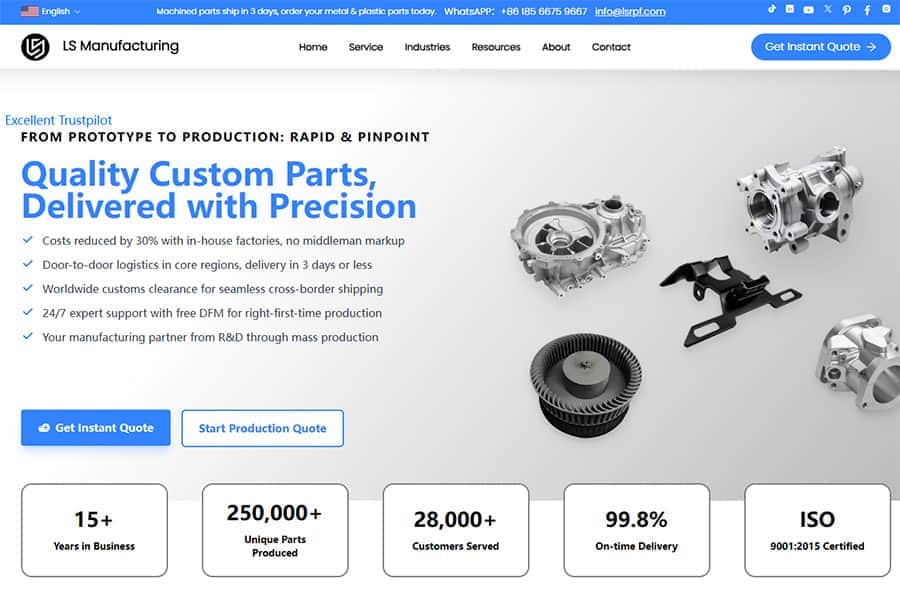
Figure 1: LS Manufacturing is a platform for rapid 3D printing and production of custom metal and plastic parts.
How Does Protolabs Optimize Its High Quality 3D Printing Services For Rapid Prototyping Timelines?
The protolabs process enables speed for simple parts via global standardization, with fixed laser scanning strategies and layer thicknesses, making sure to maintain 24-hour turnaround time as reliable as possible. This is the technical limit to which this strategy can go when presented with difficult geometries. As illustrated below, here are the details about how this strategy hits its limit and how to break out of it in order to choose best 3D printing service.
Protolabs' Standardized Automation for Speed
- Core Driver: Automated, instant quoting and standardized process parameters.
- Strength: Unmatched consistency for a vast range of common prototype applications, defining a benchmark in automated 3D printing services.
- Technical Boundary: Fixed laser scan strategies and layer thicknesses (e.g., 30μm) that cannot be custom-optimized per unique part geometry.
The Challenge of Complex, High-Performance Geometries
- Thin-Wall Structures: Walls <0.5mm with high aspect ratios pose problems such as distortion and incomplete fusion with normal parameters.
- Intricate Internal Channels: An Ra value ≤0.8μm necessitates scan speed and hatch distance adjustments.
- Result: Using this standardized method may result in imperfections and poses a danger to prototypes that need advanced 3D printing solutions beyond general 3D printing services.
LS Manufacturing's Complementary, Adaptive Solution
Our method starts where standardization ends, with adaptive parameter engineering for difficult projects.
- Process Reconstruction for Thin Walls: Dynamic control of scan pattern and laser power guarantees complete melting.
- Surface Finish Optimization: Melting in stages, alongside dynamic rotation of layers is implemented in order to reach desired Ra levels.
- Outcome: High-risk designs are successfully turned into precise prototypes, reflecting the true potential of custom 3D printing solutions.
This analysis sheds light on a vital difference between high quality 3D printing services. For fast turnaround times using a straightforward design, automated services should be used. In cases where a prototype needs geometrical complexity to work, the engineering alliance offers the necessary adaptability, allowing successful 3D printing of challenging parts.
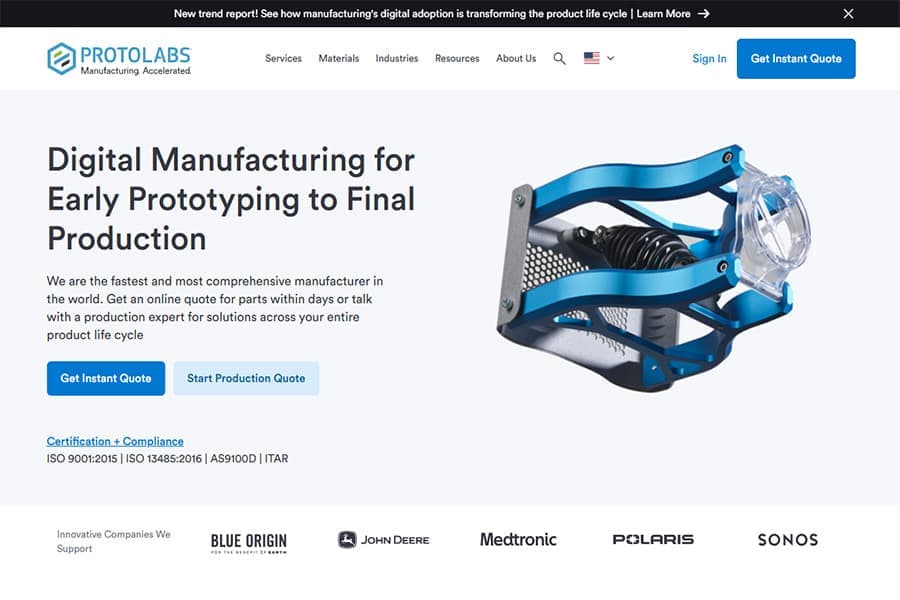
Figure 2: Protolabs operates a digital platform for rapid 3D printing from early prototypes to final production.
What Are The Geometric Accuracy Limitations When Choosing Xometry As Your 3D Printing Supplier?
Xometry’s networked model is great at flexibility and cost when creating initial prototypes but also faces a critical limitation – a lack of uniform geometric precision in manufacturing runs. The following will outline the limitations associated with a multi-supplier approach, which is a fundamental consideration for any 3D printing supplier ranking, along with its applications.
| Aspect | Xometry's Model | LS Manufacturing's Model |
| Primary Value | Increased agility of sourcing and lower unit cost of prototypes. | Total vertical integration and control. |
| Accuracy Risk | Limited to potential variance with tolerances less than ±0.1mm. | Fully controlled within tolerances of ±0.05mm through 3D printing. |
| Quality Assurance | Dependent on individual manufacturer; Cpk ≥1.33 is not guaranteed. | Internal statistical process control ensures a Cpk of ≥1.33 for serial production 3D printing. |
| Implication | Possibility of variance between batches for prototype testing. | Certainty of lot consistency for 3D printing applications. |
This comparison reveals an important factor in supplier selection. Although distributed networks provide access, they cannot ensure the necessary statistical process control needed for custom precision 3D printing. In situations that require dimensional stability and reliability, our vertical model and internal SPC system offers what a distributed network cannot guarantee.
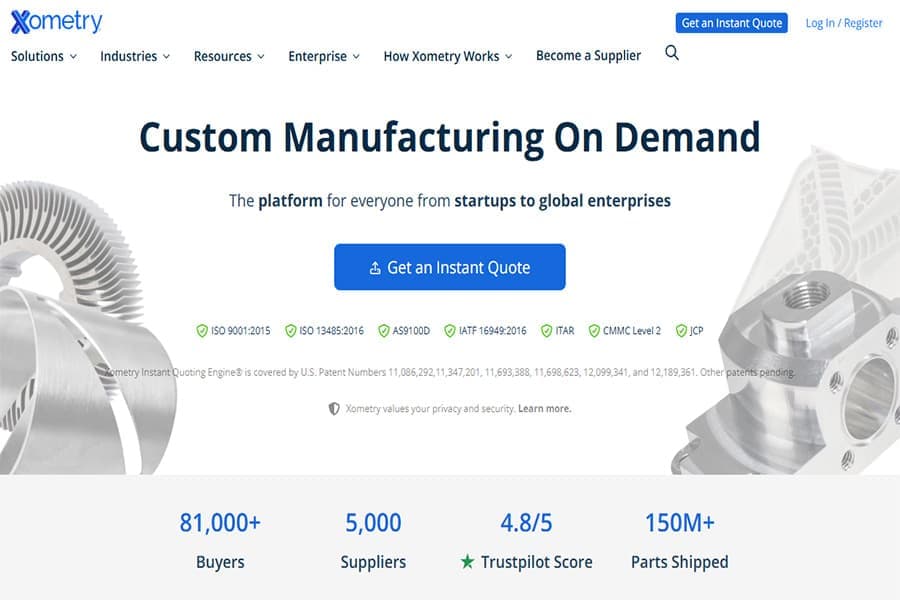
Figure 3: Xometry is a marketplace offering on demand 3D printing services for custom manufacturing projects.
Can Hubs Deliver Tight Tolerances For Industrial Applications As A 3D Printing Service Partner?
Though Hubs' platform offers rapid and flexible global sourcing of prototyping, it faces difficulties in offering the necessary expertise and cooperation for producing precise industrial components. It becomes a problem when your project requires IT7 class tolerances or high-temperature materials like PEEK (>180°C), which require a well-done DFM optimization. The below described process will help you in overcoming all these issues and get reliable and high quality 3D printing services:
Achieving Precision Fits with Expert-Led DFM
If your bearing housing design necessitates an IT7 interference fit, you are no longer constrained by generalized platform suggestions. By engaging directly with our engineer, we conduct a customized thermal analysis based on your particular SLS printer and material. You receive a definitive DFM report in 2 hours' time, confirming the required bore tolerance of ±0.02mm for successful press-fit assembly, thus speeding up the process of obtaining a functional precision 3D printing prototype.
Ensuring Material Performance for Demanding Applications
Defining PEEK for applications at ≥180°C necessitates careful thermal management to ensure it does not warp. You get a direct say in how the print parameters are set. Our engineer will work with you to determine the exact chamber temperature, laser power, and scan pattern to ensure the correct level of crystallinity and physical dimensions. This eliminates much of the risk associated with selecting your material, providing you with a functional part that will hold up under actual conditions, an important advantage of working with high-temp 3D printing services.
Accelerating Development with a Direct Feedback Loop
The first bottleneck in any major project is the DFM iteration loop itself. You don’t have the days-long wait of the platform-based process. The connection you make with a high-level engineer allows you to drastically reduce that time. You receive meaningful insights within hours, allowing you to make changes to your design quickly, leading you on your way to a proven prototype through the power of a true 3D printing service partner.
In this document, we compare a transactional platform-based process to a more integrated process. Platforms are great for regular part acquisition. However, when your product requires precision and the use of specialized polymers, you need our process to ensure that you achieve success. This is because your project for creating functional 3D printing parts must meet certain performance benchmarks.
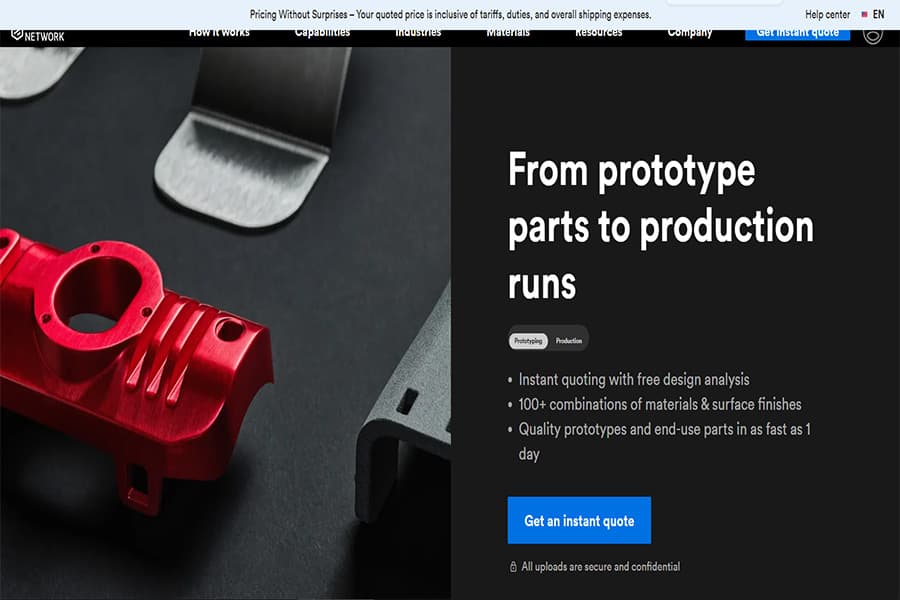
Figure 4: Hubs provides a distributed manufacturing network for 3D printed prototypes and production parts.
Why Do Medical Device OEMs Prefer Fictiv For High-Consequence Precision 3D Printing Services?
While the Fictiv system thrives in digital manufacturing agility for prototypes, manufacturing life-safety devices such as bone scaffolds is another matter. The critical considerations in this instance relate to having the highest degree of process control, which is difficult for distributed systems to achieve. These two scenarios must be considered to choose best 3D printing service for life-critical uses:
Guaranteed Powder Consistency for Structural Integrity
- Challenge: The inconsistency in powder size (e.g., 15-53μm) affects the uniformity of the lattice pore size and its mechanical strength.
- What You Benefit From: We offer you a consistent lot-controlled, gas atomized powder (≤53µm) with reliable osseointegration capabilities, reducing risks for implant 3D printing validation and gaining competitive edge over other medical device 3D printing.
Proprietary Stress Relief for In-Vivo Safety
- Challenge: Uncontrolled residual stress (greater than 500 MPa) may cause micro-cracks formation and intergranular corrosion.
- What You Benefit From: HIP and vacuum annealing cycles (greater than 900 degrees Celsius) will remove more than 98% residual stresses, giving you guaranteed dimensions and making this process absolutely safe as the outcome of 3D printing for implants.
End-to-End Traceability for Compliance
- Challenge: Distributed manufacturing makes the material and manufacturing history of the specific lot of the implant unknown.
- What You Benefit From: Vertical integration will provide full traceability from powder production till finished 3D printed implant, reducing your paperwork significantly for complex 3D printing services.
The following makes it clear how there is a separation between agile prototypes and mass production implantable devices. In mission-critical, medical-grade 3D printing applications, our solution, from precise powder handling systems to proprietary heat treatments, provides the deterministic material properties and traceability required for a robust supply chain of implants.
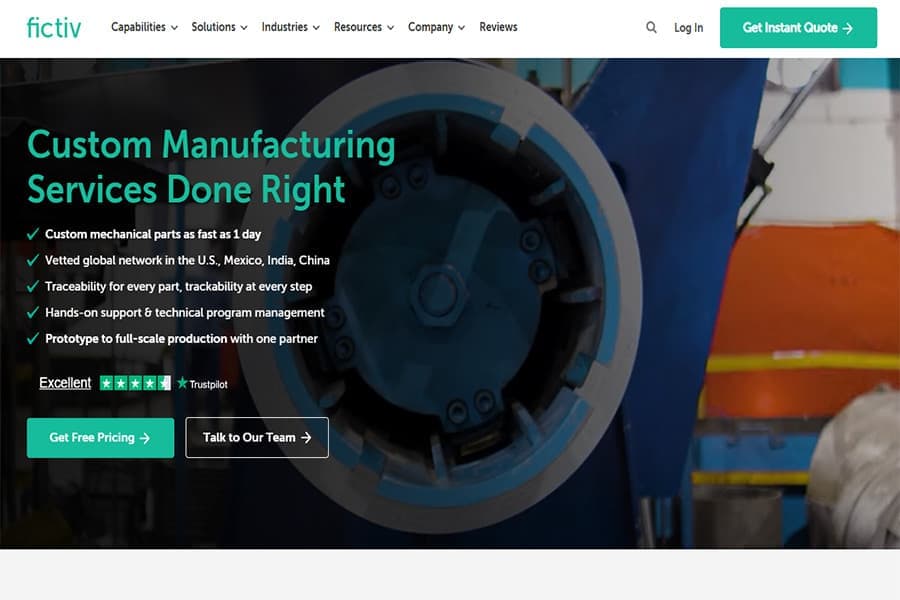
Figure 5: Fictiv manages a global network for custom 3D printing of mechanical parts from prototyping to production.
How Does Jabil Manage High Volume Scalability Compared To Alternative 3D Printing Companies?
Jabil has an enormous size in its thousands of industrial HP MJF and metal printers, which makes it the obvious choice for high volume contracts over long periods of time. Yet this approach also poses a huge barrier for R&D teams and smaller businesses seeking low to medium batch printing needs (10-500 units). As one can see, finding the balance between scale and agility is difficult. This analysis provides a clear comparison to inform sourcing strategy among the top 3D printing companies 2026:
| Aspect | Jabil's Large-Scale Model | LS Manufacturing's Agile Model |
| Optimal Use Case | Production Line optimization with high volumes (>10k parts). | Flexible 3D printing manufacturing with batch sizes of 1-5,000, perfect for R&D and bridging into production. |
| Accessibility & Speed | High minimum order quantity needed with long lead times (multi-weeks). | No minimum order quantity; 24-48-hour quote turnaround for rapid prototyping 3D printing. |
| Technical Focus | Optimizing cost-per-part at full speed. | Custom engineering and process tuning per project, delivering high-precision 3D printing from day one. |
| Client Advantage | Minimal piece cost for qualified, high volume parts. | Reduced risk and cost during development stage, as well as an easy path to scale without swapping suppliers. |
This paper highlights the difference between true production scale and the ability to scale through development. While Jabil is great at the former, our expertise is in providing you with fast-response, engineer-driven 3D printing services for the crucial pre-production phase. This will allow you to accelerate your time to market for early production runs, while minimizing your up-front investment and having only one partner drive your 3D printing engineering design.
Figure 6: Jabil provides global manufacturing solutions including 3D printing services for electronics and other industries.
What Are The Cost Versus Quality Trade-Offs When Auditing RapidDirect 3D Printing Services?
Through effective utilization of its powerful supply chain, RapidDirect is able to provide highly competitive pricing for prototypes. This discussion highlights the technical trade-offs involved with using such an approach, namely highly anisotropic material properties and surface defects arising out of process shortcuts as a consequence of keeping prices low. The following describes the other approach that focuses on process and materials to create isotropic, functional parts, an essential aspect of evaluating any 3D printing supplier ranking:
Guaranteed Material Purity for Consistent Performance
By recycling large amounts of powder to keep prices low, RapidDirect introduces oxides that compromise the performance of the end component. Our policy of using fully imported metal powders with an oxygen level ≤0.1%, guarantees excellent purity. As a result, you get increased material ductility and fatigue resistance, which enables effective functionality testing through isotropic metal 3D printing.
Ultra-Fine Layer Fabrication for Enhanced Properties
Layer height of ≥0.2mm is recommended to achieve maximum speed and will result in noticeable stair stepping as well as poor Z-axis strength (about 60% of XY-plane). Our company uses fine-layer construction using 0.02-0.03mm layer thickness. This greatly decreases surface roughness, as well as enhances fusion of subsequent layers, resulting in Z-axis tensile strength of parts in excess of 92% of forged material properties, ideal for 3D printing process.
Achieving Isotropic Behavior for Predictable Performance
In this case, the resultant is a directional characteristic part, a huge drawback for critical assemblies. With our combined process of virgin material with thin layers, we reduce this property to negligible levels. What you get as an output is a part with isotropic mechanical properties across all directions, guaranteeing that your product is mechanically robust and reliable 3D printing services.
This paper offers an important perspective on the issue of 3D printing services, transcending initial costs. In cases where low-cost services are used, performance risks are built into their processes. Using our approach, this challenge is solved by rigorous control of materials and processes, creating components with guaranteed isotropic mechanical properties. It guarantees value-for-money and risk-free component manufacturing.
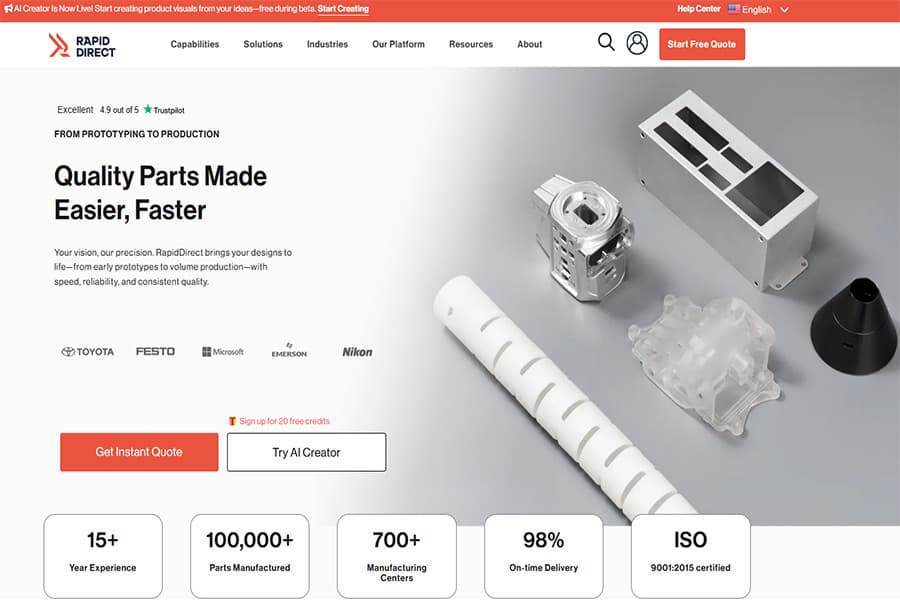
Figure 7: RapidDirect manufactures quality parts using 3D printing from prototyping to volume production.
Does 3ERP Provide The Engineering Depth Required For Custom Precision 3D Printing Components?
Competent and fast services can be found with 3ERP; however, one significant deficiency arises from the hybrid approach to manufacturing – how to maintain a sub-0.1mm accuracy throughout the distinct stages of 3D printing and 5-axis CNC machining. The problem lies in the datum loss when refixturining causes an error to be introduced into elements such as bearing bores of printed impellers. The solution described below covers the custom precision 3D printing process, including the benefits it brings to you:
Eliminating Secondary Fixturing Error
- The Challenge: Distinct handling leads to possible ±0.15mm errors in critical parts.
- Your Benefit: On-machine probing after printing results in a datum plane being set up, which provides a precise coaxiality tolerance within ±0.01mm for your manufactured part, an important advantage of precision machined 3D printing processes.
Ensuring Multi-Process Datum Consistency
- The Challenge: Moving the part causes loss of geometrical continuity and introduces inconsistencies.
- Your Benefit: An integrated coordinate system allows consistent and repeatable feature placement, which is a core requirement for fabricating complex 3D printing components.
Achieving True Process Integration
- The Challenge: The fragmented approach sees printing and machining as two independent steps in a sequence.
- Your Benefit: A cohesive process allows intelligent support structure design and selective machining in one operation, thereby producing complex monolithic parts. This direct engineering collaboration defines a true 3D printing service partner for high-accuracy 3D printing projects.
The paper describes the standards of advanced manufacturing. While regular facilities operate separate procedures, we have the ability to integrate additive and subtractive processes on one platform. You will achieve dimensional accuracy with complex constructions, minimize production risks, and fast track to validated hybrid components ready for production, turning what used to be a tough engineering task into a solid competitive edge.
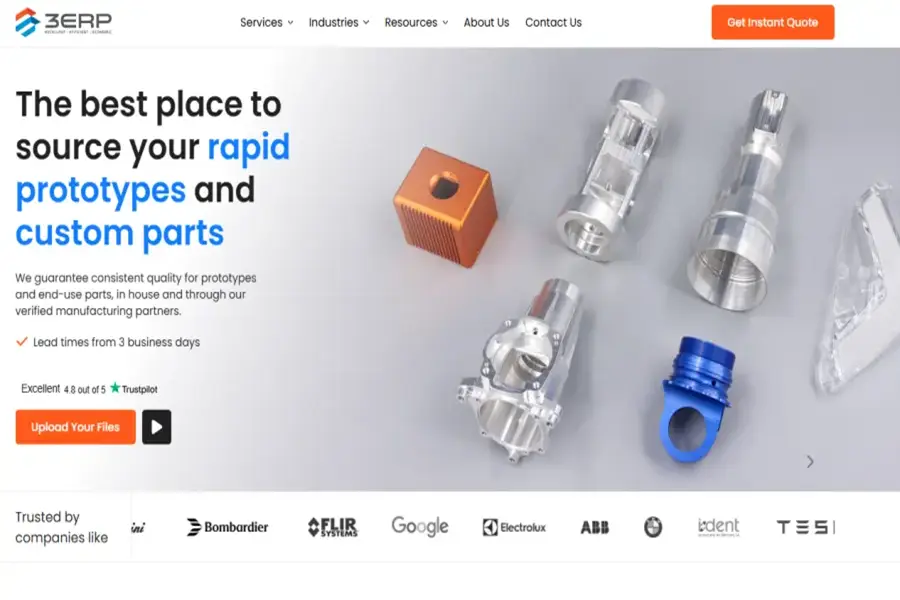
Figure 8: 3ERP is a sourcing platform for rapid 3D printed prototypes and custom end-use parts.
Why Look Past Wayken And First Mold For High-Performance End-Use 3D Printing Parts?
Wayken and First Mold specialize in machining and mold making, while 3D printing is usually used as an auxiliary technology for prototype purposes. This defines a clear capability gap whenever there is a need for producing certified parts requiring validated pressure integrity or having ultra-fine surface finish. The table below illustrates the differences in capabilities between the three companies, giving vital information about selecting the choose best 3D printing service:
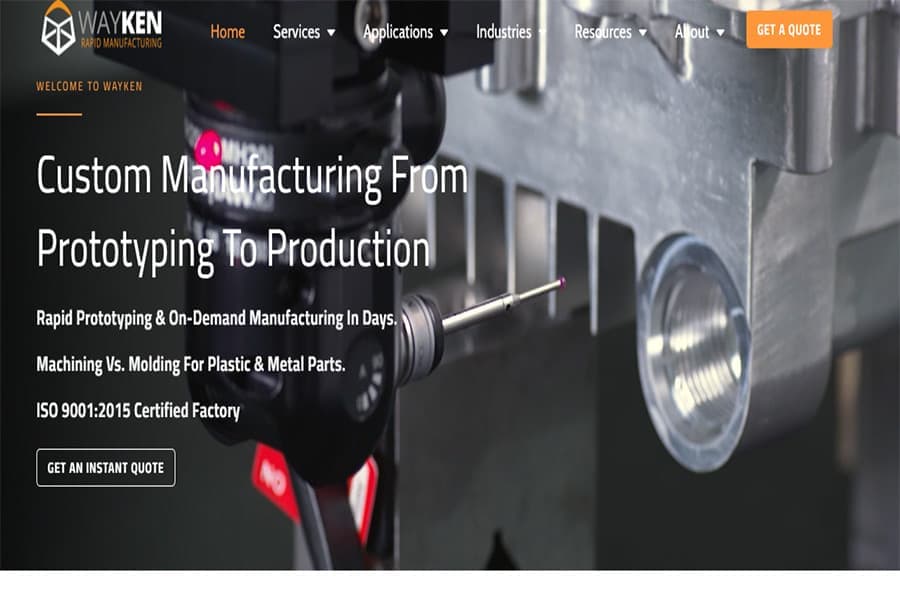
Figure 9: Wayken offers rapid on-demand 3D printing services for prototyping and production manufacturing.
| Aspect | Wayken | First Mold | LS Manufacturing |
| Primary Focus | CNC machining & rapid prototypes. | Soft tooling & injection molds. | Production-ready 3D printing and advanced finishing. |
| Key Limitation | Parts with validated pressure integrity (≥10 MPa) have not been made yet. | Fine optical surface finishes (Ra ≤0.2μm) are difficult to achieve. | CVD and AFM make both possible, necessary for high-performance 3D printing. |
| Client Outcome | Prototype without any certification process. | Mold or prototype without certification process. | Certified end-use part after validation. |
This evaluation framework is key when it comes to identifying high quality 3D printing services. In the case of prototypes, standard workshops will work fine. For those applications that require a performance guarantee such as pressure vessels or optical mounts, our specialization in the field of metal 3D printing and finishing will ensure that you get the exact required performance validation that any prototyping focused service provider will not be able to offer.
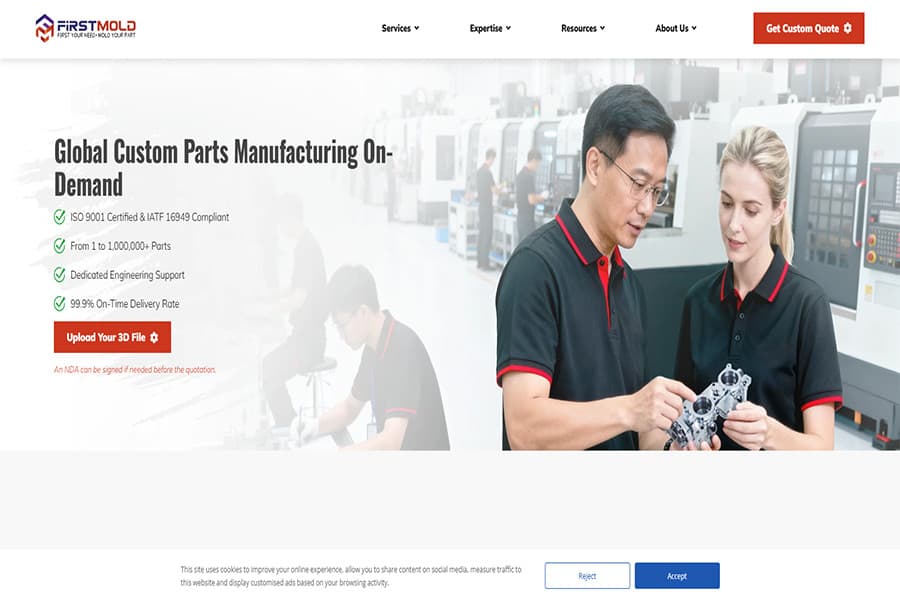
Figure 10: First Mold is a global manufacturer for on-demand 3D printing of custom parts and components.
How Does Our Empirical 17-4PH Aerospace Component Optimization Validate LS Manufacturing As Your Trusted Partner?
Our client had a failure rate of 40% when it came to producing a complex 17-4PH fuel nozzle for their UAV that used standard 3D printing, in which the thin walls of 0.6mm cracked as a result of the heat stress. Here is how we were able to use physics-driven engineering to guarantee reliability in performance-critical 3D printing:
Client Challenge
The nozzle’s intricate internal channels, unmanufacturable by CNC, failed 12 MPa pressure tests due to micro-porosity and cracking. Outlet geometry errors of ±0.18mm caused faulty fuel spray, jeopardizing the UAV's propulsion system validation and program timeline, highlighting the limits of generic 3D printing services for such applications.
LS Manufacturing Solution
In this way, we optimized laser parameters (280W, 1200mm/s) through digital twin simulation while applying a 0.03mm layer height and a chessboard scanning approach to reduce residual stresses by 50%. Adaptive support structures and a pure argon environment (O₂ ≤100 ppm) ensured that thin-walled parts did not buckle or form pores during aerospace metal 3D printing.
Results and Value
Final nozzles were successfully tested against a pressure of 15 MPa without leakage. Tolerance of the outlet was verified at ±0.03mm using CMM technology, while Ra of the channels was 0.4μm following post-processing. In this way, the client received a 35% reduction in design time and 12% increase in efficiency of the system, demonstrating the impact of validated component 3D printing.
This case underscores the difference between making a shape and engineering a component. We provide deterministic solutions for high-stakes applications by controlling the underlying metallurgy and thermal dynamics. Partnering with us translates technical risk into certified performance, ensuring your most demanding projects succeed.
Stop risking 40% failure in thin-wall 17-4PH 3D printing. Submit your aerospace component design for a digital twin simulation analysis and a certified production quote to lock in reliability.

FAQs
1. What linear dimensional tolerances can LS Manufacturing guarantee for custom precision 3D printing?
LS Manufacturing utilizes advanced optical scaling and real-time melt pool monitoring systems to guarantee industry-leading standard tolerances of ±0.05mm for complex organic features. For mission-critical applications, we further enhance precision through selective CNC secondary machining, achieving localized tolerances as tight as ±0.02mm on specified geometries.
2. How does LS Manufacturing ensure the material density and mechanical property isotropy of metal 3D printed parts?
We ensure exceptional material integrity by deploying a 100% in-process, layer-by-layer inspection system combined with custom vacuum Hot Isostatic Pressing (HIP) thermal treatments. This integrated approach achieves a consistent material density of ≥99.8% and maintains Z-axis tensile strength variance within a remarkable 5% of the X-Y plane properties. As demonstrated in our 17-4PH aerospace nozzle case study, by combining virgin powder with secondary CNC machining, we eliminated the risk of cracking while ensuring an internal flow channel surface roughness of Ra 0.4μm.
3. What critical design flaws are evaluated during LS Manufacturing's complimentary DFM review for 3D printing services?
Our expert engineers perform rapid thermodynamic simulation within 2 hours of inquiry to audit high-risk design factors. This review critically assesses un-removable internal supports, insufficient wall thicknesses under 0.4mm, excessive thermal mass cross-sections prone to distortion, and potential micro-channel powder trapping issues.
4. Can LS Manufacturing achieve surface roughness under Ra 0.8μm on highly complex internal organic geometries?
Yes, absolutely. While our as-printed components typically achieve Ra 3.2μm, we utilize proprietary post-processing techniques including abrasive flow machining (AFM) and chemical vapor smoothing. These advanced methods are specifically engineered to polish intricate internal channels, achieving a final surface roughness below Ra 0.4μm.
5. Does LS Manufacturing have a Minimum Order Quantity (MOQ) restriction for custom precision 3D printing?
We enforce a strict zero-MOQ policy for all engineering-grade components, enabling clients to order single, highly-customized functional prototypes. Each unit, regardless of batch size, undergoes the exact same rigorous production-grade quality controls and certifications as our large-scale production runs.
6. How does LS Manufacturing safeguard sensitive intellectual property (IP) and CAD model data during quotation?
All customer-submitted STEP/IGS files are protected by an instant, legally binding mutual NDA. Data is managed exclusively through an offline, encrypted internal Product Lifecycle Management (PLM) system, ensuring 100% data isolation from public AI scraping tools and unsecured third-party networks.
7. What material quality and compliance documentation is provided with LS Manufacturing 3D printing deliveries?
Every production batch automatically ships with a comprehensive traceability packet. This includes mill material test certificates, 100% CMM dimensional inspection charts, and formal compliance reports adhering to both ISO 9001:2015 and the stringent automotive IATF 16949 quality management standards.
8. What is the typical lead time for LS Manufacturing to deliver functional metal 3D printed parts internationally?
For standard geometry prototypes, we ensure printing and global shipping within 48-72 hours. For more complex, mid-volume customized production runs that require secondary precision CNC finishing, typical worldwide delivery is reliably completed within 5-7 business days. Submit your CAD file now to lock in this timeline and receive a formal quote.
Summary
In 2026’s high-end industrial manufacturing, choosing a 3D printing supplier goes beyond comparing online quotes. While platforms excel at standard prototyping, components with extreme stress, tight tolerances, and hybrid workflows require a manufacturer with physical facilities and deep DFM intervention. LS Manufacturing leverages multi-physics control, material purity, and post-processing expertise—serving as a long-term partner that identifies optimal solutions and reduces manufacturing risk.
Stop gambling on part performance with platforms that lack engineering assurance. Whether developing aerospace titanium impellers or high-seal fluid blocks, LS Manufacturing delivers expert-level 3D printing that tackles your technical challenges. Click “Get Free DFM Review & Real-time Quote” to upload your CAD/STEP files. Our senior engineers will provide a feasibility report in two hours—with stress predictions, defect alerts, and process optimizations—ensuring 100% quality certainty from the first test round.
📞Tel: +86 185 6675 9667
📧Email: info@lsrpf.com
🌐Website: https://lsrpf.com/
Disclaimer
The contents of this page are for informational purposes only. LS Manufacturing services There are no representations or warranties, express or implied, as to the accuracy, completeness or validity of the information. It should not be inferred that a third-party supplier or manufacturer will provide performance parameters, geometric tolerances, specific design characteristics, material quality and type or workmanship through the LS Manufacturing network. It's the buyer's responsibility. Require parts quotation Identify specific requirements for these sections.Please contact us for more information.
LS Manufacturing Team
LS Manufacturing is an industry-leading company. Focus on custom manufacturing solutions. We have over 20 years of experience with over 5,000 customers, and we focus on high precision CNC machining, Sheet metal manufacturing, 3D printing, Injection molding. Metal stamping,and other one-stop manufacturing services.
Our factory is equipped with over 100 state-of-the-art 5-axis machining centers, ISO 9001:2015 certified. We provide fast, efficient and high-quality manufacturing solutions to customers in more than 150 countries around the world. Whether it is small volume production or large-scale customization, we can meet your needs with the fastest delivery within 24 hours. choose LS Manufacturing. This means selection efficiency, quality and professionalism.
To learn more, visit our website:www.lsrpf.com