English



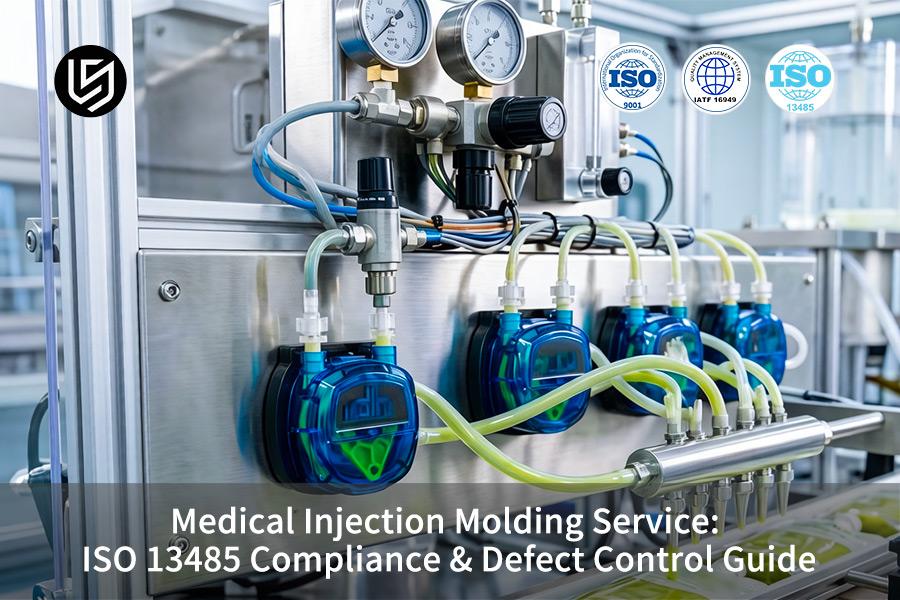
Medical injection molding service, in discovering what are the applications of injection molding, finds a significant problem when regular injection molding process falls short to deliver the required level of purity and compatibility for items such as housing, chip, and implant, since regular suppliers, lacking medical manufacturing know-how, have difficulties dealing with the tight tolerances required by the likes of PEEK, PC, and PEI, often producing deadly flaws such as weld line and size discrepancy that fail audits.
LS Manufacturing addresses all of these problems through the use of ISO 13485 certified Class 8 clean rooms, scientific molding system, and ±0.005mm precision mold control. Experience how stringent compliance with quality standards translates into real cost benefits at LS Manufacturing by joining our senior medical project engineers.
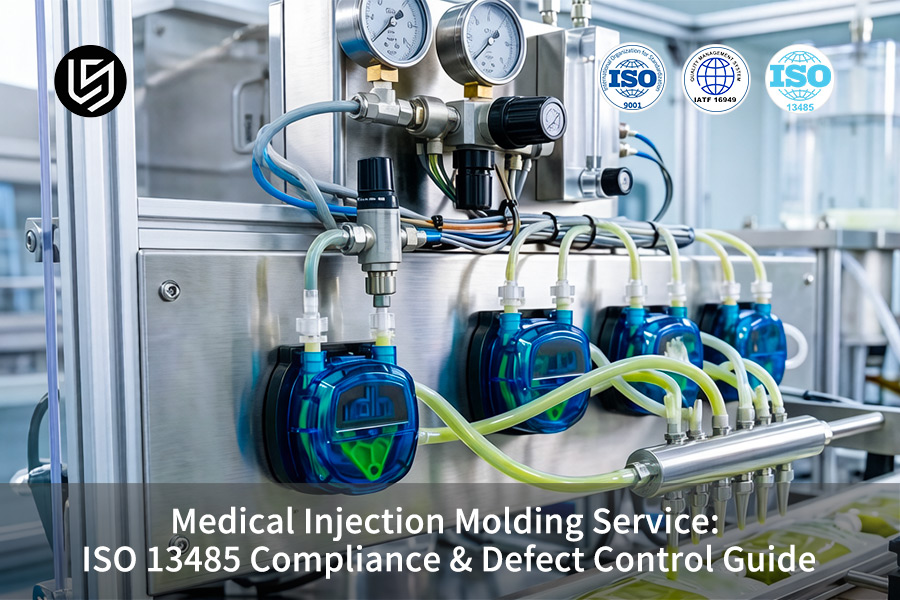
Medical Injection Molding: ISO 13485 Compliance Guide
| Key Area | Compliance Requirement | Quality Outcome |
| Material Management | Complete traceability of the raw materials and finished part with certifications. | Ensures biocompatibility of components and ensures material history is documented. |
| Process Validation | Complete IQ/OQ/PQ validation for all molds and equipment used in production. | Ensures process stability, repeatability, and that all medical injection molding parts meet specifications. |
| Cleanroom Standards | Manufacture in a clean ISO Class 7/8 environment with proper handling procedures. | Prevents any particulate or biological contamination of sterile or implantable medical devices. |
| In-System Inspection | 100% automated vision inspection with SPC. | Allows real-time detection of defects and rejection of any non-conforming parts. |
| Complete Documentation | Electronic Device History Record (DHR) for each batch of product. | Contains all process data and documentation requirements for regulatory agencies. |
Key Takeaways:
- Documentation is Paramount: The audit trail quality record (DHR) is as important as the actual part from a compliance standpoint.
- Process Control is Proactive: Validation (IQ/OQ/PQ) and statistical process control (SPC) aim at preventing defects rather than catching them.
- Environment is a Controlled Input: Cleanroom requirements are a core element of the product specifications, not a nice-to-have.
- Traceability Enables Accountability: Medical injection molding material and process traceability are key for safety and regulatory approvals.
Why Trust This Guide? Practical Experience From LS Manufacturing Experts
There are many abstract definitions of the ISO 13485 standard available in literature. This guide is unique because it is written by us – the people who use ISO 13485 standard as a guideline when manufacturing lifesaving medical devices. All processes starting from receiving materials to molding in the cleanroom environment are based on International Organization for Standardization (ISO) standards to provide for systematic control.
We mold parts in which any tiny flash, even a vague knit line, or a speck of contamination is unacceptable. These include drug delivery systems, bone fixation devices, and diagnostic fluidic cartridges. The zero-defect requirement in this industry requires that our process validation and defect control techniques meet the strict regulatory requirements of organizations such as the U.S. Food and Drug Administration (FDA).
Our practical experience in avoiding defects was gained during long years spent working in the press shop. We know all about process windows to avoid voids in thick sections, molds that do not allow gate blush to occur on transparent parts, and cleanroom practices to provide particulate-free surface finish. We share our practical knowledge with you so that you can set up a compliant molding process.
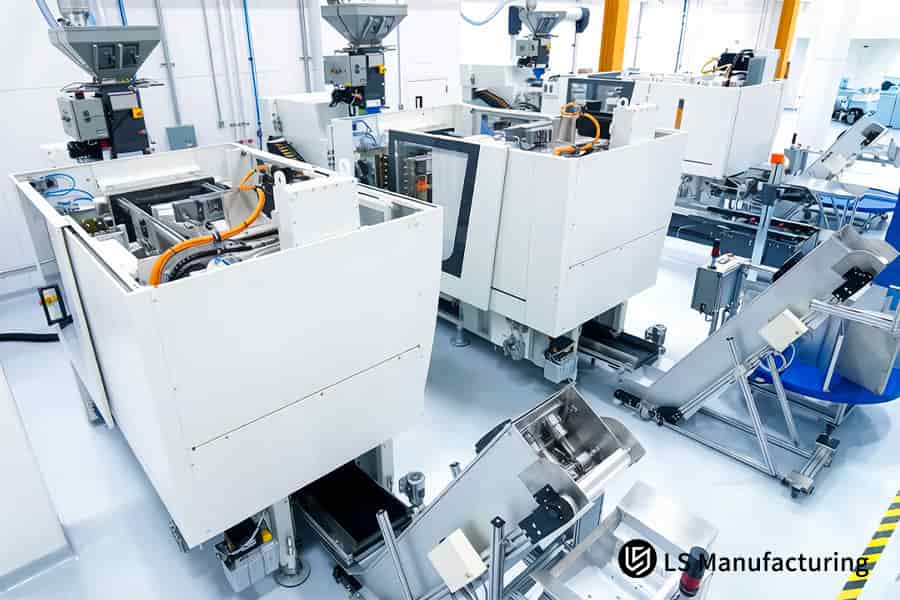
Figure 1: Sensors monitor the injection of medical grade polymer into molds within a sterile cleanroom environment.
Why Is ISO 13485 Compliance Mandatory For Your Choice Of A Medical Injection Molding Service?
When producing medical devices, the primary purchasing risk is not the cost, but the incomplete quality trail that will fail in an audit. The purpose of this document is to explain the ISO 13485 injection molding process, comparing it to standard industry practice to define its value in reducing audit risks for Class II/III devices.
| Aspect | General Industrial Molding | ISO Certified Medical Molding |
| Process Foundation | Parameters are determined based on experience; changes occur frequently and are not documented. | A validated injection molding process (IQ/OQ/PQ) specifies an evidence-based, fixed operating range. |
| Material Control | Material batches may be mixed; traceability ends with the hopper. | Lot-controlled injection molding results in chain-of-custody through to shipping of finished parts. |
| Documentation Role | Documents document production for internal logistics and minimal quality control. | Every document becomes a controlled Device History Record (DHR) subject to regulation. |
| System Outcome | The focus is on defect detection through sorting out defects. | The system is set up to prevent defects. |
The challenge for a ISO certified medical molding is that there should be systematic elimination of audit risk through the engineering of traceability at every stage. This problem is resolved through offering an unalterable chain of evidence starting from receipt of materials, through cleanroom injection molding, and ending with release. Compliance is changed from an obligation to an insurance policy for your medical injection molding service, thereby minimizing inspection costs.

How Can Precision Medical Molding Service Optimize Tool Design To Eliminate Weld Lines In High Temperature Resins?
Weld lines are very important weaknesses in high temperature resins and lead to significant weakening. The solution offered by our precision medical molding service is based on physics and involves the control of melt behavior prior to the entry of the material into the mold:
Predictive Melt-Front Management via Simulation
- Core Strategy: Perform simulations to determine flow, pressure, and temperature in anticipation of weld line formation.
- Action: Perform Moldflow analysis and develop a gate placement strategy using a temperature-controlled injection molding process such as RHCM to ensure matched temperature/pressure melt front interactions.
Tool Design for Optimal Fusion and Venting
- Core Strategy: Design the mold geometry such that it promotes polymer fusion.
- Action: Create strategically located overflow wells where weld lines occur and incorporate vent channels. It is important for multi-cavity injection molding of thin-walled parts.
Process Parameter Lock for Material Science
- Core Strategy: Set a tight window for high-viscosity resins.
- Action: Set an optimum injection speed and pressure (150-180 MPa) and maintain strict temperature control. This is crucial for our defect control injection molding process.
Verification of Structural Integrity
- Core Strategy: Verify that defects have been eliminated by measuring strength, not appearance.
- Action: Test first article components by micro-sectioning and tensile testing at the weld, confirming that the loss of strength is less than 2%, achieving reliable custom medical injection molding production.
Our method clearly demonstrates that eliminating weld lines is a predictable result of engineering. Through our engineering method of controlling the flow fronts, we turn an important quality variable into a known engineering parameter, ensuring the integrity of difficult device enclosures through a successful medical injection molding service.
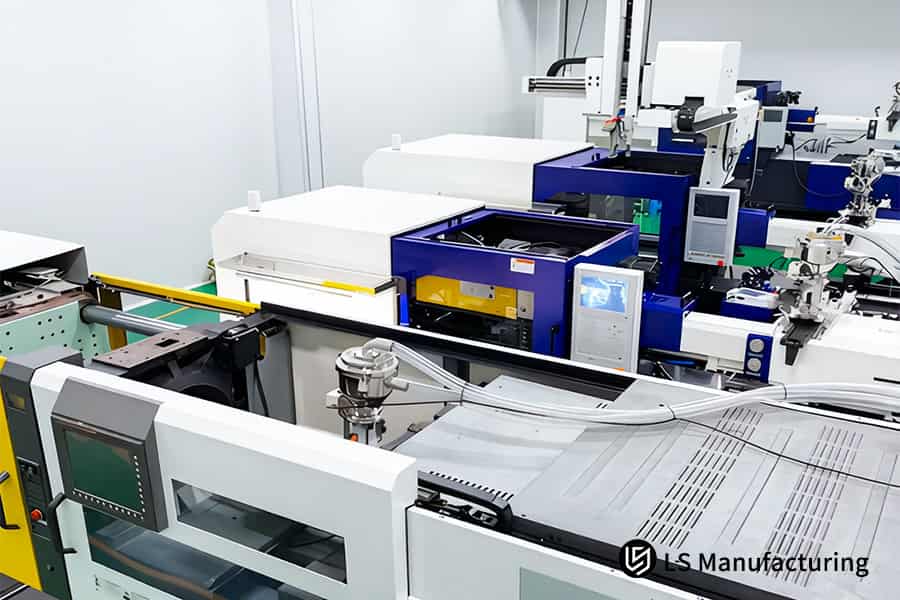
Figure 2: Robotic arms transfer precision molded medical parts with 0.02mm tolerances for quality inspection.
What Criteria Define The Selection Of Custom Medical Injection Molding Resins For Bio Compatibility?
Choosing the right resin entails finding a material that is biocompatible yet still easily processable for manufacturing success. This document outlines the engineering strategy used at our company to determine the ideal material, guaranteeing its performance in the device and stability during the custom medical injection molding process.
Building a Predictive "Material Fingerprint" Library
Our approach goes further than just consulting a datasheet from the manufacturer. In addition to listing the ISO 10993/USP Class VI certification for each medical grade injection molding resin, we also provide information on important behavior factors: exact drying profile, shear sensitive viscosity, and crystallization rate. In effect, we can predict the behavior of a newly introduced PEEK or COP resin in our high-temperature injection molding process before running any tests.
Analyzing Thermal Stability for Process Window Definition
Thermal degradation of a material during molding may reduce its biocompatibility. Isothermal weight loss studies are performed to establish the maximum residence time at different temperatures. This provides a definite basis for setting upper limits of barrel temperatures and cycle times for the medical injection molding process materials such as PPSU without any hazardous decomposition.
Synchronizing Rheology with Tool and Process Design
The flow characteristics of the material determine the quality of the part. Capillary Rheometry is used to model the viscosity according to the specific injection rates and pressures we operate at. This will inform important considerations for complex products, such as gating for multi-material injection molding assemblies or shrinkage considerations for semi-crystalline polymers.
Delivering a Compliance-Ready Manufacturing Package
The final output is the lock down of the process in documentation form. We deliver an extensive dossier which links the biocompatible certification of the resin to its processed and validated processing parameters and resulting part performance characteristics. This package is an important building block of your medical molding compliance guide, providing the necessary traceability for ISO certified medical molding.
This systematic process converts material selection into an evidence-based engineering process. We address the difficult challenge of optimizing biocompatibility, performance, and manufacturing by pre-qualifying the materials based on analysis, allowing you to move ahead without risk and providing a sound, auditable manufacturing process for precision micro-molding applications.
Case Study Of How LS Manufacturing Resolved Critical Flashing Defects On Custom Medical Ventilation Valves
When producing equipment that can mean the difference between life and death, even the smallest flaw can bring production grinding to a halt. This case study will show how LS Manufacturing solved the problem of flashing defects on custom ventilation valves, underscoring our dedication to defect control injection molding:
Client Challenge
The manufacturer of respirators worldwide was dealing with an emergency situation. The proprietary high-barrier check valve, which was manufactured using the company’s own design and was made of a medical grade injection molding PC-PBT blend, had significant flashing issues (more than 0.08 mm) on the sealing lands. The problem occurred due to lack of rigidity of the mold and unreliable V-P switchover provided by the old vendor. It resulted in a critical 72% yield on leak testing and stopped production of the necessary ventilators.
LS Manufacturing Solution
The team at LS Manufacturing developed a fast-response solution. First, we modified the tool by using H13 steel and added a four-cavity hot runner system. The most crucial step, however, involved applying a scientific injection molding approach. Using pressure sensors inside cavities, we established the exact time when the cavity would be filled up to 95%. Then, in the course of 0.01 seconds, we switched to packing pressure at 135 MPa.
Results and Value
The intervention proved successful. Flashes were no longer present, and part sizes were kept at all times within a 0.005mm tolerance level. More importantly, the yield of non-destructive leak tests increased exponentially to 99.98%. This consistent and guaranteed supply of conforming parts enabled the customer to start producing their product without any further delays, saving them from potential $150,000 in penalty fees.
This is a perfect illustration of our core strength in action, which is using molding physics and process control to tackle critical production issues. LS Manufacturing does not just manufacture components but ensures that you receive predictable results from your custom medical injection molding projects by converting defects into controllable factors using precision injection molding.
Facing similar flash or leak issues with critical components? Our scientific process control can transform your yield. To discuss a tailored solution, submit your part details for a free feasibility review.

How Do We Achieve Microns Level Tolerances Via Scientific Precision Medical Molding Service Control?
Attaining and maintaining micron tolerances (±0.005mm) necessitates going beyond regular machine parameters to regulate the actual melt. Precision medical molding service is based on a science-based approach that takes into account the variations associated with the medical injection molding process and compensates for them to attain determinism in part geometry:
Controlling the Melt: Real-Time Cavity Pressure as the Master Variable
We employ cavity pressure transducers in mold as the main feedback mechanism, not timers or positions. Through monitoring the pressure curve in real-time, we are able to monitor the viscosity and compressibility of the polymer directly at the moment of filling. We then make adjustments to the velocity to pressure conversion (V/P switchover) within milliseconds, making allowances for variations in materials lots, and ensuring the same packing phase for each shot.
Implementing Proactive Statistical Process Control (SPC)
We use real-time SPC on critical dimensions, plotting data on a per-cycle basis. This is not for post-production evaluation but for real-time correction. In case of an impending control limit breach, the software identifies possible causes such as moisture in the environment causing material to dry unevenly even before any part exceeds acceptable limits. This data-driven injection molding makes quality control proactive and predictive rather than reactive, ensuring that we maintain a Cpk greater than 1.67.
Mastering Thermal Management for Dimensional Fidelity
Precision is overcome by thermal expansion. We employ injection molding with a precision mold temperature control system (±0.5°C). It avoids the problem of thermal expansion due to inconsistent cooling. This is vital in maintaining tight tolerances on features such as sealing surfaces and snap fits in custom medical injection molding components.
Validating Long-Term Process Capability
The final validation comes from actual production runs that prove the process capability for hundreds of thousands of cycles, where we show the client that we have achieved a Cpk of 2.0 over 500,000 cycles, proving that our micrometer-tolerance injection molding is not just a claim but a statistically validated locked manufacturing process.
We remove the risk of even the toughest tolerance requirements by taking the guesswork out of the equation by leveraging the laws of physics. We overcome the tough problem of environmental and material variability by creating a closed-loop injection molding control system using direct process feedback. Stop risking tolerance drift in critical components. To lock in ±0.005mm precision and Cpk>1.67, submit your specifications for a process capability report and a validated production quotation.
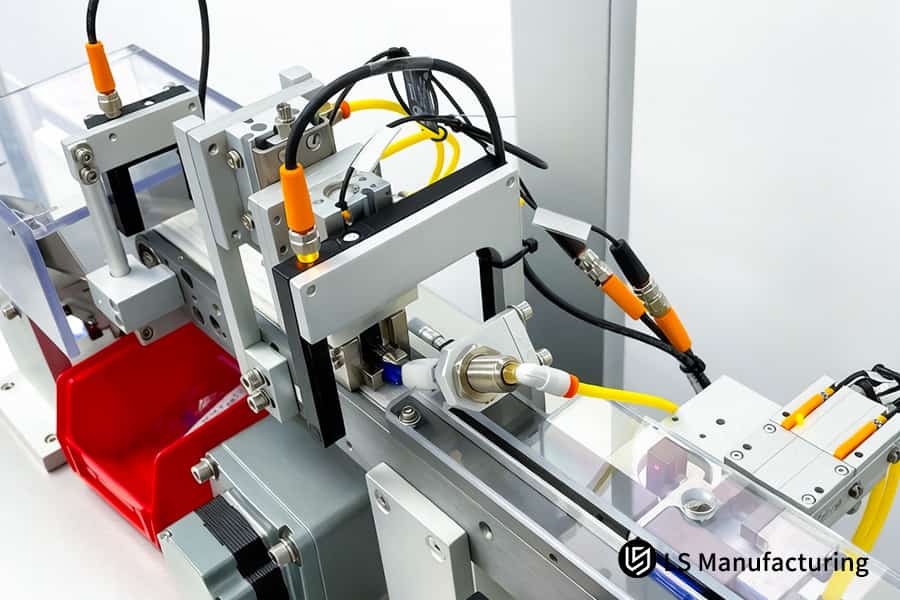
Figure 3: Molten polycarbonate resin fills the mold cavity to form a precise surgical instrument component.
What Strict Quality Control Protocols Guide Our Medical Grade Injection Molding Production Line?
Medical grade injection molding demands that quality be manufactured, not inspected, into the components. The following outlines the closed-loop, multi-dimensional controls that constitute our manufacturing core, bringing ISO certified medical molding standards into practical, quantifiable practice for each component produced.
| Control Dimension | Our Protocol & Measurable Outcome |
| Environment (Cleanroom) | The continuous monitoring of our ISO Class 8 cleanroom keeps particle counts (≥0.5µm) under 3,520,000 per cubic meter, eliminating potential contamination at the source. |
| Machine & Method (Process) | Each manufacturing process is run using a validated injection molding process recipe, and real-time machine and cavity pressures are recorded. |
| Material (Resin) | Materials are always managed using rigorous lot control practices; each batch is quarantined, verified against its CoA, and tracked from receipt through manufacture. |
| Inspection (Measurement) | Automated optical inspection (AOI) is performed on all parts for surface defects, while automated CMM sampling ensures dimension accuracy within ±2.5µm. |
| Documentation (Evidence) | With each shipment comes a full data pack including complete DHR, material CoC, and sterile barrier test results, acting as a direct medical molding compliance guide. |
This system provides manufacturing certainty through turning subjective validation into objective evidence. We address audit readiness and risk management through providing irrefutable proof of control, guaranteeing that all components being shipped meet the defect control injection molding and part-verification injection molding criteria.
How Can Custom Medical Injection Molding Manufacturers Balance High Volume Consistency With Fast Tooling Lead Times?
The most important issue for medical device developers is speeding up the process without compromising on the consistency of mass production that is needed for regulatory compliance. This system helps separate these two opposing concepts by allowing quick prototyping and scaling up in a custom medical injection molding process, adhering to ISO 13485 injection molding principles right from the start:
Rapid Prototyping Through Modular Tooling Strategy
- Core Methodology: Pre-engineering using pre-manufactured standardized modular mold bases.
- Execution: Instead of waiting for a minimum of 6-8 weeks to manufacture a custom mold base, we will simply machine and install the necessary cavity and core blocks for the first part. This results in a rapid-tool injection molding prototype being manufactured within 3 weeks.
Concurrent Engineering for Production-Ready Designs
- Core Methodology: Developing the prototype tool as a subset of the future production tool.
- Execution: The prototype cavity will be designed and machined using identical materials (for example, polished H13 steel) and processes as the future high-cavitation tool. In doing so, we ensure that the information gathered from running the prototype is fully scalable for volume production.
Validated Process Lock During Scale-Up
- Core Methodology: Transferring the proven process window from prototype to production.
- Execution: The injection molding parameters (pressures, temperatures) validated through the prototype are applied directly to the multi-cavity production tool. As a result, parts produced on the 1000th cycle will be identical in material and dimensions to the 10th part, providing a precision medical molding service.
Seamless Transition to High-Volume Manufacturing
- Core Methodology: Cavity scaling using the exact same validated manufacturing platform.
- Post-Design Freeze Manufacturing: After the design is finalized, we produce multiple identical cavities.
- High-Volume Production Mold: These cavities are then assembled into a production mold with a high cavitation count.
- Leverage of Validation: This process fully capitalizes on all prior validation work, enabling an immediate scale-up to full production capacity.
- Guaranteed Performance: The mold is guaranteed to exceed a lifecycle of 1 million shots, meeting the critical standard for a reliable medical injection molding service.
This approach is the solution to the fundamental customer problem of speed vs stability. Our solution is based on accelerated timeframes through pre-production discipline at the prototype stage, enabling a de-risked and data-driven path to market. The delivery of volume-scale injection molding capability from day one enables us to turn the tooling process into a parallel rather than sequential process.
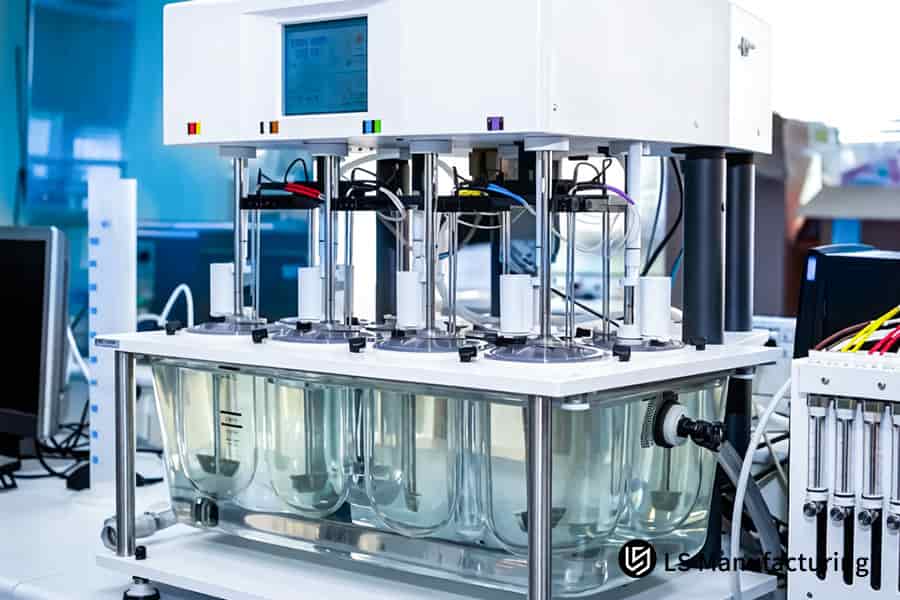
Figure 4: A molding machine processes medical grade polymer for surgical tool housings under defect control.
What Factors Determine The Realistic Cost Estimation For Medical Grade Injection Molding Projects?
Estimation of accurate costs for medical components entails consideration of more than just the unit cost but includes the system costs involved in compliance and quality. The following is an explanation of all the factors considered in our quotations for medical grade injection molding services, showing how early engineering engagement ensures real value in a medical injection molding service:
De-risking Design to Eliminate Unnecessary Cost
One of the most important elements when it comes to manufacturing cost is the design itself. In addition to each RFQ, we offer a complimentary, thorough DFM review service. The DFM reviews and solves issues related to excessive tooling complexity, long cycle time, and high scrap rate, thus reducing manufacturing cost by more than 20% before any custom medical injection molding tools are made.
Accounting for the Full Compliance Overhead
Compliance entails certain operational costs. These costs are itemized in our quotes as part of ISO certified medical molding, including validated resin drying processes, in-process SPC data collection, and cleanroom packaging control environment. This way, there will be no surprises regarding additional costs incurred due to compliance requirements and cost-effective injection molding.
Optimizing the Manufacturing Process for Efficiency
The cost is fixed once process validation is done. We optimize on cost by designing a system where the cycle time is minimized and by using a validated molding process. By making a good investment in the tool right from the start, such as through family-mold injection molding techniques, we ensure that we make effective use of our tooling cost per piece.
Providing a Total Cost of Ownership (TCO) View
Our last quotation gives a complete perspective. The capital costs (tooling), as well as piece price and other associated costs, are distinguished in our quotation. This makes it easy for the customer to plan ahead since it becomes clear to them that our DFA (Design for Assembly) cost analysis, along with the automated-inspection injection molding process, will reduce total project costs.
This provides the basis of shifting the focus from pricing to cost savings and value. We address our client's problem of uncertainty in budgeting by taking into consideration the cost engineering upfront, giving a clear explanation of the justification behind all the required investments. To move from price guessing to value certainty, initiate a professional assessment. Upload your project details for a comprehensive DFM and TCO review, securing your formal quote.
FAQs
1. What is the minimum order quantity for your medical injection molding service?
LS Manufacturing offers flexible solutions depending on various procurement requirements. The MOQ of LS Manufacturing in case of clinical trials and R&D stages is as low as 100 pieces. For mass manufacturing in the commercial scale, LS Manufacturing has the capability to manufacture millions of pieces per year. In addition, the process records for both types of production comply with the same high ISO 13485 level.
2. How does LS Manufacturing prevent material cross-contamination during ISO 13485 injection molding production?
LS Manufacturing has an independent central feeding system for the materials in the class 8 cleanroom. Before changing the raw materials, LS Manufacturing carries out a series of calibration and cleaning steps, including chemical melt purge for up to two hours and cleaning of air ducts from dust, ensuring there will be no contamination at all.
3. Can you provide certified validation support for regulatory audits under your medical molding compliance guidelines?
Yes, LS Manufacturing offers a full process validation documentation package for each medical injection molding project at no cost. It comprises IQ/OQ/PQ protocols and test results, mold flow analysis documents, and 100% traceable production records to help you meet all the requirements of an on-site audit.
4. What dimensional tolerances can your precision medical molding service consistently maintain during mass production?
By employing an advanced, highly precise scientific injection molding feedback system, we can consistently maintain tolerances of ±0.01mm in the use of engineering plastics. In cases of injection molding that requires extreme precision, we are capable of consistently maintaining tolerances of ±0.005mm.
5. How do you handle intellectual property protection during the custom medical injection molding stage?
LS Manufacturing regards intellectual property as the lifeline of our enterprise. We are prepared to sign a mandatory Non-Disclosure Agreement (NDA) even before initial inquiries are formally addressed. All client drawings and DFM report data are stored on physically isolated and encrypted secure servers, accessible only to core project engineers who possess high-level security clearance.
6. Which medical-grade injection molding resins are best suited for Gamma or Autoclave sterilization?
For parts requiring repeated autoclaving, we strongly recommend using PEEK, PPSU, or specific grades of Polycarbonate (PC). For applications requiring resistance to Gamma radiation sterilization, we will assist you in identifying specialized medical-grade resins containing radiation-stabilizers and provide comparative data to support your selection.
7. What are the common root causes of "short shots" in defect-controlled injection molding for microfluidic chips?
Short shots typically stem from the premature solidification of the molten resin within ultra-thin-walled features (less than 0.3 mm). Our engineers resolve this challenge—ensuring a 100% success rate for thin-walled medical parts—by increasing injection speeds, selectively applying Rapid Heating and Cooling Molding (RHCM) technology to specific mold zones, and utilizing precise vacuum venting systems.
8. How quickly can I receive a detailed technical quotation after submitting my CAD drawings to LS Manufacturing?
Once you upload your 3D STEP/IGES drawings and provide a clear Bill of Materials (BOM), LS Manufacturing’s team of medical technology experts will deliver a detailed quotation proposal — along with an initial, comprehensive, and complimentary Design for Manufacturability (DFM) review report—within 24 hours.
Summary
In medical device manufacturing, relying on average suppliers brings compliance risks and hidden costs. LS Manufacturing applies ISO 13485 protocols and scientific injection molding to eliminate defects like weld lines and flash. We combine an E-E-A-T quality foundation with agile engineering to deliver predictable high yield, sterile biocompatibility, and full traceability—empowering you to stand out.
Developing a new device or facing quality issues from your supplier? Stop paying for production uncertainty. Click “Get Medical Expert Quote & Free DFM Evaluation” to upload your CAD drawings. Within 24 hours, our senior medical engineers will provide a complete, transparent solution with cost-optimization proposals tailored for your comparison.
📞Tel: +86 185 6675 9667
📧Email: info@lsrpf.com
🌐Website: https://lsrpf.com/
Disclaimer
The contents of this page are for informational purposes only. LS Manufacturing services There are no representations or warranties, express or implied, as to the accuracy, completeness or validity of the information. It should not be inferred that a third-party supplier or manufacturer will provide performance parameters, geometric tolerances, specific design characteristics, material quality and type or workmanship through the LS Manufacturing network. It's the buyer's responsibility. Require parts quotation Identify specific requirements for these sections.Please contact us for more information.
LS Manufacturing Team
LS Manufacturing is an industry-leading company. Focus on custom manufacturing solutions. We have over 20 years of experience with over 5,000 customers, and we focus on high precision CNC machining, Sheet metal manufacturing, 3D printing, Injection molding. Metal stamping,and other one-stop manufacturing services.
Our factory is equipped with over 100 state-of-the-art 5-axis machining centers, ISO 9001:2015 certified. We provide fast, efficient and high-quality manufacturing solutions to customers in more than 150 countries around the world. Whether it is small volume production or large-scale customization, we can meet your needs with the fastest delivery within 24 hours. choose LS Manufacturing. This means selection efficiency, quality and professionalism.
To learn more, visit our website:www.lsrpf.com