English



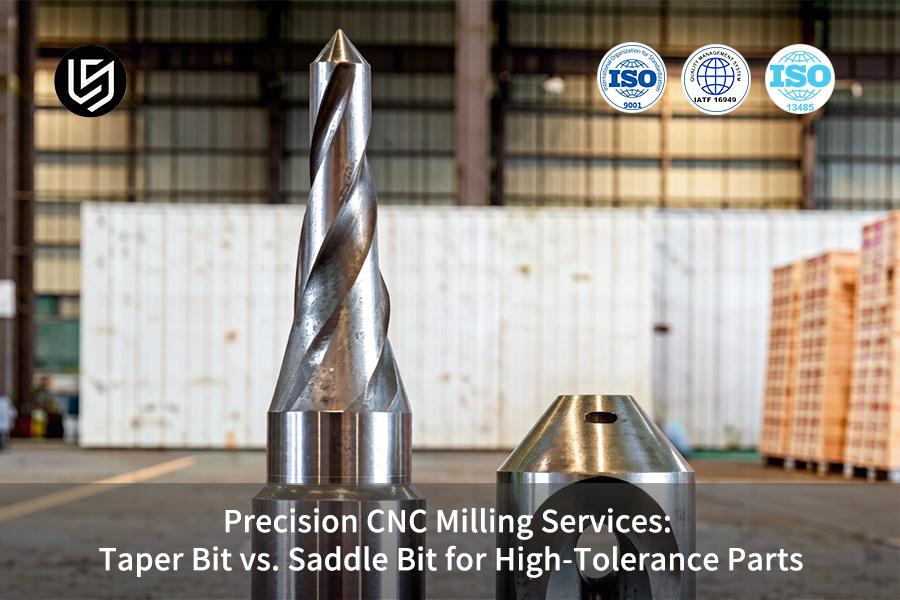
Precision CNC Milling Services are essential for resolving critical tool deflection and chatter, particularly when deciding between a taper bit vs. saddle bit for high-tolerance OEM projects. For procurement managers, the challenge is maintaining bore specifications on thin-walled workpieces where improper tool selection can increase scrap rates by 30%.
At LS Manufacturing, we go beyond tool replacement by integrating advanced DFM analysis to evaluate whether a taper bit vs. saddle bit is optimal for your specific geometry. This engineering-led approach eliminates chatter marks and inaccuracies, ensuring your manufacturing is both scalable and cost-effective.
This guide leverages 15+ years of experience to help you optimize process stability through expert Precision CNC Milling Services. By mastering the application of taper bit vs. saddle bit technologies, we achieve a 99.8% first-pass yield, transforming complex manufacturing hurdles into reliable production results.
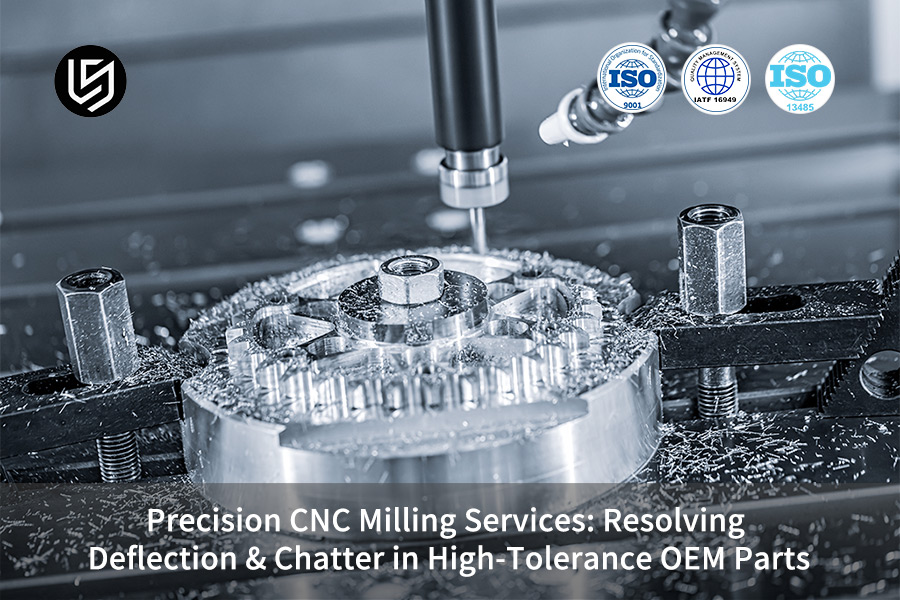
Precision CNC Milling: Taper Bit VS Saddle Bit Quick-Reference
| Feature | Taper Bit | Saddle Bit |
| Primary Geometry | A tapered bit utilizes an elongated cone-shaped cutting profile. | Involves a flatter saddle-shaped design for cutting. |
| Key Application | Best suited for machining angles, tapers, and complex pockets. | Fit to machine flat bottom and side walls at 90 degrees. |
| Rigidity & Deflection | The tapered tool may become less rigid, prone to deflection when cutting deeply into material. | Generally offers more rigidity and is best used in CNC milling applications. |
| Our Selection Criteria | Preferred tapering bits include molds, cores, and die making. | Suitable for machining slots, ledges, and features that require acute angles. |
| Result: Achievable Accuracy | Perfect for machining angles while ensuring accurate surface finishing for tapered shapes. | Best suited to maching perpendicular walls with high precision. |
| Result: Surface Finish & Efficiency | Eliminates any requirement for EDM or hand finishing for creating drafts. | Fast cycle times and finishing for machining high speed and feed slots. |
We resolve the issue of the proper tool choice for milling highly precise items with a complex profile. As experts in the field of taper vs saddle bits choice, we guarantee the best geometry, accuracy, and finish of the CNC milling parts. This leads to the efficient milling process, lower number of secondary works, and production of the highest quality items including both injection molds and aerospace details.
Why Trust This Guide? Practical Experience From LS Manufacturing Experts
With a multitude of publications dedicated to machining tools available online, what makes ours worth your attention? In contrast to many other articles on this topic, we come from a practical background. Our team at LS Manufacturing possesses over fifteen years of experience in providing precision CNC milling services. Working on challenging alloys with complex shapes in aerospace and medical spheres means putting to test the knowledge concerning the proper use of such tools as taper vs saddle bits.
Each high-tolerance part presents a unique lesson. Through experience, we have determined what tool yields the least amount of deflection when working with thin-wall Inconel 718, how to modify feed speeds to produce a flawless hole finish when machining titanium, and how to keep first pass yield at 99.8%. Lessons in machining techniques and the best ways to work with materials based on SAE International standards come not from books but from many rounds of cutting, cooling, and inspection.
Experience with machining processes that incorporate high-tolerance milling combines process control with technological innovation. Process engineering is guided by industry standards for precision automation outlined by Robotic Industries Association. Rather than choosing a single tool, we design an optimized cutting process that balances cutting speed with stability to ensure the most complex parts function perfectly in any application.
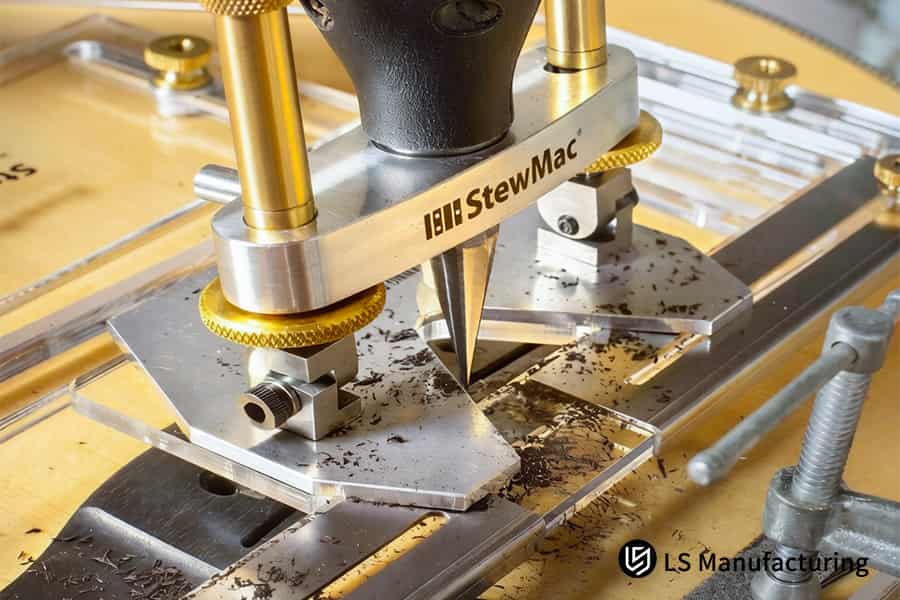
Figure 1: Using taper bits in precision CNC milling services to eliminate deflection in thin-walled aerospace components.
Why Is LS Manufacturing The Premier Partner For Precision CNC Milling Services In 2026?
By 2026, the realization of micron-level consistency in mass-production involves resolving issues associated with thermal drift and accumulation of errors. The solution provided by LS Manufacturing involves combining a fully-closed-loop precision monitoring system with servo-controlled spindles and thermal balance control. It ensures dimensional stability throughout 24-hour operations, thereby directly minimizing time spent on setups and keeping yield over 99.8%:
Real-Time Thermal Error Compensation via Full-Closed-Loop Control
The accuracy of linear encoders used is extremely high, as they are positioned on the machine axes without being influenced by inaccuracies generated by thermal expansion of the ball screws. In addition, the artificial intelligence system predicts potential changes in temperatures and provides proper corrections to positions of the axes. Therefore, it forms an integral part of our precision CNC milling services that enables us to perform reliable prototype CNC milling by eliminating possible deviations at their early stage.
Servo-Driven Spindle Synchronization with Active Thermal Management
Each spindle contains several temperature sensors and a water-cooling unit. A special controller adjusts the coolant flow according to the temperature data received in real time, thus keeping the spindle casing at a ±0.5°C range. At the same time, the servo motors coordinate the speed of acceleration/deceleration of the spindles and the axes. This process, developed by LS Manufacturing, is critical for demanding titanium CNC milling where material properties challenge quality consistency.
Intelligent Process Control for Predictive Quality Assurance
Besides controlling the machine, the software can examine the patterns in terms of tool wear, batch material, and previous data. It suggests the perfect speed and trajectory for every task depending on existing conditions. Parameters that matter are then checked via in-process probing. This predictive algorithm serves as the foundation of our cutting-edge CNC milling services, guaranteeing dependable manufacturing in high-volume CNC milling.
Digital Integration Eliminating Cumulative Error Stack-Up
In the case of DFM analysis, machining, and even quality control tests, the processes are integrated through digital means. The thermal properties of the machine used are considered during the development of the CAM software, whereas feedback collected through real-time monitoring is useful for future machining tasks. There won’t be any stack-up of errors due to this digital integration. This is what makes LS Manufacturing unique.
This paper will present additional information about the technology behind our competitive positioning strategy. Our products target the underlying causes of reduced precision that include thermal drift, mechanical hysteresis, and production variances through total hardware and software prediction strategies. Technology is at the center of LS Manufacturing’s ability to ensure that we offer consistent quality consistency in CNC milling services in comparison to competitors in 2026.

How Can Taper Bit CNC Milling Service Optimize Chip Evacuation For Deep Hole Precision?
Chip evacuation is a primary challenge in deep hole drilling because the chips might cause damage to the workpiece surface, size inaccuracy, and even the destruction of the cutting tool. LS Manufacturing offers a solution to this challenge using a taper bit CNC milling service combined with special tools, high-pressure cooling systems, and efficient process management methods.
Tool Geometry and Process Design for Controlled Chip Formation
- Tapered Flute Design: It incorporates a tapered flute that lowers the packing density of chips, hence making it easier for chips to be removed than in the case of straight tools.
- Optimized Helix & Rake Angles: They are customized based on the type of material (like 316L SS). The chips generated are brittle, and have a relatively shorter length.
- Peck Cycle Integration: This method uses an adjusted peck cycle approach where chips are broken up and evacuated by withdrawing partially to avoid continuous chip formation.
High-Pressure Coolant System as a Primary Evacuation Driver
- 70+ Bar Internal Coolant: This system ensures high-pressure coolant delivery to the cutting tool edges for cooling and removal of chips during deep hole drilling.
- Coolant Path Optimization: The channels within the taper drill make sure there is momentum of coolant flow throughout the flute. This prevents chip re-welding.
- Thermal Load Management: This highly effective cooling technique combats the heat effect causing work hardening necessary for achieving the required surface roughness of Ra 0.4 μm during demanding CNC milling of stainless steels.
Dynamic Parameter Optimization for Real-Time Stability
- Adaptive Feed/Speed Control: The system dynamically adapts its parameters in light of spindle load during the machining process, reducing feed rate whenever it encounters material inhomogeneity to ensure proper chip size.
- Pressure-Stabilized Operations: It is vital to maintain a consistent 70 Bar coolant pressure to achieve stable operations in our reliable CNC milling services for deep cavity machining.
- Toolpath Strategy for Hardened Steel Milling: For tough metals, toolpaths include decreased radial engagements as a means of limiting both force and thermal loads.
Monitoring and Adaptive Response to Prevent Failure
- In-Process Torque Monitoring: Continuous spindle load measurements determine when a higher than normal torque should activate either a purge cycle or the operator.
- Back-pressure Sensing: Coolant return pressure is used to detect blockage in the chip flute to avoid poor quality surfaces.
- Preventive Logic: The logic behind this system lies in its capability to transform the conventional machining into the active and highly controlled intricate CNC milling process.
The present document will outline a comprehensive solution based on the combination of tool geometry, thermodynamic properties, and dynamic control to tackle chip evacuation issue. The above methodology will become the foundation of LS Manufacturing's approach to ensure that our taper bit CNC milling service guarantees results in the most challenging deep hole drilling and complex CNC milling tasks.
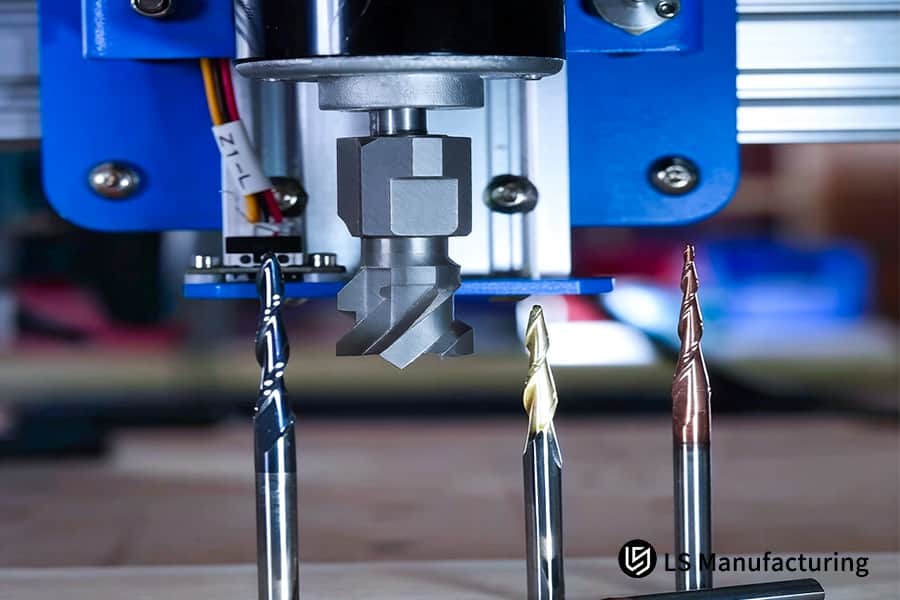
Figure 2: Three coated end mills are mounted for CNC milling for high tolerance bits in aerospace or medical part production.
Why Should Engineers Prioritize Saddle Bit CNC milling Service For Cross Hole Stability?
Positional stability while drilling at non-linear/angled surface points is essential since the “walking” phenomenon affects part integrity and geometric accuracy. This paper describes our solution through saddle bit CNC milling service. The ability of the drill bit to maintain its inherent self-centering feature, along with a particular manufacturing process flow, is demonstrated to guarantee accurate intersections of cross-holes, thereby proving its suitability for mission-critical parts.
| Aspect | Our Solution (How We Achieve It) | Key Result / Metric |
| Tool Geometry & Mechanism | Utilizing the saddle-bit geometry to guarantee two points of contact on curved surfaces prior to drilling. | Highly efficient self-centering feature mechanically eliminates walking of the tool at the onset of machining. |
| Process Protocol for Hydraulic Manifolds | Conducting a controlled cycle entry process according to predetermined parameters in saddle bit CNC milling service. | Self-certified positional tolerance of ±0.01mm for intersecting cross-holes achieved. |
| Stability Validation & Assurance | By performing in-process inspection after the procedure, a closed-loop verification system is established. | This ensures that there are documented SPC measurements which prove that the geometric accuracy required for our precision CNC milling services. |
| Impact on Cost & Reliability | It helps avoid any misalignment of holes and additional rework since this can be done in one shot. | A risky process is turned into a highly efficient one for complex CNC milling. |
This analysis shows the feasibility of the saddle bit CNC milling service in terms of being a physics-based approach to addressing geometric instability issues. The problem of tool walking is addressed using deterministic mechanical guidance and confirmed process parameters that ensure accurate intersections. This technical expertise is key to what we do and offers engineers the assurance of guaranteed tight-tolerance CNC milling.
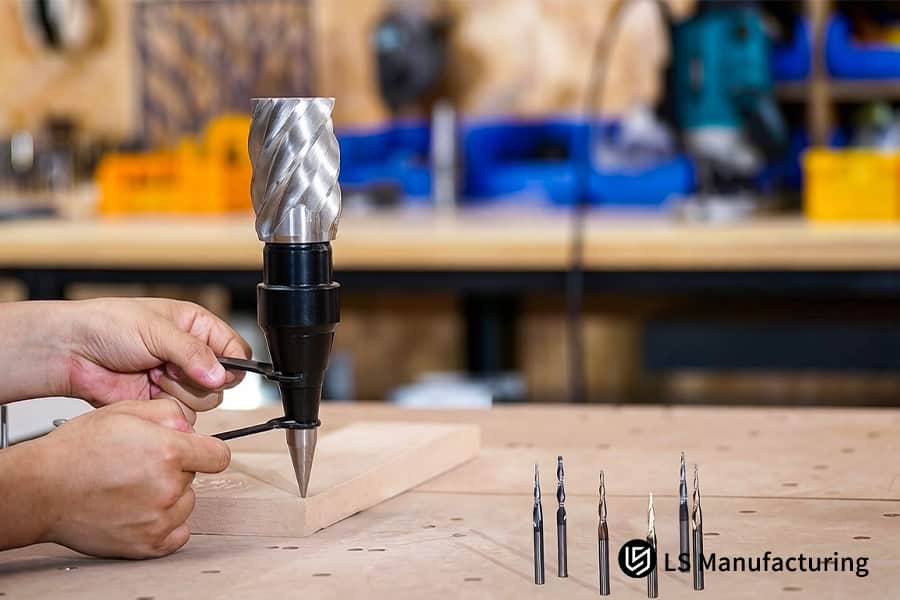
Figure 3: A CNC machine cuts 6061 aluminum with a carbide taper bit for CNC milling for high tolerance bits in aerospace brackets.
What Defines The Excellence Of High Tolerance CNC Milling Services In Aerospace Applications?
Parts used in the aerospace industry must endure severe temperature fluctuation and vibration without breaking. The hallmark of outstanding high tolerance CNC milling services capabilities can thus be said to lie in a methodology based on data that seeks to control stresses and variances from the very beginning.
Proactive Management of Raw Material Stress Signatures
Residual stress mapping through non-destructive testing of the alloy stock is the first step. A tailored roughing strategy along with thermal stabilization is then designed based on the particular stress pattern. This preparatory treatment eliminates the stresses prior to finish machining, thereby creating a stable workpiece base for all future aerospace CNC milling operations.
In-Process Metrology for Real-Time Geometric Correction
The system utilizes on-machine probing to detect crucial dimensions of parts following the semi-finishing operations. It then contrasts the readings with those from the nominal model and computes micro-corrective adjustments for the toolpaths during finishing operations. Closed-loop corrections in such a manner consider the residual part deflection and tool wear in real-time and are essential in guaranteeing the required geometric precision of aerospace engineering components.
Statistical Process Control (SPC) as a Real-Time Quality Gate
Full Lot SPC entails taking 100% measurements of key dimensional characteristics of the initial piece with sampling done after that. CPK data obtained are immediately computed and a value above 1.33 becomes the requisite process gate to permit further production processing. It therefore turns our high tolerance CNC milling services into an effective quality management process.
Early-Stage DFM to Eliminate Operational Stress Risers
Our engineers participate in the design phase by evaluating potential stress concentrations in part geometry. We make recommendations regarding improvements needed in fillets, transitions and positioning to optimize stress flow. Our high-stability CNC milling technology provides product reliability not just from its ability to manufacture it but also from its durability from fatigue failure while in operation.
In essence, it means that excellent results will come about through the practice of precision engineering. We ensure this by being proactive in managing the condition of the materials; adjusting during the manufacturing process using metrology; and verifying after completion through statistical methods. Such high engineering control standards allow us to have the necessary CPK data expected of aerospace engineering. Thus, we offer the finest CNC milling services available.
How Does Taper And Saddle Bit Milling Services Integration Reduce Total Manufacturing Costs?
For some applications, there will be a conflict between precision and efficiency in hole making because both can be done using one machine. By integrating our taper and saddle bit milling services, the conflict can be solved, since the saddle bit creates a precision hole and the taper bit enlarges the hole rapidly. Process integration in such a case emphasizes time savings not considered value added and saves money for you:
Strategic Tool Selection and Role Definition
- Saddle Bit for Precision Piloting: The saddle bit design ensures precision, alignment, and drilling of a pilot hole without any deviation from the cutting edge.
- Taper Bit for High-Efficiency Roughing: Afterward, the taper bit widens the hole effectively with good chip removal performance.
- Defined Operational Scope: The operation scope of the process focuses on making each tool function at its best capacity, which is critical in our custom CNC milling for taper bits.
Optimized Machining Parameters for Each Phase
- Pilot Hole Cycle: The saddle bit functions under precise control by maintaining low feed rate for precise positioning of the hole.
- High-Speed Roughing Cycle: The taper bit operates under maximum speed and feed rate, aiming for volume efficiency.
- Parameter Synergy: This combination ensures optimal positioning and maximum volume cut, which leads to cost reduction in high-efficiency CNC milling.
Seamless Process Integration and Automation
- Lights-Out Production Enablement: Once the pilot hole has been secured, the subsequent roughing process will proceed without a hitch, and will therefore be automated.
- Uninterrupted Execution: The process will run continuously through only one setup using ATC without having to manually intervene at each stage.
- Predictable Tool Life: Both tools carry out their designated tasks very well; thus, predicting tool life becomes easy.
Quantifiable Outcome: Cycle Time and Cost Analysis
- Cycle Time Reduction: The cycle time will be reduced by 25%, compared to the conventional method, because of the absence of delays during pilot hole production and maximized roughing.
- Total Cost Impact: The savings in time reduces the cost of machining. Reduced scrap due to poorly aligned holes and increased tool life add up to make more cost reduction.
- Technical Validation: This approach is proven effective on parts such as hydraulic blocks, allowing perfectly aligned cross-holes, which are necessary for advanced CNC milling of complex parts while reducing the time required for production.
This paper outlines our strategy for an engineering approach. Cost reduction is attained through the disassembly of the entire machining process and the optimization of each step, which requires the use of the right tool for each stage. Intelligent process integration, which is demonstrated by our taper and saddle bit milling services, reflects our approach to high-efficiency CNC milling and is achieved through radical redesign of complex drilling procedures.
Why Is Custom CNC Milling For Taper Bits The Key To Achieving Zero Burrs In Medical Plastics?
One major concern is to avoid the formation of burrs since they affect the quality of these products and render them incompatible with biocompatible conditions. The solution lies in using our custom CNC milling for taper bits, which ensures that there are no burrs from the start. This paper highlights the exact configuration required to attain zero-burr cleanroom CNC milling of medical grade machining products.
| Aspect | Our Solution (Process Implementation) | Key Result / Specification |
| Custom Tool Geometry | Manufacturing bits with smooth, sharp cutting edges and proper relief angles for specific materials. | Geometry ensures a clean shear cut, avoiding tearing of the material and plastic deformation of edges. |
| Thermal Management via Parameters | Using a precise feed rate (e.g., 0.05-0.12 mm/revolution) to manage chip load and cutting speed. | Heat dissipation is achieved, ensuring chips are expelled before melting; essential for cleanroom CNC milling. |
| Integrated Process Design | Designing optimal tool paths to ensure chips move away from the machined part. | Parts can be inspected immediately after machining, meeting zero-burr CNC milling requirements. |
| Validation & Documentation | Conducting 100% visual examination and testing according to cleanliness specifications (e.g., USP <788>). | Demonstrates that the burr-free process is validated, minimizing validation efforts on behalf of the customer. |
This technique mitigates burr issues right from the start by using specially made custom CNC milling for taper bits that combines accurate geometrical shapes with tight thermal controls. The methodology is what sets us apart with respect to our CNC milling services, offering precision medical CNC milling with an output that is already qualified to be medical grade machining quality upon delivery. This eliminates any need for deburring and saves time and resources on validation processes.
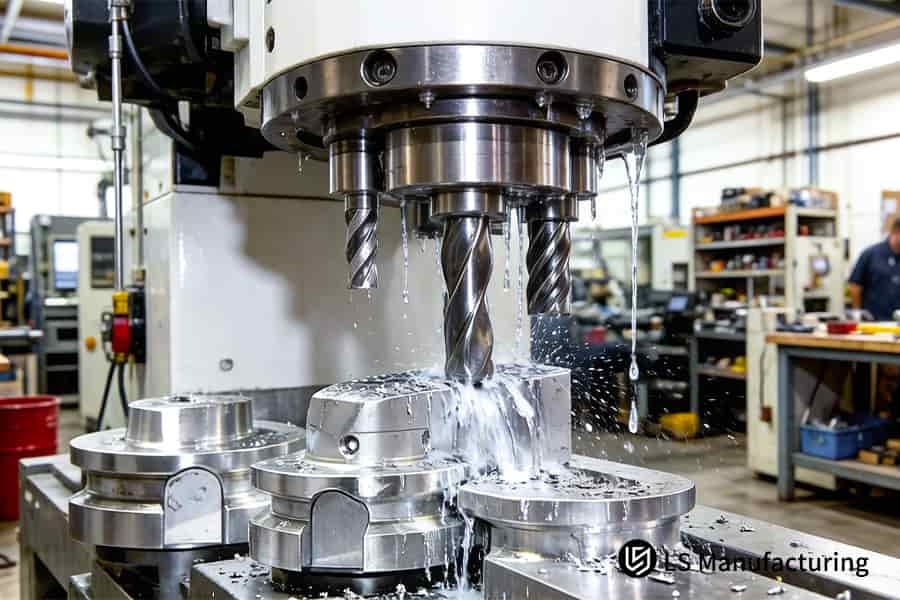
Figure 4: A five-axis CNC machine mills 6061 aluminum engine mounts with coolant for aerospace assembly applications.
Can CNC Milling For High Tolerance Bits Mitigate Material Hardening Risks During Mass Production?
During mass production of reactive materials such as titanium TC4, it is tool wear that leads to the problem of work hardening which poses a challenge to manufacturing consistency and accuracy. We are able to overcome this obstacle with the use of CNC milling for high tolerance bits which incorporates wear compensation and tool change prediction in a closed loop process:
Real-Time Tool Wear Compensation via On-Machine Metrology
In-cycle probing is used to determine the effective cutting geometry of the tool following key machining operations. Offsets of the tools are adjusted accordingly based on detected flank wear, with an upper limit of 0.015 mm. Maintaining the desired chip load through constant offset adjustment avoids the rubbing and pressure that cause work hardening, a necessary condition for successful titanium machining.
Data-Driven Predictive Tool Change Protocol
We take our process further than predefined timelines through the assessment of wear trends in real time. The tool replacement process is scheduled automatically once wear reaches a certain level, say 0.02mm, to avoid operating in a highly worn state. This strict tool wear management technique eliminates excess heat formation responsible for hardening, thus maintaining reliability during high-volume CNC milling operations.
Dynamic Process Parameter Adjustment for Stable Cutting
In addition to geometric corrections, the machine also performs micro-feeding rate adjustments using spindle load monitoring in real-time. If increasing loads indicate that the tool is coming into contact with a hard surface, the rate is momentarily decreased to minimize additional heating. Such adaptive technology is key to the precision CNC milling services offered, which ensure constant cutting force and high-tolerance CNC milling.
Closed-Loop Quality Assurance and Process Verification
The method used leaves a paper trail connecting all data related to compensation and changes in tools used in relation to every manufactured batch. Verification is carried out using post-production metrology of samples to prove surface and dimensional integrity has been achieved.
This loop-based quality assurance sets the benchmark for excellence in CNC milling for high tolerance bits used in mission-critical CNC milling applications. This report provides an outline of a dynamic system that controls the manufacturing process and prevents the occurrence of work hardening. This is done by ensuring continuous wear compensation, predictive tool replacements, and adaptive control systems. Tool wear management is therefore guaranteed throughout, ensuring all components in the batch remain flawless.
LS Manufacturing: Custom CNC Milling Solutions For Medical-Grade, High-Precision Fluid Channels
Here we will describe how LS Manufacturing solved a manufacturing problem faced by a leading OEM of medical devices. Being confronted with a yield of only 68% in making a precision-milled aluminum part because of walking of twist drills while drilling angled ports, the OEM found itself in jeopardy. However, our custom CNC milling solutions involving special tooling and digital compensation made the problem a thing of the past:
Client Challenge
Our client needed help in solving the problem of a relatively low yield rate in making a part used in their products. Namely, there was a need to manufacture an aluminum fluidic manifold made from 6061-T6 aluminum alloy. This part required making holes angled 45° relative to the main hole, with positional tolerance being ±0.05 mm. The use of ordinary twist drills caused problems such as significant walking, with a resulting average displacement of 0.15 mm.
LS Manufacturing Solution
The milling process involved the application of a two-step, tool-specific custom CNC milling operation. In the first stage, we used a saddle bit to create an accurately located pilot hole and remove initial walk issues. For deeper holes that exceeded 20 mm, we used a Taper Bit equipped with 70-bar internal coolant to enable effective chip removal. The key component of this solution is digital spindle phase control to deliver rotational precision up to 0.002 mm TIR.
Results and Value
The solution raised the first pass assembly yield ratio from 68% to 99.7%. The solution also resulted in a better finish of the port's surface by 2 levels, e.g., Ra 0.4 µm. Eliminating any need for manual intervention saved the client $85 per each end-product unit. As a result, LS Manufacturing became the only strategic manufacturing partner for the customer on a worldwide basis due to integrated CNC milling services.
This case exemplifies engineering-led problem-solving. We addressed the root cause—tool instability on complex geometries—through physics-based tool selection and sub-micron digital control. This technical authority in medical device CNC milling transforms complex challenges into reliable, cost-advantaged production, establishing LS Manufacturing as the definitive partner for mission-critical manufacturing.
Eliminate 0.15mm sloped entry drift. Achieve 99.7% yield for fluidic manifolds with saddle and taper bit precision.

FAQs
1. Why choose LS Manufacturing for precision CNC milling services instead of local machine shops?
We not only possess precision machining capabilities accurate to ±0.005mm, but we also provide upfront DFM (Design for Manufacturability) reviews and comprehensive CPK data reports throughout the entire process, ensuring you receive consistent, verifiable quality.
2. What is the main difference between a taper bit and a saddle bit regarding my CNC milling services quote?
Taper bits specialize in efficient chip evacuation and vibration suppression for deep holes, while saddle bits serve as the core guarantee for self-centering on complex surfaces; our quotes include the optimal selection of these specific processes.
3. How quickly can I receive a quotation for high-tolerance CNC milling services?
Please click the "Get a Quote" button below to upload your STEP drawings; the LS engineering team will provide a detailed proposal—including a cost breakdown and manufacturing feasibility analysis—within 12 to 24 hours.
4. Does LS Manufacturing provide material certifications for custom CNC milling of taper bits?
Yes, for every batch order, we provide original Material Test Reports (MTRs) as well as third-party quality inspection reports, ensuring that the raw material properties comply 100% with your regulatory and compliance requirements.
5. Can your taper and saddle bit milling services handle exotic alloys such as Inconel 718?
We utilize specialized coated cutting tools designed for hard alloys, combined with a 70-bar high-pressure through-spindle coolant system, to effectively address the challenges of work hardening and chip evacuation associated with machining specialty alloys.
6. Is there a Minimum Order Quantity (MOQ) for your precision CNC milling services?
We do not impose a strict MOQ; we support the entire product lifecycle—from single-unit R&D prototypes to mass production runs exceeding 10,000 units—aiming to help you accelerate your project's iteration cycles.
7. How do you ensure the intellectual property (IP) security of my designs during the quoting process?
We strictly enforce Non-Disclosure Agreements (NDAs) and have deployed a military-grade data isolation system to ensure that your R&D assets remain absolutely secure throughout both the inquiry phase and the entire machining process.
8. Why is CNC milling for high-tolerance bits more cost-effective for large-scale production?
By optimizing tool life prediction and fully automating our cutting logic, we are able to reduce costs associated with unplanned downtime by over 20%, thereby directly offering you more competitive unit pricing.
Summary
In precision manufacturing, choosing between a taper or saddle bit reflects a supplier’s respect for physics principles. LS Manufacturing applies digital monitoring and in depth DFM assessments to turn complex tool selection into measurable gains in efficiency and quality. Partnering with a provider that deeply understands materials, mechanics, and application contexts ensures the smooth delivery of your high tolerance parts and speeds your time to market.
Do not let improper tool selection slow down the pace of your innovation. Your precision designs deserve to be replicated with physical perfection. Click the "Get a Quote for Precision Machining" button below right now to upload your 3D design files. LS Manufacturing’s senior application engineers will provide you with a complimentary DFM manufacturability review and a tailored toolpath optimization report, helping you secure a highly competitive, direct-from-factory CNC milling solution within just 24 hours.
"Tired of high scrap rates due to chatter and deflection? Contact LS Manufacturing for a free DFM evaluation and see how our high-tolerance CNC milling services can optimize your OEM project costs."
📞Tel: +86 185 6675 9667
📧Email: info@lsrpf.com
🌐Website: https://lsrpf.com/
Disclaimer
The contents of this page are for informational purposes only. LS Manufacturing services There are no representations or warranties, express or implied, as to the accuracy, completeness or validity of the information. It should not be inferred that a third-party supplier or manufacturer will provide performance parameters, geometric tolerances, specific design characteristics, material quality and type or workmanship through the LS Manufacturing network. It's the buyer's responsibility. Require parts quotation Identify specific requirements for these sections.Please contact us for more information.
LS Manufacturing Team
LS Manufacturing is an industry-leading company. Focus on custom manufacturing solutions. We have over 20 years of experience with over 5,000 customers, and we focus on high precision CNC machining, Sheet metal manufacturing, 3D printing, Injection molding. Metal stamping,and other one-stop manufacturing services.
Our factory is equipped with over 100 state-of-the-art 5-axis machining centers, ISO 9001:2015 certified. We provide fast, efficient and high-quality manufacturing solutions to customers in more than 150 countries around the world. Whether it is small volume production or large-scale customization, we can meet your needs with the fastest delivery within 24 hours. choose LS Manufacturing. This means selection efficiency, quality and professionalism.
To learn more, visit our website:www.lsrpf.com.