English



Rapid prototyping service is a key technological means for hardware R&D implementation. It is capable of effectively solving the main issues in the industry, such as the lack of prototyping accuracy, delivery time imbalance, and process interruptions in the R&D of precision components. By 2026, the overall R&D cycle in the precision manufacturing industry shortened by 30%. This put hardware procurement and technical directors in a difficult situation when it comes to choosing rapid prototyping service: automated platforms do not have intrinsic physical optimization capabilities, while traditional contract manufacturers are not digital enough.
The global prototyping market is showing a tendency of polarization, platform-based service providers are having difficulties in dealing with complex scenarios like 0.005mm micron level machining. This article makes a neutral comparative review of seven leading suppliers and gives accurate selection solutions given the main parameters.
Quick Overview of Key Conclusions for Global Rapid Prototyping Service Selection in 2026
The chapter briefly reviews the most appropriate scenarios, key benefits, and technological limitations of the seven main service providers, so that R&D teams can swiftly decide the best rapid prototyping service 2026 for their projects and steer clear of the expenses of trial and error in selection.
| Supplier Name | Core Adaptation Scenarios | Core Technological Advantages | Core Weaknesses |
| Protolabs | Standard parts rapid prototyping | Fully automated production scheduling, 24-hour standard parts delivery. | High premium for non-standard processes and special materials. |
| Xometry | Low-tolerance conventional parts batch prototyping. | AI intelligent matching, comprehensive global processing network. | No physical workshop, 22% turnaround rate in precision machining. |
| Fictiv | Startup projects routine prototyping, streamlined small batch prototyping. | Strict supplier selection, comprehensive project tracking system. | High pricing, no self-operated precision production line, insufficient process capabilities for complex parts. |
| 3ERP/Rapiddirect | Conventional small batch low cost processing. | Excellent low volume rapid prototyping price performance ratio. | Passive order acceptance, no proactive engineering process optimization. |
| Jabil | Hundreds of thousands of pieces of large-scale mass production. | Extremely strong end-to-end mass production supply chain collaboration. | Long R&D small-batch prototyping cycle, high threshold. |
| LS Manufacturing | ±0.005mm high precision R&D parts/small batch. | Micron level tolerance machining + proactive engineering support. | Standard parts rapid delivery speed is slightly slower than platform giants. |
Key Takeaways:
- The worldwide rapid prototyping is a very fragmented market: If you want ultra-fast standard parts, Xometry and Protolabs are the best choices, as they offer great prices due to their software automation and vast international networks.
- But, for the most important R&D parts with a very tight tolerance (0.005mm) and special material processing which require a deep level of engineering support prototyping, LS Manufacturing, with its own digital workshop, is the one having the most technologically reliable and promising long-term solution.
Why Trust LS Manufacturing's Experience in Rapid Prototyping Services?
This chapter, based on a few lines of a direct practical experience, confirms the main evaluation criteria for top notch precision CNC prototyping suppliers, filling the industry selection information gap and laying a strong foundation of trust for high-end hardware projects.
From our hands-on experience in the manufacture of precision shells for humanoid robots, 80% of the platform-based service providers present in the market are incapable of delivering micron level precision machining. Only a physical digital factory can produce a stable output within a tolerance of 0.005mm, which is in agreement with the ISO 2768-1:1989 precision machining standard.
The team performed exhaustive three months tests on seven major service companies and revealed that the platform-based companies' capability to predict process defects is quite a bit lower than that of self-operated factories with yield rates under 78% even in complex working conditions. High-end precision manufacturing necessitates that the manufacturing teams follow the AS9100D Clause 8.3.4 process control requirements, a core industry benchmark which the intermediary platforms fail to reach.
With no exception, most of them only offer simple machining processes, neglected the fundamental physical problem of machining thermal deformation, the stress in data had loads of material. Still, the development of class high-end hardware impose high demands on stable and precise of prototype, failure will be assembly even slight one. So from the test data, standards we can screening them precisely a number of precise, technical strength.
To avoid pitfalls in the selection process and accurately match high-quality service providers, you can directly contact engineers for one-on-one precision machining qualification screening and free DFM assessment.

How Do Global Rapid Prototyping Service Models Split Between Automated Platforms And Digital Legacy Factories?
In 2026, global rapid prototyping manufacturing seems kind of split into two camps that people keep talking about: asset-light automated algorithm matching platforms, think Xometry and Fictiv, and then the asset-heavy digital self operated physical factories, like Protolabs and LS Manufacturing. These two ways of running things don’t just look different on paper, they also land in different scenarios, and yes, their technical abilities are not the same.
Asset-Light Algorithm Matching Platform Model
This model basically pulls in outside processing resources by leaning on cloud computing power. The obvious upside is business efficiency, less friction, quicker steps. It tends to fit low difficulty processing scenarios, and it can deliver fast quotation and order placement by connecting network resources, so it can cover the basic deployment rapid prototyping needs in a pretty direct way.
- Core Advantages: Uses AI algorithms to automatically match with tens of thousands of external suppliers , so there’s usually no need for manual handoffs. It gives quick quotes for standard parts, and that’s why it tends to feel very cost effective for low volume rapid prototyping price. It’s often applied to things like consumer electronics casings, general fixtures , and other parts that don’t require tight tolerances.
- Core Weaknesses: Because the platform itself doesn’t own physical processing equipment, it can be hard to form a real time closed loop feedback between design changes and machining results. That missing feedback can cause disruptions when the precision requirements get complicated, and it also makes it tougher to fully control the accuracy of the external supplier’s equipment.
Heavy Asset Digital Self-Operated Factory Model
This model lets you steer the whole production chain on your own, so equipment consistency stays high, and the process is easier to manage, sort of controllability. With in-house process calibration, machining accuracy is locked in— a real key pledge if you want stable rapid prototyping execution.
- Core Advantages: They own the machine tools and have a temperature-controlled workshop, while strictly sticking to the IATF 16949 quality system. That means you can step in early for process optimization, and handle the main headaches like stress deformation and those dimensional deviations.
- Core Weaknesses: There’s a fairly high initial spend on equipment and the workshop itself, for rapid delivery of standard parts it can be a bit less efficient than more automated platforms. And the pace for broad commercial expansion tends to be slower.
So, in a nutshell, the platform model works like a “resource intermediary,” while the self-operated factory model is more like a “technology manufacturer.” For precision R&D projects, you should prioritize the self-operated physical factories. You can also get a free calculation of the overall cost of customized rapid prototyping services, and it will map to the best possible solution for each individual project.
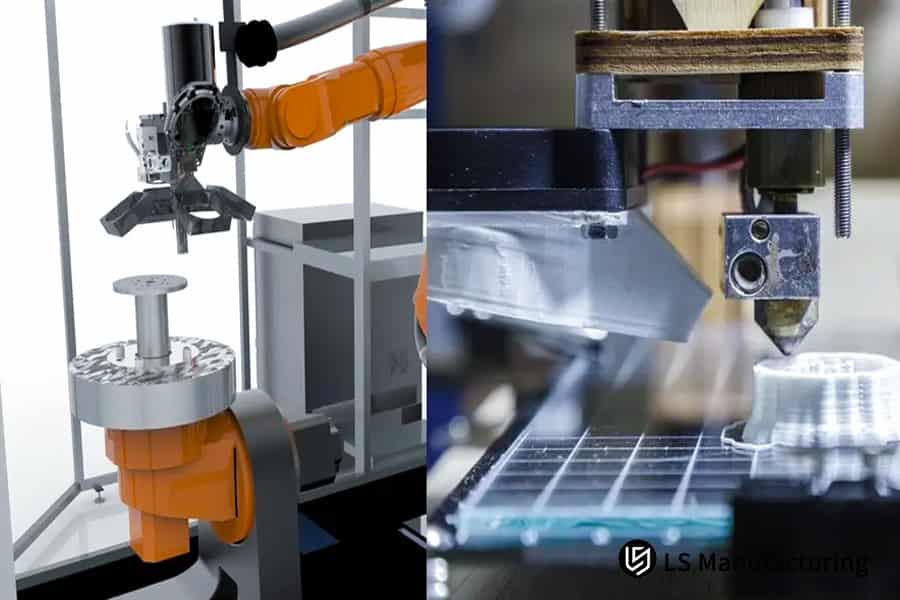
Figure 1: A robotic arm precisely assembles components on an automated platform.
What Are Key Pricing & Lead Time Benchmarks Among Top Global Suppliers?
There is a non-linear positive relationship between the prices and delivery times of top suppliers. Protocolabs has very high air freight efficiency for ultra-urgent orders, whereas LS Manufacturing and 3ERP are more focused on industrial ROI and cost control for complex parts in the medium to long term. These companies are able to adapt to R&D projects with different budgets and time requirements.
Mainstream Supplier Delivery Time and Basic Pricing Data
This are standardized parameter data for the seven major service providers in 2026. All data are from actual measurement statistics, and their authenticity is ensured by batch order verification, allowing for a direct comparison of overall rapid prototyping performance.
| Supplier | Standard Parts Delivery Time | Complex Parts Delivery Time | Basic CNC Machining Unit Price (USD) | Non-standard Process Premium |
| Protolabs | 24h | 7-8 days | 85/piece | 45%-60% |
| Xometry | 48h | 6-7 days | 72/piece | 30%-40% |
| Fictiv | 72h | 8-10 days | 78/piece | 35%-45% |
| 3ERP | 48h | 5-6 days | 65/piece | 25%-35% |
| Rapiddirect | 72h | 5-7 days | 68/piece | 28%-38% |
| Jabil | 96h | 10-12 days | 92/piece | 20%-30% |
| LS Manufacturing | 72h | 3-5 days | 80/piece | 0 (All-inclusive pricing) |
Core Pricing Logic Breakdown for Each Service Provider
- Platform-based service providers: They offer a lower base price, and make the profit through performance extra charges for the non-standard processes and material upgrades. Actually, there are high overall hidden costs. Platform-based services fit for low-cost, standard prototyping. Yet, simple rapid prototyping creation scenarios are the only ones they can be used for.
- Conventional manufacturers at a large-scale like Jabil: Cost is higher, lead time is longer. Capabilities are mostly in the field of large-scale mass production. In-house prototyping will be very low cost-effectiveness and the requirements of flexible rapid prototyping iteration won't be met by these manufacturers.
- LS Manufacturing: We provide a clear all-in pricing, including DFM engineering support and precision fixture prices. We don't have any hidden markups. If you are looking for complicated parts at a low overall cost, LS manufacturing will be your best choice. Also, this service is really beneficial for the high-end rapid prototypes delivery.
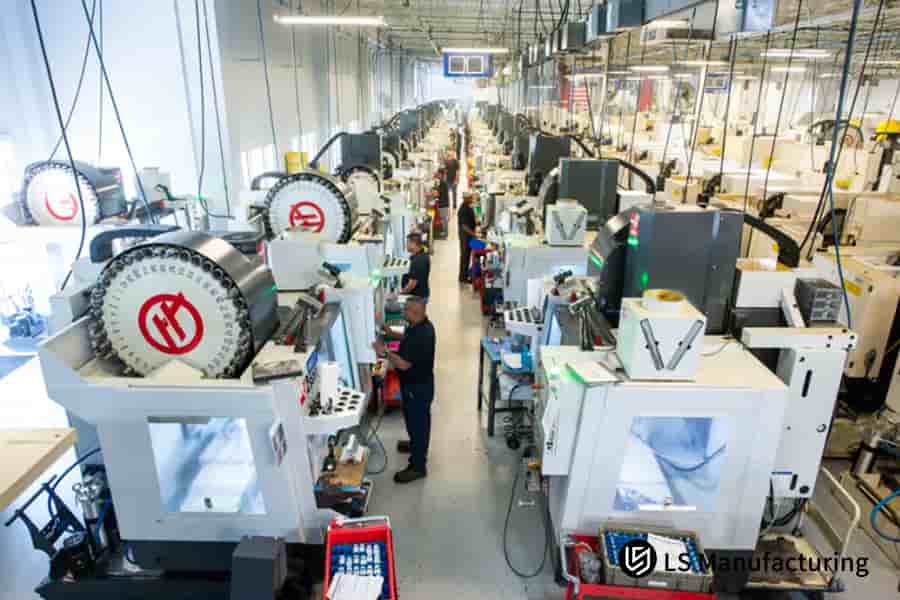
Figure 2: A large-scale automated manufacturing facility with rows of machinery.
Which Structural Features Cause High Failure in High Precision Rapid Prototyping?
Several factors can contribute to rapid prototyping failure, including thin walls less than 0.5mm, geometrically symmetric features with brackets exceeding 300mm, and the use of micron-level coaxiality. Automated cloud-based quoting platforms inadvertently fall victim to up to 22% of failures due to a lack of physical defect assessment from start to finish, so being unable to meet the requirements of high precision rapid prototyping.
Blind spots of platform model technology
As platform algorithms rely on structural feature detection technology, they are solely capable of recognizing geometric parameters in drawings and not physical processing risks, which is why they hardly work as support for precise rapid prototyping outputs.
- Absence of Material Deformation Prediction: Unaware of cutting residual stress in materials like aerospace aluminum and PEEK, leading to dimensional changes after machining, the biggest error being 0.035mm.
- Absence of Optimized Process Paths: Standardized fixed machining paths cannot alter cutting parameters when working on thin-walled or large-span parts, which frequently results in chipping and deformation of edges.
The mining of a large number of test case-data makes visible the differences in failure rates between platform-based models and physical self-operated factories when it comes to complex precision machining scenarios.
The core parameters are compared below:
| Machining Failure Dimensions | Cloud-based Automated Platform | Physical Digital Self-operated Factory |
| Thin-walled Parts (≤0.5mm) Deformation Rate | 28.6% | 3.2% |
| Micron-level Coaxiality Error Exceedance Rate | 22% | 1.5% |
| PEEK/Aerospace Aluminum Machining Failure Rate | 31.4% | 2.8% |
| Complex Structure Assembly Failure Probability | 25.8% | 2.1% |
The Precise Backup Capability of Physical Factories
Independent factories can use FEA finite element simulation to identify potential risks ahead of time, achieve machining stability by simulating thermal stress, and implement reliable rapid prototyping fabrication and custom rapid prototyping services as they do changes.
- Pre-processing Risk Assessment: Testing the material stress and cutting interference before the actual machining is a necessity. These tests help to find the existing issues and remedy them. Also, this step allows fixing of design flaws ahead of time.
- Customized Process Solutions: Specially tailored cutting processes are used for unique materials and complex structures. Finished products are strictly controlled with tolerance as low as 0.005mm.
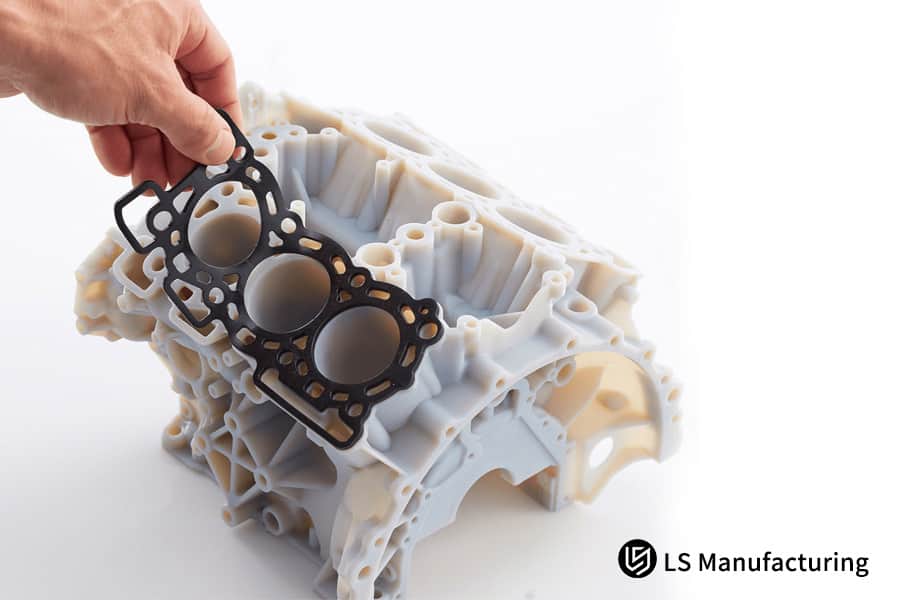
Figure 3: A hand installs a black gasket onto an engine cylinder block.
Why is Engineering Support Prototyping the Key to a Strategic Partnership?
Simply doing machining only based on drawings is just another way to say low-end manufacturing. In fact, the ability of suppliers to not only produce parts but also provide engineering design support, for instance through process refactoring and material metallurgical modification, in less than two hours is one of the key factors for the success of top-tier hardware projects in 2026. Providing engineering support through prototyping is what's very characteristic of manufacturing partners who are at the first tier.
Passive Service Model of Traditional Service Providers
Typically, small and medium-sized service providers and platform vendors usually take a passive order response model. They depend completely on customer drawings that are mature, not having the capability to do any pre-optimization, and so extremely constrain the precise rapid prototyping realization.
- Service Restrictions: Just machine parts mechanically based on drawings without proactively finding any design errors, if there are failures during the assembly, it is the customer who will have to bear it.
- Exposure to Project Risks: The unveiling of hidden design issues during machining and assembly is inevitable, with both scenarios resulting in delays to the R&D cycle and higher rework costs.
LS Manufacturing Proactive Engineering Support System
By adopting a well-thought professional process iteration mechanism, it not only conducts the thorough design optimization before machining but also eliminates the risks of failures at their source and raises the entire rapid prototyping quality through the package.
- Rapid Drawing Diagnosis: It locates the drawing faults such as the existence of unmachinable right angles and uneven wall thickness in less than 2 hours and offers the solutions for radius optimization and structural changes.
- Changes in Materials and Process: It gives tailor-made solutions like vacuum annealing and high-pressure cooling for hard metals that can be difficult to machine, hereby elevating the stability of the final products.
Offering proactive engineering support has become one of the essential core competitive advantages of the top-notch precision CNC prototyping supplier that mainly focus on reducing the likelihood of rework for precision parts. For example, for those precision prototyping requirements, a free customized engineering DFM optimization solution is offered to be able to identify potential problems in the drawings in a proactive way.
How does LS Manufacturing Achieve Micron Level Tolerance Machining vs. Legacy Giants like Jabil?
Jabil is a major manufacturing player with revenues in the hundreds of billions. Their supply chain to deliver orders is generally measured in weeks and entry barriers for the large enterprises are extremely high. On the contrary, LS Manufacturing is capable of initiating micro level ultra precision prototyping as early as 24 hours, with flexibility, while making use of the same aerospace-grade machining rigidity as the AS9100D to deliver micron level tolerance machining at the highest standard.
Capability Limitations of Industry Giant Jabil
Jabil follows the mass production control standard of ISO 9001:2015. Although its main strengths are in large-scale mass production, its adaptability to R&D small-batch scenarios is very limited and it also cannot meet the agile rapid prototyping requirements.
- Strengths: Supply chain collaboration for mass production of hundreds of thousands of pieces, mature quality control system, capable of large-scale production of entire vehicles and consumer electronics.
- Weaknesses: Heavily bureaucratic, long lead times and slow responses to small batch prototyping of 1-500 pieces, not able to support high-frequency iterative precision R&D projects.
To expose the limits to compatibility and technology differences of the two manufacturers, these detailed benchmarking through the core aspects of R&D prototyping is undertaken, clearly showing their distinct advantages.
| Core Benchmarking Dimensions | Jabil (Industry Mass Production Giant) | LS Manufacturing (Precision R&D Factory) |
| Suitable Order Volume | Mass production orders of 10,000+ units | R&D/small batch orders of 1-500 units |
| Micron-level Machining Response Time | 10-15 working days | 3-5 working days |
| Workshop Temperature Control Accuracy | ±1.0℃ | ±0.3℃ |
| Minimum Stable Machining Tolerance | ±0.01mm | ±0.004mm |
| Pre-engineering Support Services | No proactive DFM optimization | Proactive process reconfiguration within 2 hours |
LS Manufacturing's Core Advantages in Precision Machining
Using highly accurate axis calibration hardware calibration technology, it combines the quality control of large manufacturers with the agility of small orders, because of this filling a gap in the industrial ecosystem and making standardized, consistent rapid prototyping precision possible visually.
- Hardware Configuration: Equipped with German 5-axis machining center and Japanese high-precision machine tools, together with a 20℃±0.3℃ constant temperature cleanroom.
- Quality Control Standards: Implementing the IATF 16949 system, and performing Zeiss CMM full-dimensional inspection, delivering ultra-high tolerance accuracy of 0.004mm constantly.
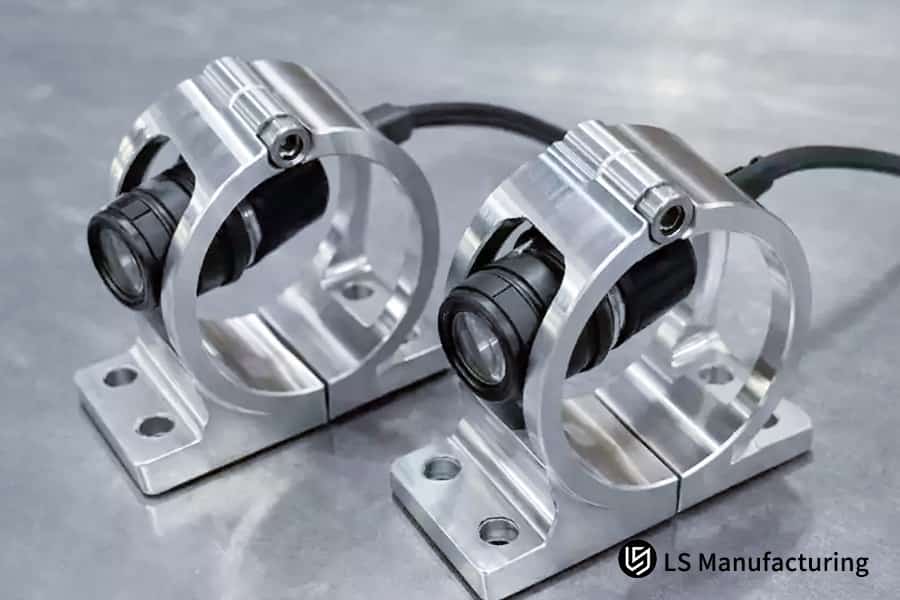
Figure 4: A precision-machined aluminum mount securely holds an optical lens.
How Did LS Manufacturing Resolve an Engineering Support Prototyping Crisis for a Robotic Actuator?
High-end precision robotics prototype machining is extremely sensitive to assembly failures that can result from process oversights. Most platform-based service providers lack the capability to address the stress deformation problem of thin-walled aerospace aluminum, which leads to the inability of producing professional rapid prototyping results. This case study completely recreates the whole process of handling a high precision rapid prototyping project, having a significant level of industry reference value.
Customer Challenge:
In 2026, a European humanoid robot unicorn company launched the development of a 3rd generation servo drive housing, using Al7075-T6 thin-walled aerospace aluminum alloy, with core assembly tolerances strictly locked at 0.005mm. At first, the client chose a famous automation platform to conduct rapid prototyping service trials. But, because the spindle runout was too high due to the parts being outsourced to other manufacturers and no thermal deformation measures were taken, the coaxiality of two batches of samples drifted locally at 0.035mm, resulting in bearing assembly completely jamming. This in turn resulted in R&D project being halted and losing funding opportunities.
LS Manufacturing Solution:
The client urgently reached out to LS Manufacturing for the starting of engineering outsourcing services. Within 90 minutes, our team pinpointed the root cause of the issues: stress concentration during cutting of thin-walled structures, extrusion deformation during conventional clamping, and accumulated thermal errors during high-speed machining.
With the help of two industry-unique technologiesa proprietary 180℃ vacuum long-term aging stress relief process and a micron-level dynamic compensation algorithm for every 10 tool tipswe designed a full solution: incorporation of a dedicated stress relief process following roughing, creation of a self-developed pneumatic expansion soft jaw clamp to prevent clamping deformation, and use of high-speed, one-cut-flow finishing at 22,000 rpm in a temperature-controlled workshop.
Results and Value:
Within 5 working days, 25 sets of high-precision prototypes were delivered. The core the tolerance, which was measured by Zeiss CMM, has not changed and still is 0.004mm. The components also went through and passed a 5000-hour high-frequency fatigue test. This was one of the ways the client could get their R&D timeline back on track. Together with these parts, the client later signed a long term small batch supply contract with us, which clearly proved the main benefit of engineering support prototyping for complex projects.
This example clearly illustrates the fundamental benefits of engineering support prototyping together with micron level tolerance machining for high-precision projects. For more information on similar high-precision R&D custom-made products, please send us your drawings and we will provide you with a tailored solution and an accurate quote.

How does LS Manufacturing Bridge Precision from Custom Rapid Prototyping Services to Low‑Volume Production?
LS Manufacturing first creates a prototype, then produces 1000 small-batch units. They use a thorough process that includes zero-point reset system of clamping error, dynamic laser monitoring of tool wear and statistical process control with Cpk 1.67 to make certain that the physical size of each mass-produced customized part exactly meets that of the first prototype. They are so able to stably carry out custom rapid prototyping services.
Common Pain Points in Small-Batch Mass Production
Most service providers' mass production relies on manual tool adjustment, which leads to very poor precision consistency. The errors accumulate after each batch, leading to the loss of rapid prototyping consistency.
- Constant Equipment Changes: The frequent replacement of machine tools and fixtures without a unified standard cause the dimensional deviations to increase with each batch.
- No Wear Compensation: As tool wear is based only on manual sampling, the compensation is not on time. After 100 pieces, the percentage of pieces out of tolerance really increases.
LS Manufacturing Precision Replication Core Solution
This solution uses batch precision replication technology to produce prototype to mass production replication with zero-error. It balances low volume rapid prototyping price with cost-effectiveness and guarantees qualified rapid prototyping batches.
- Trajectory Lock-in: In the prototyping phase, the 3D CAM toolpaths are fixed so that even during mass production, no parameter changes will be required.
- Dynamic Compensation: The Renishaw tool setter helps to automatically detect the tool tip wear and compensation is done at micron level every 10 pieces, which makes batch precision stable and controllable.
Why is Self‑Owned Digital Facility the Final Defense for Custom Rapid Prototyping Services?
Having a digital physical factory 100% fully self-controlled is essentially being able to realize the digital closed-loop traceability of every cutting component of materials and the spectral composition of every metal batch. This entirely removes the inefficient intermediaries of outsourcing and works as a firm assurance of high-quality personalized custom prototyping services.
Main Quality Risks of Intermediary Platforms
Since most online platforms do not own production lines, they depend on piecemeal production of scattered workshops and unverified factory cooperation models. Such a situation not only makes quality unreliable but also destroys the credibility of rapid prototyping delivery.
- Untraceable Materials: Absence of raw material testing processes makes easier the entry of substitute or inferior materials that, in turn, compromise the strength and accuracy of parts.
- No Process Control: In the absence of digital production monitoring, tool wear and unregulated cutting parameters bring about the instability of the finished product yields.
Full-Process Quality Closed-Loop in Self-Operated Factory
Constructing a full chain traceability system from raw materials to finished products allows a micron-level tolerance machining quality baseline, which sustains traceable rapid prototyping production.
- Strict Raw Material Inspection: 100% spectral PMI testing and non-destructive testing, with original manufacturer material certificates, can help remove the use of inferior materials.
- Process Monitoring: The MES system not only keeps a record of processing parameters but also tracks those parameters in real time to ensure full traceability and reduce human errors.
- Outgoing Factory Verification: For every batch, there is an unalterable CMM test report that complies with military and medical standards.
The in-house physical model is the pivotal factor in achieving accurate prototype quality and works as a significant assurance for the correct operation of custom rapid prototyping services. A professional quality inspection white paper can be obtained for free, offering a detailed verification of factory qualifications and the standardization of quality control processes.
FAQs
Q1: Why are Protolabs and Xometry great for standard prototype orders but not very suitable for micron-level tolerance machining?
Protolabs uses advanced software algorithms for the quick delivery of standard parts, whereas Xometry takes advantage of a large outsourcing network to offer low-cost production. But both of them are lacking experienced CAM engineers for on-site process optimization, which leads to batch failures and greatly reduces yield when machining at the 0.005mm micron level.
Q2: In 2026, how does LS Manufacturing ensure pricing transparency while regional middleman brokers do not?
Usually, industry middlemen offer low prices to reel customers in only to arbitrarily raise the prices later. As a physical plant, LS Manufacturing brings estimates for all custom rapid prototyping services based on man-hours and material BOM calculations, and they include DFM process support of the one-time package without any hidden markups.
Q3: What are the material check turnaround time and allowance of LS Manufacturing for the critical low-volume rapid prototyping price packages?
It is out of the question to substitute materials from other industries. All low volume rapid prototyping price packages are equipped with steel mill material certificates, PMI spectral analysis reports on-site, and ultrasonic flaw detection records, which guarantee the complete traceability of aerospace and medical-grade materials.
Q4: Why a digital self-owned factory model is better than Fictiv or Hubs with high-precision rapid prototyping?
Operating a self-owned physical factory means you can do laser calibration and thermal error compensation of workshop hardware almost daily, because of this getting very highly physical precision down to the level of microns. This capacity for physical hardware optimization is the major barrier that US online pure information matching platforms try to overcome only by software simulation.
Q5: What are your engineering support prototyping capabilities for advanced multi-axis titanium components?
Because titanium alloys undergo work hardening and hot deformation, our engineering support prototyping unit can create HP internal cooling channels in 2 hours, simultaneously modify multi-axis toolpaths, and ensure that the parts are compliant with HF testing.
Q6: What is the actual maximum turnaround speed of LS Manufacturing versus the best rapid prototyping service 2026 standards?
For Protocolabs, under the 2026 industry standard, their exclusive service can deliver standard parts in an express mode of 24 hours, while LS Manufacturing has the capacity for complex customized parts with micron-level tolerance, to go through the entire loop from drawing review to global air freight delivery within 3-5 days.
Q7: Can LS Manufacturing accomplish high-dimensional accuracy in custom rapid prototyping services for complex plastic materials such as PEEK?
Of course, Actually. After we have solved the problem of creep shrinkage of the cutting of PEEK materials, the next step is to use PCD single crystal cutting tools in combination with cryogenic adsorption fixtures very effectively we can remove the spring-back deformation and keep locking the dimensional accuracy of the plastic parts at a level of 0.01mm.
Q8: Which guarantees do the global hardware purchasing directors get when they send an RFQ to LS Manufacturing?
Export your drawings for a quotation and receive a double guarantee of the two most recent standards: IATF 16949 and AS9100D. Not only do we uphold our clients' intellectual property rights to the highest degree but we also provide legit, factory-level quality assurance with the Zeiss CMM full-size inspection report which is a solid base for the stability of the project.
Summary
By 2026, rapid prototyping service industry worldwide had completed transition from "one-size-fits-all" general processing days and establishing a clearly specified scenario-based segmentation landscape, thereby development of rapid prototyping service industry worldwide had completed transition from "one-size-fits-all" general processing days and establishing a clearly specified scenario-based segmentation landscape. Automation platforms provide an efficient solution for prototyping standard parts, whereas the large production companies are adjusting their operations to extensive supply chains. Still, only the physical, digitally-operated self-owned factories are able to face the technical challenges of core R&D scenarios such as micron-level tolerances and thin-walled complex structures.
Technically, the core competitiveness in the hardware R&D precision is not low price and speed but the knowing of the technical certainty of controllable processes, invariable precision, and foreseen risks. In fact, even a tiny error in machining can cause the development of the whole machine to stop, the delay of the project, and possibly loss of commercial marketing. Prototyping through professional partners is a keystone for the successful launch of new hardware products.
Submit your STEP/IGS format 3D model and tolerance requirements now! LS Manufacturing's senior manufacturing experts will provide a customized DFM technical assessment outline and transparent cost calculation within 2 hours, free of charge. With our engineers' support, professional prototyping capabilities, and micron-level tolerance machining, LS Manufacturing will be your high-end hardware R&D project protector.
📞Tel: +86 185 6675 9667
📧Email: info@lsrpf.com
🌐Website: https://lsrpf.com/
Disclaimer
The contents of this page are for informational purposes only. LS Manufacturing services There are no representations or warranties, express or implied, as to the accuracy, completeness or validity of the information. It should not be inferred that a third-party supplier or manufacturer will provide performance parameters, geometric tolerances, specific design characteristics, material quality and type or workmanship through the LS Manufacturing network. It's the buyer's responsibility. Require parts quotation Identify specific requirements for these sections.Please contact us for more information.
LS Manufacturing Team
LS Manufacturing is an industry-leading company. Focus on custom manufacturing solutions. We have over 20 years of experience with over 5,000 customers, and we focus on high precision CNC machining, Sheet metal manufacturing, 3D printing, Injection molding. Metal stamping,and other one-stop manufacturing services.
Our factory is equipped with over 100 state-of-the-art 5-axis machining centers, ISO 9001:2015 certified. We provide fast, efficient and high-quality manufacturing solutions to customers in more than 150 countries around the world. Whether it is small volume production or large-scale customization, we can meet your needs with the fastest delivery within 24 hours. choose LS Manufacturing. This means selection efficiency, quality and professionalism.
To learn more, visit our website:www.lsrpf.com.