English



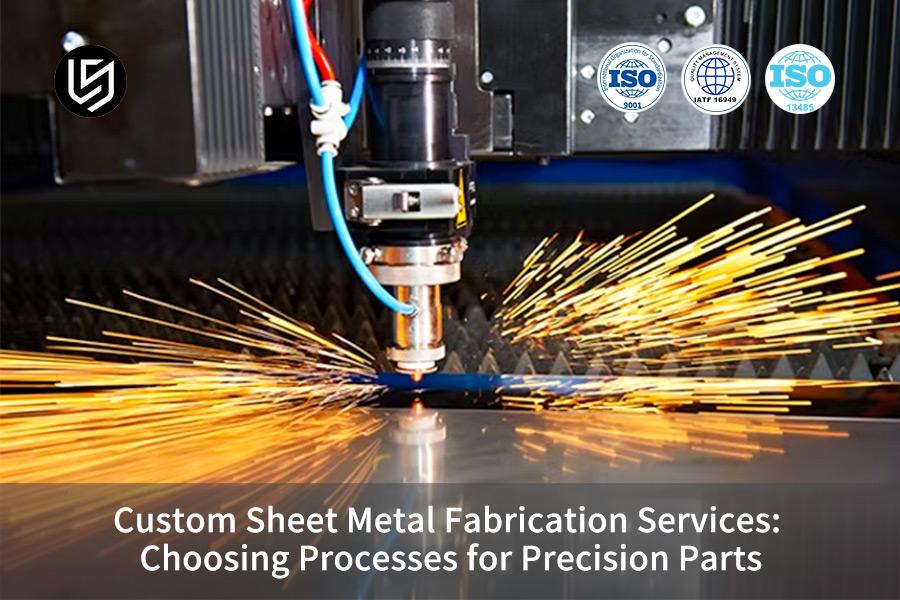
Custom sheet metal fabrication services are often inadequate, especially in high-tech markets where the extreme conflict between precision and cost results in a halt to the assembly line because of the cumulative effect of tolerance stack-ups. LS Manufacturing eliminates this problem by targeting the underlying causes, uncontrolled heat-affected zones and springback compensation, and shifting the paradigm from cutting and bending to material stress and structure through DFM.
Our "Deterministic Manufacturing Path" system eliminates this problem with quantifiable proof, utilizing metallurgical properties of advanced laser technology and 6-axis servo compensation for bending. We also offer a supplier audit standard to ensure consistent achievement of the stringent ±0.05mm tolerance requirements, changing your supply chain paradigm. The first step to zero-defect assembly is revealed in the technical roadmap below.
Custom Sheet Metal Fabrication: Process Selection Quick-Reference
| Process | Key Application & Benefit |
| CNC Laser Cutting | Suitable for complex 2D profiles, close tolerances ±0.1mm, and quick prototyping. Edges are clean, and set-up is minimal. |
| CNC Punching | Best suited for large quantities of components with standard hole patterns and regular shapes. Faster than laser cutting, especially for less complex sheet metal fabrication designs. |
| CNC Press Brake Bending | Critical for creating 3D parts from flat sheets. Accurate and repeatable bends are achieved, with compensation for bending angles. |
| TIG Welding | Employed for precise, high-quality, and visually appealing welds, especially on stainless steel, aluminum, and thin materials. |
| Robotic Welding | Suitable for high-volume production and consistent weld quality, especially on repetitive designs. Faster and more consistent than traditional welding methods. |
| Our Integrated Process Design | We assess the geometry, volume, and tolerance requirements of the part to be manufactured and then recommend the most appropriate processes. |
| Result: Optimized Manufacturing Flow | Ensures that the part goes from raw material to finished part in the most efficient manner, taking into account quality, speed, and cost factors. |
| Result: Part Performance & Fit | Provides components that meet critical size and performance specifications, ready for assembly into a reliable product. |
We help you overcome the challenge of choosing the most appropriate manufacturing process for the production of your precision sheet metal components. Our expertise can help you choose the appropriate manufacturing process, including cutting, forming, and joining techniques, to ensure the production of your components efficiently and cost-effectively while maintaining the highest quality standards to ensure the reliable functioning of the components in the intended application.
Why Trust This Guide? Practical Experience From LS Manufacturing Experts
There are hundreds of articles available online regarding custom sheet metal fabrication services. So, why read this one? We are not theorists; we are practitioners. We are a working shop, a real battlefield, every day dealing with high-strength materials, close tolerances, and complex geometries for industries that cannot afford failure. We don’t just “know” these processes; we rely on this knowledge, and we are heavily influenced by the strict safety and operational guidelines established and monitored by the Occupational Safety and Health Administration (OSHA), to ensure that every part is a success, every time.
The choice of fabrication process, such as laser cutting, precision bending, and welding, is what ultimately determines success or failure. An error in process selection for an aerospace heat shield or a medical device chassis can mean catastrophic failure in the field. Our experience, based on delivering thousands of precision components, dictates the best parameters for etching aluminum without distortion and bending stainless steel without stress, through deep industry intelligence provided by Gardner Business Media.
All of the tips you'll find here are the result of hard-won experience, including the costly lessons of early failure and the consistent lessons of proven success. We've learned how to manage heat input on thin gauges, select tooling to achieve perfect bend radii, and apply DFM concepts that are effective on the production floor. This is the knowledge we've proven with coolant, shavings, and inspection – the same knowledge we use every day. We're passing it on to you to help you avoid the mistakes we've made and achieve precision with success.
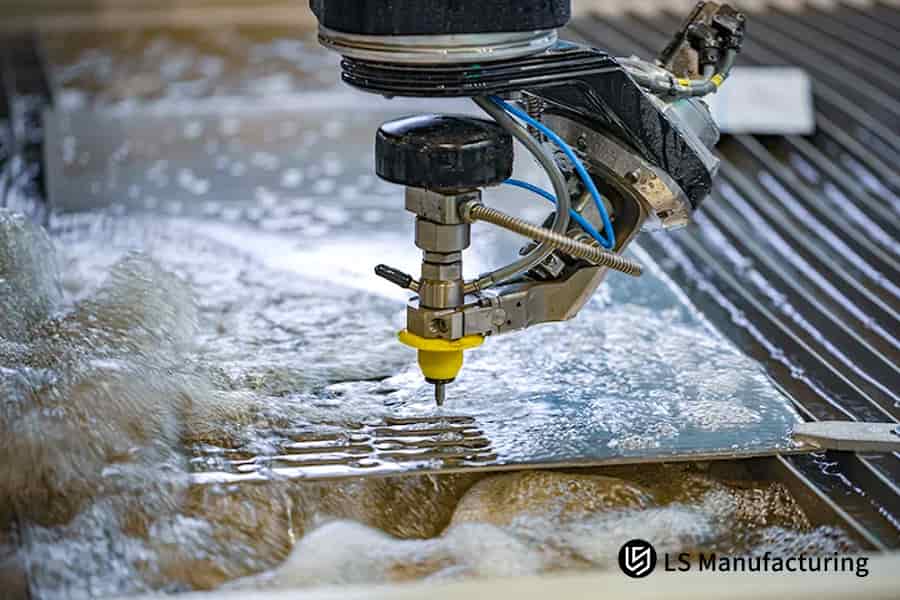
Figure 1: Shaping a 6061 aluminum panel with a waterjet for medical imaging equipment structural frames.
Why Should Engineers Prioritize Custom Sheet Metal Fabrication Services With DFM Integration?
Prioritizing custom sheet metal fabrication services with true DFM integration is a strategic decision made by the engineer that addresses production challenges at the earliest stages of the design process. This approach eliminates costly downstream issues and accelerates schedules by converting design intent into reliable manufacturing components. Our approach is centered on the pre-emptive elimination of the causes of failure in precision components:
Mitigating Thermal Distortion Proactively
One of the problems in precision metal fabrication services is warping due to heat from the laser cutting process. Our DFM process optimizes the part geometry to minimize warping due to heat stress. For example, optimizing the pattern of holes in a chassis, including micro-tabs, eliminated warping due to heat stress, which greatly reduced the amount of scrap.
Optimizing for Material Grain Direction
Neglecting material grain alignment can cause premature part failures. In our DFM optimization process, blank orientation was adjusted to ensure proper part bending across the material grain. By applying this process to a high-strength part, micro-cracking at the bend was eliminated without having to select a more costly material.
Designing for Seamless Assembly
Many complex assemblies often experience failures at assembly fit-up. In DFM, we account for assembly interfaces and stacks. For a multi-piece assembly enclosure, we redesigned the flanges and added locator features. These changes enabled a perfect sheet metal assembly fit without human intervention and post-weld adjustments, saving assembly time and cost.
Engineering for Weld Consistency and Strength
For custom welded assemblies, the designs of the joints are important, and the DFM process must take them into account. In the case of the critical part assembly, the problematic joint was replaced with an optimized part, and the part assembly had an excellent and strong weld, especially because the part was designed to have a reliable lap joint.
This document underscores a core competency: DFM optimization as an embedded, non-negotiable phase of our custom sheet metal fabrication services. The technical depth lies in the specific, pre-emptive actions we take—from thermal management to grain science—to guarantee yield and performance. Our distinct value is this rigorous, problem-solving methodology that transforms complex designs into high-reliability, production-ready components, ensuring your project's success from the first article.

How Can Precision Sheet Metal Fabrication Services Maintain Tight Tolerances In Complex Multi-Bend Assemblies?
The main problem with precision sheet metal fabrication services is to ensure that tight tolerances are maintained for complex multi-bend parts. The main problem is to reduce material springback, an important factor in dimensional stability. Our solution is to use a closed-loop, data-driven forming process to "lock in" tolerances to ±0.05mm. Precision is thus an intrinsic, concurrent parameter to precision sheet metal fabrication services, vital for automated welding and assembly processes:
Implementing Adaptive, Real-Time Angle Correction
- Technology Used: 6-axis CNC press brake with in-cycle laser angle measurement.
- Action & Result: Actual springback is measured after every bend, and servo re-hit is commanded based on compensating for material hardness changes in real-time to achieve desired angle.
Eliminating Process Variables for Batch Consistency
- Methodology: Dynamic changes in bending operations based on real-time sensor data, not fixed tool locations.
- Outcome: Removes guesswork associated with traditional sheet metal forming services, where the first part of a run is assured to be within tolerances of the thousandth, based on actual production drift curves.
Enabling Seamless Downstream Automation
- Direct Benefit: Accurate bend angles mean consistent flange lengths and predictable weld gaps.
- Client Value: This degree of tolerance control enables reliable robotic welding for complex sheet metal fabrication assemblies, drastically reducing fit-up labor and post-weld grinding.
Ensuring Robustness for Demanding Applications
- Validation: Process stability is validated through statistical process control (SPC) data collected over multiple production cycles.
- Application: Provides the reliability required for high-performance sheet metal fabrication in industries such as aerospace and medical devices, where assembly is mission-critical and failure is not an option.
This methodology proves that reliable high-precision sheet metal fabrication is an engineered, deterministic process. We add technical value by explaining the specifics of how we close the control loop, using real-time metrology to actively compensate for the problem of springback error. We are solving the critical industrial problem of dimensionality, and our solution is verifiable and robust, applicable to critical tolerance sheet metal fabrication and assembly success in the most demanding applications.
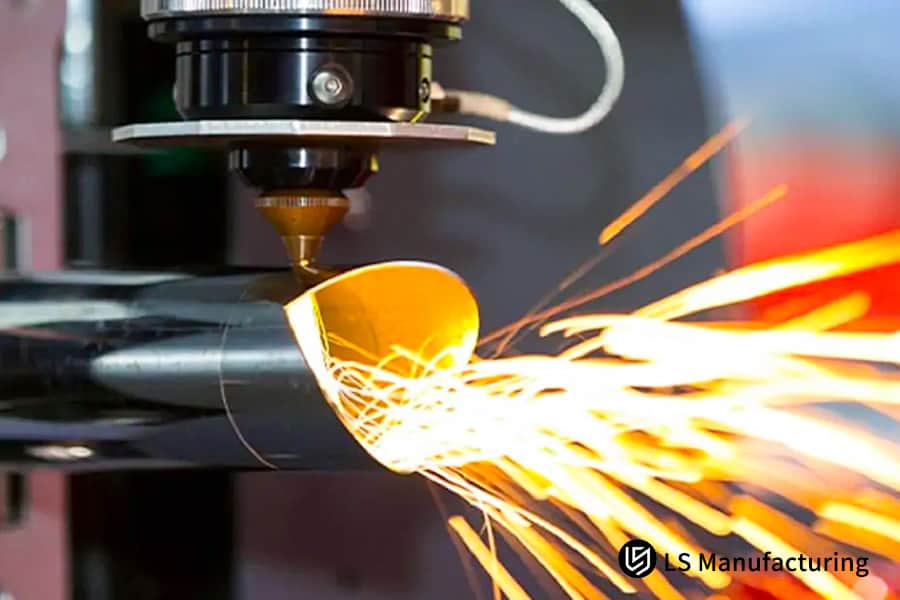
Figure 2: Piercing 304 stainless steel sheet with a laser for industrial machinery guard or housing panels.
Which Sheet Metal Fabrication Processes Are Best Suited For High-Speed Semiconductor Equipment?
High-speed semiconductor equipment requires unparalleled part cleanliness and cut quality, which standard sheet metal fabrication processes can introduce critical contaminants into. In the following analysis, the decisive difference in cutting methodologies for 316L stainless steel will be compared in relation to quantifiable effects on cut edge cleanliness and outgassing, which are critical parameters in evaluating suppliers of precision metal fabrication services for ultra-high-vacuum semiconductor components:
| Evaluation Criteria | Oxygen-Assisted Cutting | High-Pressure Nitrogen Cutting |
| Process Mechanism | Exothermic reaction, very fast but heavily oxidizes the cut edge. | Inert gas melt-and-blow, which completely prevents oxidation, providing a clean edge. |
| Oxide Layer Thickness | Thick, porous oxide layer (>0.05mm) which can flake off. | Limits oxide layer to <0.02mm, creating a near-pristine metallic edge. |
| Cut Surface Quality (Ra) | Higher surface roughness (>3.2 μm) due to the formation of slag, which acts as a particle trap. | Low surface roughness (<1.6 μm), which minimizes the creation of particles. |
| Post-Processing Need | Mandatory acid cleaning or grinding before further use. | Allows for direct-to-weld fabrication, eliminating the need for cleaning operations. |
| Vacuum Suitability (Outgassing) | Oxidized edge considered a major outgassing contributor, compromising vacuum cleanliness. | Dense metallic edge minimizes outgassing, ensuring vacuum cleanliness. |
| Optimal Application | Structural components where cost considerations are the major factor. | Critical high-purity sheet metal fabrication components, including chambers, handlers, and shields. |
Cutting process selection is critical for semiconductor component performance. Data supports that high-pressure nitrogen cutting, though more processically intense, is critical for semiconductor-grade sheet metal fabrication. It directly addresses the single biggest client problem: producing components that preserve extreme vacuum integrity and cleanroom standards, thus protecting process yield and equipment reliability of high-value capital equipment.
Why Is Choosing Specialized Sheet Metal Fabrication For Precision Parts Critical For Medical Devices?
Sheet metal fabrication for precision parts intended for medical devices, has to attain accuracy in terms of size while maintaining surface integrity, especially for biocompatibility and sterilization. This document outlines the technical processes implemented to guarantee such components comply with client demands, particularly with regards to how such processes directly address client concerns, especially those concerning contamination, damage, and stability in a sterile environment:
Implementing “Mark-Free” Bending to Preserve Critical Surfaces
A major problem is maintaining the pristine Ra 0.8μm brushed finish through the forming process. We make use of specialized polyurethane tooling on our press brakes. The flexible nature of the material ensures an even application of force, avoiding the appearance of tool marks and scratches that are normally associated with steel tooling.
Ensuring Geometric Stability Through Rigorous Process Control
While precision is important, stability is equally important, especially when the parts are required to be repeatedly autoclaved. We employ real-time SPC (Statistical Process Control) monitoring on all critical dimensions. By using this data-driven approach, we are able to ensure that the Cpk is ≥1.33, and the precise geometry and fit of the surgical tool tray are maintained through hundreds of sterilization cycles.
Validating Integrity with Comprehensive Non-Destructive Evaluation
The final verification must not affect the part in any way. Except for the above, we make use of techniques such as dye penetrant inspection done on the seam of the weld, which enables us to ascertain the presence of microscopic imperfections on the surface of an enclosure, which are not visible to the bare eye, for custom metal fabrication services on the enclosures, thus ensuring the integrity of the structural components without changing them.
Designing for Cleanability and Biocompatibility from the Start
When it comes to medical-grade sheet metal fabrication, the designs must be able to withstand cleaning processes. Our DFM review ensures radiused corners, seamless welds, and no pockets or crevices are included in the design. By taking a proactive approach to designing, we can provide enclosures and chassis for medical devices that can be thoroughly cleaned and sterilized, meeting the most stringent bio safety requirements.
This methodology underscores that reliable medical device fabrication is defined by controlled, validated processes. Our technical depth is demonstrated by specifying howwe protect surfaces with specialized tooling, enforce stability via SPC, and verify safety with NDT. This solves the core client problems of ensuring durable, biocompatible, and inspection-ready parts, providing a verifiable quality assurance framework essential for regulatory compliance and patient safety in high-stakes medical applications.
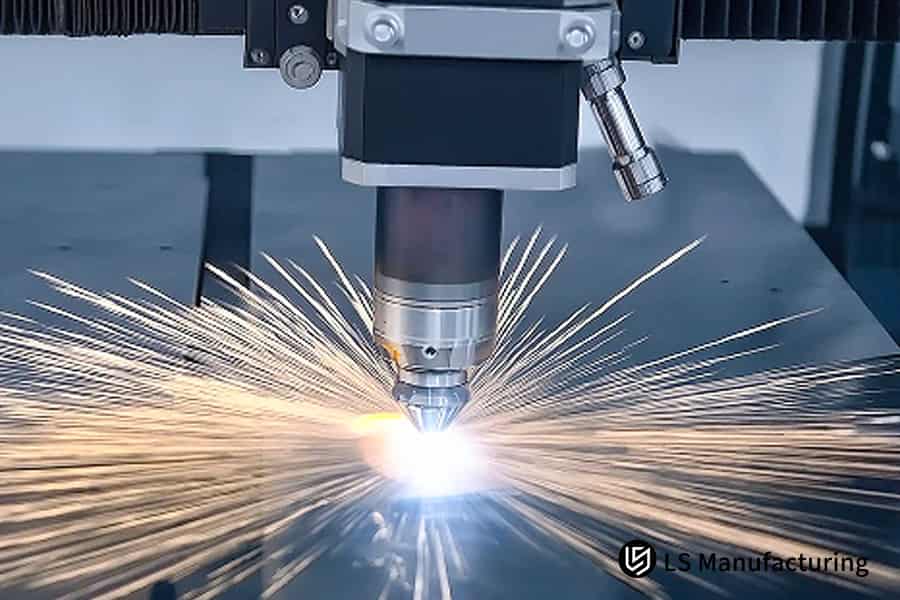
Figure 3: Slicing a thin aluminum sheet with a CNC laser for electronic device enclosure or bracket fabrication.
How Do Custom Metal Fabrication Services Manage Material Stress Relief In Thin-Walled Components?
In thin-walled components, if t<1.0mm, warpage from cutting stress can occur, creating issues during the final assembly stage. However, in order to counter this, a good custom metal fabrication services need to be able to manage the stress, which is a major problem associated with thin materials, in order to ensure flatness. The following is the document outlining our approach to stress relief, which demonstrates our ability to manage this process to a flatness value of ≤0.2mm/m², which is designed to combat one of the major problems associated with thin materials in the precision sheet metal fabrication industry:
Mitigating Thermal Stress During Cutting
- Technology: Multiple path, intermittent laser cutting methods.
- Action: The technology changes and staggers its cutting path to ensure an even distribution of heat input into the part.
- Result: It prevents the buildup of heat stress, which results in warpage immediately after the cutting process, especially for thin-gauge sheet metal fabrication.
Applying Corrective Leveling Post-Cutting
- Technology: Precision hydraulic leveling presses.
- Action: It applies global pressure to the entire blank, resulting in plastic deformation and flatness.
- Result: It actively counteracts warpage from previous operations, returning flatness to a baseline condition, ready for high-tolerance fabrication.
Utilizing Vibration Stress Relief for Stability
- Technology: Computer-controlled vibration stress relief.
- Action: It exposes components to resonant frequency after forming.
- Result: It uniformly eliminates all microscopic stresses that have been locked in during the part's creation, providing long-term dimensional stability for critical stress relief in final assemblies.
Integrating Control into the Production Flow
- Method: Flatness measurement and SPC tracking after each stress relief process.
- Outcome: It creates a process where stress is managed as a known variable, rather than an unknown.
This methodology clearly demonstrates how stress relief is an orderly process, taking multiple steps to be an integral part of high-tech sheet metal fabrication. We offer technical expertise in how we address stress relief to correct and lock out stress within our operations. It addresses the client's basic needs to ensure flatness and stability in thin-walled components, correcting hidden costs in high-value, lightweight components requiring precision thin-wall fabrication.
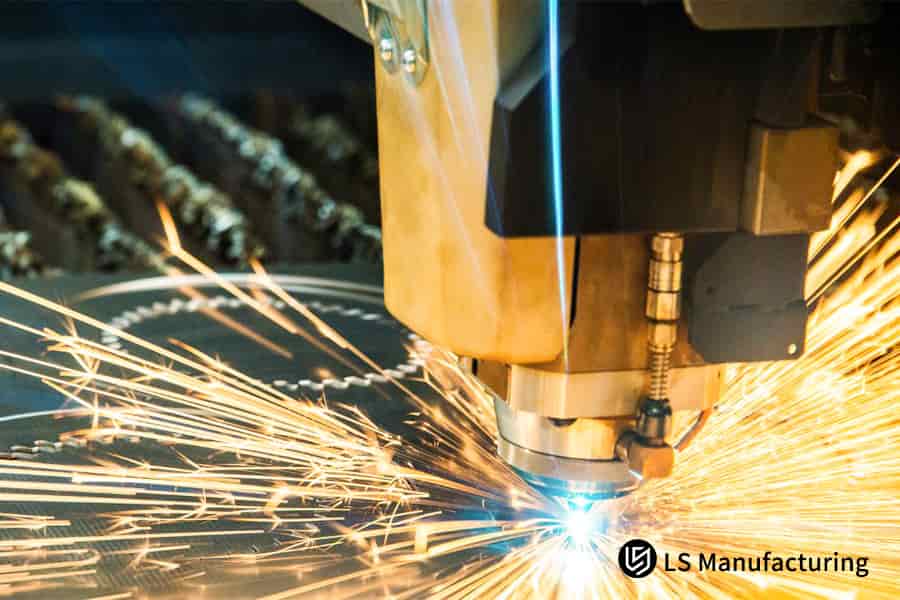
Figure 4: A laser melts 6061 aluminum sheet to form a high-precision bracket for aerospace structural components.
Case Study: LS Manufacturing Medical Aerospace Titanium Cooling Module Precision Fabrication Project
This case study details how LS Manufacturing resolved a critical failure mode in a high-performance aerospace component, demonstrating the application of our precision sheet metal fabrication services to solve a problem that halted a client's production. The project underscores our capability to deliver reliable fabrication for the most demanding applications:
Client Challenge
One of our global aerospace industry clients was experiencing stress fatigue fractures in their Ti-6Al-4V titanium liquid cooling manifolds for aerospace applications due to pressure cycling at 150 PSI. The problem was attributed to micro-cracking due to uncontrolled heat input during conventional laser cutting of complex internal channels within the manifolds. Our client was experiencing a yield rate of less than 60% during the initial production batch, effectively shutting down production of their next-generation thermal management systems, thus indicating a critical gap in sheet metal fabrication for precision parts.
LS Manufacturing Solution
Our solution to the problem has been to undertake a multi-physics heat transfer analysis to simulate the heat transfer, and we substituted the traditional laser cutting technique with the quasi-continuous wave laser cutting technique, which reduces the heat input by 35%. The most important change has been the addition of a stress-relief annealing operation in a vacuum environment to the process. Additionally, we incorporated 100% in-process CMM verification on all 12 critical interface holes.
Results and Value
The last manifolds have completed a tough 5,000-hour combined vibration and pressure cycle qualification test. The scrap rates were brought down to less than 0.2%, which is revolutionary in the world of production reliability. The high success rates led the client to decide to give the entire year’s requirement to LS Manufacturing. The cost savings were substantial, as the client realized 24% less in the Total Cost of Ownership (TCO), while the project timeline was accelerated due to the rapid turnaround on the prototypes, which are flight certifiable.
This project exemplifies our engineering-driven methodology for mission-critical components. We provide more than sheet metal fabrication services; we deliver certified manufacturing solutions by diagnosing root causes, deploying tailored advanced processes, and validating outcomes with rigorous data. This high-integrity fabrication approach solves core reliability challenges, making LS Manufacturing a partner for high-value aerospace fabrication where failure is not an option.
Transform your most challenging custom sheet metal fabrication services into a reliability success story.

How Can Sheet Metal Forming Services Leverage Automated Robotics For Consistent High-Volume Delivery?
To ensure absolute consistency in high-volume production, it is necessary to move beyond the realm of human skills and apply engineering solutions. In the analysis, we have demonstrated the application of robotics in the implementation of bending cells, including the application of force sensing and handling to remove the variance of the human factor. The value of the application to the sheet metal forming services for high-volume production was quantified.
| Evaluation Dimension | Manual Press Brake Operation | Robotic Bending Cell Operation |
| Core Mechanism | Completely relies on the skill level of the operator to effectively manage the parts and start the process. | Utilizes a 6-axis robot that incorporates force feedback to allow for simultaneous and precise handling of the materials. |
| Key Enabling Technology | Visual alignment of the parts and application of different levels of manual pressure. | Utilizes force feedback technology to ensure continuous material contact and account for springback. |
| Precision Consistency | Prone to operator fatigue, which causes batch-to-batch differences. | Minimizes part handling variances with tolerance levels set at ±0.02mm throughout the entire process. |
| Production Throughput | Limited by the number of shifts the operators can maintain. | Facilitates lights-out production, reducing bulk order lead times by up to 40%. |
| Supply Chain Outcome | Inserts uncertainty into the schedule and requires significant inspection efforts. | Enables a predictable high-volume production process, which supports just-in-time delivery and lowers overall costs. |
The move to robotic automated production changes sheet metal fabrication services from a highly skilled craft into a predictable and controlled process of production, and this directly addresses the fundamental client issues of volatility and inconsistency, delivering a deterministic process that is required for high-volume fabrication to be competitive. It offers a new level of repeatable quality and increased speed, setting a new level of reliability for complex custom sheet metal fabrication projects.
What Criteria Should Procurement Managers Use To Audit A Precision Metal Fabrication Services Manufacturer?
Making the decision on the supplier for precision metal fabrication services based solely on cost is a high-risk decision, as the supplier audit must consider the underlying process control and engineering rigor that the manufacturer must have in place to ensure long-term quality and security. The following are the criteria that must be considered when determining whether the supplier is qualified to be considered as an extension of your engineering team:
Verifying Material Integrity and Traceability
Another important audit aspect is to verify material compliance beyond what is shown on the certificate. We offer in-house positive material identification using optical emission spectrometry on all material lots. This removes the risk of unknown or incorrect alloy substitutions, providing complete traceability for each and every part of your custom sheet metal fabrication order and ensuring against failure in the field due to material problems.
Assessing Process Control with Live Data
True capability is demonstrated with process control, not final inspection. Auditors need to have access to live Statistical Process Control (SPC) charts on critical dimensions. We offer clients view-only portal access to live SPC charting on variables such as laser kerf and bend angle, ensuring consistency in high-mix sheet metal fabrication.
Evaluating Non-Destructive Testing and Documentation
The ability to validate internal integrity without destroying the part is a significant requirement. Our audit package includes standardized non-destructive test reports, such as dye penetrant inspection of weld seams. This provides documented evidence of the quality of the structure in safety-critical fabrication, extending beyond visual inspection and reducing your validation efforts with certified reports.
Reviewing Project Transparency and IP Protection
A partner must demonstrate security and transparency. This is shown by the ability of our ERP portal access to track a project in real-time and strong IP protection agreements. This eliminates the double problem of the client: lack of visibility into the project schedule and the security of the IP design.
This audit framework shifts focus from basic capabilities to the systemic controls that prevent failure. We demonstrate our value through verifiable material traceability, transparent process data, and certified quality documentation. This approach directly solves the procurement core challenge: de-risking the supply chain by selecting a partner whose precision sheet metal fabrication are built on data-driven control and secure processes, ensuring project success from development through sustained production.
FAQs
1. What is the highest level of precision that LS Manufacturing's sheet metal fabrication services can achieve?
Operating within a temperature-controlled workshop environment—and utilizing servo-driven equipment alongside in-line inspection systems—we can consistently achieve linear dimensional tolerances of ±0.05mm and hole diameter tolerances of ±0.02mm.
2. How do you address the issue of discoloration (blackening) that often occurs after cutting precision stainless steel parts?
We strictly utilize 99.999% high-purity nitrogen as an assist gas. Combined with our proprietary cooling nozzles, this ensures that the cut edges remain a bright silvery-white finish, making them ready for welding immediately without the need for subsequent pickling.
3. What specific safeguards do your sheet metal forming services offer for the medical industry?
We maintain a dedicated, damage-free mold storage facility and strictly adhere to cleanroom packaging standards. This ensures that the surface of every custom part remains free of dents, scratches, and oil contamination.
4. How long does it take to receive a formal quotation that includes a DFM (Design for Manufacturability) analysis?
Once you have provided your STEP/PDF drawings and technical specifications, LS Manufacturing's team of experts typically issues a detailed process analysis report within 24 hours.
5. Which high-strength materials do you support for custom sheet metal fabrication?
In addition to standard stainless steel and aluminum, we specialize in processing titanium alloys, Hastelloy, Hardox high-wear-resistant steel, and various aerospace-grade lightweight alloys.
6. How does LS Manufacturing ensure consistency across large-volume orders?
Through our SPC (Statistical Process Control) system, we perform automated sampling and measurements every hour to generate trend charts, thereby ensuring that the process capability index (Cpk) for the entire order consistently meets or exceeds 1.33.
7. How does LS Manufacturing handle situations where parts fail to meet the specified drawing tolerances?
We uphold a "Full-Lifecycle Quality Accountability" policy. If any part fails to meet specifications due to our manufacturing processes, we immediately initiate an expedited rework protocol to complete replacements within three business days. Concurrently, we conduct a root cause analysis and update our operational standards to prevent recurrence.
8. What are the maximum and minimum sheet metal thicknesses you can process?
We specialize in handling a wide range of material thicknesses—from ultra-thin sheets as fine as 0.5mm to heavy-gauge plates up to 25mm—covering the full spectrum of applications, from precision instrumentation to large-scale industrial frameworks.
Summary
Precision sheet metal fabrication is a sophisticated systems engineering discipline, integrating deep material science insights at every stage. At LS Manufacturing, we deliver not just components but a seamless, trouble-free assembly line experience—a foundation for product reliability. Choosing us means partnering with a technological pioneer to proactively mitigate risks and translate precision into tangible cost advantages.
Overcome your precision manufacturing bottlenecks with LS Manufacturing's complimentary DFM Audit and cost-optimization recommendations. Our experts conduct in-depth drawing evaluations, identify risks like thermal distortion, and provide quantified solutions. We offer transparent sheet metal fabrication quotations within 24 hours for complex semiconductor brackets to aerospace-grade components. Upload drawings for a free evaluation or schedule a technical consultation to embark on precision manufacturing excellence.
Elevate your design with expert custom sheet metal fabrication services for flawless assembly.
📞Tel: +86 185 6675 9667
📧Email: info@lsrpf.com
🌐Website: https://lsrpf.com/
Disclaimer
The contents of this page are for informational purposes only. LS Manufacturing services There are no representations or warranties, express or implied, as to the accuracy, completeness or validity of the information. It should not be inferred that a third-party supplier or manufacturer will provide performance parameters, geometric tolerances, specific design characteristics, material quality and type or workmanship through the LS Manufacturing network. It's the buyer's responsibility. Require parts quotation Identify specific requirements for these sections.Please contact us for more information.
LS Manufacturing Team
LS Manufacturing is an industry-leading company. Focus on custom manufacturing solutions. We have over 20 years of experience with over 5,000 customers, and we focus on high precision CNC machining, Sheet metal manufacturing, 3D printing, Injection molding. Metal stamping,and other one-stop manufacturing services.
Our factory is equipped with over 100 state-of-the-art 5-axis machining centers, ISO 9001:2015 certified. We provide fast, efficient and high-quality manufacturing solutions to customers in more than 150 countries around the world. Whether it is small volume production or large-scale customization, we can meet your needs with the fastest delivery within 24 hours. choose LS Manufacturing. This means selection efficiency, quality and professionalism.
To learn more, visit our website:www.lsrpf.com.