English



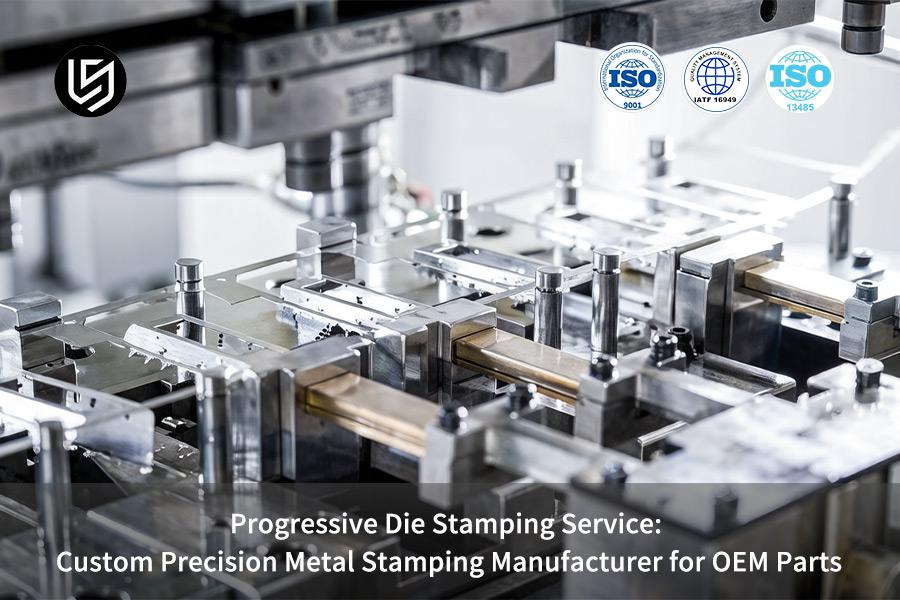
Progressive die stamping service becomes vital in OEM's supply chain when procurement officers are focused on how does progressive die stamping work as well as its cost amortization, but suffer from problems associated with tolerance variation, excessive material loss, and late deliveries due to regular die maintenance issues. Those difficulties stem from improper material flow simulation in die design and lack of control over thermal stress buildup, which results in the inability to get stable CPK greater than 1.33.
Our company solves the problem via implementing progressive dies with high precision along with monitoring services, delivering all-inclusive services starting from sample DFM evaluation through million unit production. We optimize die design in terms of pitch and layout, helping reduce the cost of raw materials by more than 20% for precision metal stamping for OEM project.
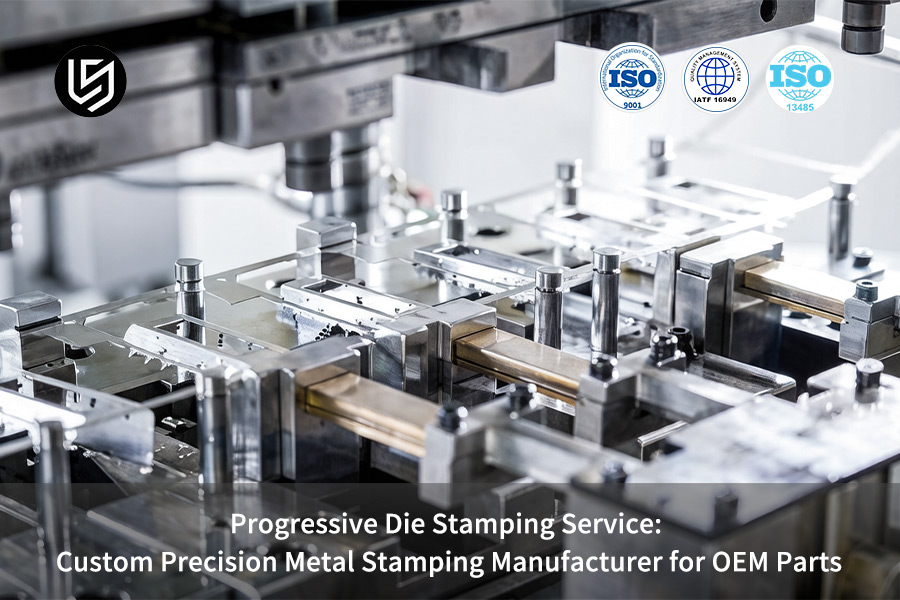
Progressive Die Stamping: OEM Parts Quick-Reference
| Process Feature | Progressive Die Implementation | Value for OEM Production |
| Multi-Station Efficiency | Each station performs a separate operation on a strip of metal fed into the die. | Saves up to 95% on labor, cycles, and materials versus traditional one-stage dies. |
| Tolerance & Consistency | Tight tolerances of ±0.05mm can be held in one pass because all features are produced simultaneously in a fixed relationship. | Guarantees consistent quality in tens of millions of pieces. |
| Tooling Investment | High investment required for the production of an elaborate, multi-station die that amortizes out with volume. | Proves to have the lowest unit cost for large volumes metal stamping. |
| In-Die Integration | All of the operations such as piercing, bending, forming, and coining are performed simultaneously in a fully automated process. | Bypasses secondary operations and creates a final product without further treatment. |
| Our Engineering Focus | Optimizing ejection, scrap removal, and die life is the key factor in our engineering approach. | The main goal is uninterrupted and high-speed die functionality for JIT manufacturing. |
| Result: Unmatched Volume Economics | We optimize our dies with regard to efficiency, material utilization, and labor savings. | This results in the lowest cost-per-part rate in the business. |
We solve the high volume manufacturing dilemma with metal stamping. With our progressive die stamping service, we produce highly consistent components at an exceptionally low unit price. This guarantees you an unlimited supply of components to ease your assembly work, helping you achieve your high volume manufacturing goals.
Why Trust This Guide? Practical Experience From LS Manufacturing Experts
While there are hundreds of metal stamping guides out there, this guide is unique. We know metal stamping in practice because it is something we do each day as part of our progressive die stamping service. This is what we have learned through years of experience, not from a book, and always with the aim of making complex designs reality based on ASTM International standards and SAE International.
We help our clients overcome difficult production problems within the automotive and healthcare industries, where even the smallest component failures cannot be tolerated. The way that we do this is through a careful combination of accurate die design and strict adherence to the highest quality control standards.
What makes our process work is our ability to apply the knowledge that we have gained over years of experience. This knowledge has helped us to optimize our processes in order to be as efficient as possible and reduce unnecessary costs. The solutions that we provide will help guide you along the way.
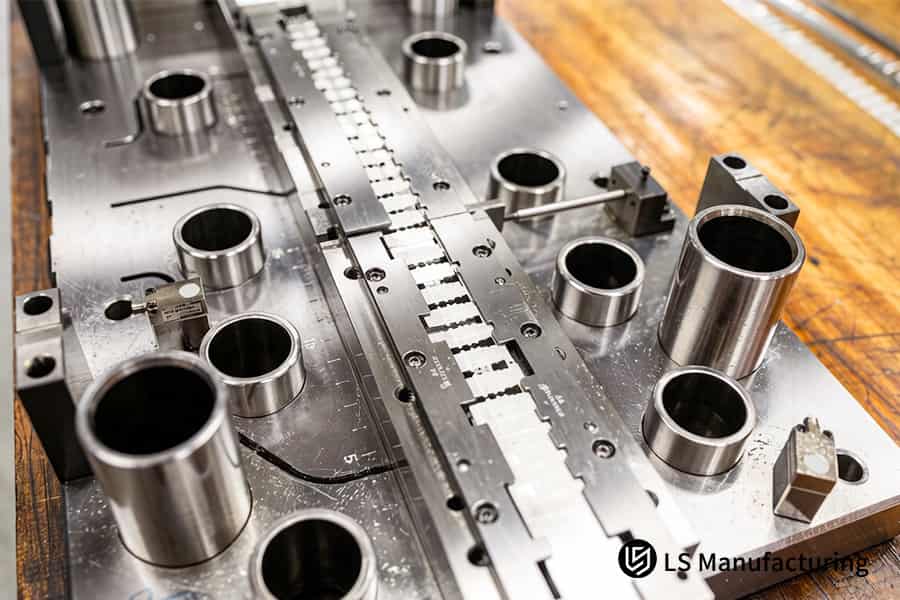
Figure 1: The progressive die stamping molds form metal tubes from stainless steel sheets for plumbing applications.
Why Choose A Professional Progressive Die Stamping Service For High Precision OEM Parts?
The conventional multi-station stamping method has been inefficient and, more importantly, unable to manage the tolerance stacking in different stages of the process, which leads to poor quality in the resulting components. Our unique progressive die stamping service offers a clear way out by completing the entire forming process through a single, unbroken stroke on the press. Such an approach is critical in guaranteeing consistent high-volume production of sophisticated parts:
Eliminating Tolerance Stack-Up Through Unified Processing
Cumulative errors can be overcome by making a die where all operations take place sequentially, starting from piercing and finishing with forming, all completed in a single operation inside one stroke of the press. The part strip will always remain perfectly aligned because it does not need to be relocated between different machines or stations, eliminating misalignments and differences. precision metal stamping for OEM assemblies requires such tight control.
Integrating Complex Forming for Enhanced Part Strength
In addition to the basic punching operation, our procedure incorporates procedures like drawing, coining, and bending in one die sequence. The combination of these processes on the partially finished product that remains attached to the strip offers better support, which reduces the extent of stretching and stress concentration. It yields parts with improved strength and mechanical properties, thus facilitating durable complex metal stamping parts.
Locking Critical Dimensions with Precision Process Control
Reaching ±0.01mm tolerance calls for coordinating servo press dynamics of heavy machinery with meticulous die manufacturing. We use precise monitoring tools to regulate ram displacement, shut height, and feed of strips with micrometer accuracy. This feedback loop, crucial to our precision manufacturing approach, automatically balances out all sorts of variables, which is why it is essential to achieve high-volume progressive die stamping of connectors and small parts that must fit each other perfectly.
Ensuring Cost-Effective Scale for Demanding Production Runs
The large capital expense is built to last long while being extremely low-maintenance during its long lifespan. The automatic and one-shot machining of individual pieces lowers the expenses associated with handling labor, secondary fabrication work, and quality control processes. As such, we provide a highly cost-efficient service for all custom progressive die stamping solutions, particularly for applications that demand the use of millions of uniform precision-made pieces.
This memorandum outlines the technical understanding needed for progressing from standard stamping to advanced precision integration. Our expertise lies in an engineering-driven methodology that deals head-on with the issues of accumulated tolerances, stability, and micrometer precision. While competing with other suppliers by presenting our capabilities, we do so in terms of providing a tested manufacturing procedure that will ensure the dependability of your most complex pieces.

How Can Custom Progressive Die Stamping Optimize Your Raw Material Utilization Rates?
Maximizing the yield of raw materials is another important aspect of large-scale manufacturing processes. With our custom progressive die stamping process, we have developed a method of designing layout using front-end engineering, employing simulation technology in order to achieve the least amount of scrap at the design stage. It allows us to efficiently transform coils into parts, effectively embedding cost reduction and waste prevention into the manufacturing process:
Part Nesting and Strip Layout Optimization
- Simulation-Driven Nesting: We apply simulation technology by running simulations on different part orientation layouts on the strip to maximize part density per unit width of the coil strip and reduce skeleton scraps.
- Carrier and Bridge Design: Our carrier strip and micro-joint design is designed to be thin yet maintain absolute part transportation integrity.
Precision Stamping Control for Minimal Kerf Loss
- Die and Punch Precision: Clearance tolerances between punches and dies are specified down to micron-level tolerances, resulting in a precise shearing cut with no deformation or material losses, which is an important component of the precision progressive die stamping process.
- Feed Accuracy: Using a highly accurate servo feed system allows us to control the progression pitch tolerance to such exact tolerances that no pitch variation exists; this eliminates waste that would normally require wider tolerances.
Material Specification and Forming Strategy Integration
- Gauge and Grade Analysis: We analyze the specific material grade and its forming characteristics to recommend the optimal starting gauge, avoiding over-engineering and excess weight, achieving true material utilization optimization.
- Forming Sequence: This pertains to the cutting, notching, and bending sequence within the tooling, such that the parts remain stable within the strip, making high-efficiency progressive die stamping.
From Scrap Reduction to Direct Cost Attribution
- Waste Stream Analytics: The ratio of the total weight of the stamped component to the weight of the coil used is rigorously computed, giving a validated material yield percentage. The actual saving in scrap helps to reduce the cost of raw materials allocated per piece.
- Holistic Cost Benefit: Not only does reduced scrap lead to reduced material cost, but it also helps in saving logistics cost incurred in managing and recycling the material. Our approach is ideal for high mix progressive die stamping production where every penny counts when considering the SKU-wise cost.
By making use of front end simulations, our proprietary process control system optimizes the route for material utilization right from the start. In this paper, we will explain the science behind converting waste into value by optimizing material utilization in a progressive die stamping operation. We will demonstrate how our custom progressive die stamping solution can provide real cost reduction by material utilization optimization.
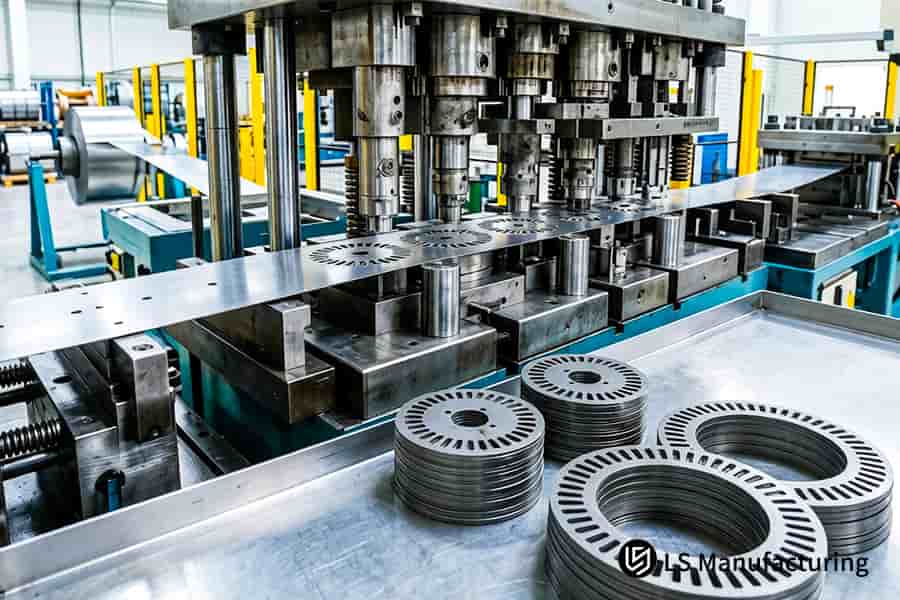
Figure 2: The progressive die stamping line produces stator cores from silicon steel for electric motor manufacturing.
What Technical Parameters Define A Top Tier Progressive Die Manufacturer For OEM Parts?
Choosing a progressive die manufacturer is a crucial choice that determines part quality, supply chain integrity, and overall cost. Excellence is proven through stringent and controlled technical parameters, not claims. This document will lay out the criteria for judging manufacturing excellence, offering OEM engineers a definitive evaluation method.
| Parameter Category | Key Metric & Specification | Impact on Production |
| Process Control | Press tonnage control within ±2% by SPC. | Dimensional and mechanical consistency is assured in all pieces stamped. |
| Tooling Durability | High quality tooling made from die steel capable of performing above 5 million strokes without maintenance. | Predictable uptime assures on time shipments and the lowest cost per piece. |
| Part Precision | Tolerances held to ±0.01mm by computerized measuring equipment. | Sets a precise standard for prototype progressive die stamping runs and production level manufacturing. |
| Operational Efficiency | Operation at maximum speed through automation with in-die monitoring system. | Sets the optimal rate of production with zero defects per part as a standard, required for automated progressive die stamping lines. |
These are the variables that set the elite OEM manufacturers apart from their competitors. By controlling these variables, we meet the needs of the OEMs: quality, lifecycle costs, and risk minimization of supply. To meet the demanding progressive die stamping applications where perfection is mandatory, this methodology is essential to the success of the OEMs. To secure these benchmarks—±0.01mm precision, 5M+ cycles, SPC control—for your production, contact our engineering team to initiate a formal project review and quotation process.
Why Is High Volume Progressive Stamping The Ultimate Solution For Scale And Speed?
With the combination of benefits from continuous and speedy automated production intelligent manufacturing systems, high volume progressive stamping ensures that raw coils can be converted into manufactured products via an integrated process. Below are some of the reasons why it is fundamental in large scale manufacturing:
Engineered for Maximum Strokes and Minimum Downtime
Press strokes are realized between 200-600 per minute with servo presses working in conjunction with progressive dies made of extremely durable and perfectly balanced materials. It is not only about speed but consistent speed. Predictive maintenance of vital wear parts and tonnage monitoring in real-time ensure there are no unforeseen downtimes. As such, we keep the highest pace of productivity suitable for mass production progressive die stamping.
Optimizing Unit Cost Through Integrated Processing
Economy of scale is achieved by bringing together several operations such as piercing, forming, and tapping into a single die. There is no need for any intermediate handling, waiting, and fixture. As a result, there are great savings on labor and overhead cost per unit. With an order that is more than 100,000 units, the unit cost is reduced to its lowest possible level.
Integrating Automated Quality Assurance at Line Speed
Zero defect parts are assured even in the fast manufacturing process involving inline AOI. With the application of cameras placed along the die path, critical characteristics of the part will be evaluated in real-time, using the full speed of the press against a digital master copy. Defective parts are removed from the manufacturing stream without compromising the productivity of the production line. The closed loop automated production system uses 100% inspection over statistical sampling in ensuring quality assurance in the manufacture of automotive progressive die stamping and other significant sectors.
System-Wide Synchronization for Seamless Throughput
True speed is a systems issue. Coil feeding, die work, in-die sensing, and part unloading all become coordinated into one cell through a central production control system to track speeds, maximize efficiency (OEE) and anticipate any deviation from expected performance. Systems level control converts the stamping press into a true manufacturing system and is essential for effective large scale manufacturing of complex components.
In this instance, our focus is a systems engineering approach that balances speed, scalability, and quality, without having to choose one over the other. The competitive edge that we offer is the capability to design fully optimized production cells based on high volume progressive stamping that will produce reliable, affordable, and perfect parts at quantities that are unattainable for any competitors. Our company offers proven solutions for some of the world’s most precision progressive metal stamping operations.
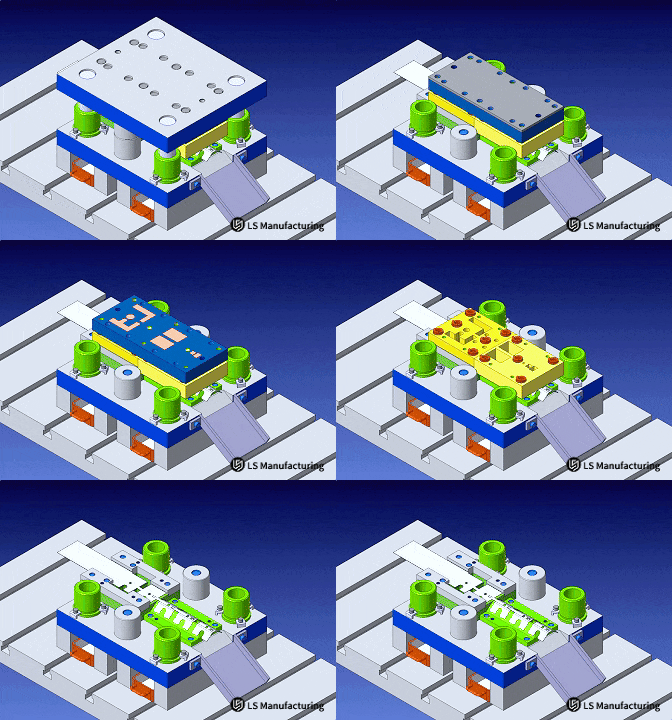
Figure 3: The 3d model illustrates the internal mechanism of a progressive die stamping tool during design phase.
How Does Our OEM Progressive Die Service Mitigate Manufacturing Risks For Global Buyers?
International manufacturers face many risks related to offshore production, including unforeseen delays, quality control, and lack of transparency that disrupt the highly coordinated process of assembling products. In order to solve these problems, the OEM progressive die service is created as a way to risk mitigation by transforming problems into processes. The management of risks involves extensive engineering processes at the outset and reliable processes in the global supply chain:
Proactive Design Validation to Eliminate Tooling Failures
- Comprehensive DFM Analysis: We carry out a comprehensive review of the manufacturability of the design via simulations to detect issues such as springback, tear, or any instability.
- Prototype Validation Path: Either soft tooling or sample run validation is recommended for critical designs to prove the part design for form, fit, and function on mission-critical progressive die stamping parts.
Securing the Supply Chain from Material Origin
- Full Material Traceability: The material reports provided are issued by the mill detailing the composition of the alloy, temper, and coating, important in certified progressive die stamping manufacturing.
- Incoming Quality Verification: Hardness test and visual examination is done on all incoming materials, and documentation is kept to confirm that there is no variation at the outset.
Process Control for Predictable Output and Lead Times
- Statistical Process Control (SPC): Information related to process control is maintained during the process and maintenance and expected quality of deliveries are forecasted.
- Integrated Production Scheduling: With our advanced production scheduling capabilities, we are able to schedule tools, press, and materials to achieve consistent delivery schedules.
Ensuring Quality and Compliance for Global Delivery
- Full-Dimensional First-Article Inspection: The first articles go through full dimensional verification based on the 3D CMM report against the customers' CAD certification.
- Automated In-Line Detection: The vision inspection machines and sensors ensure 100% inspection of the critical defect criteria during high volume production to ensure that only good parts are passed on, which is vital for high-reliability progressive die stamping.
This document highlights our structured and data-backed strategy of minimizing risks in offshore sourcing. Our unique advantage lies in our ability to avoid failure by virtue of engineering expertise, provide certainty with documentation, and reduce variability through process controls. This ensures that we deliver risk mitigation simply because we have certainty at each step of the way, making your global supply chain work like an extension of your plant floor.
What Custom Precision Stamping Service Features Ensure Long Term Durability Of Metal Parts?
Achieving part longevity requires moving beyond primary forming to address performance in the end-use environment. A custom precision stamping service must integrate targeted secondary processes to prevent premature failure. This document details the systematic, application-specific surface engineering we employ to transform stamped components into high durability parts. The focus is on how controlled surface treatment mitigates wear, corrosion, and fatigue:
| Process Category | Key Features & Technical Execution | Direct Outcome & Validation |
| Deburring & Edge Refinement | Using automated mass finishing techniques like vibration or tumbling, along with robot-assisted deburring to get rid of any and all micro burrs, creating round corners. | Creates smooth surfaces, thus avoiding potential stress concentrations which may lead to cracking. Vital for high-cycle progressive die stamping parts. |
| Cleaning & Preparation | Industrial cleaning (alkaline and ultrasonic) with phosphating or chemical conversion coating for complete cleaning and reactivity of surface. | Prevents dirt and other contamination, providing a perfect bonding site for further finishing. One of the important prerequisites for corrosion-resistant progressive die stamping. |
| Protective Coatings (e.g., Zinc-Nickel) | Zinc-nickel alloy electroplating with controlled coating thickness (8-12 μm) and then chromate passivation post-plating. | Provides a sacrificial coating that performs beyond 500 hours before red rust appears in neutral salt spray (ASTM B117) testing. |
| Advanced Finishes (e.g., Paints, Powders) | Application of epoxy, polyester, or fluoropolymer finishes using electrostatic spray, followed by curing at particular temperatures for proper cross-linking. | Results in a heavy and continuous film with great chemical and abrasion resistance. Important in medical-grade progressive die stamping and outside use. |
| Performance Validation | Destructive and non-destructive testing, such as adhesion by cross section method (ASTM D3359) and cyclic corrosion tests, in relation to expected performance. | It gives tangible proof that ensures the effectiveness of the coating system when subjected to certain performance-critical progressive die stamping. |
Durability is not a characteristic feature of the material itself but is an engineered result. We address the problem of reliability over time through the development of an entire system for protecting the surfaces, which is designed specifically for the particular operating conditions. Our approach involves the use of post-stamping surface treatment as an integral, evidence-based part of our custom precision stamping service, creating high durability parts with guaranteed service life.
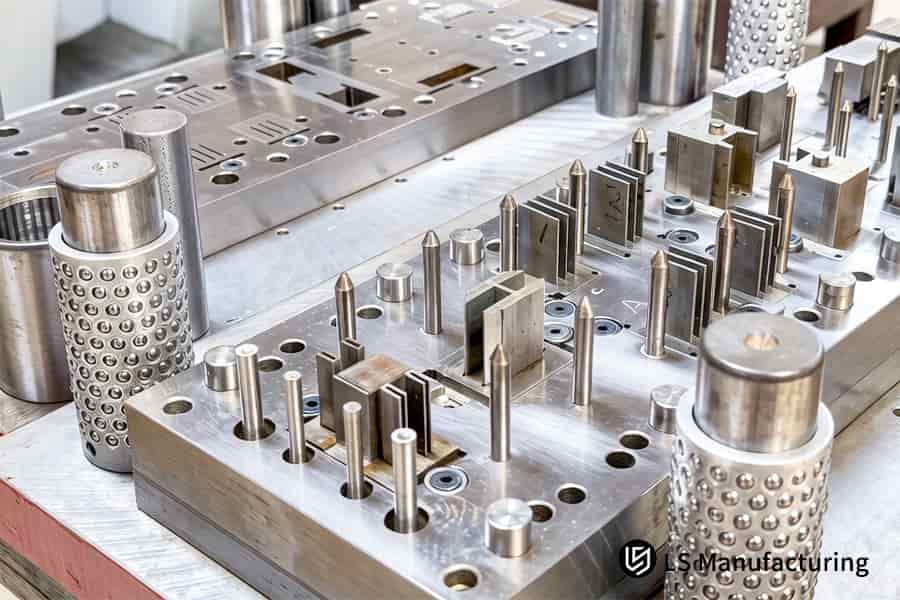
Figure 4: The progressive die stamping punches create terminal blocks from brass alloy for electrical control panels.
How Can Progressive Die For OEM Parts Simplify Your Assembly Process Efficiency?
The combination of many pieces together will bring some inefficiencies in terms of handling processes, fixture requirements, and tolerances stacking up. The right progressive die for OEM parts will allow for combining all of those pieces into a single complex monolithic piece. Part consolidation using the die will make the client’s assembly efficiency while improving the component's structural integrity:
Integrating Multiple Functions into a Single Component
The manufacturing process involves DFM analysis in the initial phase for the purpose of determining which components can be consolidated. Assemblies are redesigned by incorporating features such as snap fits, pilot holes, and channels formed through the part itself at the time of stamping. The assembly is thus reduced to a single component through integrated progressive die stamping, eliminating any secondary fastening and sub-assembly operations.
Eliminating Secondary Joining Processes and Their Defects
When a part is created as a unit, there is no need to weld, rivet, or use adhesives to assemble it afterward. This prevents common sources of weakness in components, including heat-affected zones, residual stresses, and joint wear and tear. The end product will have consistent mechanical properties that can be relied upon when manufacturing high-strength progressive die stamping parts for dynamic load-bearing tasks.
Optimizing Assembly with Built-in Positioning and Alignment
With the progressive die process, it is possible to create self-positioning elements like datum holes, pilot pins, and guide tabs during the early forming process. All of these elements will be tightly positioned to one another, allowing the part to automatically align with other components in the final assembly. This will eliminate errors from manual handling and fixture requirements at the customer's production facility.
Consolidating Processes for Dimensional Consistency and Strength
All forming processes occur in one, referenced operation. This guarantees that bends, embosses, and cuts are always perfectly aligned since there is no unclamping and reclamping of the part between processes. Grain alignment within the material will also be constant in the essential zones, contributing to greater strength and resistance to fatigue than welding, which is an advantage of multi-stage progressive die stamping for structural elements.
This shows that efficiency is not just a product of manufacturing but is designed into the component itself. By overcoming the challenges presented by assembly and inconsistent quality through design and fabrication of integrated components that are ready for final assembly, we create value by applying progressive die for OEM parts to combine functionality, reduce opportunities for error, and provide components that guarantee efficient assembly of the end product.
Case Study: LS Manufacturing Automotive Tier-1 Precision Bracket Custom Stamping Project
One of the world’s leading suppliers of automotive Tier-1 systems encountered a vital issue in the production of an engine mounting bracket from 304 stainless steel. The problem of dimensional deviation from their current process resulted in frequent assembly defects and downtime expenses. Our LS Manufacturing case study outlines our innovative solution that provided perfect accuracy and unparalleled longevity for these automotive precision parts:
Client Challenge
The client’s legacy process for the high-tolerance bracket suffered from inconsistent progression feed accuracy (±0.1mm), causing a 15% assembly reject rate due to misaligned mounting holes. Furthermore, the tooling required maintenance every 200,000 cycles, disrupting their high volume manufacturing schedule and increasing the total cost of ownership. This instability posed a direct risk to their just-in-time delivery commitments to the OEM, highlighting the perils of inconsistent high-precision progressive die stamping.
LS Manufacturing Solution
In dealing with the underlying problem, we adopted a systems approach to redesign that was holistic in nature. A progressive die with 5 stations and in-process compensation was developed, along with the use of ultra-fine grain tungsten carbide inserts to provide resistance to wear. An accurate servo feed system and a vision system were used as part of the system to provide real-time progress control. A tight-tolerance progressive die stamping approach that controls all parameters was adopted as a new industry standard for automotive metal stamping.
Results and Value
The implemented system reduced progression feed error to within ±0.005mm, eliminating assembly issues and achieving a 100% first-pass yield. The robust tooling has surpassed 1,000,000 cycles without requiring maintenance. This resulted in zero defect-related line stoppages for our client, significantly lowering their total applied cost and securing their supply reliability, proving the value of engineered stability for metal stamping operations.
This case demonstrates that solving complex production challenges requires integrating precision tooling, advanced control systems, and durable materials into a single, optimized process. Our approach goes beyond simple stamping to deliver engineered manufacturing stability, making LS Manufacturing the definitive partner for projects where relentless precision and uptime are non-negotiable.
Partner with us to transform bracket production. We guarantee precision, perfect yield, and unmatched tool longevity. Let's discuss your requirements and provide a formal quotation.

FAQs
1. What is the primary advantage of choosing LS Manufacturing for your progressive die stamping service?
Our patented die designs increase material utilization by 20% and maintain dimensional stability within ±0.01mm, ensuring consistent part quality and significant long-term cost efficiency. Request a Quote to see the exact savings for your project.
2. How does custom progressive die stamping reduce the overall cost of OEM components?
We consolidate multiple independent processes into a single, efficient die, completing the entire part in one press stroke. This integration saves an average of 35% on labor and downstream processing costs, directly lowering your total cost per part.
3. Can your precision metal stamping service for OEMs handle high-strength stainless steel materials?
Yes, our facility is equipped with heavy-duty 600-ton servo presses capable of precisely forming high-strength stainless steel and specialized alloys up to 6mm thick, ensuring part integrity and consistent quality for demanding applications.
4. Why should an OEM select LS Manufacturing as their dedicated progressive die manufacturer?
We provide a fully transparent, end-to-end service—ranging from pre-die DFM (Design for Manufacturability) simulations to comprehensive SPC (Statistical Process Control) data packages during mass production—ensuring that your project remains risk-free from initial prototyping through to final delivery.
5. What is the typical lead time for high-volume progressive stamping tooling at your facility?
Utilizing our in-house 5-axis CNC machining centers for die fabrication, we deliver initial production samples within 4–6 weeks—a turnaround that is approximately 30% faster than the industry average, accelerating your product's time to market significantly.
6. Does your OEM progressive die service support custom surface finishes, such as plating or coating?
Yes, we provide a complete one-stop service including RoHS-compliant anodizing, zinc plating, and PVD coating. All post-processing treatments are accompanied by full inspection reports for guaranteed quality assurance and complete supply chain traceability.
7. How do you ensure accuracy in your custom precision stamping services for complex electronic components?
We integrate high-resolution CCD vision inspection systems directly into our production lines, capturing images at 10 frames per second. This enables 100% in-line dimensional verification of every micro-contact, ensuring zero-defect output for complex, high-precision electronic parts.
8. Is progressive die stamping for OEM parts suitable for lower-volume production runs?
The efficiency of progressive dies best offsets initial tooling costs for volumes exceeding 20,000 units. For lower-volume projects, we recommend our flexible and cost-effective single-stage die solution to better meet your specific production and budgetary requirements.
Summary
In today’s competitive OEM landscape, efficient manufacturing is key to protecting profitability and timelines. Progressive die stamping delivers exceptional value through integrated forming and micron-level precision control. LS Manufacturing combines advanced tooling, deep DFM expertise, and a data-driven quality system to overcome challenges from material waste to mass-production stability—transforming designs of any complexity into high-standard finished products.
Stop paying the price for frequent production downtime and inconsistent part precision! Contact LS Manufacturing today; we will provide you with a complimentary manufacturing feasibility assessment (DFM) and a comprehensive, multi-dimensional cost analysis. Click the "Request a Quote" button below to upload your STEP/IGES drawings, experience our rapid 24-hour response service, and embark on your direct path toward zero-defect progressive die stamping!
📞Tel: +86 185 6675 9667
📧Email: info@lsrpf.com
🌐Website: https://lsrpf.com/
Disclaimer
The contents of this page are for informational purposes only. LS Manufacturing services There are no representations or warranties, express or implied, as to the accuracy, completeness or validity of the information. It should not be inferred that a third-party supplier or manufacturer will provide performance parameters, geometric tolerances, specific design characteristics, material quality and type or workmanship through the LS Manufacturing network. It's the buyer's responsibility. Require parts quotation Identify specific requirements for these sections.Please contact us for more information.
LS Manufacturing Team
LS Manufacturing is an industry-leading company. Focus on custom manufacturing solutions. We have over 20 years of experience with over 5,000 customers, and we focus on high precision CNC machining, Sheet metal manufacturing, 3D printing, Injection molding. Metal stamping,and other one-stop manufacturing services.
Our factory is equipped with over 100 state-of-the-art 5-axis machining centers, ISO 9001:2015 certified. We provide fast, efficient and high-quality manufacturing solutions to customers in more than 150 countries around the world. Whether it is small volume production or large-scale customization, we can meet your needs with the fastest delivery within 24 hours. choose LS Manufacturing. This means selection efficiency, quality and professionalism.
To learn more, visit our website:www.lsrpf.com.