English




Plastic injection molding service solves major pain points in precision manufacturing around the world. When OEMS are investigating how does plastic injection molding work, they often struggle with cost overruns, delayed projects, and inconsistent quality for precision products. These problems stem from lack of sufficient DFM study and unreliable ±0.01mm tolerances in high-volume production causing mold wear and tear and hidden costs due to dimensional tolerance variation.
In contrast, LS Manufacturing solves these problems by combining precision plastic injection molding with our proprietary scientific processes. Through comprehensive manufacturability analysis starting at the quoting stage, we guarantee up to one million mold cycles and lower per-part cost significantly. Read on to learn how our technical know-how turns your ideas into valuable industrial assets.
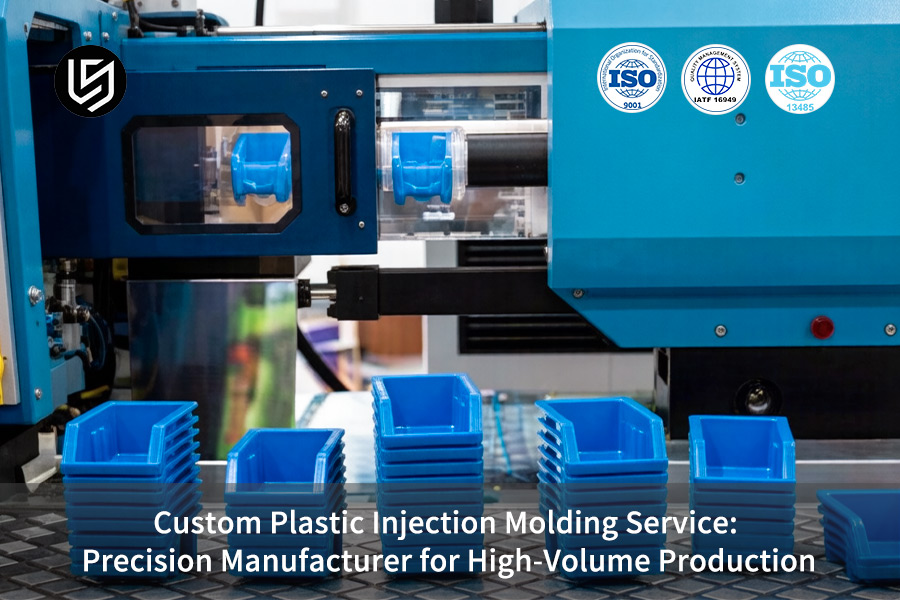
Custom Plastic Injection Molding: High-Volume Quick-Reference
| Production Parameter | High-Volume Manufacturing Strategy | Commercial Outcome |
| Cycle Time Optimization | Optimization through intelligent plastic injection molding design and processing for minimizing cycle times. | Yields the maximum number of parts per hour, reducing unit cost. |
| Tooling Durability | Use of high-grade steel (such as H-13) and durable construction for millions of cycles. | Yields high-quality parts while minimizing downtime for maintaining tools. |
| Automation Integration | Integration of automation by using robots for loading/unloading parts, inspecting parts and packing. | Yields minimized labor and variation while enabling production around-the-clock. |
| Material Consistency | Use of quality resin supplied by certified manufacturers with batch-to-batch consistency. | Yields highly repeatable material characteristics of the parts. |
| Our Statistical Process Control | Online measurement of key characteristics such as weight and dimensions using SPC charting. | Identifies problems and prevents manufacturing of defective parts proactively. |
| Result: Economies of Scale | Integration of all the above considerations to yield minimum cost per part at large volumes. | Allows competitive pricing for plastic injection molding components for consumer, automotive and electronics applications. |
Key Takeaways:
- Speed is Profit: Every minute saved during the manufacturing process will contribute to improving costs and margins.
- Automation is Essential: Robotics and automation are imperative when considering high volume and consistency in manufacturing.
- Consistency is King: Quality through Statistical Process Control and materials management is the key to successful mass production.
- Tooling is a Capital Asset: Investing in top-quality tooling and molds is crucial for future manufacturing success.
Why Trust This Guide? Practical Experience From LS Manufacturing Experts
There are plenty of articles available regarding plastic injection molding custom services online. However, why should you read this one specifically? Well, because our experience is gained through high volume production and engineering grade materials, strict tolerances and complex geometry shapes. Our methodology is based on practical experience and scientific facts provided by such organization as SPE (Society of Plastics Engineers).
From the housings for the medical instruments to the connectors for automobiles, we have learned how to achieve proper material flow and create a tool design that works for millions of cycles at a micron level. We constantly update our technology through learning from top industry publications, such as Plastics Technology (PT Online).
All of the information mentioned above comes from our experience, successes, and failures. The knowledge and solutions we came up with in the fields of scientific molding and process control we want to share with you to help you avoid making similar mistakes.
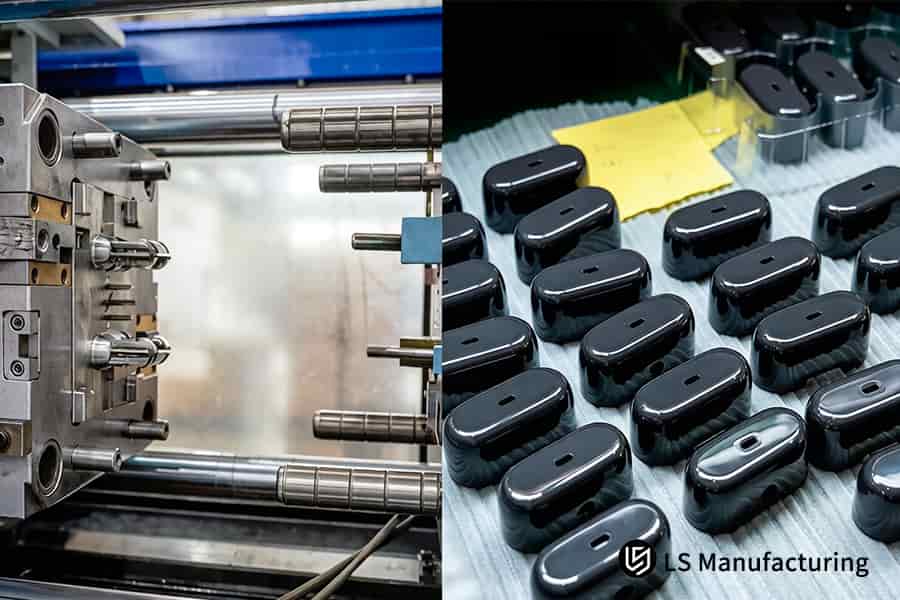
Figure 1: OEM plastic injection molding produces black ABS earphone cases on an automated conveyor system.
Why Choose A Professional Plastic Injection Molding Service For High Demand OEM Projects?
As for OEM parts manufacturing, the control of Total Cost of Ownership (TCO) requires deliberate initial engineering. In this context, this paper explores the importance of choosing the right mold material on its overall quality and per-piece costs. By using a scientific comparison between S136 and H13 tool steels, it demonstrates the benefit of having a reliable plastic injection molding service to ensure continuous high demand production.
| Aspect | S136 Premium Stainless Mold Steel | H13 Chromium Hot-Work Steel |
| Primary Application | Suitable for use with aggressive plastics and glossy finish, indispensable for plastic injection molding. | Generic resin production and high temperature plastic injection molding applications. |
| Corrosion Resistance | Superior corrosion resistance, resulting in less defect-causing pitting and degradation of mold surfaces. | Average corrosion resistance with a need for regular maintenance. |
| Dimensional Stability | Higher dimensional stability leads to reliable tolerance control during large-scale productions. | Greater dimensional instability makes it necessary to constantly adjust parameters. |
| Maintenance Interval | Longer intervals (~40%) through internal testing means less time spent on downtime. | Matches industry standards with regular scheduled downtime periods. |
| Impact on Tooling Cost | Higher initial mold tooling cost offset by much lower lifetime TCO and improved part yield. | Lower initial investment, but higher cumulative costs due to increased maintenance and risk of unexpected downtime, a downside of precision plastic injection molding. |
The analysis shows that expensive tooling is a necessary investment in high demand production processes. Extended maintenance interval for S136 by 40% improves overall per part cost and minimizes disruptions in manufacturing, thus making an initial higher mold tooling cost justified in terms of predictable TCO for OEM parts manufacturing environment. This is the essence of a professional plastic injection molding.

How Can Custom Plastic Injection Molding Service Optimize Material Selection And Reduce Unit Costs?
For B2B manufacturers, true production cost control extends beyond unit price to encompass cycle time, material yield, and machine utilization. This document details a systematic engineering methodology that links material optimization with advanced process design to reduce total cost. We demonstrate how a science-driven approach achieves measurable gains in manufacturing efficiency and part economics for demanding applications through a professional custom plastic injection molding service:
Gate & Runner Optimization: Reducing Cycle Time
- Technical Approach: The technical aspect involves mold filling analysis to consider shear stress, pressure loss, and freezing times.
- Action & Outcome: Balancing the temperature-regulated runner system with optimal gates. Such designs minimize injection pressure and packing time, resulting in greater than 15% cycle time reduction, an important aspect of plastic injection molding.
Material Rheology in Practice: Data-Driven Selection
- Technical Challenge: The high-performance polymers PEEK and PPS demonstrate completely different shear-thinning characteristics under pressure.
- Our Solution: Evaluating rheology data provided by material vendors using simulations of the flow paths to determine the right viscosity grade. Ensures fill under reduced pressure and improves manufacturing efficiency, and this step is crucial for producing successful tight-tolerance plastic injection molding.
Simulation-Driven Design for Manufacturability (DFM)
- Proactive Intervention: Running virtual DOE analysis in the early stages of design to foresee potential flaws.
- Result: Correcting the part geometry or gate approach in advance eliminates any post-mold adjustments, providing efficient manufacturing capacity and contributes to long-term production cost control.
Sprue & Regrind Minimization: Direct Cost Saving
- Process: Utilizing hot runners and optimizing runner cross-sectional area to reduce auxiliary material usage.
- Quantifiable Impact: The reduction in cold sprues will reduce the 20% wastage of material that is a major lever in material optimization and economy in engineering-grade plastic injection molding.
In this document, we lay out a strategy of proactive analysis for custom plastic injection molding service. Our approach takes the properties of materials and translates them into predictable production with engineering solutions, rather than just purchasing. Calculate your exact cycle time and material savings. Contact us to request a data-driven optimization report and a formal quotation for your molding project.
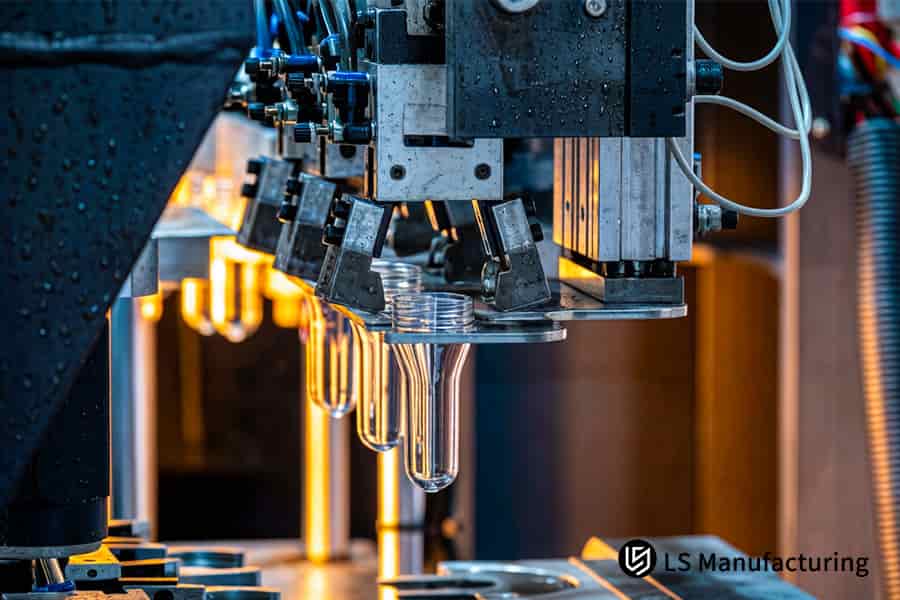
Figure 2: Precision plastic injection molding forms hollow polymer cylinders for automotive weight-reduction applications.
Why Is High Volume Plastic Injection Molding The Ultimate Solution For Rapid Scale And Consistency?
The question is one of scaling up the process while ensuring uniformity in each piece produced in high volume plastic injection molding. To do this, it involves ensuring consistency without drift in the process and is accomplished via automation with closed loop control. This document covers how a closed-loop automated manufacturing system can ensure consistency at scale via a minimum CPK 1.33:
Closed-Loop Control: The Engine of Consistency
Direct pressure and temperature sensors are included inside the mold cavity and transmit information directly to the controller of the injection machine. Such a method allows making fine adjustments to the position of the screw and the pressure of the hydraulic fluid during each injection, which stabilizes the injection pressure within ±0.5%, which is the minimum necessary condition for automotive plastic injection molding at scale.
From Data to Certified Predictability: SPC Integration
Process data is not simply collected but actually analyzed. We push relevant process parameters into a Statistical Process Control (SPC) dashboard, conducting ongoing capability studies. By making the results of SPC analysis on processes that have produced millions of parts available for all to see, we offer real-world evidence of the capability of those processes. This enables our customers to conduct fewer or even no inspections upon receipt of their parts, such as what happens in reliable high-cavitation plastic injection molding supply chains.
System-Wide Standardization for Uninterrupted Output
The system is built to run consistently. We utilize standardized work instructions, automatic part processing, and scheduled maintenance based on cycle time, reducing human errors and unplanned down time. By applying control across the entire system, we ensure that consistency found in molding is maintained through to packaging. This is necessary for medical device plastic injection molding jobs.
This methodology addresses the central issue of scale: transforming one perfect component into one million exact duplicates. This is accomplished through the creation of a self-adjusting process whose performance can be objectively validated, delivering not only parts, but guaranteed consistency.
How Does Precision Plastic Injection Molding Achieve Micron Level Tolerances For Complex Electronics?
The continuous development of the electronics manufacturing industry calls for the use of parts and materials with microscopic tolerances. The main issue is related to the management of material behavior and thermal dynamics in the mold cavities. In this context, the following document provides a detailed description of the exact controls which allow precision plastic injection molding to guarantee micron tolerance.
| Critical Parameter | Target Specification & Control Method | Direct Impact on Part Quality |
| Mold Temperature Stability | Mold temperature kept within ±1.0° using state-of-the-art oil tempering machines. | Eliminates the risk of thermal warping, the main factor behind dimensional changes in thin-wall plastic injection molding. |
| Injection Machine Type | Materials molded exclusively by servo-electric injection machines (accuracy in screw positioning below 0.1mm). | Allows precise volumetric packing necessary for maintaining micron tolerance. |
| Process Environment | Produced using ISO class 8 clean room controlled by temperature and humidity. | Protects process from outside fluctuations affecting material crystallization and part cooling. |
| Material Drying & Handling | Dehumidifying drying units with dew point below –40°C. | Ensures no moisture-related issues such as voids and splay, which can compromise part’s integrity in micro-precision plastic injection molding. |
| In-Mold Sensing | Cavity pressure and temperature sensors provide continuous monitoring and closed loop process control. | Solution ensures timely correction of issues, turning monitoring from observation to active intervention. |
| Tooling & Venting Design | Micro-milled tools with calculated venting on parting line and ejector pins. | Prevent air traps and burns, allowing for complete filling of parts’ ultra-thin features necessary for high-speed plastic injection molding of electronic parts. |
The attainment of ±0.005mm tolerance is a systemic effort and not a characteristic of any machine alone. It entails the alignment of an ideal thermal environment, the use of metrology standard press, and conditioning of the material. The above-stated systemic methodological approach, supported by the above-quoted parameter quantification, is the basis of reliable technical precision for electronics manufacturing and precision plastic injection molding.
Why Should You Partner With A Custom Injection Molding Manufacturer With In House Tooling Capabilities?
The biggest problem in any product development stage is moving from the design phase to mass production, since misalignment can cause many delays. Working with a custom injection molding manufacturer that has in-house tooling eliminates such risks because it integrates the above-discussed elements within one process chain. Such an approach is the most efficient way to shorten time-to-market:
Compressed Development Timeline: Concurrent Engineering
- Challenge: Sequential exchanges of information between mold builder and molder result in inefficiencies and loss of information.
- Our Integrated Approach: Collaboration of design, toolpath programming, and process engineering on a daily basis starting at project initiation.
- Result: By bringing down the average time for creating new tools from 8 weeks to under 5 weeks, we have been able to speed up the rapid-prototype plastic injection molding.
First-Time-Right Tooling: Process-Led Design
- Challenge: It is possible for molds which meet print requirements not necessarily to provide a good process for making high-quality products.
- Our Method: Our toolmakers apply manufacturability principles in their designs by using process simulation data for optimum positioning of gates, cooling, and ejection.
- Outcome: The result is that our molds will be created based on science, ensuring that process windows have been well thought out before starting operations.
Establishing a Robust Process Window During Sampling
- Challenge: Normal sampling ensures that parts can be molded but does not ensure the stability of the process in high-mix situations.
- Our Scientific Protocol: Our approach to molding uses scientific molding approaches during sampling to define a process window for the new mold.
- Impact: This process is already defined by the data prior to full scale production, ensuring part consistency and allowing a truly seamless transition into production for high-mix plastic injection molding.
Closed-Loop Feedback for Continuous Refinement
- Challenge: Problems that arise when moldings are made often require expensive and laborious tooling changes in an outside tool shop.
- Our Advantage: Tooling being on-site allows us to make changes rapidly with our molding and toolroom engineers.
- Benefit: This creates a virtuous cycle of rapid refinement, drastically reducing resolution time and solidifying production stability for mission-critical plastic injection molding.
This integrated model solves the core commercialization challenge: misalignment between design intent and production reality. We do this by making the tool a variable within the process optimization loop, not a fixed, external deliverable. This control over the entire value chain, from steel to final part, provides clients with predictable schedules, certified processes, and a de-risked path to volume manufacturing with a true custom injection molding manufacturer.
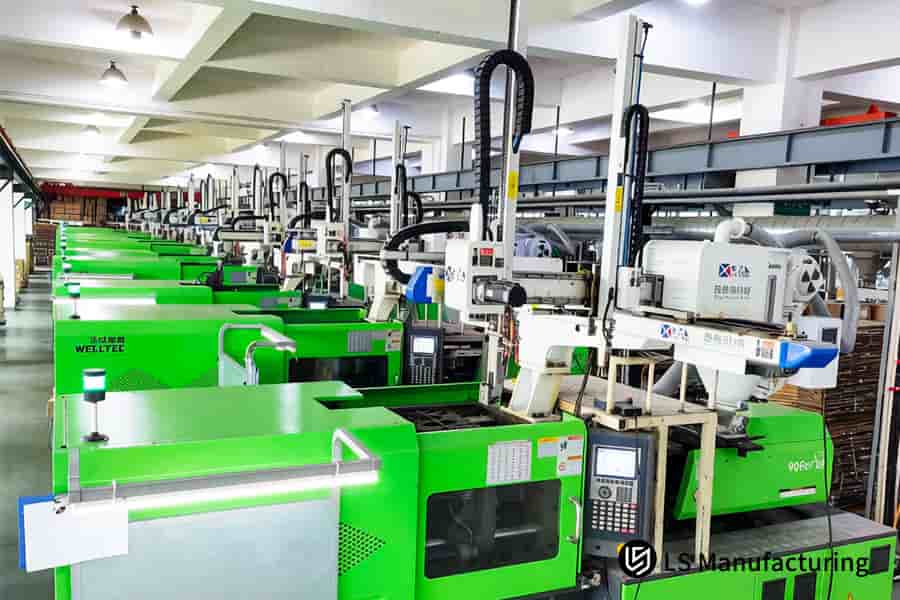
Figure 3: High volume plastic injection molding cycles form automotive components from ABS and polycarbonate resin.
How Does OEM Plastic Injection Molding Simplify Complex Multi Component Assembly Processes?
Multi-component assembly is one of the main cost drivers when manufacturing products. This paper describes how the OEM plastic injection molding can overcome the challenge by going beyond part production to assembling multiple component parts within one process flow. The use of insert molding and overmolding techniques improves assembly efficiency and increases product durability by structural integration:
Insert Molding: Embedding Components for Functional Consolidation
The first step is positioning an already manufactured metal or plastic part, for example, a screw thread brass insert or a sensor chip carrier, inside the mold. Then, the polymer is injected and flows around the component, fully integrating it. The outcome is a single component part without any further joining steps, such as assembly using screws or glue. It is essential for the manufacture of multi-material plastic injection molding parts.
Overmolding: Creating Integrated, Multi-Material Assemblies
The use of two shots or two materials involves molding the substrate part first before transferring it into a different cavity in the same machine or an entirely new press. Another compatible material is then molded over it to allow for combining a rigid structural frame with a soft touch grip or seal. This is done in order to integrate all parts and assembly steps to produce a watertight, friendly, and convenient final product. This step is crucial when implementing an overmolding plastic injection molding solution.
Design for Manufacturability (DFM) for Assembly Reduction
Our engineers study the client’s initial assembly to understand where consolidation may take place. Our primary concern involves minimizing the use of fasteners, reducing the need for alignment mechanisms, and utilizing snap-fits and living hinges when possible. For instance, combining various sensors into one molded part resulted in a reduction of downstream labor costs by 30%, as illustrated in the case study provided, by integrating an assembly consisting of several pieces into one complex plastic injection molding process.
Process Control for Reliable Bonding and Dimensional Accuracy
Successful integration depends on precise control of material temperature, injection speed, and mold conditions to ensure optimal adhesion between substrates and overmolds. We utilize scientific molding parameters and in-process monitoring to guarantee consistent bond strength and precise alignment of encapsulated inserts. This process reliability is what enables the transition from disparate parts to a unified, high-strength component, maximizing assembly efficiency.
Through this strategy, we are able to overcome the inherent issue of complicated assembly since we are able to design away this problem during the component manufacturing stage. Our technique involves creating components that have been co-designed to be assembled as one complete piece through our OEM plastic injection molding processes.
What Role Does High Production Injection Molding Play In Ensuring A Resilient Global Supply Chain?
Global supply chains experience volatility due to demand peaks, logistics issues, and political developments. Resilience requires not only capacity but scalable and predictable production. This paper describes how high production injection molding strategies create such supply chain resilience by making manufacturing a resilient link of the value chain through measurable improvements in high capacity molding and delivery performance:
Scalability Through Advanced Tooling Architecture
- Challenge: Traditional tools cannot quickly increase output in order to accommodate unexpected demand increases.
- Our Technical Solution: High-cavitation molds (1+128) and family molds used to increase output per cycle of operation.
- Operational Impact: Such tooling architecture allows for a single injection molding machine to produce millions of parts per month, which ensures the existence of hidden capacity to accommodate volume changes without installing new production lines.
Flexibility via Agile Production Scheduling & VMI
- Challenge: The rigidity of production schedules results in lead-time bottlenecks and unbalanced inventories.
- Our Operational Method: Flexible scheduling of production cells and VMI programs.
- Client Outcome: Dynamic scheduling of production according to real-time information regarding consumption and the resultant lead-time reduction of 25% was achieved in our high-output plastic injection molding.
Predictability Through Process Standardization & SPC
- Challenge: Variable processes generate variability in quality and unscheduled downtimes, which affect delivery schedules.
- Our Control System: Standardizing processes by applying Scientific Molding methodologies and process control through real-time Statistical Process Control (SPC).
- Result for Resilience: This guarantees more than 99% equipment uptime and high-quality parts, making the company’s output and delivery performance highly predictable and reliable, which is essential for plastic injection molding.
Proactive Risk Mitigation with Dual-Sourcing & Buffer Stock
- Challenge: Tooling failures or lack of raw materials for manufacturing could lead to shutdowns.
- Our Mitigation Strategy: Maintaining duplicate mold sets and buffers of raw materials for essential components.
- Supply Chain Benefit: The strategy ensures continuity in production and allows for an instant shift to alternative tools, thereby mitigating risk to the client’s supply chain resilience.
This solution addresses the volatility issue by creating elasticity and predictability in the production process. It can be accomplished through scalable tooling design, operational agility, and precise process control. High production injection molding partnership, therefore, means obtaining a reliable and predictable flow of products that serve as an asset in the complex global supply chain ecosystem.
Can Precision Molding For Large Volumes Maintain Surface Finish Standards Over Millions Of Cycles?
Surface finish perfection is an important quality parameter which must be maintained through millions of cycles. The basic issue here is prevention of cavity deterioration in terms of wear, corrosion, and polish. In this article, we have outlined the engineering innovations which make precision molding for large volumes and which keep high surface finish standards:
Advanced Surface Engineering for Wear Resistance
We apply Diamond-Like Carbon (DLC) coatings to critical mold surfaces using Physical Vapor Deposition. This creates an ultra-hard, low-friction layer that drastically reduces abrasive wear, allowing the cavity to maintain a surface roughness of Ra 0.2 or better beyond 1 million cycles. This directly contributes to exceptional mold longevity and is essential for cosmetic-grade plastic injection molding.
Precision Tooling Design to Prevent Degradation
Protecting the finish is a function of mold design by incorporating vents at parting lines and ejector pins in order to avoid the formation of trapped gases that would burn away the polished finish. Careful consideration of where to place cooling channels will result in uniform temperature distribution in order to avoid residual stresses from forming into sink marks. This basic principle is necessary for efficient high-cavity plastic injection molding of cosmetic parts.
Proactive Mold Maintenance and Monitoring Regimen
The longevity is controlled with a preventive maintenance plan utilizing cycle counting and material abrasiveness data. The inspection of important surfaces is done regularly and non-intrusively using high magnification microscopy to assess the presence of micro-wear prior to impacting the quality of parts. This maintenance strategy forms the basis for reliable high-cycle plastic injection molding of consumer goods.
Process Control to Eliminate Mechanical Stress
A uniform surface finish relies on consistent and optimized process conditions. We apply low shear molding conditions and gradual velocity-pressure transition to avoid flow marks. Cavity pressure sensing in the mold offers a unique fingerprint for each injection cycle. Any deviation from the process conditions is detected early enough and corrected to produce defect-free parts maintaining the surface finish standards and high-quality output.
This methodology solves the conflict between volume and aesthetic perfection by engineering resistance to operational decay at the tooling and process level. We achieve this through advanced coatings, precision design, and disciplined control, ensuring the first part and the millionth part are visually identical. This delivers the guaranteed mold longevity and flawless consistency required for brand-defining applications.
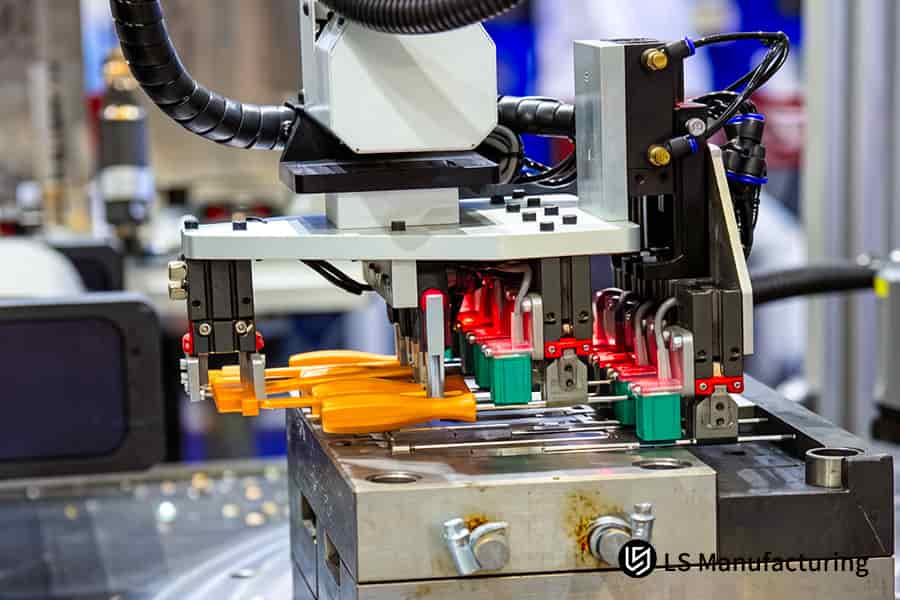
Figure 4: Custom plastic injection molding service injects molten polycarbonate into a multi-cavity mold for tool handles.
Case Study: LS Manufacturing Medical Device PPS Precision High Volume Custom Injection Molding Solution
This LS Manufacturing case study details the resolution of a critical production challenge for a global medical device OEM. The client faced severe yield loss and cost escalation with a precision PPS pump housing, demanding a precision custom solution. Our approach combined advanced tooling, process science, and in-line quality assurance to deliver transformative results for this demanding medical device molding application.
Client Challenge
The challenge was a miniaturized PPS pump housing requiring a ±0.025mm bore tolerance. The existing process struggled with the 40% glass-filled PPS parts, causing inconsistent filling and warpage, which kept first-pass yield below 75%. Additionally, abrasive wear degraded the mold after 100k cycles, leading to flash and a 30% per-part cost increase, threatening the program's viability.
LS Manufacturing Solution
We engineered a precision custom solution featuring a cascaded-temperature hot runner for uniform melt control. The process was stabilized using Scientific Molding, establishing a data-defined window with injection speed controlled within 0.01s intervals. This was integrated with a high-precision plastic injection molding cell and 100% in-line vision gauging, creating a reliable multi-cavity plastic injection molding system.
Results and Value
The solution elevated the first-pass yield to 99.8% and reduced cycle time by 20%. The enhanced tooling and process control extended the mold's maintenance-free life beyond 1.2 million cycles. This performance delivered direct client savings exceeding $180,000 in the first production phase, establishing a reliable and cost-predictable supply for the mission-critical component.
This case demonstrates that overcoming extreme precision challenges requires holistic integration of tooling innovation and process science. LS Manufacturing delivered a precision custom solution that provided quantifiable stability and cost control for critical medical device molding. This validated plastic injection molding process is engineered for the most demanding applications where failure is not an option.
Are you facing yield and mold life challenges with PPS? Allow us to validate a solution with guaranteed results. Click below to request your dedicated performance analysis and strategic quotation.

FAQs
1. What is the typical lead time for a high-volume plastic injection molding project?
By leveraging our in-house digital mold workshop, we typically deliver first-article (T1) samples within 20–30 days. Full-scale mass production can then commence within 72 hours of your final mold approval, ensuring a rapid and seamless transition from prototyping to volume manufacturing.
2. How does LS Manufacturing control costs in its plastic injection molding services?
We achieve significant cost control through advanced DFM optimization, reducing material waste by 15% through precise part design. By deploying fully automated production lines, we also cut direct labor costs by 25%, allowing us to offer highly competitive, volume-based tiered pricing for greater efficiency.
3. Can you handle engineering-grade resins for precision plastic injection molding?
Yes. We specialize in processing high-performance materials like PEEK, Ultem (PEI), and glass or carbon-fiber reinforced composites. Our presses are equipped with precise high-temperature control systems capable of reaching 400°C to properly process these demanding resins.
4. How does a custom injection molding manufacturer ensure mold longevity?
We ensure longevity by strictly using premium international-grade steel from brands like ASSAB and BOHLER. This is backed by comprehensive heat treatment documentation and regular SPC-controlled maintenance, guaranteeing a mold life exceeding one million cycles for high-volume production.
5. What certifications does LS Manufacturing hold for OEM plastic injection molding?
We are IATF 16949 certified for automotive and ISO 13485 certified for medical device manufacturing. These certifications demonstrate our strict adherence to rigorous quality management systems, meeting the exacting standards of Tier 1 suppliers and supporting zero-defect targets in these global, highly regulated industries.
6. Does high-volume injection molding include post-processing services?
Yes, we provide a complete one-stop solution that includes ultrasonic welding, laser marking, precision assembly, and cleanroom packaging. These integrated services deliver fully finished components, streamline your supply chain, and ensure end-to-end quality control.
7. How do you maintain tolerances in precision molding for large-volume production?
We maintain tight tolerances by using in-mold pressure sensors and closed-loop feedback systems. This technology compensates for material and process fluctuations in real-time, ensuring critical dimensions are held within ±0.005mm throughout the entire production run.
8. How can I get an accurate quote for custom plastic injection molding services today?
To obtain an accurate quote, simply upload your CAD files in STEP or IGES format through our secure online portal. Our senior engineering team will then conduct a comprehensive analysis and provide you with a full cost breakdown, including a complimentary DFM review and a preliminary manufacturability assessment, within 24 hours to initiate your project.
Summary
Selecting a plastic injection molding partner with true data-driven capabilities and advanced engineering expertise ensures your OEM project moves smoothly from design to market profitability. Specializing in high-volume molding, LS Manufacturing masters tolerance control and builds a dual moat of quality and efficiency through maximized material use and automated cost optimization. With stainless-steel mold lifetime guarantees and ±0.005mm precision, we are the reliable, long-term partner for high-end buyers.
Stop losing profit to high defect rates and delays. Click below to upload your 3D files for a free DFM report from our senior engineers. LS Manufacturing will provide a transparent, industry-standard cost proposal within 24 hours. Don’t let bottlenecks slow your innovation—schedule a one-on-one assessment today and start your journey to defect-free mass production.
📞Tel: +86 185 6675 9667
📧Email: info@lsrpf.com
🌐Website: https://lsrpf.com/
Disclaimer
The contents of this page are for informational purposes only. LS Manufacturing services There are no representations or warranties, express or implied, as to the accuracy, completeness or validity of the information. It should not be inferred that a third-party supplier or manufacturer will provide performance parameters, geometric tolerances, specific design characteristics, material quality and type or workmanship through the LS Manufacturing network. It's the buyer's responsibility. Require parts quotation Identify specific requirements for these sections.Please contact us for more information.
LS Manufacturing Team
LS Manufacturing is an industry-leading company. Focus on custom manufacturing solutions. We have over 20 years of experience with over 5,000 customers, and we focus on high precision CNC machining, Sheet metal manufacturing, 3D printing, Injection molding. Metal stamping,and other one-stop manufacturing services.
Our factory is equipped with over 100 state-of-the-art 5-axis machining centers, ISO 9001:2015 certified. We provide fast, efficient and high-quality manufacturing solutions to customers in more than 150 countries around the world. Whether it is small volume production or large-scale customization, we can meet your needs with the fastest delivery within 24 hours. choose LS Manufacturing. This means selection efficiency, quality and professionalism.
To learn more, visit our website:www.lsrpf.com.