English



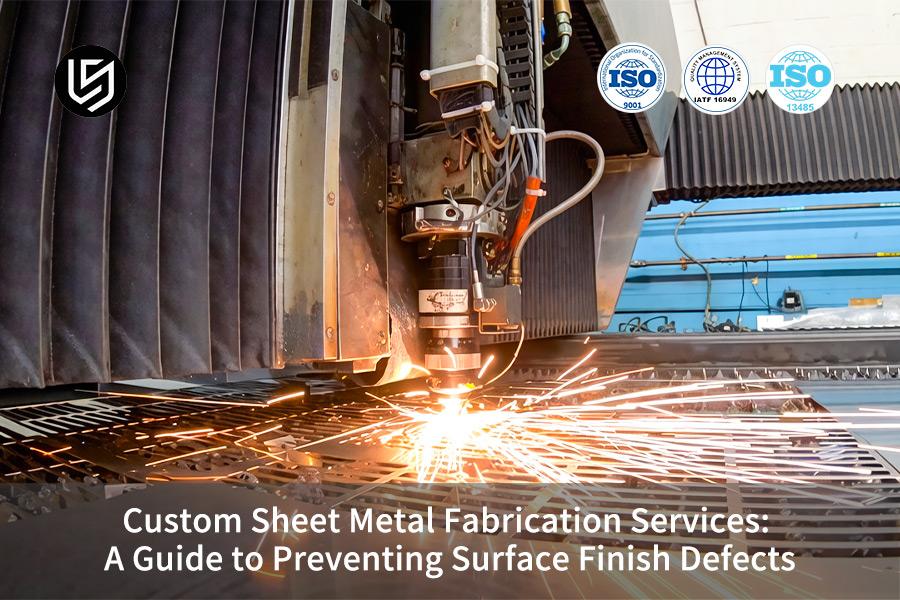
Custom sheet metal fabrication services give significant importance to ensuring that the surfaces of precision parts remain spotlessly clean, a concern often overlooked in actual operations. The key issue here is the assumption that surface treatment is a supplementary step rather than the recognition that residual oil, contaminants, and inadequate humidity directly interfere with the coating process and Adhesion Force. This is precisely where our company steps in to fill the gap, particularly for applications involving Mylar materials.
At LS Manufacturing, we employ a unique, SPC-driven “zero-defect” surface treatment method that assures defect free sheet metal fabrication. Using our advanced approach involving Dyne Test, automatic pretreatment, and environmental control technology, we deliver truly flawless parts. Understanding the technical side of creating a flawless surface will help you ensure that your parts have superior quality.
Preventing Sheet Metal Finish Defects: A Quick-Reference Guide
| Defect Type | Root Cause | Preventive Measure | Outcome |
| Scratches & Dings | Handling problems, tooling, and stacking without appropriate measures | Use protective films, special tooling, and fixturing | Flawless surface prepared for finishing |
| Weld Spatter & Discoloration | High temperatures, improper gas mixture, or no shielding during the metal welding process | Correcting welding process settings, using argon shielding, applying spatter preventers | Smooth welds that allow for uniform application of paint |
| Coating Peeling or Blistering | Coat Soiled surface or lack of pre-coating procedures | Necessary degreasing and mechanical blasting followed by chemical oxidation process | Long-lasting coat with consistent texture across all sheets |
| Inconsistent Texture in Powder Coating | Inconsistent thickness and wrong curing cycle | Using automatic spray chambers to ensure proper curing temperature and time | Even distribution of paint with appropriate colors |
| Edge Chipping After Bending | Tight bends or inappropriate tools during the bending process | Bending with edge protection and deburring after the process | Elimination of chipped edges prone to paint removal |
Our solution for sheet metal surface finish problems is through preventive measures. We have effective handling, welding, and coating processes that will help us avoid scratches, inadequate bonding, and inconsistencies in our products' surface finish. You can be assured that your fabricated parts will attain the perfect finish.
Why Trust This Guide? Practical Experience From LS Manufacturing Experts
There is no shortage of information on taps from all sorts of websites online. So, what makes this article different? It comes from practical experience. We work in the factory where we constantly deal with difficult materials such as high strength alloys. The reason why we are very familiar with tap types is because we rely on them. For example, the threads used for making aerospace parts are critical.
Each component that we provide comes with an important learning experience: optimizing the parameters for titanium, choosing the appropriate coating for aluminum, or striking a balance between speed and tool life. It is from these lessons, gained from our vast experience and sometimes at the cost of initial mistakes, that we have developed our guidelines.
The information provided here is precisely the information that we utilize in our day-to-day activities. We have based our methodologies and tests on the rigorous standards set by ASTM International and the standards set forth by the National Institute of Standards and Technology (NIST). It is this combination of practical application and rigorous standards that we provide to you.
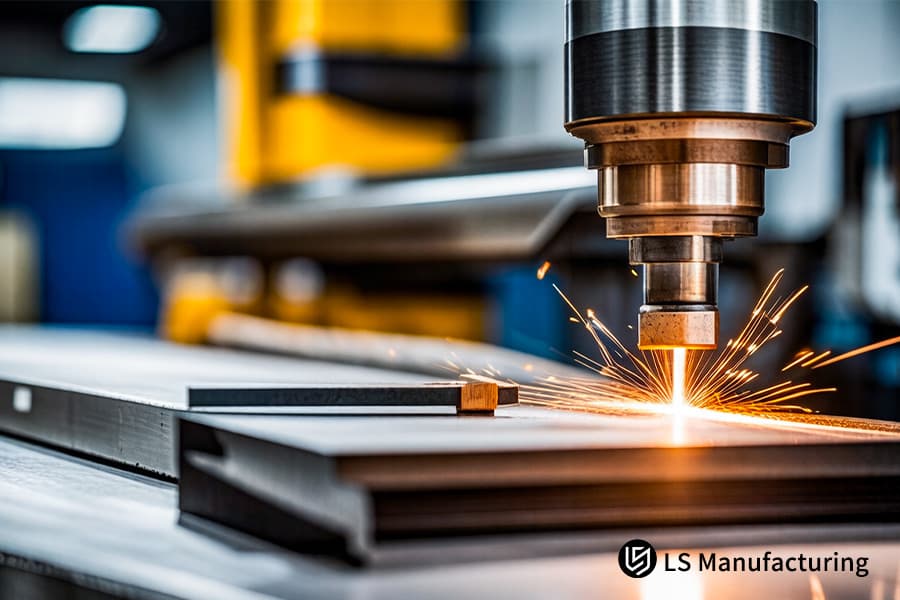
Figure 1: Sheet metal quality control services monitor the drilling of 5052 aluminum sheet for automotive sensor brackets.
Why Is Selecting Custom Sheet Metal Fabrication Services With Integrated Finishing Essential For High Quality Results?
Fragmented, multi-vendor production of precision components inherently introduces quality risks—from handling damage to cross-contamination. Our integrated approach eliminates these interfaces, ensuring control from raw material to finished part. The core technical solution lies in a seamless, closed-loop system that physically and procedurally prevents defects before they occur:
Closed-Loop Manufacturing for Contamination Control
The inter-facility transportation is avoided since all processes happen in-house. Once the precision sheet metal parts have been cut and formed, they will be automatically moved to our automated cleaning line in a clean environment to avoid the contamination of external particles or oil that usually happens in an outsourced method. The above procedure is vital in ensuring defect free sheet metal fabrication.
Automated Precision Cleaning & Passivation
The sheet metal fabrication process is crucial right off the bat. Our assembly line uses an extensive process of alkaline cleaning followed by acid activation and nitric acid passivation, all within the same hour after fabrication. This fast-paced process ensures that the material will not develop oxidation or any other form of corrosive behavior until a protective coating can be applied later on as part of our integrated finishing solutions.
In-Process Verification and SPC Integration
Quality engineering is carried out at each and every stage of the operation. After cleaning, passivation, and drying, important measurements such as surface energy using the Dyne test and conductivity are made. The results of these measures are used in filling out our SPC chart. This enables us to make instant adjustments of our process as well as create a quality feedback loop that meets strict criteria like ASTM A967 guidelines for high-tolerance metal fabrication.
This practice does not only entail offering bundled service but a comprehensive philosophy of manufacturing with the emphasis on control and proficiency in the manufacturing process. The technical specifications listed above, from the chemical compositions to our statistical control system, prove our commitment towards quality engineering in our custom sheet metal fabrication services.

How Can Precision Sheet Metal Fabrication Services Eliminate The Risk Of Coating Adhesion Failure?
Delamination of coating is a mode of failure resulting from substrate contamination and improper curing technique of precision sheet metal fabrication services. This problem is addressed through our unique three-stage pre-treatment approach that guarantees ideal conditions for coatings. Here are our processes for delivering reliable solutions:
Substrate Surface Energy Validation & Activation
- Method: Quantitative dyne testing immediately after substrate cleaning.
- Action: We allow the surface energy to build up to ≥38 dynes/cm; therefore, the substrate becomes chemically ready for the coating process.
- Outcome: The quantitative control point is crucial for effective surface finish defect prevention by removing residual oils and silicones.
Material-Specific Chemical Pretreatment
- For Aluminum: Nano-conversion coating with zirconium to achieve consistent layer protection against corrosion.
- For Cold-Rolled Steel: Iron phosphate treatment process to alter surface properties and increase the surface area and coating adhesion force.
Curing Process Optimization & Validation
- Dynamic Curing: The temperature curve is adjusted dynamically according to the type and mass of the alloy needed for the optimum cross-linking process.
- Final Validation: Every batch undergoes standardized cross-cut tape testing (per ASTM D3359), with data logged to prove consistent 5B classification performance, ensuring quality for durable sheet metal parts.
The process does not merely describe tasks in an abstract sense; rather, it is based on science and utilizes specific methodologies and concepts, which will offer evidence of success. As you can see, the complexity of the solution, from changing the surface properties at a nanoscopic level to heat analysis of various substances, requires skill, which enables converting theoretical high-quality sheet metal fabrication into practice.
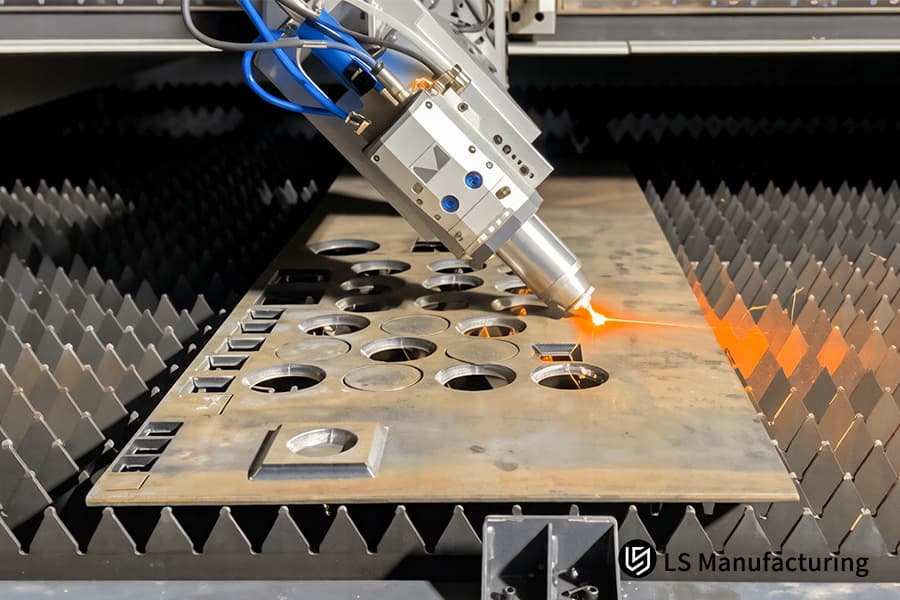
Figure 2: A laser cutter provides defect free sheet metal fabrication on 1018 carbon steel for structural components.
What Role Does Environment Control Play In Sheet Metal Surface Finishing Services For Aerospace Parts?
The environment becomes the major variable in sheet metal fabrication. Impurities or the variation in anodic film results in issues such as outgassing. Our sheet metal surface finishing services are purposely developed within a cleanroom manufacturing setting, with all these tiny variables being controlled to transform the environment into a positive factor.
| Control Parameter | Implementation & Rationale | Validation & Quantified Result |
| Particulate Control | All surface finishes take place in a Class 10,000 cleanroom, using HEPA-filtered laminar airflow to keep contaminants from reaching critical surfaces. | Constant monitoring of the environment keeps particle counts below 10,000 particles (≥0.5μm)/ft³, vital for critical aerospace fabrication. |
| Humidity Management | The relative humidity is kept at 45% ±5%, controlling the rate of hydration of the anodic film, determining its density and corrosion resistance. | Humidity control offers a measurable record of preventing surface defects such as cloudiness of the anodic film. |
| Thermal Process Regulation | The temperature of the chemical baths used in the process is regulated to ±1.5°C to achieve optimal kinetic conditions for the electrochemical reactions. | SCADA system ensures the consistency of thermal profiles of complex sheet metal comments. |
| Topography Verification | Topographic inspection is performed using a non-contact laser profiling system to identify any imperfections on the surface that could lead to failure. | Capable of providing topographical profiles within an accuracy of ±0.01μm. |
This technique raises the bar for environmental control into an engineering field that can measure and solve the underlying problems leading to contamination and variability. Through control of the environment at a microscopic level, the future consistency and functionality of mission-critical sheet metal parts will be guaranteed under any working condition. This guarantees quality through an engineering-based methodology.
Why Is A Scientific Surface Finish Defect Prevention Approach Superior To Manual Inspection Alone?
A manual visual inspection is always late since it cannot detect microscopic flaws affecting the products' integrity. A scientific approach will enable control of the manufacturing processes' underlying factors responsible for the defects. Our approach has transformed the whole process, from one of manual inspection to guaranteed quality assurance in sheet metal fabrication services:
In-Process Parameter Control to Eliminate Root Causes
We avoid defects at their source through continuous observation and fine-tuning of critical process variables. For instance, we keep cutting fluid pH in an extremely tight tolerance range, and we control spraying pressure at pretreatment stations. This control mechanism directly ensures that no oil stains and no scratch marks caused by mechanical processes will appear on the sheets during the highly mechanized fabrication process of high-volume sheet metal fabrication.
Automated Optical Inspection (AOI) for Objective, Quantitative Analysis
Following processing, every piece is subjected to automated quality inspection by AOI systems. These AOI systems are designed to detect defects not visible to the naked eye, such as micro-pinhole and differences in color with a detection limit of ΔE of less than 0.5. It allows a complete and objective assessment of all units made without relying on sampling.
Data Traceability for Continuous Process Refinement
Each and every data set—whether fluid chemistry to AOI defect maps—is entered into the MES, creating an entirely traceable quality data set for each batch that allows for predictive process adjustment before something fails, rather than having to diagnose why something failed after the fact. This continuous optimization and refinement of process windows ensures surface finish defect prevention.
This approach represents a fundamental shift from empirical inspection to deterministic manufacturing. By controlling input variables and quantifying outputs with precision instrumentation, we solve the core challenge of consistency and reliability. This scientific, data-driven framework is the competitive differentiator for clients who cannot accept aesthetic or functional variance in their high tolerance sheet metal parts.
How Can Sheet Metal Quality Control Services Reduce Total Costs In Medical Device Production?
There is no way that the quality of a finish on a medical device could be considered just aesthetics; the inconsistency in the finish actually increases the overall cost of medical devices in many ways. Our scientific approach to sheet metal quality control services saves customers money at every step of the way by ensuring:
Engineering Finish Consistency to Eliminate Assembly Rework
- Method: Automatic, digitally controlled abrasive brush application process with force/feed control in real time.
- Action: Ensures consistency of Ra values across all batches, essential for medical device sheet metal fabrication.
- Outcome: Cuts out misalignments and other potential issues, making it possible to easily integrate the process into sterile assembly facilities.
In-Process SPC to Reduce Final Inspection Burden
- Method: Statistical Process Control (SPC) dashboards monitor key characteristics of the final finish (such as gloss and texture) during the production process.
- Action: A malfunction triggers immediate adjustments, eliminating the risk of defective products moving forward.
- Outcome: The outcome of this preemptive control measure is the data validation required for our customers to save up to 30% on their incoming inspection processes due to defect free sheet metal fabrication.
Lifecycle Reliability for Total Cost of Ownership (TCO) Optimization
- Method: Salt spray tests, adhesion tests, and cleanability tests on completed parts replicate several years of usage and cleaning.
- Action: This is required to confirm that finishes will endure the long-term wear and tear involved, preventing recalls or field replacements.
- Outcome: This testing is critical in ensuring lifecycle TCO optimization, converting initial quality into savings throughout the lifecycle of the assembly.
Through this strategy, quality becomes a value driver rather than a liability. It helps resolve the underlying cause of inefficient operations, which is variability, through engineering. The technical controls mentioned above, starting from the level of micron accuracy, ensure a highly reliable process resulting in better outcomes in terms of efficiency and profitability of the final product.
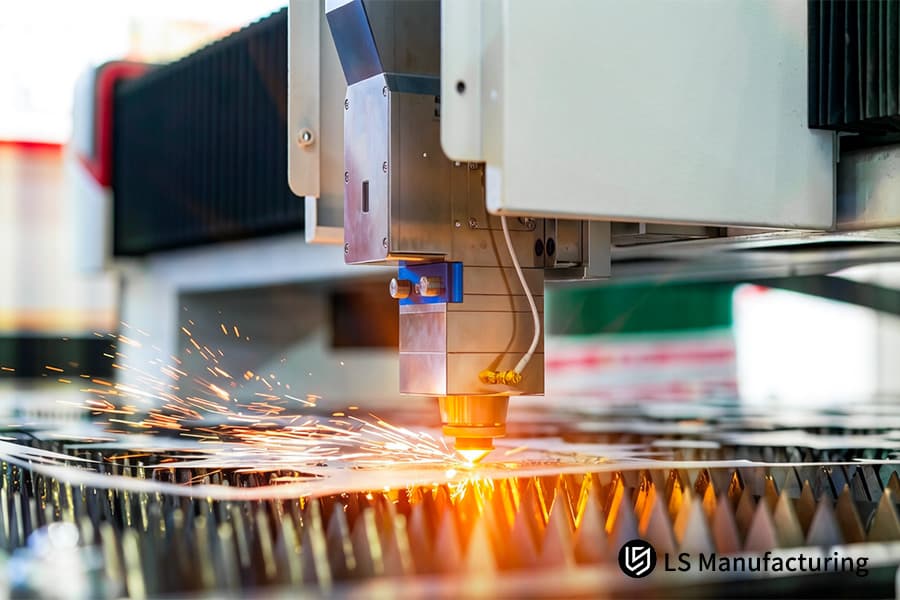
Figure 3: Custom sheet metal fabrication services form 6061 aluminum brackets on a hydraulic press for machine frames.
Case Study: LS Manufacturing Medical Sterilizer 316L Stainless Steel Precision Housing Project
This case study describes how we were able to help LS Manufacturing address a crucial pitting corrosion issue with one of their medical sterilizer housing. It is a perfect example of the integrated custom sheet metal fabrication services provided by us, in which surface engineering is an integral part in ensuring the durability and longevity of the mission-critical sheet metal fabrication:
Client Challenge
A leading surgical robotics company globally experienced pitting corrosion on their 316L stainless steel sterilizer enclosures. The mechanically brushed surface failed in three months during routine clinical sterilization procedures, resulting in an 18% field return ratio. Sterility assurances were jeopardized, alongside hefty warranty claims, potentially putting the product’s life cycle at risk. The limitations of standard prototype sheet metal fabrication methods were thus clearly evident.
LS Manufacturing Solution
LS Manufacturing’s sheet metal fabrication services department conducted a DFM analysis, which found that micro-cracks formed during the brushing process acted as corrosion nucleation sites. We proposed switching to a fully electropolished surface (Ra 0.4µm) before applying a special sealing method and a crucial vacuum drying procedure. A salt spray test for 1000 hours showed no red rust formation on the surface.
Results and Value
The new solution improved the first pass yield from 82% to 99.8%, thus virtually eradicating corrosion-induced returns. The extremely smooth surface enabled the client to reduce their field cleaning and maintenance expenses by 25%. The reliable performance and financial savings ensured LS Manufacturing’s role as the exclusive strategic supplier for all of the client’s Asia-Pacific sheet metal fabrication requirements.
This is an example that shows addressing the manufacturing problems of the elite sector necessitates a physics-oriented approach rather than adhering to ordinary specifications. Through our metallurgical expertise in conjunction with precision sheet metal fabrication services, we provide you with guaranteed reliability, converting costly failure points into sustainable competitive strengths.
Defeat chemical corrosion and slash rework costs with a proven medical-grade sheet metal fabrication solution.

Why Is Preventing Surface Defects During The Design Phase The Smartest Strategy For Engineers?
Preventing surface defects should be seen as a preventive approach to engineering and not as an inspection procedure after manufacture. Quality must be built in from the start. This paper shows how early DFM optimization with your manufacturing partner eliminates problems in their root cause, making sure that your product design is engineered for impeccable high-volume sheet metal fabrication.
| Design Challenge | Proactive DFM Solution | Quantified Outcome |
| Fluid Entrapment | Include appropriate drain holes (≥ Ø3mm) and angle self-drainage in enclosure design. | Eliminates unseen corrosion problem, essential for durable medical device fabrication. |
| Coating Pooling | Define minimum internal bend radii (≥ R1.5mm) for smooth material flow. | Ensures uniformity in coating layer thickness (±10µm) required for precision enclosure sheet metal fabrication. |
| Spray Shadowing | Recommend enclosure segmentation or access hatches for direct line-of-sight spraying. | Ensures perfect coverage (100%) eliminating the need for touch-ups in complex sheet metal fabrication. |
| Stress Cracking | Blending radius required for all edges & stamps (min R0.5mm). | Increase coating durability and chip resistance by over 30%. |
The proactive measure to preventing surface defects issues shifts the quality checkpoint earlier. Through collaboration on sheet metal fabrication DFM optimization, we transform possible issues into design reliability, saving up to 25% on development time without expensive redesigns at a later stage. This guarantees your project benefits from custom sheet metal fabrication services, enabling accurate results right from the outset.
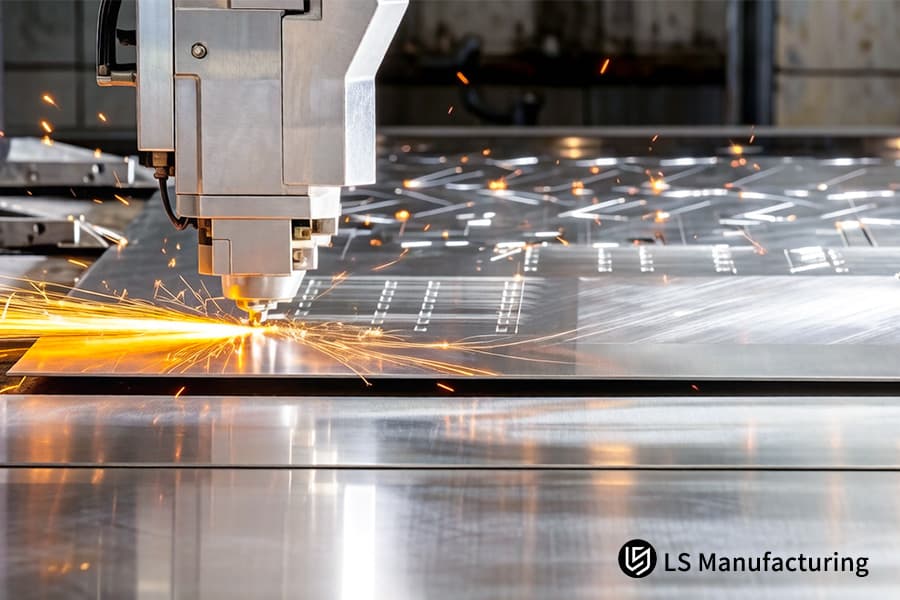
Figure 4: Precision sheet metal fabrication services cut a custom carbon steel part with sparks for industrial machinery.
What Factors Should You Verify When Choosing A Provider For Precision Sheet Metal Fabrication Services?
Finding the appropriate company for precision sheet metal fabrication services is an essential risk mitigation activity since you basically select a supplier of your quality management process. Selection criteria must be founded on the control of engineering processes rather than simple quoting. Below, we explain which audits distinguish mere service providers from technical collaborators:
Objective Verification of Material Integrity
Quality starts with the right raw material. Make sure that the provider has done spectroscopic testing of each incoming lot for material grade against its mill certificate, thereby eliminating disastrous cross-contamination. There should be no room for compromise here, whether you need prototype sheet metal fabrication or manufacturing quantities.
Evidence of Automotive-Grade Process Discipline
Ask for evidence of integrated process control, for example, through IATF 16949 techniques. Look out for real-time SPC charts showing process control on vital process parameters. This is the only way to demonstrate process control as opposed to defect detection after the fact. This is what defines a truly advanced high-mix sheet metal fabrication environment.
Transparency Through Digital Traceability Systems
Modern supplier audit checklist has to consider digital transparency. Ask for view-only access to the live production dashboard that showcases real-time metrics such as first-pass yield and job status. This type of operational visibility, called digital traceability, reflects a dedication to being accountable and transforming commitments into results through your sheet metal fabrication projects.
Proactive Engineering via Formal DFM
The pre-quote interaction is a critical test. A substantive Design for Manufacturability (DFM) report should identify potential risks (e.g., coating voids, weld distortion) with data-backed solutions. This demonstrates an engineering partnership focused on preventing problems, ensuring your design is optimized for robust and cost-effective sheet metal fabrication from the outset.
Through these verification steps, we transform simple price comparison into a process of engineering assurance. These tangible proofs of performance, from spectrometer testing to sharing SPC data, are essential because we offer peace of mind by removing all technical and timing risks inherent in your program. By working together in sheet metal fabrication services, you can count on an engineered supply chain that works reliably for you.
FAQs
1. Why does LS Manufacturing use Dyne tests for custom sheet metal fabrication services?
LS Manufacturing uses the Dyne pen test to check the surface tension of the material to ensure that it achieves the necessary surface tension level, ≥38 dynes/cm to ensure full adhesion for future coating applications.
2. How do you prevent scratches during the precision sheet metal fabrication process?
LS Manufacturing uses flexible polyurethane tooling combined with automatic vacuum-suction holding mechanisms to prevent any potential scratching during the fabrication process.
3. Does LS Manufacturing provide automated cleaning for all sheet metal fabrication services?
Indeed, before painting takes place, all components go through a five-step automatic inline cleaning and degreasing operation to completely eliminate even those particles at the Ra level.
4. Can you achieve defect-free sheet metal fabrication for high-mirror-finish stainless steel?
Yes, we have a cleanroom facility, controlled in terms of temperature, which is used together with our synchronized laser protective film processing technique, ensuring that all mirror finished parts are delivered defect-free.
5. How do you manage sheet metal quality control to ensure batch consistency?
SPC dashboards are used by us to constantly monitor the temperatures and speeds on our painting line conveyor, and we ensure that color difference value ($\Delta$E) for orders up to a million pieces is always less than 0.5.
6. What is the benefit of preventing surface defects in harsh outdoor environments?
Properly applying surface sealant techniques will reduce salt spray corrosion by 90% and increase the maintenance cycle for your outdoor enclosure to more than 10 years.
7. Do you offer certificates of compliance for your surface finishing services?
Each order is delivered with a Material Test Report (MTR), Cross Hatch Adhesion Test Report, and a Certificate of Conformity that meets the ISO standard.
8. How can I get a quote for high-tolerance parts with specific surface requirements?
Upload your STEP drawings and indicate your specifications regarding textures or salt spray resistance; our engineering department will assess DFM and quote you in less than 24 hours.
Summary
Surface defects reveal underlying manufacturing problems, revealing the level of engineering behind the whole production process. With the LS Manufacturing approach to manufacturing sheet metal parts, we remove any "uncertainty on the surface" through the use of digital technology and material science. We guarantee defect-free, tailor-made, high-quality sheets made possible through a zero-defect philosophy.
Stop letting part defects erode profits and damage your brand reputation. For high-potential projects, our senior engineers are offering a complimentary Surface Finish Risk Audit Report. Simply upload your STEP files; within 24 hours, receive a tailored report with process analysis, defect forecasts, and a transparent cost breakdown. Upload now for a free DFM evaluation or schedule a one-on-one expert consultation—let our precision redefine your manufacturing success.
📞Tel: +86 185 6675 9667
📧Email: info@lsrpf.com
🌐Website: https://lsrpf.com/
Disclaimer
The contents of this page are for informational purposes only. LS Manufacturing services There are no representations or warranties, express or implied, as to the accuracy, completeness or validity of the information. It should not be inferred that a third-party supplier or manufacturer will provide performance parameters, geometric tolerances, specific design characteristics, material quality and type or workmanship through the LS Manufacturing network. It's the buyer's responsibility. Require parts quotation Identify specific requirements for these sections.Please contact us for more information.
LS Manufacturing Team
LS Manufacturing is an industry-leading company. Focus on custom manufacturing solutions. We have over 20 years of experience with over 5,000 customers, and we focus on high precision CNC machining, Sheet metal manufacturing, 3D printing, Injection molding. Metal stamping,and other one-stop manufacturing services.
Our factory is equipped with over 100 state-of-the-art 5-axis machining centers, ISO 9001:2015 certified. We provide fast, efficient and high-quality manufacturing solutions to customers in more than 150 countries around the world. Whether it is small volume production or large-scale customization, we can meet your needs with the fastest delivery within 24 hours. choose LS Manufacturing. This means selection efficiency, quality and professionalism.
To learn more, visit our website:www.lsrpf.com.