English



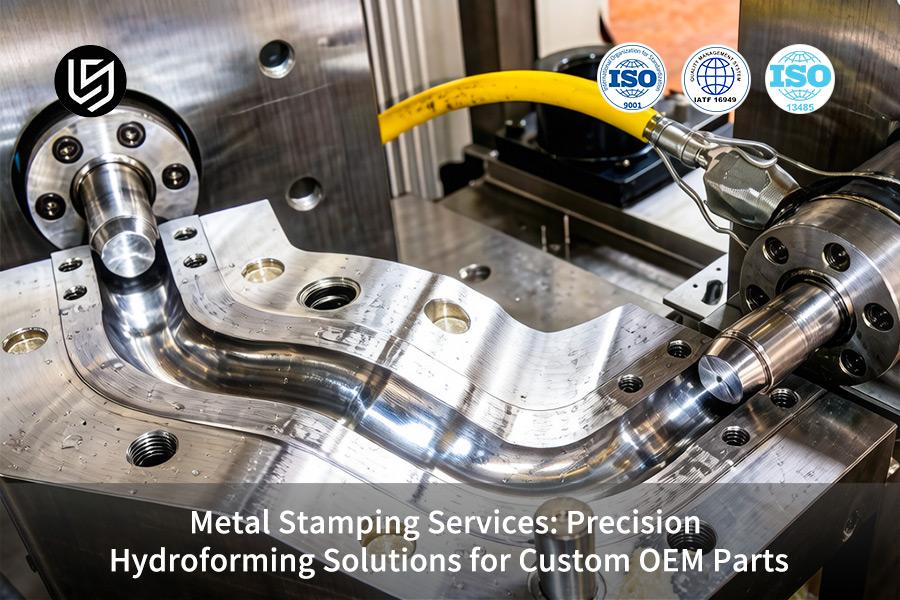
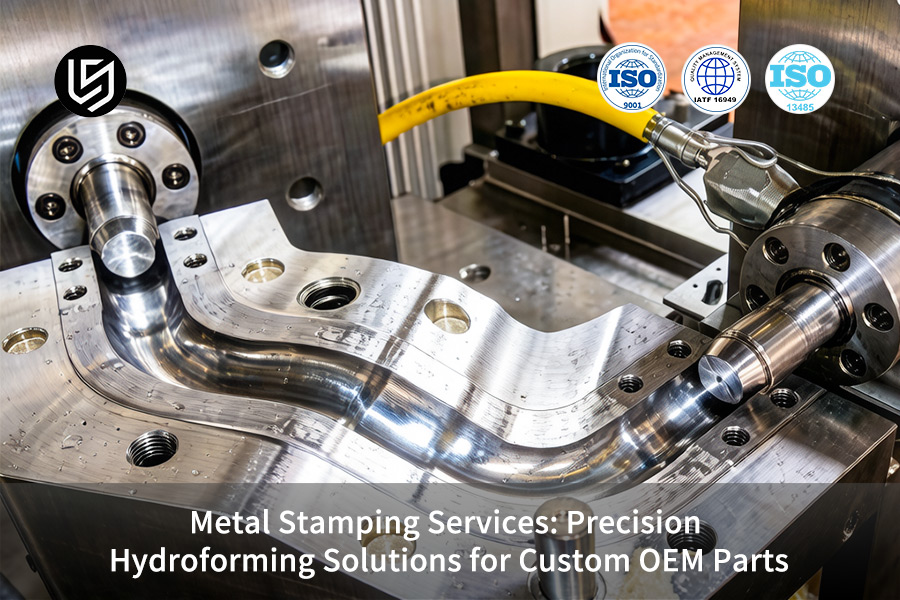
Metal stamping services are being met with some challenges especially in regards to the production of lightweight, high-strength materials due to the lack of clarity regarding what is hydroforming and traditional manufacturing processes. In addition, conventional parts with weldings reduce the structural performance and thus create a gap in terms of costs and performances for Original Equipment Manufacturers (OEM).
LS Manufacturing describes how precision hydroforming solutions can help to solve such problems through the use of one-stop-forming which increases the structural strength up to 30% while maintaining the forming pressure in 100-200 MPa range. Through reading more, you will see how important it is to choose an experienced metal stamping services provider to cut costs and enhance efficiency for OEM products.
Precision Hydroforming: OEM Parts Quick-Reference
| Key Process Attribute | Hydroforming Solution | OEM Application Benefit |
| Complex Geometry Formation | Fluid pressure allows for the creation of seamless, deep drawn three-dimensional geometries from a single blank. | Allows for single piece hydroforming design eliminating multiple component assemblies, decreasing weight and welding. |
| Material & Strength Integrity | Uniform fluid pressure means uniform wall thickness, increasing strength through work hardening. | Contributes to efficient structures for load bearing and pressure containment applications. |
| Tooling Cost & Lead Time | Single die means greatly reduced cost and lead time compared to traditional two die sets. | Reduces initial cost and speeds up prototyping for complex parts of low to medium volume. |
| Tolerance & Surface Finish | Process control allows for precise tolerances (±0.1-0.2mm) with great surface finish. | Means little or no secondary machining required for near net shape parts. |
| Our Integrated Process | Our process includes hydroforming followed by in-line piercing, trimming, and calibration. | Streamlines our process for blanks to final parts for maximum efficiency. |
We address the problem associated with manufacturing complex, lightweight, and robust OEM components. Our precise hydroforming technology allows us to create seamless 3D structures that offer excellent material integrity. It helps design innovative shapes, consolidates parts, and accelerates development processes, from automotive structures to unique enclosures. With our advanced capabilities, we can make your design come to life.
Why Trust This Guide? Practical Experience From LS Manufacturing Experts
There is no shortage of information about metal stamping services available on the internet. What makes this guide unique? While many writers are theoreticians, we, on the other hand, are practical experts working within the industry. Our insights have been proven to be true by the rigorous standards set forth by organizations such as the Occupational Safety and Health Administration (OSHA).
Our lives are governed by the application of precision hydroforming systems. It takes no imagination to think of what might happen if an aerospace bracket is not formed properly or if a medical implant housing is made of poor structural integrity. Through thousands of jobs, we know exactly what we need to do to control the material flow when high pressure is involved, what needs to be considered when there won’t be any springback in advanced metals, and how to balance speed and reliability for each custom OEM component.
Every one of the tips that will be shared comes from our hard-won experience—both from our successes and our failures. Our system combines a strict validation phase where design is checked based on technological and methodological recommendations from leading companies like 3D Systems. The information we share with you is tried-and-tested in the manufacturing process, sifted by coolant and metal chips, and put through strict quality assurance procedures.
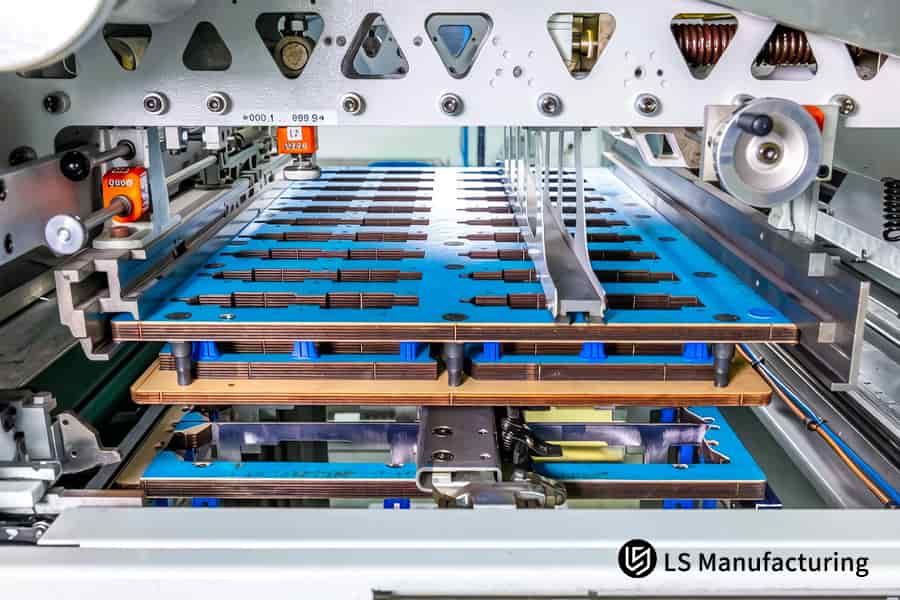
Figure 1: The automated system feeds C11000 copper strips through progressive dies for electrical connector manufacturing.
Why Choose High Precision Metal Stamping Services For Complex OEM Components?
In case of sophisticated OEM parts, conventional multiple process manufacturing presents several drawbacks. Our highly accurate and innovative metal stamping services provide a solution through integration of components into one singular piece. This eliminates need for welding, decreases weight by 15-25% and improves material efficiency from 60% to more than 85%, providing answers to key structural and economic challenges:
Unibody Construction via Single-Stroke Forming
We provide replacement for multi-component assemblies through one single stamping operation. Through our precision hydroforming processes, we use highly evolved progressive dies that are capable of forming complicated geometry in a single shot of metal stamping including bosses, louvers, and other designs.
Material Optimization and Cost Control
Reaching an efficiency of 85% and above in material usage is an engineered objective. We utilize state-of-the-art software and design for manufacturing (DFM) analysis to maximize blank placement on the coil, thus reducing waste. Such detailed preparation, in combination with the mass reduction offered by unibody construction, results in substantial savings in material costs per unit, making our OEM metal stamping solutions superior to the competition in terms of price.
Engineering-Led Design Collaboration
Our expertise kicks in right from the design stage through the use of Finite Element Analysis (FEA) where we examine both the formability process as well as the final component properties, thereby preventing any issues like metal thinning or spring back. Using this predictive engineering approach, the most custom OEM parts can be made even without any problem with respect to accuracy and high-volume hydroforming capability.
The current whitepaper explains a methodology, which is engineering-based and not a generic capability statement. It is our methodology and the metrics that support it that make us the measure of the complex manufacturing processes that exist. We manufacture much more than mere parts – we produce mission critical complex hydroforming assemblies.

How Can Precision Hydroforming Solutions Reduce Your Tooling Costs By 50%?
In manufacturing complex and encased cross sections in medium quantities, the traditional tooling method leads to increased costs and inefficiencies. The solution to reducing costs is the utilization of precision hydroforming solutions, wherein a shape is formed using pressure from a fluid and not between two dies. Here's how:
Single-Tool Strategy: Halving Capital Investment
- Core Mechanism: The process makes use of a single die where the hydraulic pressure serves as the female die.
- Cost Impact: The lack of necessity to use a perfectly matching upper die cuts down the cost of material and machining by about half.
- Case in Point: By using the concept of one-tool, it was possible to decrease the number of hard tooling sets required for making an SS316L exhaust pipe from four to two.
Accelerated Development: From 12 Weeks to 6
- Process Simplification: Saves significantly in terms of fitting and trial processes for multi-stage hydroforming.
- Result: Reduction in tooling development and proofing time, ensuring quick market entry for hydroforming for custom parts.
- Data Support: The improvement in cycle time by way of pressure vs. time control ensures formability before any hard tooling.
Mitigating Secondary Operations
- How: The use of fluids under high pressure enables material to fill the cavities in the die making it possible to shape complex forms in just one cycle.
- Solves: Fewer secondary manufacturing steps like welding and assembling are necessary as opposed to precision metal stamping.
- Outcome: This produces a much cheaper product while maintaining strength as a single work-hardened product.
Optimizing Material Utilization & ROI
- Direct Link to hydroforming cost: Effective usage of materials and reduced cost of tooling per piece will help towards optimizing ROl.
- Technical Control: Profiling of Pressure will control thinning and defects, thus maximizing output of expensive metals utilized.
- Comparative Advantage: Provides a business-oriented substitute to the complicated hydroforming process when full hard-tooling is prohibitively expensive.
This paper proves that our precision hydroforming solutions are not only a substitute but also a strategy to evaluate in the manufacturing process under particular volumes and complexities. The success of the technology depends on its capacity to regulate pressure, movement, and material reactions to come up with the best solutions for the hydroforming cost and time issues. Together, we will make sure the total cost of owning your part is reduced by avoiding using outdated progressive metal stamping technology.
What Technical Parameters Define The Best Custom Metal Stamping Services Provider?
Selecting a custom metal stamping services provider requires more than just capability evaluation; it necessitates rigorous engineering benchmarking. While dealing with parts where performance is critical, the quality of the service provider's quality standards and production systems outweighs marketing promises. The following are the major technical considerations that differentiate an excellent service provider from other companies:
| Parameter Category | Our Control Standard & Measurable Outcome |
| Material Integrity Preservation | In our process of hydroforming metal stamping, the maximum value of wall thinning that we have achieved stands at less than 10% while in the industry, it stands at 18-20%. |
| Dimensional & Geometric Precision | We ensure tolerances on critical feature locations up to ±0.05mm using five axis coordinate measuring machines, thereby ensuring proper fitment for components produced from the precision metal stamping process. |
| Surface Finish & Part Consistency | We ensure the minimum Ra of ≤1.6 µm to minimize friction and wear on the high performing complex metal stamping systems. |
| Process Control & Repeatability | According to our quality standards, each critical dimension must have a CpK of at least 1.67 to ensure statistical process control and lot-to-lot repeatability of multi-step metal stamping operations. |
The specifications highlighted above are not mere targets, but are the essential measures of our production system. It provides the definitive standard in terms of sourcing decisions in highly technical and competitive situations. Submit your part design for a formal hydroforming quote. We guarantee <10% material thinning, CpK≥1.67 process control, and ±0.05mm precision to meet critical performance requirements.
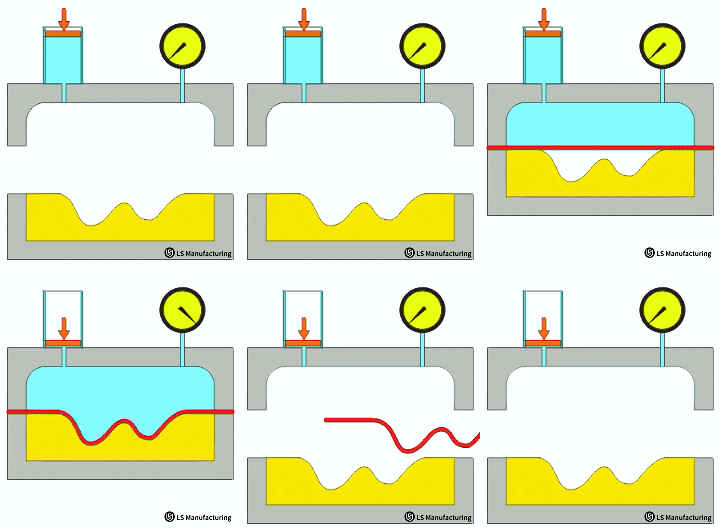
Figure 2: The hydroforming machine presses 6061 aluminum tubes into complex brackets for automotive suspension systems.
Why Is LS Manufacturing The Leading Manufacturer For Custom OEM Hydroforming Parts?
Leadership in producing custom OEM hydroforming parts is the result of expertise with difficult materials to minimize costly failures. With materials such as Al 6061-T6, poor process control results in wrinkling and non-uniform springback. LS Manufacturing ensures consistent production by combining advanced simulations with careful process control to turn theoretical knowledge into practical results without waste.
Predictive Simulation to Defeat Wrinkling
In anticipation of forming issues, we apply thermal-mechanical FEA coupling. With respect to aluminum hydroforming parts, our simulation evaluates the material flow at certain pre-heat temperatures (for instance, 320–350° C for 6061-T6) in order to identify and eliminate potential wrinkles. This computational model will predict a perfect formability region without any defects during the forming process.
Closed-Loop Control for Consistent Execution
Our 5,000-ton press capacity is directed by intelligent, adaptive systems. Based on simulation results, we program and execute multi-stage pressure and feed curves while managing die temperature zones in real-time. This dynamic control, a hallmark of a true hydroforming manufacturer, actively compensates for material lot variations, ensuring predicted optimal flow is achieved in production for every part.
Integrated Finishing for Net-Shape Delivery
The hydroformed part is ready for assembly through the process design we have put in place. The hydroforming process and the subsequent finishing steps, including precision trimming of the part using metal stamping, are carried out sequentially to ensure that the datum structures remain intact, avoid misalignment problems, and produce a finished product.
The technical know-how we have is based on the principle of predictability and control. We have solved problems associated with wrinkling and springback during aluminum hydroforming processes by implementing production methods that rely on physics-based models and closed-loop implementation systems. In this way, we can guarantee our clients of the structural integrity and economic feasibility of the projects, thus our ability to undertake critical deep-draw hydroforming applications.
How To Achieve ±0.01mm Tolerance With Precision Hydroforming Services?
When it comes to precision parts used in applications where an exact seal or interference fit is required, traditional tolerances simply won’t do. Reaching ±0.01mm requires leaving behind traditional forming technology in favor of the concept of active, live tolerance control. Our precision hydroforming services are designed to overcome this challenge through the use of an active system that can compensate for variations in material properties and springback while the part is being formed:
Real-Time Closed-Loop Pressure Regulation
- Core Technology: Combination of advanced servo valves and inline pressure sensors.
- How It Works: System continuously regulates the hydraulic pressure in a ±0.5% range during part forming.
- Problem Solved: Tackles the issue of dimensional variance due to inconsistent fluid pressure, which is common in traditional hydroforming techniques.
Predictive Springback Compensation via FEA
- Proactive Design: Use of Finite Element Analysis (FEA) to simulate and calculate spring-back of the particular metal.
- Implementation: Die design becomes intelligent by distorting its configuration in advance using FEA results prior to actual die cutting.
- Result: The component springs back into the desired net shape through precise calculation, ensuring accuracy equal to a high precision stamping process.
In-Process Monitoring & Adaptive Correction
- Sensor Fusion: Utilization of non-contact laser scanners or sensors inside the die to monitor important dimensions continuously.
- Corrective Action: Automatic adjustment to pressure or stroke for subsequent cycles if any drift is detected.
- Outcome: Continuous tolerance control during the whole production cycle; essential for ultra-precise hydroforming operation.
Contrast with Conventional Stamping Limitations
- Direct Comparison: As opposed to conventional hydroforming that is prone to springback inconsistencies due to tool wear and varying metal hardness, our technology responds accordingly.
- Data-Backed Result: It produces identical end products that do not need any form of selective assembly, providing an assurance of 100% fit for hermetically sealed and extremely precise assemblies.
This approach sets a new standard for dimensional accuracy in fluid forming. By incorporating intelligence into the manufacturing process, we address the instability associated with metal forming. In cases where ±0.01mm is required, our solution offers a proven, dependable method compared to expensive secondary machining or uncertain prototype metal stamping.
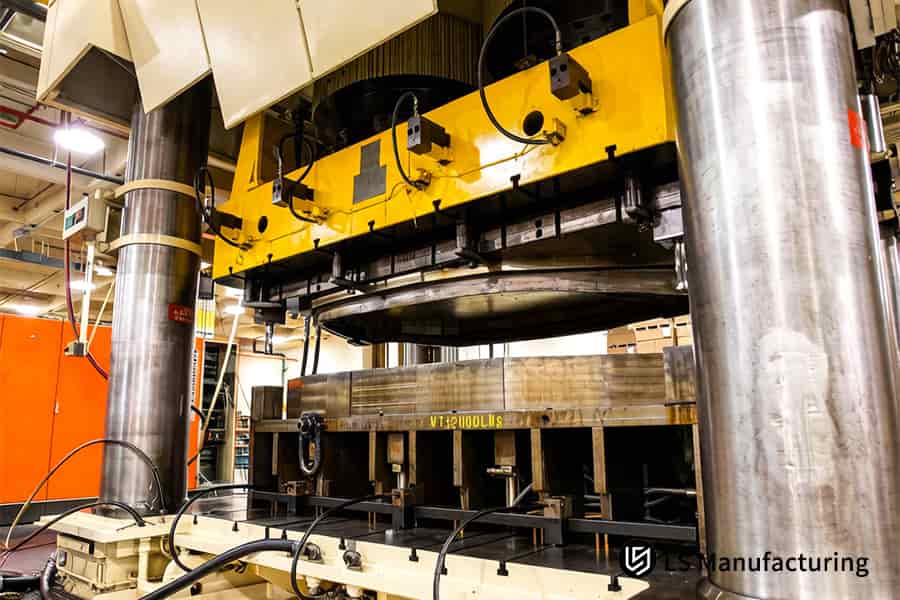
Figure 3: The hydraulic press crushes and shapes DC04 steel plates for heavy machinery component production.
How Does LS Manufacturing Optimize DFM For Custom Metal Stamping Services?
Custom metal stamping services optimization begins well before production starts, during the designing phase itself. The DFM optimization carried out by us entails a thorough engineering analysis that is done within 24 hours of receipt of the design drawing. It ensures that any manufacturability problems are resolved beforehand so that parts become more durable, economical, and reliable as well. Following is a brief comparison of how we measure up:
| DFM Focus Area | Our Optimization Action & Measurable Outcome |
| Feature Design for Durability | Increasing the radius R at the stress area from 0.5t to 1.0t, which is one example of a tool life enhancement action that helps increase punch life from 100k cycles to over 300k cycles. |
| Process Parameter Optimization | Timing and speed adjustment of the feeder in progressive metal stamping process to ensure smooth flow of metal and minimize burrs formation and secondary manufacturing costs by 25%. |
| Material Utilization & Efficiency | Strip layout and nesting in the case of high-speed hydroforming to maximize material utilization up to 8-12%. |
| Tolerance Strategy for Cost | Analysis of tolerance to distinguish between those required and unnecessary from the functional aspect, avoiding inclusion of any nonessential tolerance to avoid requiring the process of precision metal stamping where regular stamping is sufficient. |
This DFM optimization approach above solves customer's problems in terms of eliminating tooling problems, cost optimization, and project schedule security. Such an approach ensures the manufacturing process stability, and thus provides customers with guaranteed production and lifetime expenses, making it a technical criterion for obtaining custom metal stamping services.
Can Hydroforming For Custom Parts Handle High-Strength Steel And Exotic Alloys?
Hydroforming for custom parts production in aerospace and energy sectors requires dealing with alloys that have low forming properties and extremely high strength. Hydroforming of Titanium TC4 or Inconel 718 are among the hardest tasks where cracks and high spring back phenomena should be addressed. In order to address these problems, our company does not follow any universal approaches but follows hydroforming techniques which influence material behavior during all processing stages:
Engineered Multi-Stage Forming for Titanium
To solve the issue of low elongation of materials like TC4, a series of steps in titanium hydroforming are applied. This process can be defined as a step-by-step deformation of a part that includes preliminary working of the workpiece under comparatively low pressure followed by annealing operations and finishing with calibration under high pressure.
Integrated Thermal Management Systems
In the case of high strength steels and certain exotic alloys, we incorporate direct thermal control in the forming process. The technique entails the circulation of temperature-controlled fluid in the tooling during hydroforming for custom parts. Through temperature control of the workpiece, we can decrease the flow stresses and increase the ductility of the material when it is being formed. We achieve deeper draw depths and complex geometries without changing the metallurgical structure of the material.
Specialized Process Design for Nickel Alloys
The process of creating an exotic alloy stamping material like Inconel involves dealing with extensive work hardening challenges. The answer to this problem includes using ultra-high system pressure capability (>600 MPa) with specially formulated lubrication that can handle very high contact pressures. This creates conditions where enough deformation can take place prior to reaching the limit of work hardening, resulting in highly durable products in cases where traditional corrosion-resistant hydroforming fails.
The unique capabilities of our company lie in an engineering methodology built around process-oriented techniques. We overcome the problems associated with complex metals through developing a multi-stage forming procedure as well as controlling the temperature during the process. From the technical standpoint, this allows us to be considered experts in mission-critical aerospace hydroforming and temperature-controlled metal stamping.
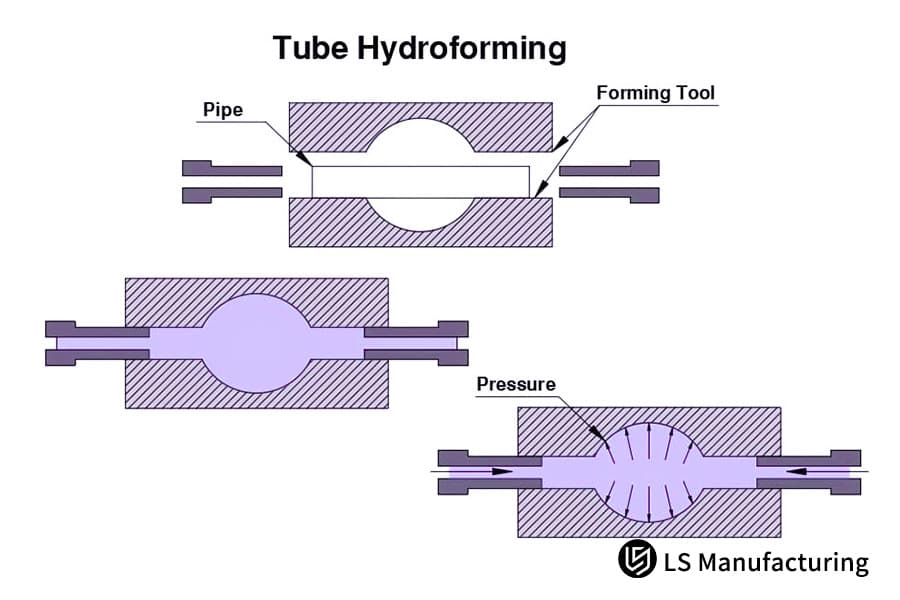
Figure 4: This diagram illustrates precision hydroforming services for shaping 304 stainless steel aerospace tubes.
Case Study: LS Manufacturing Medical Industry Stainless Steel Precision Hydroforming
This case study is aimed at demonstrating how LS Manufacturing solved a tough issue in manufacturing for a world-renowned OEM company by utilizing innovative fluid forming technology applied to a component that could not be made via standard methods. The required result was achieved through producing an ultra-complex endoscope housing from 0.2 mm thick stainless steel 304 that had perfect surface and wall thickness tolerance of ±0.05 mm:
Client Challenge
This component was an endoscope housing with complex curvature constructed using 0.2 mm thick stainless steel 304 that demanded a flawless cosmetic finish and wall thickness deviation of ±0.05mm. The conventional medical device hydroforming process produced serious scratches and a wall thickness deviation of ±0.15mm, leading to a scrap rate of 40%. This unreliable manufacturing process delayed the launch of the client's new product, incurring high tooling expenses and an inconsistent supply of these vital stainless steel parts in the medical industry.
LS Manufacturing Solution
LS Manufacturing applied their own custom hydroforming method, whereby they applied fluid as the forming medium to ensure no contact between the tool and component occurs and, therefore, prevent any scratching. LS Manufacturing made use of their own proprietary variable pressure algorithm system whereby pressure was varied throughout the forming process. The technique gave precise control of material flow resulting in a deviation of wall thickness of ±0.02mm, outperforming regular fine-blanking hydroforming.
Results and Value
First-pass yield on the stainless steel parts went up significantly to 99.5% from just 60% before, and savings in mold costs were made at 45% by way of designing tooling to operate only on one side. The new technique provided a very fast turnaround period of only 4 weeks between approved design and validated prototypes, thus ensuring a reliable supply chain system that minimized costs and shortened time-to-market while enjoying the benefits of micro-precision hydroforming through hydroforming with less expense.
This is an illustrative case demonstrating the application of the custom hydroforming technique in overcoming the existing problems associated with the manufacture of components in the medical industry. Thanks to the use of the innovative fluid technique as an alternative to unreliable short-run metal stamping, LS Manufacturing will be able to offer its clients high assurance regarding part quality, pricing, and supply.
Contact us to obtain a formal quote for precision 304SS hydroforming that guarantees zero surface defects, uniform wall thickness, and validated production-ready tooling.

FAQs
1. What are the main cost drivers in metal stamping services?
The primary cost drivers are die complexity, material utilization efficiency, and total processing time. Our hydroforming technology significantly reduces costs by reducing the required number of tools by 50%, minimizing material waste, and accelerating production cycles.
2. How does hydroforming compare to traditional stamping for OEM parts?
Hydroforming uses fluid pressure to shape material, enabling more complex, seamless geometries with superior structural integrity. It avoids springback, provides excellent surface finishes, and reduces secondary operations compared to traditional methods.
3. What is the typical lead time for custom OEM hydroformed parts?
Utilizing our in-house tooling department, LS Manufacturing produces prototype parts in 15-20 business days, which is approximately 30% faster than industry standards. This speed is maintained for production runs through streamlined workflows.
4. Can you provide precision hydroforming services for small-batch production?
Yes. The single-sided tooling requirement of hydroforming dramatically reduces setup costs and MOQs, making it perfect for precise, cost-effective batches from 50 to 500 pieces. This enables low-volume production, prototyping, and bridge tooling with excellent part quality.
5. Which materials are best suited for hydroforming metal stamping?
Hydroforming is most effective with ductile metals like 300/400 series stainless steel, 5000/6000 series aluminum alloys, copper, and nickel alloys. These materials provide the necessary formability, strength, and surface quality for high-integrity, complex structural components.
6. How do you ensure the precision of your custom metal stamping services?
We ensure precision through real-time computer-controlled pressure regulation and 100% dimensional inspection using ZEISS CMM equipment. This combination guarantees micron-level accuracy, consistent part geometry, and strict compliance with your specified tolerances.
7. Do you offer OEM metal stamping solutions that include assembly services?
Yes. We provide a complete turnkey solution covering hydroforming, laser cutting, CNC machining, welding, and final assembly. This integrated service streamlines your supply chain, ensures cohesive quality control, and accelerates your overall time-to-market.
8. How can I get a quote for precision hydroforming solutions today?
Click "Request a Quote" to upload your 3D drawings (STEP/IGES). Our engineering team provides a free, detailed evaluation including manufacturability analysis and cost breakdown within 24 hours, ensuring a fast and informed project start.
Summary
As this analysis shows, precision hydroforming has become a key solution for manufacturing complex OEM parts. LS Manufacturing goes beyond machining—through DFM optimization, rigorous parameter control, and innovative single-side forming, we resolve critical pain points like high cost, dimensional instability, and long development cycles. Whether deep-drawing stainless steel or shaping high-strength alloys, our technical depth ensures your designs become high-performance industrial assets.
Ready to take your OEM project to the next level? Don't let inefficient traditional processes hinder your innovation. Click the "Request a Quote" button below to upload your design drawings; our senior engineers at LS Manufacturing will provide you with a complimentary Design for Manufacturability (DFM) review and a precise quotation. Choose LS Manufacturing—and let our expert-level hydroforming technology validate the competitive edge of your products!
📞Tel: +86 185 6675 9667
📧Email: info@lsrpf.com
🌐Website: https://lsrpf.com/
Disclaimer
The contents of this page are for informational purposes only. LS Manufacturing services There are no representations or warranties, express or implied, as to the accuracy, completeness or validity of the information. It should not be inferred that a third-party supplier or manufacturer will provide performance parameters, geometric tolerances, specific design characteristics, material quality and type or workmanship through the LS Manufacturing network. It's the buyer's responsibility. Require parts quotation Identify specific requirements for these sections.Please contact us for more information.
LS Manufacturing Team
LS Manufacturing is an industry-leading company. Focus on custom manufacturing solutions. We have over 20 years of experience with over 5,000 customers, and we focus on high precision CNC machining, Sheet metal manufacturing, 3D printing, Injection molding. Metal stamping,and other one-stop manufacturing services.
Our factory is equipped with over 100 state-of-the-art 5-axis machining centers, ISO 9001:2015 certified. We provide fast, efficient and high-quality manufacturing solutions to customers in more than 150 countries around the world. Whether it is small volume production or large-scale customization, we can meet your needs with the fastest delivery within 24 hours. choose LS Manufacturing. This means selection efficiency, quality and professionalism.
To learn more, visit our website:www.lsrpf.com.