English




Plastic injection molding service is usually investigated by engineers beginning with the question of what is plastic injection molding, but in industries such as medical or aerospace, components that face extreme tolerances cannot be made economically due to the challenge of balancing accuracy with affordability, leading to delays in prototype development. This is mainly because there is an unstable thermal contraction of material, as well as inadequate mold ventilation, which makes standard injection incapable of achieving consistent accuracy within ±0.01mm.
At LS Manufacturing, our high precision plastic molding and full automation of real-time pressure control technology can provide comprehensive solutions to the aforementioned challenges from DFM optimization to the mass production of millions. To learn more about how our technical proficiency turns your ideas into commercially competitive products, please continue reading below.
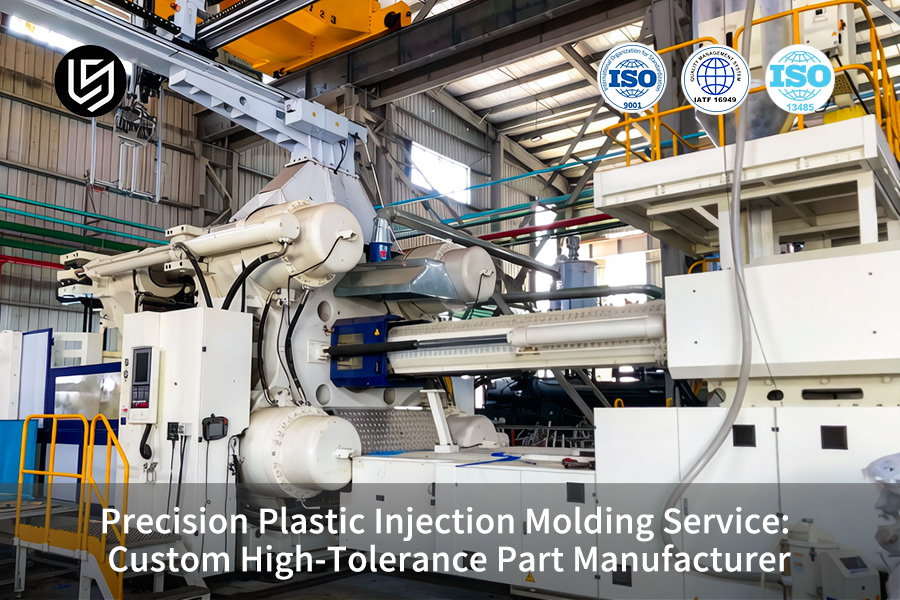
Precision Plastic Injection Molding: High-Tolerance Quick-Reference
| Technical Challenge | Manufacturing Solution | Dimensional Result |
| Mold Thermal Management | Conformal cooling channels with accurate thermal regulation for uniform shrinkage. | Limiting warpage to achieve ±0.05mm accuracy in flatness and parallelism. |
| Gate & Vent Design | Gate optimization for proper filling without leaving voids in the part. | Complete filling of all thin areas while preventing air entrapment in complex geometries plastic injection molding. |
| Material Shrinkage Prediction | Engineering-grade material shrinkage predictions accounting for anisotropic behavior of materials. | Strict tolerances maintained down to ±0.02mm in important areas such as bores and snap fits. |
| Process Repeatability | Closed-loop feedback control of pressure, speed, and hold times. | Part-to-part consistency is guaranteed to facilitate automated assembly operations. |
| Our Tooling & Validation | Molds with high precision and hardened steel cores. | 100% first article inspection with CMM certification of dimensions to ensure part accuracy. |
| Result: Assembly-Ready Components | Molded to final dimensions, eliminating post-molding machining. | Final product can be assembled without any further steps. |
Key Takeaways:
- Mold Design is Paramount: Precise mold engineering involves the application of conformal cooling and proper gating.
- Process Control is Non-Negotiable: This must be done to get consistent parts.
- Validation Through Data: FAI of parts with data provided through CMM reports is the only way of assuring dimensionality.
- Design for Manufacturability (DFM): Plastic injection molding part design in tandem with process engineers is crucial for tolerance control and reduced costs.
Why Trust This Guide? Practical Experience From LS Manufacturing Experts
There are many articles about precise plastic injection molding. What is special about this particular article? We are practitioners, not theoreticians. The shop floor, drawing from such references as Metal Powder Industry Federation (MPIF), is a battleground where the issues of material shrinkage and micrometric tolerances are fought every day.
We breathe this discipline. Successful completion of projects in aerospace, medical device, and automotive industries requires understanding all the nuances from proper melt flow of PEEK to machining parts within tolerances of ±0.01mm. The development of the process, supported by material properties databases, such as Granta Design (CES EduPack), helps us turn challenging designs into a mass-production reality step by step.
Each rule listed here is drawn from real experience, giving you practical methods for avoiding unnecessary mistakes. This is the practical expertise that guarantees your high tolerance components are manufactured correctly, using empirical evidence to provide assurance from prototype to production.
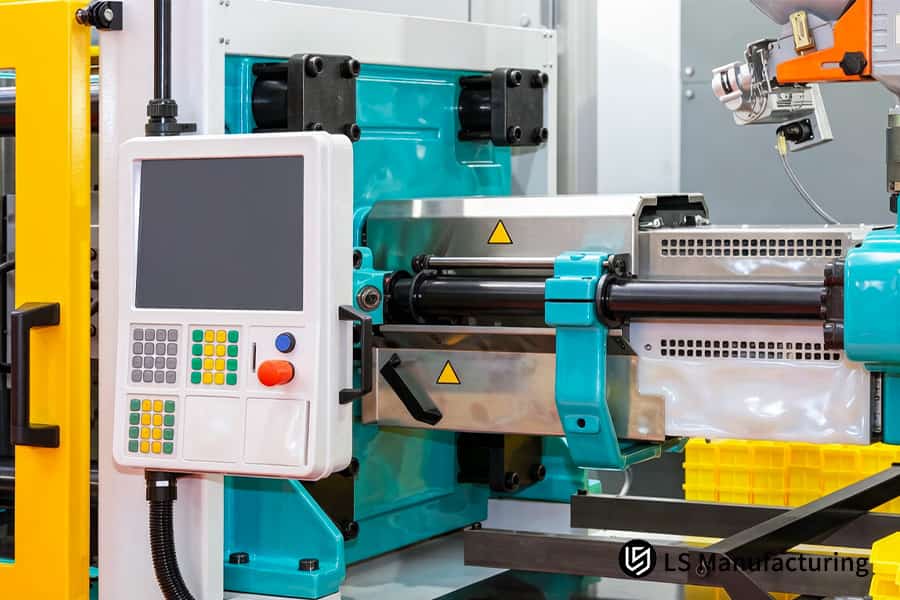
Figure 1: The automated injection system injects engineering plastic into molds for tight-tolerance industrial components.
Why Is High Precision Plastic Molding Critical For Medical And Aerospace Applications?
Reliable functioning of components in the medical industry and aerospace industry requires perfect dimensions and structural perfection. This report outlines the approach used by us to attain such perfection under the most challenging conditions, providing specific answers to some crucial engineering questions.
Achieving Micron-Level Consistency in Production
The technology that enables us to provide high precision plastic molding involves closed-loop cavity pressure and melt temperature control systems. Such an approach allows dynamic changes in injection and packing profiles during each cycle. In this way, a precision injection molding supplier can ensure that each produced element fits into the ±0.005mm accuracy requirement for device assemblies.
Managing Thin-Wall and Complex Geometries
In order to produce thin-wall and complex geometries, such as parts with wall thickness of 0.3mm, we apply multi-physics simulation to predict the flow, cooling, and shrinkage behavior prior to tooling. This analysis helps determine the proper gate and conformal cooling channel positioning and is indispensable for successful multi-cavity plastic injection molding.
Material Science and Regulatory Compliance Synergy
Process parameters in medical grade plastic molding must be documented as part of the quality record. The process engineering, for example when molding PEEK components, aims to maintain material properties and assure traceability. This link between the science of process engineering and validation, according to standards such as ISO 13485, characterizes our scientific plastic injection molding process.
Process Validation Through Predictive Engineering
Using a controlled cleanroom plastic injection molding process and scientific approach, we define an engineered process window. By validating the relationship between process parameters and parts, we offer proof of stability. This approach ensures 100% inspections and OEM audits compliance.
Our expertise relies on translating complex precision issues into precise physical processes that can be measured and controlled. Do your thin-walled parts require an accuracy of ±0.005mm? Contact our engineering team today to obtain a proven production solution and a formal project quotation.

How Can Custom High Tolerance Injection Molding Solve Your Complex Assembly Challenges?
Multi-part assemblies fail because of the stackup of part dimensions that result from their tolerance values. Our approach circumvents the problem at its source through controlling the dimensional stability of components. The result is a system wherein each individual component not only meets its dimensional requirements but does so within the final assembly:
Controlling the Source of Variation: In-Mold Pressure
Dimensional variance at its source is controlled through directly controlling the mold environment, rather than indirectly controlling the machine parameters
- Method: Using piezoelectric pressure sensors in the mold cavity to obtain pressure measurements.
- Action: Data from the sensors provides feedback to a closed loop system, which adjusts injection speed and transfer points.
- Result: Cavitation pressure variations can be maintained to ±1%, thus ensuring part consistency in terms of size and density. This serves as the basis of accurate custom high tolerance injection molding of interfacing parts, such as electrical connectors.
Selecting the Optimal Manufacturing Platform
Press technology selection is an informed, data-led process that significantly affects repeatability. Our company utilizes injection molding. With no hydraulic fluid inertial effects and no thermal variations, the repeatability enhancement offered by these presses surpasses 30% on pertinent metrics. Such capability is indispensable for a tight tolerance injection molding manufacturer producing micro-precision parts.
Designing the Manufacturing Path for Your Geometry
The best solution depends on the complexity of the component and its functions; there is no cookie-cutter solution.
- Decision Criterion - Volume & Speed: High-volume connector parts are manufactured using high-speed plastic injection molding cycles. The machine’s speed capabilities are optimized without losing dimensional integrity in the parts.
- Decision Criterion - Part Integration: For a family of interlocking parts, a multi-component plastic injection molding process in one automated cycle guarantees proper relative positioning of each piece without any human error during the manufacturing process.
- Goal: Every recommended process is specifically designed to maximize the effectiveness of complex assembly solutions, eliminating the problem of cumulative tolerances at its origin.
Our complete control over variability through innovative techniques such as automated plastic injection molding systems is what sets us apart. Not only will you get precise components, but you will be sure that they will fit and function perfectly in your finished product.
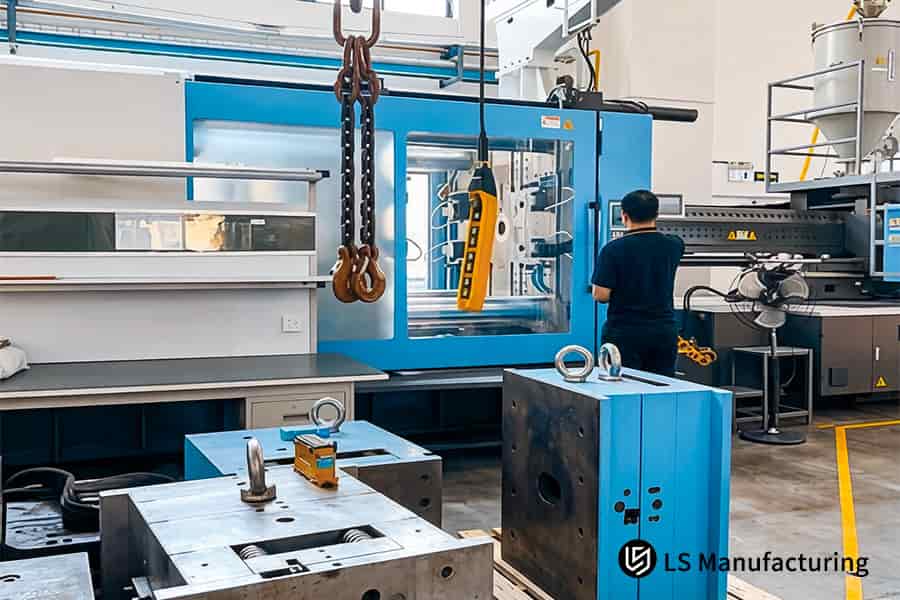
Figure 2: A worker operates the injection machine to form custom parts from polymer resin for various industries.
What Factors Influence Custom Plastic Injection Molding Service Costs And Project Lead Times?
To understand the financial side of purchasing custom plastic injection molding services, you need to know how the technology works. The following text explains the "black box" of pricing, outlining how decisions about materials, tools, and processes affect your ROI and time to market. This text helps you learn how to evaluate injection molding quote factors for more effective sourcing decisions:
| Factor Category | Key Consideration & Impact |
| Tooling Investment | Choosing higher grade steel molds such as grade T1 (e.g., S136) as compared to aluminum molds costs more initially but lowers costs per piece when considering more than 1 million shots, making it perfect for high-volume plastic injection molding. |
| Production Process | A quick-change plastic injection molding machine will shorten the changeover time by up to 40%, resulting in significantly reduced production lead times. |
| Part Design & Material | The correct calculation of shrinkage rates in the design process can save costs and material losses due to post-mold machining operations. |
| Mold Technology | Hot runners result in higher costs for molds than cold runners, yet offer higher yields and cycle times that reduce unit costs in large-part plastic injection molding. |
| Automation Level | The use of automation in post-processing activities, such as trimming using robots, is costly upfront but ensures stable, cheaper unit costs overall, which are critical for low volume production cost optimization. |
| Project Timeline | In order to iterate fast, prototype plastic injection molding with the use of soft tooling is the quickest way to get testable prototypes. |
With our expertise, both cost and time can be turned into calculated outputs. Our clients can make strategic decisions like investing in more expensive tooling because of future savings, or choosing quick processes when working with prototypes, due to a quantitative approach. This allows procurement and engineering specialists within competitive industries to leverage the technical aspects of injection molding quote factors in their favor for maximum ROI.
Why Is LS Manufacturing The Preferred Custom High-Tolerance Part Manufacturer For CNC Inserts?
This technical brief provides a description of how LS Manufacturing resolved a significant production problem for a custom high-tolerance part manufacturer. Being confronted with issues associated with dimensional problems, we were able to engineer a solution that converted an unstable process into a stable and reliable one. The challenge faced, the technical resolution implemented, and the resulting outcomes are provided below.
Client Challenge
The client had difficulties in producing a miniature housing unit from PA66 with 30% glass fiber content due to anisotropic shrinkage. This led to a consistent failure to achieve a 0.02mm true position tolerance requirement. Initially, the process yielded only 60% of parts which meant substantial scrap, possible delivery delays, and financial penalties threatening the viability of the project.
LS Manufacturing Solution
The design of our precision-engineered plastic injection molding process started with a comprehensive DFM study. Our improvements included the redesign of the feeding process with the adoption of the balanced-fill plastic injection molding technique using a three-point hot runner. In order to manage stress levels, mold sensors were incorporated, and the cavity temperature was controlled within ±1°C, which was especially important for the glass fiber reinforced nylon molding process.
Results and Value
These improvements resulted in significant and measurable results. The yield rate of the component increased from 60% to 99.8%, thus entirely removing any production pauses caused by quality-related issues. Moreover, this fast-cycling plastic injection molding process expedited the manufacturing process, resulting in certified full-scale production in only 22 days after design review. The customer was able to obtain the necessary mission-critical parts and save nearly $150,000 per year on scrap costs.
This case study plastic molding shows our approach of applying physics principles in solving difficult technical issues. By controlling the molding conditions, we overcome the effects of material properties. This ability to guarantee results within stringent requirements explains our expertise in solving mission-critical manufacturing tasks.
Verify if our solution for 99.8% yield and anisotropic control in nylon parts fits your challenge. Contact us now to discuss your specifications and request a formal quote.

How Does Precision Plastic Injection Molding Service Ensure Material Performance Stability?
In the case of high-performance plastics such as PEEK, the most difficult aspect is maintaining all its superior properties during the manufacturing process. Any mistake in handling the material could lead to degradation of its molecular structure, rendering an expensive material unusable. Our precision plastic injection molding service is designed to avoid this, guaranteeing that the end product functions as intended by both the designer and the supplier:
Precise Material Preparation and Handling
Deterioration of the material occurs even prior to entering the extruder. It is ensured by the implementation of a strict procedure beginning from validation of drying. For example, PEEK materials undergo drying for 4-6 hours at 150°С in a desiccant dryer with dew point lower than – 40°С and then supplied through heated hoppers. In this way, hydrolysis – a main reason behind molecular weight decline and brittleness of condensation polymers – is avoided, establishing a solid base for successful high performance polymer molding.
Controlled Plastification and Shear Management
Screws' shear action is vital for melting, however, it may lead to mechanical degradation of the polymer chain under conditions of its excess. For PEEK injection molding process we use special corrosion-resistant screws having appropriate compression ratios. Screw speeds vary within 40-60 RPM range and there is a lack of back pressure. Thus, a good blend of melt homogeneity and long-chain polymer structure is achieved.
Optimized Thermal Management for Crystallinity
Crystallinity, in turn, determines the mechanical properties of semi-crystalline polymers. High-temperature tooling control is used, which is able to hold the tool surfaces at temperatures as high as 180°C for PPS with accuracy up to ±1°C. As a result, we achieve a very gradual crystallization without any internal stresses, leading to predictable and stable dimensions of the parts, which have good chemical resistance as the desired result from our high-temperature plastic injection molding.
Validation Through Data-Driven Process Control
To prove performance retention, objective measurements are conducted. It is accomplished through process parameter optimization using a “window” when parameters such as melt temperature, screw speed, mold temperature are correlated with certain quality indicators. After that, destructive testing is performed on samples taken from edges and center of the window created earlier. These results provide confirmation that physical properties of the material are preserved due to our plastic injection molding technology.
The technical expertise of our company is manifested in the ability to control all the stages of heat and mechanical treatment of the polymer, from drying to its ejection. Partner with us to safeguard your premium material investment through scientific molding. Inquire now for a technical consultation and a guaranteed performance quotation.
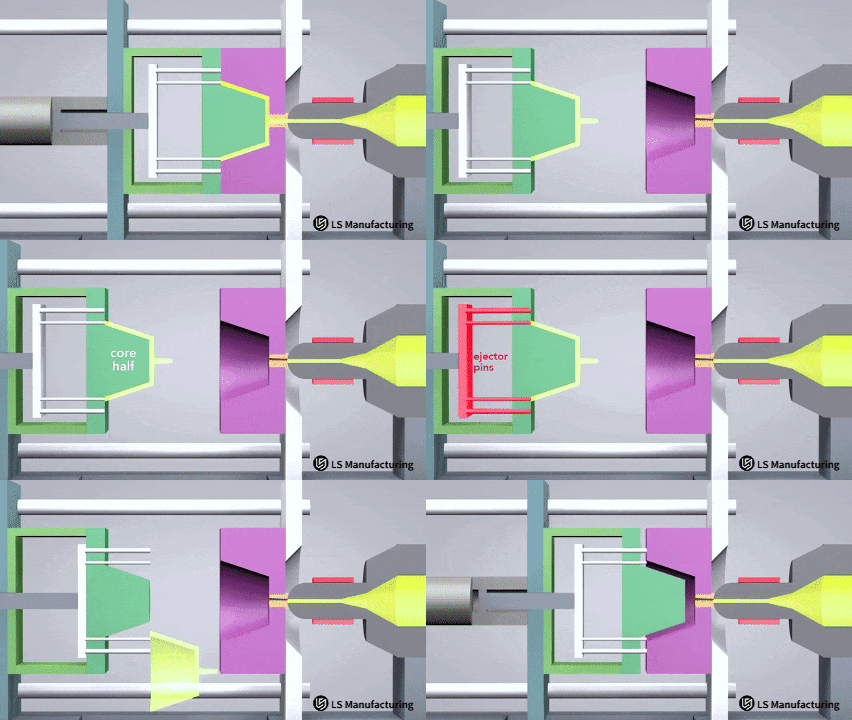
Figure 3: Precision plastic injection molding injects molten POM into heated molds for automotive electrical connectors.
Can OEM Plastic Injection Molding Optimize Your Supply Chain For Long Term Reliability?
OEM supply chain reliability depends on quality prediction and sufficient production capacity. This paper explains how an OEM plastic injection molding relationship helps ensure reliable supply chains by incorporating transparency and flexibility. We implement such strategies by means of data-driven process management and automation aimed at minimizing risks:
Implementing Proactive, Data-Driven Quality Assurance
Reliability stems from statistically proven facts, rather than end-of-line inspection alone.
- Method: Our Statistical Process Control (SPC) process constantly tracks critical parameters (such as cushion size and cavity pressure).
- Action & Deliverable: Process Capability (Cpk) is evaluated during every run, and automatic reports sent out. We strive and achieve a Cpk value above 1.33.
- Client Value: Such an effort gives you statistical confirmation about the quality of the batches manufactured, drastically cutting down or even fully eliminating the need for additional quality checks at your facilities.
Ensuring Consistency Through Advanced Process Control
Consistency is ensured through eliminating all possible variables from the manufacturing process.
- Core Technology: We implement an automated plastic injection molding with a feedback loop control mechanism for temperature, pressure, and speed.
- Result: This automation ensures that process conditions are controlled within a narrow margin all day long, thereby making part quality not dependent on operator rotation.
- Impact: It ensures that the 10,000th part will be identical to the first part produced, one of the key deliverables of a reliable injection molding supplier.
Providing Scalable and Responsive Manufacturing Capacity
Supply chain optimization requires a scalable solution that does not compromise on quality or lead time.
- Infrastructure: Our lights-out plastic injection molding capable production lines can operate unmanned for extended periods of time.
- Flexibility: Combined with quick mold change (SMED), this leads to efficient adjustment of batches and quick reaction to changing demands.
- Outcome: The resilient solution is capable of providing stability necessary for high volume OEM production despite market fluctuations.
The synergy of our companies allows us to provide reliability by predicting quality and controlling capacity. We accomplish this through replacing old-school supervision with information control (SPC/Cpk) and manual work with automated processes. This engineered solution will solve the problem you are facing as an OEM by eliminating the inspection costs and unstable supply problems.
How To Select The Right Custom Injection Molded Parts Supplier For High-Volume Production?
Choosing a supplier for high-volume plastic injection molding involves more than mere unit cost comparisons. Real cost-effectiveness and success hinge on meticulous engineering, process control, and lifecycle management. The following audit criteria serve as a guide in gauging your partner’s suitability for delivering consistently effective production at scale in terms of crucial technical metrics:
| Audit Dimension | Professional Partner | Typical "Low-Cost Shop" |
| Predictive Engineering | Deploys autonomous moldflow forecasting, ensuring optimum gate and cooling configuration without the need for mold remakes. | Discovers problems through trial and error, often resulting in defective products and mold deterioration. |
| Facility & Process Control Operates | Class 1000 clean rooms for medical plastic injection molding, employing process automation and controls. | No environmental control, leaving processes prone to contamination. |
| Design Collaboration | Provides feedback on DFM with simulation results and validation post revision of custom injection molded parts. | Provides generic feedback without data for any performance claim. |
| Tooling Strategy | Utilizes long-life mold design using quality materials able to withstand over 1M cycles with negligible downtime. | Utilizes poor quality tooling leading to regular maintenance issues with high lifetime costs. |
| Quality System | Utilizes real-time statistical process control (SPC) with Cpk control with batch certification for an efficient audit injection molding factory. | Relies on final inspection alone which requires 100% auditing by clients. |
An audit for high-volume plastic injection molding production requires that engineering capacity and control processes be established. This is achieved through our provision of clear simulation reports, validation data, and rationale behind tooling designs. The objective here is to solve the problem of life cycle costs uncertainties and thereby change the selection criteria from initial costs to performance and overall cost of ownership.
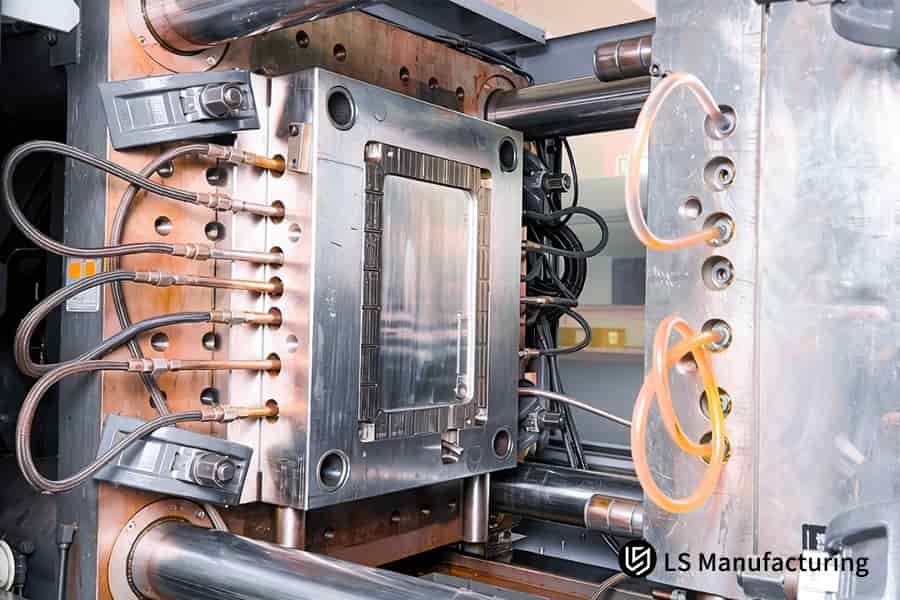
Figure 4: The injection machine injects molten ABS into metal molds for automotive housing components with high tolerance.
Why Choose LS Manufacturing For Your Next Tight Tolerance Molding Project?
Achieving success in tight tolerance injection molding involves taking precision from being a requirement on paper and turning it into a reproducible and reliable reality through the production process. This can be achieved through working with a company that combines knowledge of engineering, control of the manufacturing processes, and a relentless pursuit of quality stewardship. At LS Manufacturing, we handle the primary issue involved through the following strategies:
Proactive Risk Mitigation Through Experienced Engineering
By using our expertise in the area, the experienced engineers at LS Manufacturing expertise to mitigate risks and ensure there is no failure. Our experienced engineering department does an extensive analysis for any possible sink marks, warpage, and other forms of stress concentration through the application of the DFM tool. Our engineers analyze historical data to come up with effective solutions.
Verification with Metrology-Grade Measurement Systems
Micron accuracy can only be assured by having the ability to measure better than the tolerance of the part itself. Zeiss CMMs and Optical Comparators allow us to conduct first article and in-process inspections. This level of testing allows for full GD&T inspection, providing us SPC data showing consistent conformity. This level of precision injection molding measurement ensures that each batch is in compliance with your print, not just a few pieces.
Lifecycle Tooling Management for Total Cost Control
Design for reliability and efficiency. With our advanced molding technology, this includes long-life injection molding tooling that uses hardened steel construction along with sensor ports. This, combined with our mold maintenance and warranty programs, will keep your equipment operating at optimal efficiency, extending the production life of your asset. We address the issue of unpredictable tool wear with our solution.
Secure Collaboration and IP Protection Framework
Protecting your intellectual property is foundational to partnership. We operate within a robust, auditable security framework featuring controlled data access, secure CAD data transfer protocols, and strict confidentiality agreements. Our facilities enforce clean-desk policies and compartmentalized project access. This injection molding environment ensures your designs and innovations remain your exclusive property, enabling truly open technical collaboration.
Our distinction lies in a systematic, engineering-first methodology that de-risks high-precision manufacturing. We solve critical challenges by applying empirical knowledge to prevent defects, verifying quality with authoritative data, engineering tools for longevity, and safeguarding your IP. This end-to-end controlled process delivers not just parts, but predictable success for your most demanding plastic injection molding projects.
FAQs
1. What are the tightest tolerances you can achieve?
For critical engineering plastics like POM or high-performance nylon, we can consistently achieve precision within ±0.005mm. This is ensured by our advanced process controls, high-precision tooling, and a rigorous quality management system for demanding applications.
2. Will you alert me if my design drawings contain flaws?
Yes. We provide a complimentary, detailed DFM report during quoting, highlighting potential issues like uneven wall thickness or insufficient draft angles. This proactive review includes actionable suggestions to enhance manufacturability, performance, and cost-efficiency.
3. What is LS Manufacturing's Minimum Order Quantity (MOQ)?
To fully support R&D and production, we offer services from “rapid small-batch” production starting at just 100 units, all the way to fully automated, large-scale mass production runs capable of delivering millions of parts to meet your full product lifecycle needs.
4. Which high-performance engineering plastics do you support for processing?
We specialize in processing demanding materials like PEEK, PPS, LCP, and PEI. Our extensive material library includes a complete database of proven, optimized processing parameters to ensure successful molding of these high-temperature, high-strength polymers.
5. Who owns the molds?
Upon your full payment of the tooling costs, 100% ownership of the production molds is transferred directly to you, the client. Additionally, we provide complimentary lifetime routine maintenance and storage for the molds as part of our service commitment.
6. How do you ensure consistency between the first and the 100,000th product during mass production?
We ensure consistency using a closed-loop plastic injection molding control system combined with automated weight sorting. This integration maintains shot-to-shot injection weight fluctuation below 0.1%, guaranteeing exceptional dimensional and weight stability for every single part.
7. How long is your quotation typically valid?
Due to raw material market volatility, our standard project quotations are valid for 30 days. For long-term partnership stability, we can lock in pricing through a formal framework agreement, providing you with predictable costs and supply security.
8. Can I upload my 3D drawings directly to receive a DFM review?
Summary
Selecting a plastic injection molding service means partnering with a technical expert who balances material properties, mold dynamics, and cost efficiency. Using deep expertise, LS Manufacturing turns designs into high-performance products through rigorous data monitoring and DFM optimization. We help resolve quality issues and achieve high-tolerance mass production, delivering professional support that consistently exceeds expectations.
Ready to elevate your product precision? Click the "Get a Quote" button below to upload your 3D prototype files. Our plastic injection molding senior engineers will conduct an in-depth manufacturability assessment and provide a detailed proposal covering costs, lead times, and technical risk mitigation. Don't let tolerance issues limit your design potential—contact LS Manufacturing today to embark on your journey toward precision manufacturing excellence!
📞Tel: +86 185 6675 9667
📧Email: info@lsrpf.com
🌐Website: https://lsrpf.com/
Disclaimer
The contents of this page are for informational purposes only. LS Manufacturing services There are no representations or warranties, express or implied, as to the accuracy, completeness or validity of the information. It should not be inferred that a third-party supplier or manufacturer will provide performance parameters, geometric tolerances, specific design characteristics, material quality and type or workmanship through the LS Manufacturing network. It's the buyer's responsibility. Require parts quotation Identify specific requirements for these sections.Please contact us for more information.
LS Manufacturing Team
LS Manufacturing is an industry-leading company. Focus on custom manufacturing solutions. We have over 20 years of experience with over 5,000 customers, and we focus on high precision CNC machining, Sheet metal manufacturing, 3D printing, Injection molding. Metal stamping,and other one-stop manufacturing services.
Our factory is equipped with over 100 state-of-the-art 5-axis machining centers, ISO 9001:2015 certified. We provide fast, efficient and high-quality manufacturing solutions to customers in more than 150 countries around the world. Whether it is small volume production or large-scale customization, we can meet your needs with the fastest delivery within 24 hours. choose LS Manufacturing. This means selection efficiency, quality and professionalism.
To learn more, visit our website:www.lsrpf.com.