English



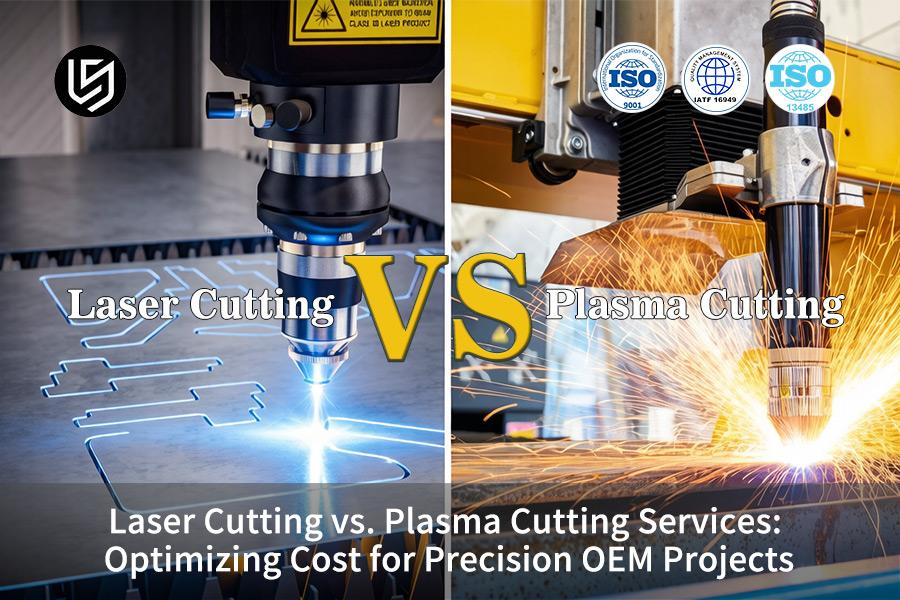
Laser cutting vs. plasma cutting services is critical in OEM project profitability, since procurement starts with how do you calculate plasma cutting cost but finds it difficult to weigh precision against TOC. In plates above 20mm or in thin precision parts, wrong decision-making leads to dimensional problems, and although plasma is more cost-effective at first, its wide HAZ and bevel increase costs by over 30% through secondary processing.
With LS Manufacturing, we offer optimize cutting cost for OEM that go beyond basic metal cutting, leveraging direct comparisons of real-time performance in terms of the 12,000W high-power laser versus fine plasma in order to dispel any process fallacies. With this guide, you'll learn the exact cost dynamics behind each technology, and tackle the problem of quality versus budget head-on.
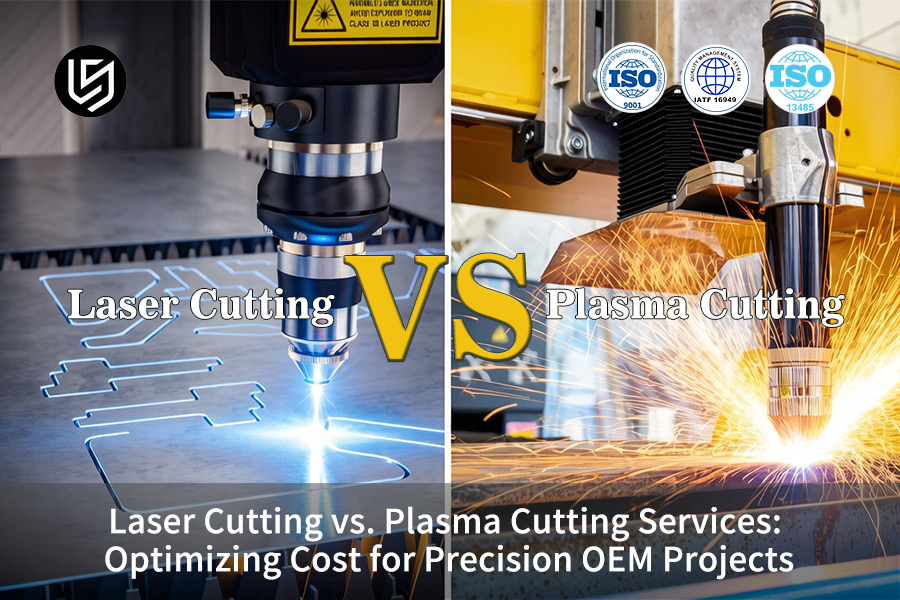
Laser VS Plasma Cutting: OEM Cost-Optimization Guide
| Key Factor | Laser Cutting for OEM Projects | Plasma Cutting for OEM Projects |
| Cutting Accuracy | Excellent precision, up to ±0.1 mm tolerance – excellent for fine detail work. | Accurate enough for general fabrication work but not for very fine detail. |
| Edge Quality | Excellent quality square edges, often ready for welding. | Beveled edges, will need further processing to remove excess material. |
| Material Thickness | Lasers work better for thinner and middle thicknesses of up to 25mm (material dependent). | Lasers are less effective in cutting thick plates from 6mm upwards. |
| Operating Cost | Larger upfront capital requirement, reduced operating costs for thin plate laser cutting material. | Smaller upfront capital requirement, more operational costs for thicker plates. |
| Our Process Selection | Our suggestion for using lasers is for parts that require high precision and fine detail, where post-cutting processing isn’t required. | Our suggestion for using plasma is for larger and structural parts, where cutting thick plates efficiently is a priority. |
| Result: Optimized Unit Cost | Our recommendation for laser cutting provides the most value for parts that require precision and fine detail. | Our recommendation for plasma cutting is most effective when cutting larger, simpler parts. |
We select the best cutting process that will keep your project’s cost to a minimum. Your process selection dilemma will be resolved using our knowledge of how to maximize your efficiency and minimize waste to arrive at the best technique, whether laser or plasma cutting. With our advice, you will get the best balance in quality, delivery time, and budgeting that suits your OEM manufacturing requirements.
Why Trust This Guide? Practical Experience From LS Manufacturing Experts
Many writings can be found online regarding laser cutting and plasma cutting. But what makes this article worth your attention? We are professionals who practice what we preach. All suggestions have been tested and proven to yield results and meet industry standards, including those provided by TWI Global.
Our expertise lies within sectors where accuracy in cutting is key. Each operation has to result in a fully functional component whether it is an aerospace body or chassis for a medical device. Our experience, which also includes substrate preparation for Additive Manufacturing (AM), gives us full insight into where accuracy of laser cutting is needed and when plasma cutting becomes a valuable alternative, helping us avoid unnecessary engineering and quality risks.
All methods discussed here have been proven to work perfectly. We know what to do to prevent the additional cost associated with secondary machining of plasma cut bevels, and at the same time ensure impeccable results while working with a 20mm aluminum laser cut. All our hard-earned information is provided so that you may save your resources.
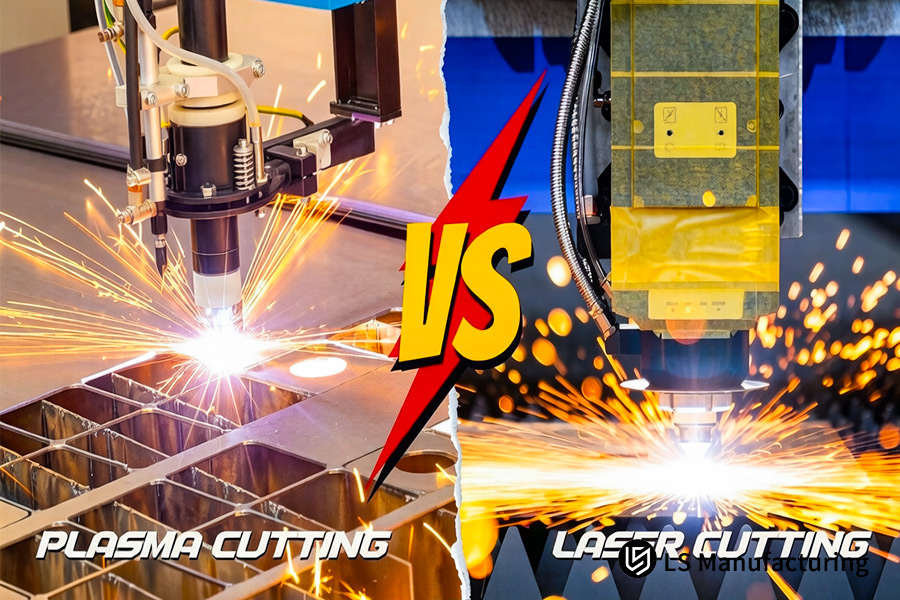
Figure 1: Laser cutting versus plasma cutting delivers clean cuts on stainless steel for food processing equipment.
Why Is LS Manufacturing The Leader In Laser Cutting VS. Plasma Cutting Services For 2026 Projects?
LS Manufacturing addresses the key problem in the industry of variability, resulting in higher total cost of ownership due to expensive secondary fitting. The superiority of LS Manufacturing in the field of laser cutting vs. plasma cutting services is rooted in a holistic, agnostic approach to the manufacturing process. LS Manufacturing technology guarantees ±0.05mm accuracy in all parts, ensuring part interchangeability in OEM metal cutting services:
Material-Specific Process Optimization
LS Manufacturing departs from universal machine parameters. In each case, a model is built taking into account such properties of the material as reflectivity, thermal conductivity, and melting point, thus determining the allocation of the task either to high-power laser cutting or to fine plasma, depending on the material's properties.
Data-Driven Process Synergy and Control
The strategy of how tools are used and parameters that change dynamically is determined by an algorithm. For example, if stainless steel is being cut, then infrared sensing controls the laser beam's energy and frequency to compensate for the thermal distortion effect. This high-speed laser cutting technology together with plasma precision controls will provide a required tolerance level.
Closed-Loop Quality Validation Protocol
Interchangeability has been demonstrated, not merely assumed. All lots are subjected to a two-step process verification test. Sensors measure the cut shape while in process, and CMM sampling tests are statistically linked to the sensor readings, developing a continuously improving quality feedback system. This verifies the product's precision laser cutting parts and makes the ±0.05mm tolerances a measurable fact.
The following paper explains our approach to engineering and design by moving past capabilities alone. The competitive advantage of our laser cutting vs. plasma cutting services lies in producing custom laser-cut components with data-proven interchangeability. This solves the hidden costs of fitment and establishes a new benchmark for OEM metal cutting services using LS Manufacturing technology.

How Can Smart Engineering Optimize Cutting Cost For OEM By Reducing Secondary Processing?
The actual cost associated with a cut part involves much more than the quoted price from the processing itself, hidden in secondary processes such as grinding. The following case study outlines an engineered approach to optimize cutting cost for OEM production through the use of highly precise lasers to do away with any post-processing operations. Through our cost-to-value analysis, it is clear that:
Deconstructing the "Hidden" Cost Drivers: A Systematic Audit
- Process Mapping & Cost Attribution: We carry out an entire process mapping exercise that tracks each step from start to finish of the fabrication process. Costs associated with secondary grinding are separated from costs involved with the primary cutting process.
- Material & Specification Analysis: The technical root cause is determined—such as the thick oxide coating (scale) and heat-affected zone (HAZ) associated with plasma cutting of 10mm carbon steel requires significant cleaning to ensure tolerance and surface finish for paint or welding purposes.
Strategic Technology Substitution: From Thermal Roughing to Precision Kerf
- Plasma-to-Laser Migration Path: A process design strategy was designed that would transition the current 400A plasma system into a 15kW fiber laser system. The critical measurement point is the kerf width, which has been optimized at 0.15mm compared to 3-4mm when using a thermal cutting approach.
- Enabling Direct Assembly: The implementation of laser cutting for precision parts drastically improves edge squareness and reduces the HAZ. The resultant laser-cut component quality often meets final assembly specs directly, a core benefit of advanced laser cutting technology.
- Technical Challenge Overcome: In order to achieve a high-speed and quality cut of 10mm steel, it was necessary to optimize gas dynamics and beam modulation in order to avoid defects related to dross.
Holistic Process Optimization for Net Saving
- Nested Programming for Yield: Apart from making cuts, we optimize the nesting of parts in order to save on material cost. With the narrow kerf, this leads to increased savings per unit of material.
- Integrated Quality Gate: The high concentricity cut is confirmed to be the de facto first step within the proposed process and involves the elimination of the grinding station. It is an integral component of precision laser cutting technology.
Quantifying the Outcome: A Data-Driven Validation
- Comparative Cost Modeling: A direct comparison was drawn between “plasma cutting + grinding” and “high precision laser cutting”. The latter had been proved to be 10% more costly with regard to the laser cutting cost.
- Total Cost Calculation: After determining the total cost of the process through the application of plasma cutting technology, the cost “in hand” was then compared with the laser cutting material without any requirement for grinding.
- Verified Result: The finished-part price of the laser cutting solution is 18% lower, thus conclusively demonstrating the usefulness of our cost-to-value analysis. The return on investment is computed using the total cost of manufacture.
This report presents a precise engineering workflow process, beginning from the identification of drivers and laser cutting parameter selection, up to optimization of the process and justification of economics. The competitive advantage offered is the proven process of technical disassembly and economic redesign of the manufacturing process, which results in the lowest finished-part cost for the OEM. Hidden costs of OEM cutting processes are removed by improving the process.
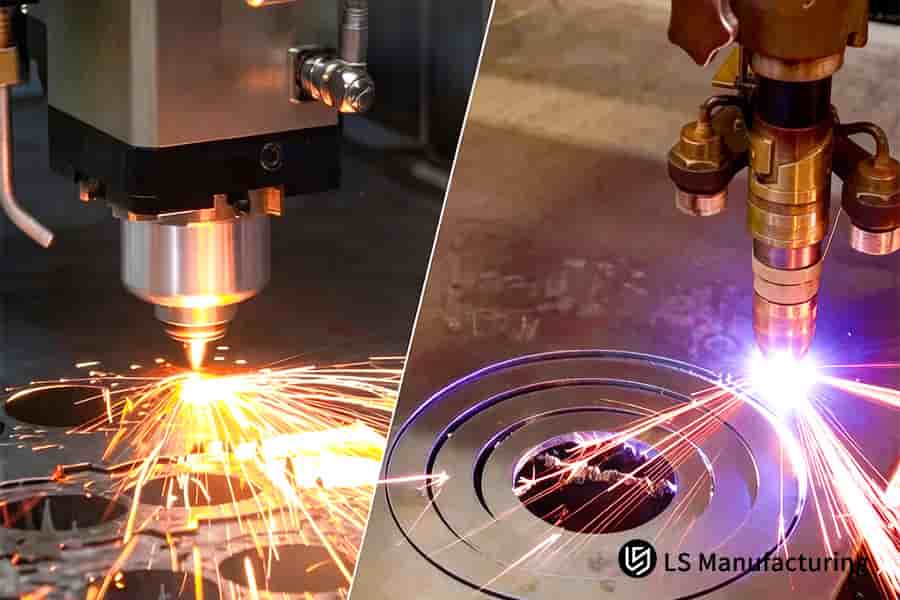
Figure 2: Laser cutting versus plasma cutting shapes lightweight aluminum brackets for aerospace assemblies.
Why Should Engineers Prioritize Precision OEM cutting Services For High Tolerance Medical Enclosures?
The manufacture of high-tolerance medical enclosures demands zero deviation in cut cleanliness and dimensional consistency. Traditional fabrication methods often introduce thermal distortion, compromising critical features. This document details the technical imperative for utilizing dedicated precision OEM cutting services, outlining a production approach that inherently supports stringent regulatory compliance. Its value is in linking specific process controls directly to outcomes essential for medical grade manufacturing.
| Aspect | Capability & Outcome |
| Primary Technology | High precision laser cutting coupled with high pressure nitrogen gas results in oxidation-free environment. |
| Thermal Management | Frequency and duty cycle of the laser change instantly during fiber laser cutting and HAZ stays within 50µm. |
| Cut Quality | This method ensures a clean, dross free cut with a surface roughness (Ra) of less than 1.6µm, which is important for ensuring proper seal formation and biocompatibility. |
| Geometric Fidelity | Limited thermal distortion enables the creation of intricate mounting hole patterns to be coaxial with ±5µm positioning accuracy. |
| Process Assurance | Modern CNC laser cutting technologies make use of real-time inspection techniques to ensure 100% process control of geometries at the cutting stage. |
| Regulatory Impact | Since the process is reliable and accurate, regulatory approval requirements are simplified and FDA audits will be faster. |
The reason behind focusing on precision OEM cutting services lies in the measurable control of micro-distortion due to heat. In turn, this strategy addresses the customer needs by avoiding any post-cutting steps, ensuring that components fit, and meeting the requirement of process traceability. This technical reasoning was tailored specifically for demanding cases when precision laser cutting and reliable medical grade manufacturing become crucial.
How Does Laser Cutting Cost VS Plasma Compare When Processing 20mm Heavy Duty Plates?
The selection of an effective technique to cut through 20mm sheets is not just an economical issue; it is rather vital because the cut quality can affect the entire performance of components and the expenses associated with the whole project. The main factor which distinguishes plasma cutting from high-power laser cutting is quality of cut, which can impact each stage of manufacturing process. Therefore, the following explanation is designed to help make the right choice between laser cutting cost vs plasma:
Quantifying the Kerf Quality Disparity
It all begins with the beveled angle that is created by the cut. While the cut in the heavy plate fabrication will result in an angle of about 1.5°, our high-power laser cutting technique will ensure that the beveled angle will be no more than 0.5°. Such verticality control is crucial if you are going to use these elements for welding.
DFM Intervention to Mitigate Assembly Risk
One of the primary criteria we consider when performing DFM analysis is high precision. As an effective way to avoid assembling problems during manufacturing parts with holes or thread clusters, we perform precision laser cutting prior to machining. Thus, any deformation that may occur due to heat can be avoided.
Analyzing Total Cost of Ownership (TCO)
While the cost per hour of using custom laser cutting services, might be slightly higher than other options, the TCO will favor the choice of using lasers since the high accuracy obtained eliminates any need to perform any extra processes such as milling and reaming. Furthermore, the outstanding outcomes achieved from automated laser cutting lead to easier welding operations and less time spent on inspections, which leads to better efficiency and savings on hidden expenses.
It proves the advantages of using multiaxis laser cutting technology in order to make precision parts economical thanks to the high level of technical capabilities of the equipment. Secure superior edge quality, DFM advantages, and long-term cost savings for your heavy-plate parts by contacting our laser cutting experts now.
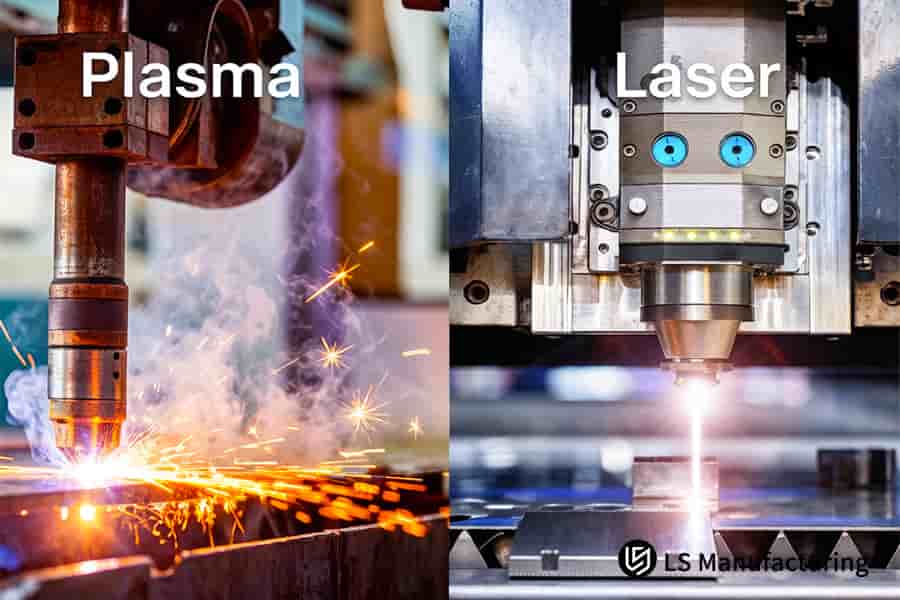
Figure 3: Plasma and laser cutting generate complex geometries in metal sheets for industrial machinery fabrication.
Can Custom Laser Cutting Services Handle The Challenges Of High Reflection Materials Like Copper And Brass?
The ability to laser-process materials such as pure copper and brass is a difficult task, considering that these materials have very high reflectivity and may lead to equipment failure, resulting in substandard cuts. This report outlines the specific engineering approaches used to achieve dependable and efficient reflective material cutting. Here, we demonstrate how we turn a technological obstacle into a valuable process:
Engineered System Integrity for Safe Operation
- Core Safeguard: Utilization of the fiber laser process that involves protection against possible damage that could arise from back-reflection protection energy waves.
- Process Stability: Utilization of customized beam delivery systems along with cutting heads that have the capacity to control the reflection capabilities of the non-ferrous metals.
Dynamic Parameter Optimization for Consistent Quality
- Alloy-Specific Protocols: Development of individual methods of pulse shaping for each unique alloy because of issues that arise from thermal conductivity.
- Result: Delivery of a clean cut that is free from burrs through consistent power output due to high-speed laser cutting.
Quantifiable Output and Industry-Specific Compliance
- Documented Verification: Providing detailed documentation after the production process that includes the surface roughness (Ra) measurement.
- Application Focus: Our focus on surface integrity contributes significantly to our precision OEM cutting services to fulfill the validation requirements of the power electronics and aerospace industry segments.
We solve the core challenge of cutting reflective metals by deploying safeguarded systems and dynamic pulsed laser cutting protocols, delivering reliable, high-integrity results. This positions our custom laser cutting services as a technically robust solution, providing the clean laser cutting finishes and documented quality essential for high-value components. Our controlled non-contact laser cutting methodology ensures deterministic outcomes for advanced manufacturing.
Why Is Plasma Cutting Cost Optimization The Best Strategy For Large Scale Structural Components?
In large-scale structural parts such as beams and bases, when precision is less important than robustness, plasma cutting cost optimization is by far the most advantageous approach. This article examines ways that careful choice of process and use of nested cutting can result in minimized waste and lowest possible cost per part. This discussion of cutting processes addresses the heavy industry market specifically, rather than applications of industrial laser cutting.
| Parameter | Optimization Strategy & Measurable Outcome |
| Primary Process Selection | By applying high definition plasma cutting in a secondary operation (tolerance ±1 mm), thereby reducing process costs up to 40% against automated laser cutting. |
| Material Utilization | By utilizing nesting software that optimizes material utilization, thereby ensuring material usage stays above 90% in large plate cutting operations. |
| Operational Efficiency | Parallel cutting through the application of multi-torch automated plasma cutting technology results in the possibility of doing several identical pieces at the same time and saving time spent on working with one unit per piece. |
| Economic Model | It is possible to build an economic model through the efficient pricing structure that provides volume discounts, offering significant savings per piece. |
| Integrated Service Scope | We offer this service as an integrated part of our comprehensive scope of OEM metal cutting services that combine plasma cutting with other techniques like 3D laser cutting in order to provide various other services. |
Plasma cutting cost optimization is a highly precise engineering solution for the issue faced by the customer when it comes to the management of large-budget projects. The matter of optimum material usage by means of nesting and fast plasma cutting makes the justification of the chosen technology quite precise from an engineering point of view, without any costly precision tube laser cutting.
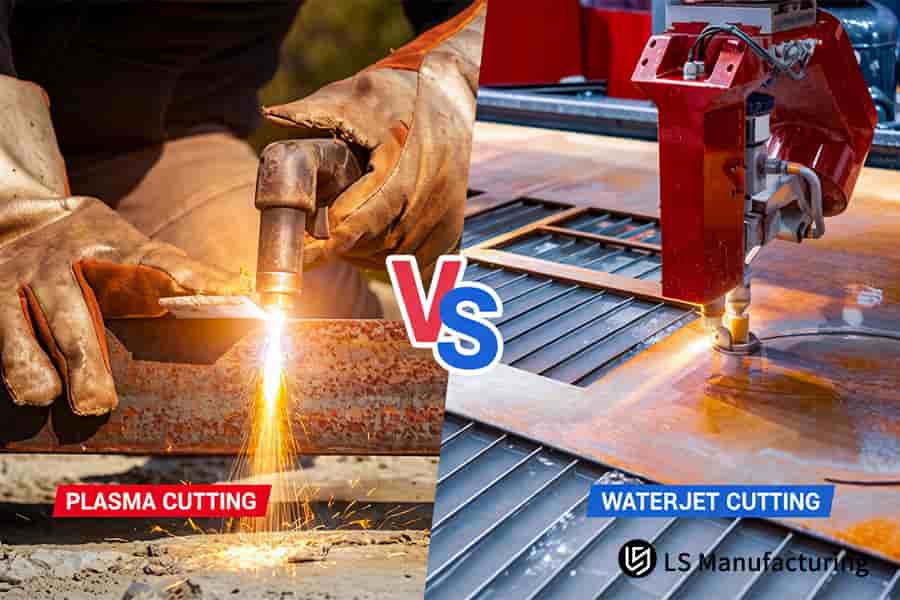
Figure 4: Laser cutting vs. plasma cutting services produce precise edges on thick carbon steel for heavy vehicle frames.
How Do OEM Metal Cutting Services From LS Manufacturing Ensure 100 Percent Material Traceability?
For industries like aerospace and nuclear power, a lack of full material traceability is one of the main compliance and liability risks. This paper describes how we have set up an interlocked process chain for our OEM metal cutting services to ensure that there is full traceability from start to finish. Here are the concrete steps by which we translate a compliance issue into a distinct competitive advantage for us:
Verification at Point of Entry: Positive Material Identification (PMI)
All incoming materials must be tested for PMI using the Spectrometer system before acceptance. The test determines the alloy type and its chemical composition, compared to the mill certificate. It is the first digital proof in the life cycle of each component to ensure material integrity and lay the groundwork for precise part manufacturing.
In-Process Data Logging and Binding
The critical parameters of the process are automatically recorded during manufacturing. In case of multi-axis laser cutting for complex parts, the relevant information is collected through dynamic laser cutting systems, linking the batch numbers to the information on cutting power, speed, and gases used.
Comprehensive Certification and Documentation Delivery
The ultimate step in this process is the generation of an exhaustive Material Test Report 3.1b and FAI report that includes complete dimensional data. This document set is the very foundation of our quality assurance protocol and constitutes the official paperwork required for the audit process of the client. This is essential for the approval of mission-critical laser cutting for precision parts.
In terms of the traceability protocol employed in our company, the core issue that needs to be addressed is the fear of non-compliance audit due to a lack of manufacturing documentation. The problem is tackled by incorporating the real material information together with the manufacturing information into the documentation for each component made. This means that we will have sufficient documentation for the certification of each piece made by the certified laser cutting process.
Why Is Laser Cutting For Precision Parts The Key To Accelerating Your Product Time To Market?
It should also be noted that the time involved in carrying out the longest phase is that of iteration of the prototype component. Thus, laser cutting for precision parts without requiring any tooling is an absolute necessity in order to enable quicker iterations, which would ultimately lead to fast product development. Below are described some of the ways in which high precision laser cutting as well as engineering assistance can have a huge effect on development cycle times:
Eliminating Tooling with Digital Prototyping
- Rapid Turnaround: Use advanced laser cutting to create "soft tools" that allow development of digital prototypes in 48 hours.
- Client Benefit: Rapid prototyping allows tests to be carried out regarding fit, form, and function in less than one week before the end of the project.
Design for Manufacturing (DFM) to Ensure First-Pass Success
- Proactive Intervention: Checking design features and suggesting changes such as replacing welding with direct laser cutting.
- Measurable Outcome: Such an improvement, coupled with laser-cutting precision, increases first-assembly success rate to 99.8% without any need for rework and downtime.
Integrated Service for Seamless Progression
- Unified Workflow: Providing an integrated service from CAD file all the way to final part manufacturing with processes such as cutting, bending, and finishing.
- Efficiency Driver: Such a holistic approach eliminates the communication issues associated with coordinating multiple contractors, which is one of the major sources of LS Manufacturing efficiency.
The issue of delays due to unavailability of prototyping and assembly processes is solved by tool-free manufacturing and proactive design for manufacturability. This integrated process of high-efficiency laser cutting guarantees that our design is transformed into a validated part seamlessly, thus becoming the ideal risk management strategy and first mover advantage.
Case Study: LS Manufacturing Aerospace Titanium Structural Joint Precision Custom Solution
This is an example of the innovative process solution that helped LS Manufacturing overcome the critical challenge faced while manufacturing an expensive aerospace component. We used our custom laser cutting technique to overcome the limitations of regular thermal cutting methods and transformed the production limitation into a production benchmark for quality:
Client Challenge
One of the OEMs of international aircraft faced difficulties manufacturing custom Ti-6Al-4V reinforcements. The brackets were getting subjected to thermal oxidation and cracks up to 0.8 mm in depth using plasma cutting processes. Fatigue testing showed that such components could not function beyond 60% of their useful lifespan. This made it necessary to develop a high-stability laser cutting process.
LS Manufacturing Solution
The shift occurred towards the ultra-precise laser cutting technique utilizing a highly powerful laser accompanied by the highly purified argon gas as assist gas. The critical innovation involved in this approach was a special cryogenic cooling work table, which aimed to extract the heat from the part itself. Alongside a specialized DFM-oriented feed rate strategy, this controlled laser cutting technique helped to eliminate the Heat Affected Zone (HAZ) to below 0.05mm.
Results and Value
The re-engineered brackets successfully passed through 1,000,000 cycles of fatigue loading test without showing any signs of micrometrical cracks, thus verifying the calculated lifecycle of the parts. This successful outcome of the reliable laser cutting ensured that our customer could resume operations in their production facility two weeks ahead of the rescheduled date. Additionally, the high-quality cuts resulted in the absence of oxide layers and did not require any subsequent cleaning procedures, saving 15% off the cost per unit.
This project is an example of our unique ability at LS Manufacturing to utilize process knowledge in solving difficult manufacturing problems. By providing both the component and the technology, we were able to remove risks from a key path forward, reduce costs, and create a new performance standard. That's what technical authority looks like at LS Manufacturing.
For assemblies where micron-level drift is not an option, our laser cutting service delivers verified consistency. Contact us to discuss your volume and tolerance requirements.

FAQs
1. Why choose LS Manufacturing for my precision OEM cutting services?
In addition to providing ±0.05mm tolerances, we ensure that our products come with pre-DFM analysis and total material traceability, thus making sure that your precision components are perfectly compatible during assembly from day one.
2. What is the main factor in a laser cutting vs. plasma cutting cost comparison for thin metals?
Laser cutting for metal sheets that are thinner than 6mm proves to be more than five times faster than plasma cutting. Additionally, it ensures a better edge quality of the part cut out, thus making the cost per unit piece more affordable.
3. How do you achieve cost optimization for plasma cutting in heavy-duty projects?
We utilize intelligent nesting algorithms to boost material utilization rates to over 90%, and we pair this with automated material handling systems to reduce the labor cost allocation per hour of operation.
4. Can LS Manufacturing provide high-precision laser cutting for complex aerospace alloys?
Yes, we have customized parameter sets for titanium alloys and superalloys made from nickel. This helps us achieve proper HAZ control and retain the mechanical characteristics of the material.
5. How quickly can I receive an accurate quotation for my custom laser cutting services?
Please send us your STEP or DXF files; our engineers will provide you with a precise quote within 12 hours.
6. Does LS Manufacturing provide secondary services following metal cutting?
LS Manufacturing provides a complete solution that involves fine deburring, surface passivation, CNC tapping, and anodizing of the metal components.
7. Why is laser cutting for precision parts superior to waterjet cutting for thin aluminum?
Laser cutting involves no mechanical cutting forces; therefore, when processing extremely thin and deformation-prone aluminum sheets, it maintains superior flatness tolerances (±0.1mm/m) while offering higher operational efficiency.
8. How do you handle material price fluctuations within your long-term OEM cutting services?
We lock in base material prices through direct procurement agreements with major steel mills. Furthermore, within our quotations, we utilize transparent market-index-linked formulas to share the risk with our clients, thereby ensuring a stable and reliable long-term supply.
Summary
In precision manufacturing, choosing between laser and plasma cutting is a strategic decision involving material mechanics, tolerances, and total cost. LS Manufacturing delivers true cost advantages through digital HAZ control, nesting algorithms that maximize material use, and proactive DFM analysis that eliminates rework risk. Whether you’re prototyping or scaling to mass production, partnering with LS Manufacturing injects predictable profitability into your supply chain.
Stop worrying about persistently high rework rates or delayed price quotes. Your precision designs deserve to be realized with micron-level manufacturing accuracy. Click the "Get Instant Manufacturing Quote" button below right now to upload your design drawings. LS Manufacturing laser cutting team of senior engineers stands ready to provide you with a complimentary, personalized process comparison report, helping you secure the most competitive direct-from-manufacturer solution within just 24 hours.
📞Tel: +86 185 6675 9667
📧Email: info@lsrpf.com
🌐Website: https://lsrpf.com/
Disclaimer
The contents of this page are for informational purposes only. LS Manufacturing services There are no representations or warranties, express or implied, as to the accuracy, completeness or validity of the information. It should not be inferred that a third-party supplier or manufacturer will provide performance parameters, geometric tolerances, specific design characteristics, material quality and type or workmanship through the LS Manufacturing network. It's the buyer's responsibility. Require parts quotation Identify specific requirements for these sections.Please contact us for more information.
LS Manufacturing Team
LS Manufacturing is an industry-leading company. Focus on custom manufacturing solutions. We have over 20 years of experience with over 5,000 customers, and we focus on high precision CNC machining, Sheet metal manufacturing, 3D printing, Injection molding. Metal stamping,and other one-stop manufacturing services.
Our factory is equipped with over 100 state-of-the-art 5-axis machining centers, ISO 9001:2015 certified. We provide fast, efficient and high-quality manufacturing solutions to customers in more than 150 countries around the world. Whether it is small volume production or large-scale customization, we can meet your needs with the fastest delivery within 24 hours. choose LS Manufacturing. This means selection efficiency, quality and professionalism.
To learn more, visit our website:www.lsrpf.com.