English



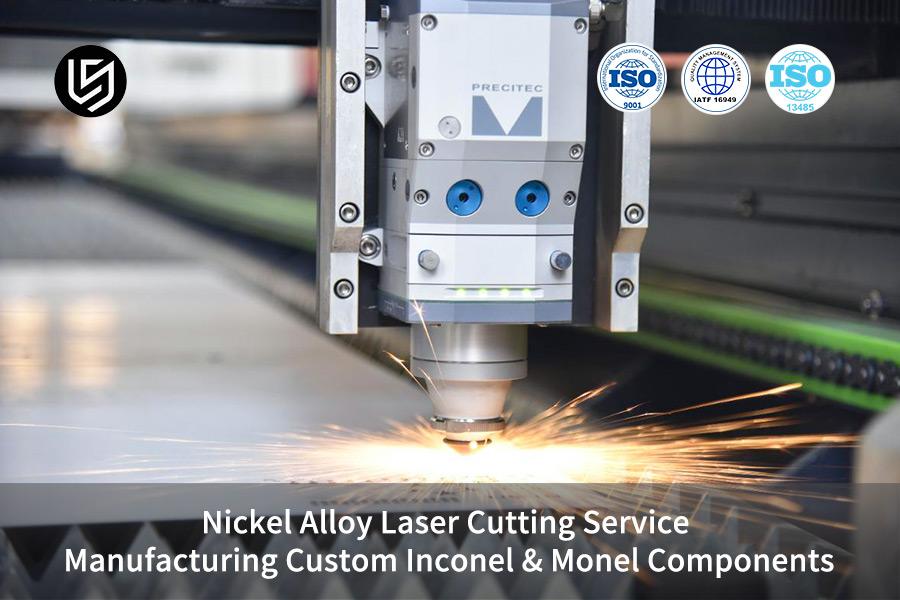
Nickel alloy laser cutting service is a highly specialized machining method tailored to endure the harsh requirements of aerospace and marine engineering. It effectively addresses the industry's challenge of large heat-affected zones, microcracks, and remelting slag adhesion which usually result in part scrapping in nickel alloy cutting. The service uses high-power lasers in combination with high-purity gas and temperature control techniques to maintain precise tolerances of 0.05mm, heat-affected zones less than 50μm, and produce cuts free of oxide, so fulfilling the machining requirements of top-quality high-temperature alloys including Inconel and Monel.
During such scenarios in aerospace and marine engineering, conventional machining companies very often face issues with metallurgical degradation due mainly to their lack of knowledge of the thermophysical properties of nickel alloys. This paper will explain LS Manufacturing's well-established process solutions in detail which are aimed at enabling customers to minimize machining losses and prolong part longevity.
Nickel Alloy Laser Cutting Service Core Process Overview and Key Conclusions
In this chapter, the main technology parameters, technical standards and customer benefits of the nickel alloy laser cutting are briefed, so that the buyers and engineers can easily understand the main technical points and quickly select the best machining solutions.
| Process Dimensions | Core Technical Parameters | Execution Standards | Core Customer Benefits |
| Heat Affected Zone (HAZ) Control | HAZ ≤50μm, pulsed laser modulation | Aerospace fatigue testing standards | Eliminates intergranular corrosion and thermal stress cracking. |
| Auxiliary Gas Process | 99.999% high-purity nitrogen, ≥1.5MPa pressure | ISO 17025 testing specifications | Oxidation-free cuts, supports direct weld-free machining. |
| Dimensional Tolerance Control | ±0.05mm for standard parts, ±0.015mm for thin plates | IATF 16949 system | No secondary mold repair required, suitable for precision mass production. |
| Process Capability Management | Cpk ≥1.33, 100% full-size inspection | Industrial precision machining standards | Zero defects in mass production, maximized supply chain stability. |
| Surface Finishing Effect | Roughness Ra1.6-3.2μm, slag ≤0.02mm | Marine corrosion resistance standards | Improves part corrosion resistance and fatigue life. |
Key Takeaways
- Thermal control makes a difference: Only pulsed modulated lasers can be applied to very precisely limit the heat-affected zone (HAZ) to within 50μm to avoid intergranular corrosion at the material edges.
- Airflow is must: The coaxial blowing with 99.999% high-purity nitrogen at 1.5 MPa will result in a completely oxide-free cut allowing direct welding, without grinding.
- Supplier qualifications: It is highly recommended to check if the supplier has IATF 16949 system certification and 100% process capability index (Cpk 1.33) testing capabilities before ordering custom nickel alloy parts.
Why Trust LS Manufacturing for Nickel Alloy Laser Cutting Services?
At the heart of a top-notch nickel alloy laser cutting service are mature process knowledge coupled with a well-quality-controlled system that can fully address the various hidden risks in processing high-end alloys. After experimenting with Inconel 718 thin sheet processing for three months, we found that the scrap rate of parts made by regular laser processes can be as high as 35%.
Naturally, nickel alloy machining has an almost negligible tolerance for process mistakes. For instance, ASTM B637 mentions that the machining of hightemperature alloys should be very strictly controlled about the deviation in heat input (3%). During the actual implementation of the production process, our team learned that 90% of failures were due to the use of incorrect parameters and the presence of impure gases.
At the same time, we want special parts to be fully traceable throughout the process. For this reason, we have developed a special parameter database for nickel alloys, which includes the main materials of Monel 400 and Inconel 625, and the machining data is recorded continuously. By leveraging the IATF 16949 certification system, we are capable of guaranteeing the consistent performance of every batch of parts.
Thanks to our continuous efforts in the high-end alloy machining field, we can be considered a trustworthy partner for a number of clients in aerospace semiconductor marine engineering, and providing stable & reliable custom laser cutting service as well as a full solution to special nickel alloy challenges.
Mature process accumulation and a compliant quality control system are the core of high-quality custom nickel alloy cutting services, completely avoiding the risk of scrap in nickel alloy machining and consistently ensuring part quality and delivery compliance. To gain a basic understanding of high-end machining standards, you can download the Process Compliance White Paper for free.

Why Is Controlling HAZ Critical In Nickel Alloy Laser Cutting Service?
In fact, controlling the HAZ precisely is vital for securing the fatigue durability of nickel alloy components. LS Manufacturing employs an extremely accurate method for regulating the laser pulse. They are able to maintain the HAZ of Inconel 718 cutting to less than or equal to 0.05mm, so not only avoiding thermal stress cracking but also materially contributing to the enhancement of the overall operational stability of nickel alloy laser cutting service.
Material Failure Mechanism Caused by Excessive HAZ
What makes high-temperature alloy laser cutting still challenging is controlling the heat input. One of the most influential factors of part quality is how the alloy thermal stress accumulates. Careful laser cutting thermal control technology can be the perfect solution for this problem. In addition, nickel-based alloys are materials characterized by low thermal conductivity and high thermal sensitivity. It is well known that a laser constantly emitting light can not only cause the segregation of elements at the edge but also the destruction of the grain structure.
Failure problems in particular can be divided into two groups:
- Susceptibility to intergranular corrosion: Overly wide HAZ results in a compositional imbalance at the grain boundaries which are then prone to the rapid aging and cracking of the parts under the influence of moisture or a corrosive environment.
- Diminished fatigue strength: Thermal deformation creates internal residual stress that will be manifested through the extension of microcracks under conditions of high-frequency loading.
Comparison of Pulsed and Continuous Laser Processing Effects
Implementing the laser beam pulse modulation technique is a major step forward in minimizing the HAZ. Well-executed laser cutting edge refinement can make the cut surface almost twice as smooth as the untreated one. Thanks to our in-house process parameter database, it is a piece of cake to get precise temperature control when working with 3.0mm nickel alloys.
| Laser Mode | Peak Power | Operating Frequency | Duty Cycle | Microhardness Fluctuation | HAZ Value |
| Continuous Wave Laser | 8kW | Constant Output | 100% | ±25% | ≥120μm |
| Modulated Pulse Laser | 12kW | 5000Hz | 35% | ±10% | ≤50μm |
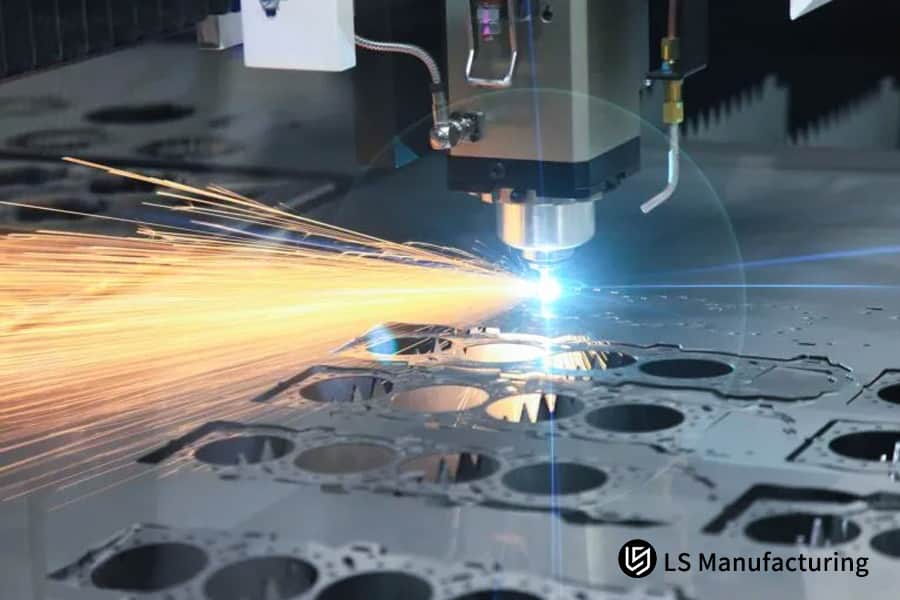
Figure 1: A laser cutter in action on a nickel alloy plate, emitting sparks as it makes a precise cut.
How To Eliminate Dross In Custom Laser Cutting Inconel Components?
High-energy output lasers together with rapid gas flushing can efficiently get rid of the dross left during Inconel cutting and can even result in a dross thickness of 0.02mm without the need for secondary grinding. Precise matching of parameters is really the essence of top-notch laser cutting Inconel components.
Accurate Matching Solution for Core Dross Removal Parameters
Optimizing the nozzle's airflow is among the chief hands-on measures for avoiding dross accumulation during operation. Modern laser cutting dross removal techniques are flexible enough to handle different Inconel materials. After thorough testing in production, we have finalized the best parameter set for Inconel laser cutting dependent on its characteristics.
- Nozzle: Choose a large diameter 2.5mm coaxial nozzle, as this enlarges the area gas flushing covers by 60% relative to 1.5mm nozzle, so securing full coverage of the kerf area.
- Defocus: Makes easier a range from -1.0mm to -2.5mm. This way laser energy will be concentrated on the bottom of the sheet metal layer, facilitating the removal of molten metal.
- Gas Pressure: 1.8MPa of high-purity nitrogen pressure, which is very stable. High-speed airflow will immediately and efficiently get rid of molten droplets of nickel-based metal.
Efficiency and Accuracy Harmonizing Techniques
Inconel laser cutting with a speed of 2.5m/min end up with slag-free cuts and this speed level is a good compromise between mass production efficiency and processing precision. Speed matching of laser cutting that has been standardized help to prevent parameter imbalance problems. It was experimentally confirmed that parameter imbalance affects proper slag removal and leads to rough cutting surfaces as well.
Precise parameter matching balances the slag-free effect and mass production efficiency of Inconel laser cutting components, solving the common industry pain point of sacrificing both precision and speed, and adapting to various precision mass production projects. For mass production processing needs, a free customized DFM process solution is available.
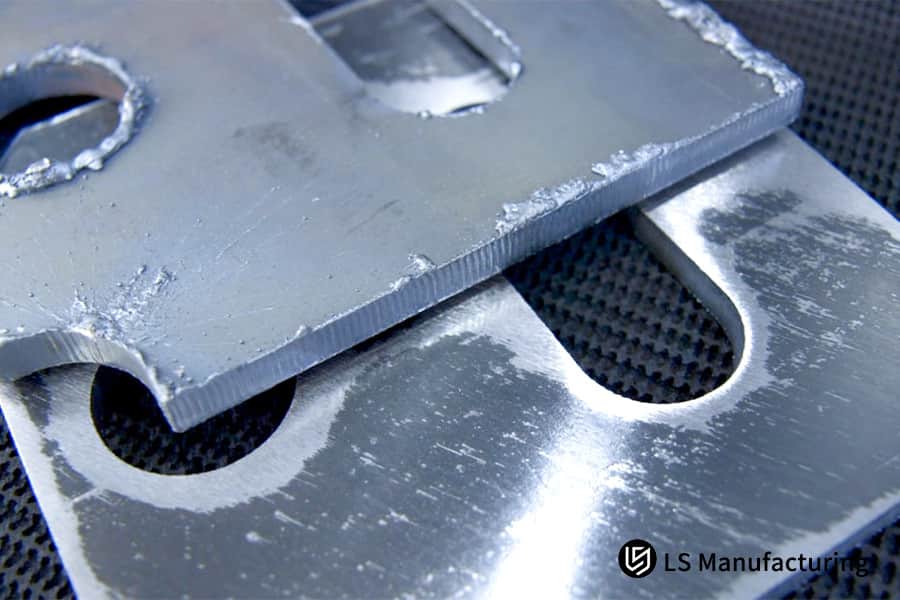
Figure 2: Nickel alloy parts with clean edges after laser cutting, demonstrating effective dross elimination.
Why Does Gas Purity Matter For a Monel Components Manufacturer?
The purity of the auxiliary gas is the single most important factor that affects the corrosion resistance of Monel cut edges. And since we are a reliable Monel components manufacturer, we employ 99.999% high-purity nitrogen to carry out our operation, and are able to produce the oxide-free cut edges that can be welded directly without any problems.
Material Damage Mechanism of Impure Oxygen
A successful corrosion prevention through gas purity ensures the durability of parts, whereas a reliable laser cutting gas protection system is the cornerstone of processing premium nickel parts. High-quality custom laser cut nickel parts strictly require the processing gas to be pure. If only 0.1% oxygen is left, it will lead to tiny copper segregation on the cut edge which in turn causes a brittle oxide layer, thereby opposing the initial structure of the material that was corrosion-resistant.
Such underlying harm is not evident to the naked eye. Still, it will lead to the parts getting corroded and cracked very fast under salt spray and the humid marine conditions, thereby greatly reducing their lifespan.
Comparison of Processing Performance with Different Nitrogen Purities
From our hands-on experience in the Monel valve body processing project for marine engineering, laser cutting with the help of anti-oxidation technology can totally upgrade the materials corrosion resistance. There is a drastic change in processing results with different purities of gases.
| Nitrogen Purity | Salt Spray Test Duration | Cut Surface Roughness | Oxide Layer Status | Welding Compatibility |
| 99.9% Ordinary Nitrogen | 720 hours | Ra ≥ 6.3μm | Obvious black oxide layer present | Grinding required before welding |
| 99.999% High-Purity Nitrogen | 720 hours | Ra 1.6-3.2μm | No oxidation, bright silver metallic surface | Direct welding without grinding |
How Do We Balance Taper And Speed In Custom Laser Cut Nickel Parts?
Precision beam control is the approach of balancing the divergence rate and cutting speed in thick nickel alloy plates, controlling the single-sided taper of the 6mm plate to be 0.5. Accurate beam control is among the primary conditions for the large-scale production of quality custom laser cut nickel parts.
Main Reasons for Taper Being too Large
The depth distribution of laser energy directly affects the perpendicularity of thick plate cutting. Expert laser cutting thickness adaptation technology enables different sizes of plates to be worked on. Custom nickel alloy cutting procedures at a standardized level are Mainly optimized for beam shape. In conventional single-focus laser processing, the beam's energy declines very quickly with the depth of the plate, producing a kerf which is larger at the top and smaller at the bottom, this way a taper is formed.
Also, a thicker the plate means a greater the energy loss, a more severe the taper deviation which will not only be inaccurate for the assembly but also may be rejected by the customer.
A Unique Process Ratio, Speed vs. Precision
Through the application of spatial light modulation technology, our aim is to engineer the laser energy as per the "fire cap" shape to be aligned with the utilization of thick plates. Lasers cutting dimension calibration can perform a controlled cutting accuracy.
- Parameter Combination: 5.0mm nickel alloy sheet using 14kW power, 1.8m/min speed, +0.5mm positive defocusing parameters.
- Technical Advantages: Regular compensation for depth energy loss, leading to a drastic decrease in kerf deviation.
- Implementation Results: Well-maintained control of single-sided taper 0.5, a fine balance of the mass production efficiency and accuracy of verticality.
A dedicated beam control process perfectly solves the problem of excessive taper in thick plate cutting, significantly improving the assembly accuracy of custom laser-cut nickel parts, balancing mass production efficiency and dimensional verticality. For specific processing requirements, submit drawings to obtain a precise graded quote.
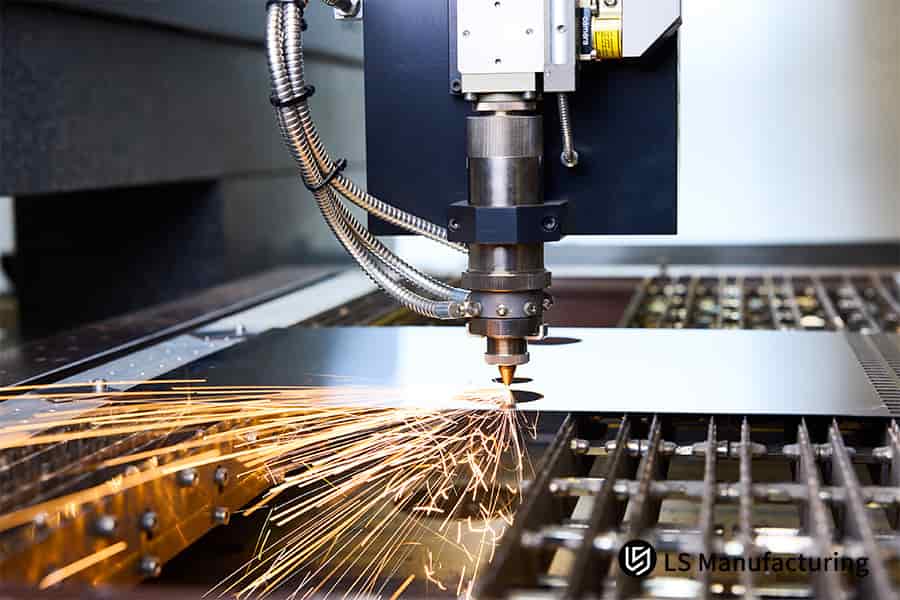
Figure 3: Close-up of laser cutting nickel alloy, optimizing the balance between cutting speed and edge taper.
What Specific Quality Control Standards Ensure 100 Percent Reliability?
Full-dimensional non-destructive testing and process control are the main ingredients of parts being highly dependable. We base our assurance of parts meeting the Cpk1.33 tolerance standard on full-process precision testing, which is a key quality control system for reliable custom nickel alloy cutting.
Pre-feed Material Verification
Material composition verification is the main instrument of quality control. A thorough laser cutting quality inspection process would be a strong preventative measure for product defects. A trusted Monel components manufacturer performs a pre-processing raw material testing. For high temperature alloy laser cutting service, we employ a PMI energy dispersive spectroscopy (EDS) instrument to confirm the composition of raw materials to 100%.
We precisely measure the ratios of nickel, chromium, and molybdenum of materials such as Inconel 625 and Monel 400, because of this avoiding mixing of materials and contamination with waste materials, and this way control the quality of the product from the source.
Comprehensive Inspection During Processing and Shipment
- In-process Monitoring: A combined dual closed-loop vision system not only measures kerf width but also adjusts it dynamically, which results in a stable range of 0.20mm±0.02mm. Intelligent laser cutting real-time monitoring ensures processing stability.
- Shipment Inspection: Using an ISO 17025 certified laboratory, two separate dimensional inspection and elemental flaw detection reports are issued.
- System Guarantee: Each part is capable of full traceability since the whole procedure follows IATF 16949 norms.
How Does Procurement Budget Impact Laser Cutting Inconel Components?
One of the major points of our early DFM process optimization is that it can bring significant cost saving in nickel alloy purchasing. Our exclusive nesting software is capable of increasing material utilization to more than 88% which coupled with the laser cutting Inconel components results in very high performance.
Main Cost Breakdown of Production
Analyzing the composition of purchasing cost is a good way to implementation of accurate cost control. So, scientific laser cutting cost optimization is the key to reducing losses of mass productions. The cost structure of a professional Inconel laser cutting project is very transparent and clear. To be more specific, materials 65%, high-purity gas 15%, equipment time 20%, and no hidden charges.
This cost formula is very precise and it has not been revealed to the public very often in the industry. On top of that, it is the core basis for our customized cost reduction solutions for clients.
Cost Reduction Solutions We Use in Reality
- Layout Optimization: The part spacing is reduced from 5.0mm to 2.5mm, while using the common-edge cutting process to maximize the utilization of the raw material.
- Process Streamlining: By making the length of the start-up lead that is ineffective as short as possible, one can reduce the material waste and the loss of the machine time. Also, the production capacity can be increased by simplification of the laser cutting process, which is efficient.
- Batch Cost Amortization: Different price levels are set to cater to the orders of 50, 200, and 1000 pieces or more. Buying in large quantities can greatly reduce the cost per unit.
Scientific DFM optimization and layout processes effectively compress the overall procurement cost of Inconel laser cutting. Utilizing a transparent cost structure maximizes raw material utilization and reduces mass production losses. For budget control needs, a free customized cost calculation can be initiated with one click.
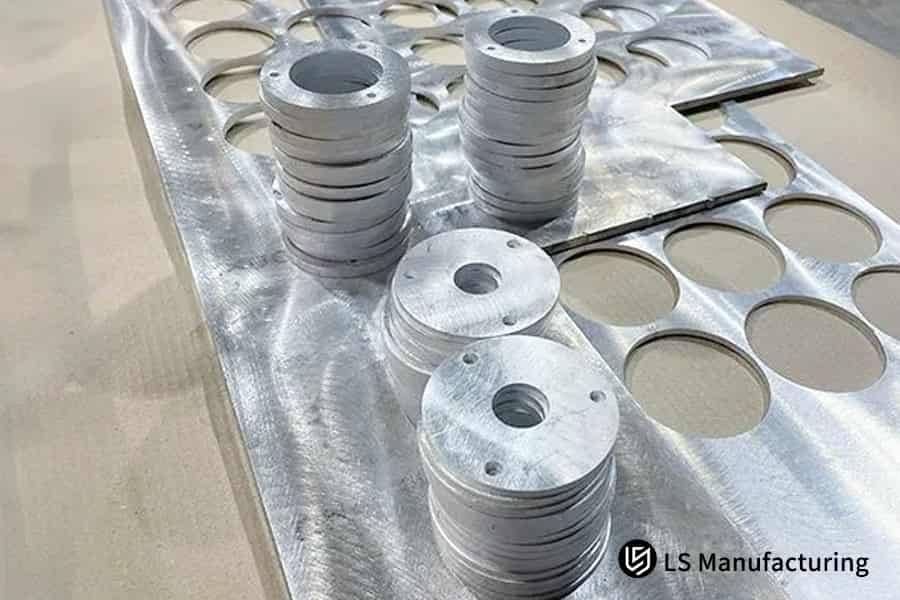
Figure 4: A stack of circular laser-cut Inconel and Monel parts, showing efficient production and material use.
How To Evaluate a Reliable Nickel Alloy Laser Cutting Service Provider?
Choosing a nickel alloy laser cutting supplier with excellent quality should Mostly be based on a review of equipment precision and testing capacity. Standard procedures cannot satisfy the requirements of top-notch nickel alloy laser cutting service. Professional qualifications, technical barriers, and standardized processes are the main pillars for measuring custom laser cutting service of good quality.
Points to Consider for the Review of Core Technical Qualification
Assessment of supplier's technical competence is a very important measure to lessen supply chain risks. Using professional laser cutting supplier screening standards can effectively pinpoint the quality manufacturers. A reliable Monel components manufacturer, besides the basic conditions, must satisfy 3 main requirements, which are also the main bases for deciding the quality of nickel alloy laser cutting services.
- Equipment: Has a 15kW high-power fiber laser, capable of Inconel and Monel special alloy processing.
- Engineering Abilities: Has the capability of independent development of conformal anti-deformation fixtures, thereby addressing the issues of deformation of thin plates and parts of irregular shapes.
- Data Support: It is feasible to supply the process capability analysis report accompanied by an SPC system Cpk1.33 at the sample stage.
How to Identify Industry Hidden Dangers of May be Inferior Processing
There are some manufacturers who, in an attempt to save costs, use 99.5% ordinary industrial nitrogen, which after cutting the nickel alloy will cause a brittle oxide layer to be formed, drastically diminishing the corrosion resistance and fatigue resistance of parts, which will lead to cracking and failure after short-term use. Non-standard process operations are one more typical issue of poor laser cutting standard deviation, which seriously affects the quality of finished products.
Case Study: LS Manufacturing Semiconductor Monel Valve Diaphragm Laser Cutting Customization
The processing of cutting-edge semiconductor components has very strict criteria for process accuracy. Top-notch nickel alloy laser cutting service can address the processing issues of extremely thin Monel parts that are difficult to produce and ensure the stable mass production of precision components.
Customer Problems
A top semiconductor equipment integrator was in urgent need of 0.25mm thick Monel 400 diaphragms for high-pressure valves. This component through which the core gas circulates has very strict requirements for precision, stability, and fatigue life. The customer's current supplier, who used traditional laser processing, came up with serious quality defects.
Monel alloy holds high thermal conductivity as well as high thermal sensitivity. Processing in a traditional manner, for example, easily leads to the accumulation of residual stress. Making use of an appropriate laser cutting thin plate shaping technique will be able to entirely remove the problem of the deformation of thin plates. Besides, in many cases part warping, localized thinning exceeding 15%, and a high possibility of HAZ microcracks during high-pressure cycling tests have been observed in ordinary custom laser cut nickel parts processing, resulting in zero yield.
These issues are typically encountered in nickel parts processing with ordinary custom laser cutting and are one of the major factors causing delays in mass production.
LS Manufacturing Solution
Facing this urgent request, our engineering department completely revamped the DFM process, totally giving up the traditional mode of continuous laser and using microsecond-level ultra-short pulse laser cutting process, which is at the high end of the spectrum of laser cutting aerospace fabrication scenarios. A 0.05ms pulse width, 6kW peak power, and 8000Hz high-frequency spot firing enable the single-point thermal action time to be drastically shortened, while the measured HAZ is as low as 15μm.
At the same time, a self-made vacuum adsorption and cold air integrated fixture is capable of providing negative pressure fixation to the thin plates to keep them from deforming, coupled with 1.6MPa high-purity nitrogen coaxial blowing for quick cooling and slag removal, fully illustrate the benefits a professional custom nickel alloy cutting technology can bring to the table.
Results and Value
Within 4 working days, the last 1500 custom-made pieces were handed over. CMM complete inspection revealed a dimensional tolerance of 0.015mm without slag or thinning. Also, they completely passed 200,000 cycles of high-pressure fatigue testing. Following the original collaboration, the customer immediately ceased that and appointed us the sole global supplier for the respective product line, Also signing a 3-year mass production contract.
By customizing pulse technology and manufacturing special tools, our premium nickel alloy laser cutting service can turn ultra-thin precision machining into a piece of cake, totally resolving problems like deformation, cracking, and dimensional deviations of thin sheets. You can view more semiconductor precision machining case studies for your reference and selection.

FAQs
Q1: What is the thickest Inconel piece you can laser cut?
We use a 15kW fiber laser cutting system equipped with full automation. It is capable of reliably and cleanly cutting two main variants of high-temperature alloys, Inconel 718 and Inconel 625, with a maximum thickness of 12.0mm. We are also able to control the taper in single-sided cutting down to a precision level of 0.8.
Q2: How do you stop Monel cut edges from oxidizing during the process?
We continuously coaxially inject 1.8MPa high-pressure, 99.999% ultra-high purity nitrogen gas at the cutting head. This completely excludes oxygen from the processing area, quickly removes molten metal impurities, and keeps the Monel 400 cut edges in a bright silver metallic color, completely solving the oxidation and blackening issue.
Q3: Is a tolerance of 0.05mm achievable for your custom nickel alloy cuts?
Yes, it is. For nickel alloy sheet parts of 4.0mm thickness or lower, using a high-precision ball screw drive together with a closed-loop feedback control system, we can reliably maintain the linear dimensional tolerance within 0.05mm. This capability satisfies the aerospace precision assembly requirements.
Q4: What details must be provided to get a manufacturing quote that is accurate?
The customer needs to provide 2D/3D drawings with specific material grades like Inconel 718. The drawings should be in one of the widely supported formats like DXF, DWG, and STEP. Besides that, they have to indicate the tolerance range, surface roughness standard, and the exact minimum order quantity for getting the accurate quotation.
Q5: Do you have a minimum order quantity for Inconel laser cutting?
We don't require a minimum order quantity for Inconel laser cutting of high-difficulty specialty nickel alloy as it is a way to help our customers' R&D testing and prototype iteration. Single-piece sampling helps the quick making of samples within 48 hours so it can be easily adjusted to the different small-batch R&D needs.
Q6: Are your laser-cut nickel alloy components certified for aerospace use?
Actually. First, to ensure the quality of our products, our production center is certified based on both the IATF 16949 and ISO 9001 quality management system standards. Besides that, any nickel alloy parts we deliver are accompanied by original material certificates from the steel mill and product traceability reports, which fully comply with the highest standards for aerospace applications.
Q7: How do you ensure thin-walled custom nickel parts do not deform?
It is not enough to simply hold the workpiece in place with large-area copper water-cooled conformal fixtures, what makes the difference is a segmented, skip-cut laser path, which is used effectively to disperse the localized heat build-up. So the temperature rise during the processing of thin-walled parts is strictly controlled to be below 80℃, and that means, thermal deformation issues are eliminated from the source.
Q8: What is your typical lead time for custom nickel alloy components?
For standard prototype development and small-batch custom orders, the delivery cycle is 3-5 working days. Besides that, if the customer offers standard drawings, and we have sufficient raw material inventory, we can ship urgent sample orders by international logistics within 24 hours, thereby efficiently meeting urgent project requirements.
Summary
Laser cutting of nickel alloy is not just a simple sheet metal fabrication method, it is a very sophisticated specialty manufacturing process that involves the use of metallurgical techniques, highly precise optical control, and well-established quality control standards. The major difficulties in processing special alloys like Inconel and Monel are mainly related to the control of heat-affected zone, the removal of kerf, gas protection, and the trade-off between dimensional accuracy and other factors.
LS Manufacturing, through the use of 15kW high-power laser machine, 99.999% high-purity nitrogen protection system, and IATF 16949 standard process control, has been able to resolve the industry's major challenges, producing parts without defects and with 0.05mm tolerances, suitable for the high-end uses in aerospace, marine engineering, and semiconductors. A set of completely measured process parameters and the company's own quality control standards have totally resolved customers' issues of part rejection, short product life, and unreliable supply chains.
If you are facing supply chain challenges such as severe kerfing, low yield, and substandard accuracy in Inconel laser cutting, there's no need to waste budget and time trying ordinary processing plants. Upload your design drawings in DXF/STEP format now, and our experienced process team will provide professional DFM analysis, tolerance assessment, and graded quotation within 12 hours, using solid process data to safeguard the quality and delivery efficiency of your project.
📞Tel: +86 185 6675 9667
📧Email: info@lsrpf.com
🌐Website: https://lsrpf.com/
Disclaimer
The contents of this page are for informational purposes only. LS Manufacturing services There are no representations or warranties, express or implied, as to the accuracy, completeness or validity of the information. It should not be inferred that a third-party supplier or manufacturer will provide performance parameters, geometric tolerances, specific design characteristics, material quality and type or workmanship through the LS Manufacturing network. It's the buyer's responsibility. Require parts quotation Identify specific requirements for these sections.Please contact us for more information.
LS Manufacturing Team
LS Manufacturing is an industry-leading company. Focus on custom manufacturing solutions. We have over 20 years of experience with over 5,000 customers, and we focus on high precision CNC machining, Sheet metal manufacturing, 3D printing, Injection molding. Metal stamping,and other one-stop manufacturing services.
Our factory is equipped with over 100 state-of-the-art 5-axis machining centers, ISO 9001:2015 certified. We provide fast, efficient and high-quality manufacturing solutions to customers in more than 150 countries around the world. Whether it is small volume production or large-scale customization, we can meet your needs with the fastest delivery within 24 hours. choose LS Manufacturing. This means selection efficiency, quality and professionalism.
To learn more, visit our website:www.lsrpf.com.