English



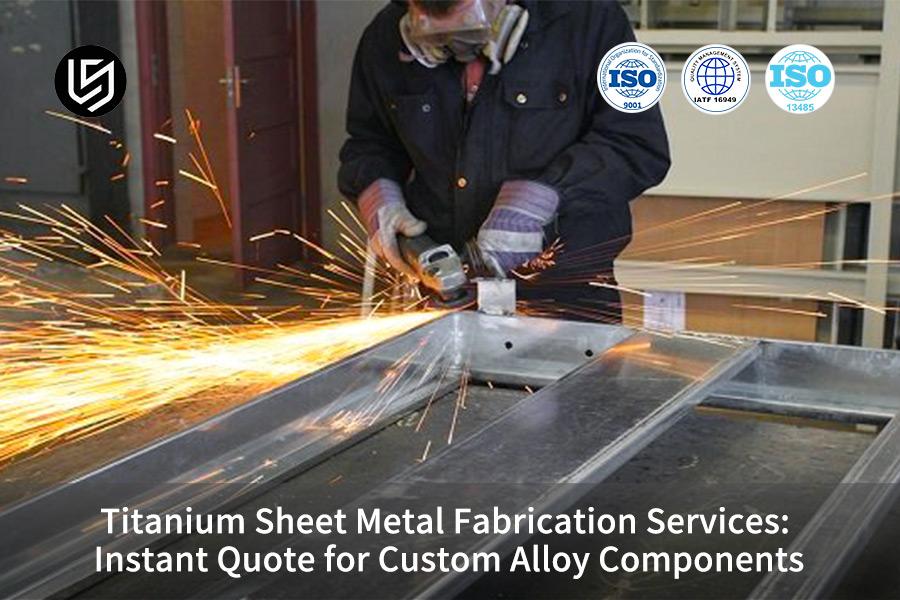
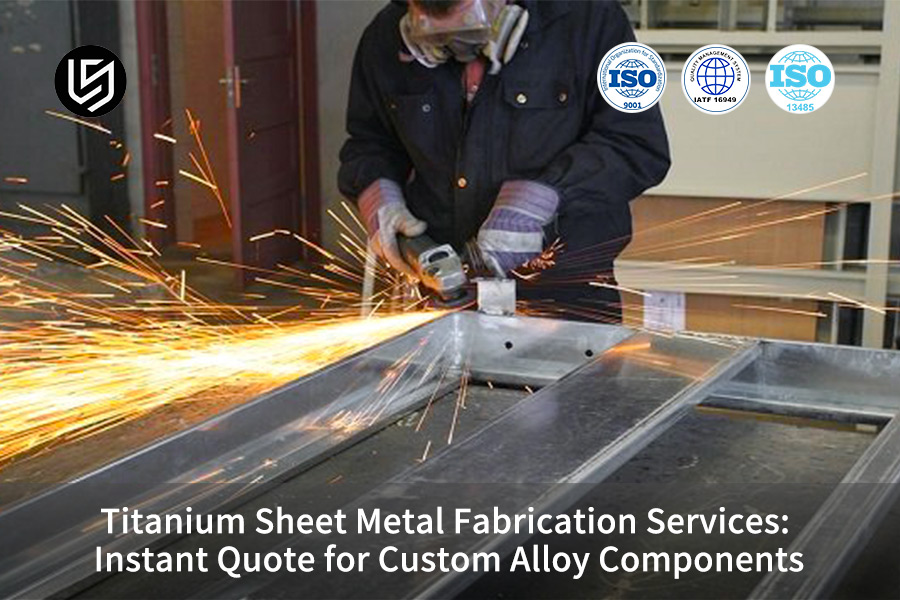
Titanium sheet metal fabrication is a highly accurate titanium alloy sheet metal fabrication solution mainly for medical device, aerospace, and semiconductor equipment sectors. It overcomes major issues in the traditional supply chain like laser cutting-induced embrittlement of the heat-affected zone, uncontrolled springback during bending, welding embrittlement, and lack of price transparency. For instance, LS Manufacturing can reduce the heat-affected zone after laser cutting to 0.08 mm and keep the bending angle tolerance to ±0.5°.
Plus, the integration of a sheet metal fabrication instant quote system with DFM (Design for Manufacturing) audits completely rules out price changes halfway through the process. By following this article, you will get a set of quantitative benchmarks that can be used to evaluate the technological readiness of high-value titanium alloy suppliers.
Comparison of Core Process Dimensions of Titanium Sheet Metal Fabrication
| Process Dimension | Industry Average | LS Manufacturing Process Limit | Direct Customer Benefits |
| Direct Customer Benefits | ≥0.25 mm | ≤0.08 mm | Bending crack risk reduced by over 90% |
| Bending Angle Springback Tolerance | ±2°~±3° | ±0.5° | Assembly yield increased to 99.8% |
| Welding Exhaust Gas Oxygen Content | ≥200 ppm | ≤50 ppm | Weld fatigue life increased by 200% |
| Titanium Sheet Material Utilization Rate | Approximately 68% | Maximum 84% | Single-piece raw material cost reduced by 22% |
| Dimensional Positioning Tolerance | ±0.15 mm | ±0.05 mm | Meets the precision assembly requirements of high-end equipment |
Key Takeaways
- Choice for Bending Crack Avoidance:
Titanium alloys exhibit a very high yield strength ratio. When cold bending the section, the distance between lower die opening needs to be more exactly set (usually V 6t - 8t), and for Grade 5 the bending radius must be at least R 4.5t to successfully prevent bending cracks.
- Accurate Springback Compensation:
Extremely accurate sheet metal forming of titanium alloys must consider the springback of at least 15°-20° (that's roughly 3-4 times that of carbon steel) in the compensation algorithm of the mold, with fully automated laser angle closed-loop monitoring.
- Control of High-Purity Welding Gas:
As temperature goes above 400℃, titanium will very easily absorb atmospheric gases which will cause the weld to become brittle. Because of this, double-sided full-coverage tail protection with 99.999% pure argon gas is a must, and oxygen levels in exhaust gas need to be 50 ppm.
- Commercial Quotation Assurance:
LS Manufacturing does not rely solely on the algorithm-generated instant quotations. It offers a composite quotation system that combines 100% expert-level DFM review, guaranteeing that parts are fully compliant with ISO 9001/AS9100 manufacturing standards and so no hidden costs are incurred.
Why Choose LS Manufacturing's Titanium Sheet Metal Fabrication For Custom Titanium Alloy Components?
It is very important that you choose a supplier who is able to control the entire process from start to finish, because a supplier like this will be able to help you reduce the risk of the failure of your customized titanium alloy sheet metal parts and the control of the total cost of the parts.
In our experience of manufacturing precision aerospace brackets, we have found that generally sheet metal factories have a scrap rate of cold bending titanium alloys of more than 25%. This is mainly because they do not have the means to quantitatively control the material anisotropy. We have compiled a reference table of rheological stresses for titanium alloys with thicknesses ranging from 0.5 mm to 4.0 mm, which allows us to identify the risks of cracking and springback at the drawing stage.
Every processing operation is very closely monitored and controlled so that is fully compliant with the AS9100D aerospace-grade quality management system standards. Our process engineers are able to create a unique sequence of operations for the manufacturing of each titanium alloy component by setting quantitatively the quality control points at every phase, i.e. cutting forming, and welding.
We ensure that the finished product is delivered with a material certificate that complies with EN 10204 3.1 standard of traceability. Our pricing method is such that we mention all special process costs at the beginning, so the customer will never have to worry about finding out that there are hidden markups later.
Precise process prediction can mitigate over 80% of titanium alloy processing failure risks at the source. You can submit product drawings, and our process engineers will provide a free DFM (Design for Manufacturing) manufacturability assessment to identify cracking risks and cost optimization opportunities in advance.

Why Does Titanium Sheet Metal Fabrication Require Strict Thermal Control To Avoid Micro‑Cracking?
In titanium sheet metal fabrication, titanium's low thermal conductivity and high sensitivity to shear can cause grain coarsening in the heat-affected zone during laser cutting or shearing, which results in edge microcracks. The thermal stress must be completely removed either by modifying the pulse frequency, using high-pressure nitrogen as an aid, or by cutting with cold water.
Microscopic Failure Mechanism in Hot Cutting Processes
Compared to carbon steel, the thermal conductivity of titanium alloys is merely about one-fifth that of carbon steel. During cutting, heat cannot be dissipated quickly, resulting in grain coarsening and an increase in hardness in the edge area. Later bending may cause cracking along the heat-affected zone quite easily - that is why it is necessary to handle it carefully in stress controlled sheet metal fabrication processes.
The 10.6μm CO laser has a longer wavelength and its heat input is more focused, so it causes more thermal damage to titanium alloys than a 1.06μm fiber laser. In other words, the shorter the laser wavelength, the less thermal damage to the cut edge of the titanium alloy, which makes it more appropriate for precision thin-plate machining.
LS Manufacturing Thermal Stress Control Limit Parameters
We have done thorough side-by-side testing of various laser procedures to measure the performance of the cut edge, which can be a decision-making tool in laser cut sheet metal and custom titanium alloy components. The main data is given in the table below:
| Laser Type | Cutting Speed (m/min) | Output Power (W) | HAZ Thickness (mm) | Edge Microhardness (HV) |
| CO₂ Laser (Air Assisted) | 1.2 | 1500 | 0.32 | 485 |
| Fiber Laser (Air Assisted) | 2.0 | 1200 | 0.21 | 452 |
| Fiber Laser (1.5MPa N₂) | 2.5 | 1200 | 0.08 | 340 |
| Fiber Laser (2.0MPa N₂) | 3.0 | 1500 | 0.07 | 335 |
| High-Pressure Water Cutting (400MPa) | 0.3 | - | 0 | 310 |
The main realisation standards for thermal stress control are:
- Fiber laser with a wavelength of 1.06μm, assisted with a gas of 1.5MPa high-pressure, high-purity nitrogen for cutting help.
- Locate the direction of the metal sheet before cutting, the cutting line follows the direction of the fibres to minimize the overall distortion.
- For parts with a thickness of more than 3mm and that cannot tolerate any heat effects, the use of cold water jet cutting is the most appropriate.
The system of this process guarantees the physical properties of the parts at their edges. Our sheet metal fabrication instant quote tool intelligently selects the best processing option without the need for further customer confirmation.
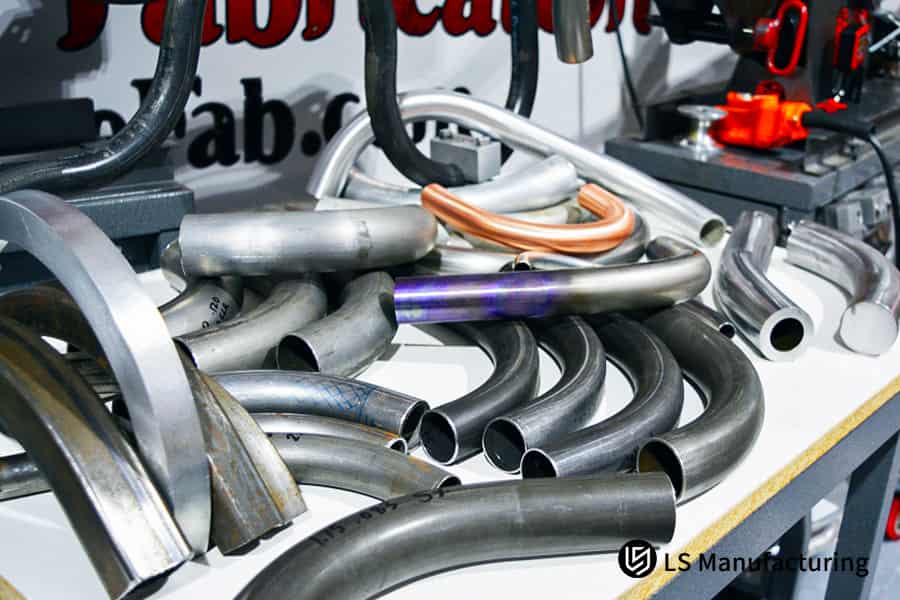
Figure 1: A diverse collection of bent metal pipes and tubes, including stainless steel exhaust components.
How Can Custom Titanium Alloy Components Overcome Precision Limits Without Springback?
In the production of custom titanium alloy components, the modulus of elasticity for titanium alloy is at a level of 110 GPa, which results in a bending springback of up to 15° - 20 °(or approximately 3-4 times that of carbon steel). The ultimate fix to this problem is the implementation of a variable bending compensation algorithm and a CNC bending machine equipped with an automatic angle measurement system enabling dynamic compensation.
Basic Mechanical Rationale for Springback
The yield strength ratio of titanium alloys is 0.93, and they exhibit a strong propensities for work hardening. Only a small portion of the metal is plastically deformed during bending, and a significant portion remains elastically deformed. Titanium alloys show a very high springback after unloading, which is typical for carbon steel. Out-of-tolerance dimensional accuracy of parts is a major concern in precision bent sheet metal fabrication.
Without precise compensation, the finished angle may be far off the design value, and in some cases, the part may not be assembled at all. In simple words, titanium alloys are quite elastic, and the springback after bending is much more than that of carbon steel, that means, without pre-compensation, it is impossible to get a proper angle.
Quantitative Bending Control Method
We have created a specific bending parameter matrix for titanium sheets with various thicknesses and conditions. Main control points are:
- Die and Radius Control: When cold bending, a die specification of V 6t - 8t is applied. The minimum bending radius of Grade 5 titanium sheets should be R≥4.5t.
- Accurate K-factor Correction: The neutral position shift factor is individually calibrated for annealed and solution-aged sheets, with margin of error being within ±0.02.
- Closed-Loop Real-Time Compensation: The laser angle sensing system is used to perform an automatic correction of the compensation amount after every bending stroke, thereby removing the differences in material performance from one batch to another.
Common bending parameters for Grade 5 titanium sheets of various thicknesses work as the main references for the bending process in the tight tolerance sheet metal fabrication. Specific parameters are as follows:
| Sheet Thickness t (mm) | Minimum Bending Radius R (mm) | Recommended Die V Width (mm) | Estimated Springback Angle (°) | Bending Tonnage per Unit Length (tons/meter) |
| 0.5 | 2.25 | 4.0 | 18 | 12 |
| 1.0 | 4.5 | 8.0 | 17 | 22 |
| 2.0 | 9.0 | 16.0 | 16 | 40 |
| 3.0 | 13.5 | 24.0 | 15 | 58 |
| 4.0 | 18.0 | 32.0 | 14 | 75 |
A complete springback control system is the core difference between professional titanium fabrication service and general sheet metal workshops.
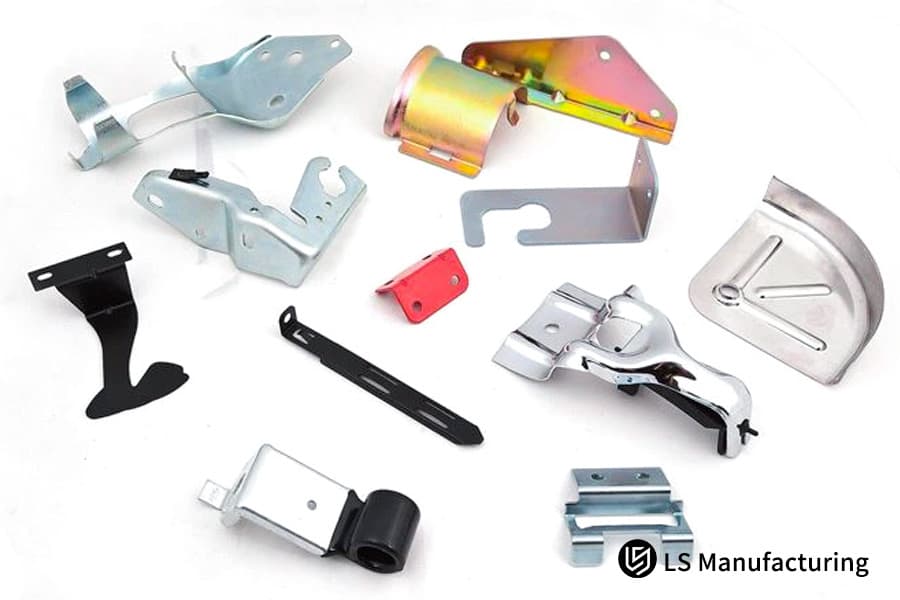
Figure 2: An assortment of stamped and formed sheet metal parts in various shapes and surface finishes.
How Does An Instant Quote Sheet Metal Parts Engine Balance Algorithms With DFM For Titanium?
The general algorithm for instant quote sheet metal parts often overlooks the implicit costs of special fixtures, protective gas covers, and significant bending forces required during titanium alloy welding. The efficient conversion of high-value inquiries requires a composite pricing mechanism that combines front-end AI geometric grasping with back-end engineers' secondary actuarial calculations.
The Main Problem Of Purely Algorithmic Pricing
Purely automated instant quote sheet metal parts engines compute only labor and material costs through geometrical features, failing to identify the special processing requirements of titanium alloys in situations of high value sheet metal fabrication. Such requirements include double-sided argon-filled fixtures, losses from dedicated production lines to prevent iron ion contamination, and additional tonnage costs of bending processes. These hidden costs usually make up 15%-25% of the total quote, so price increases are pretty much unavoidable.
In a nutshell, purely algorithmic pricing just calculates basic geometric costs, completely ignoring special processing costs, thereby causing price increases eventually.
LS Manufacturing's Composite Quotation Technique
We have developed a dedicated physical attribute accounting engine for titanium alloys and built a sheet metal fabrication instant quote mode that fits the actual process of custom engineered sheet metal fabrication. This allows for an efficient blend of algorithms and human skills:
- AI Scrutiny: In less than 10 minutes after uploading drawings, the system automatically detects geometric features and produces a simple material and labor quote.
- Engineer DFM Review: Within 15 minutes, senior process engineers carry out process feasibility inspections, detecting cracking risks and design optimization points.
- Smart Stock Optimization: The percentage of titanium sheets utilization has been increased from the industry average of 68% to 84% through a layout algorithm dedicated to this, resulting in a direct reduction in raw material costs.
Transparent and accurate quotations are the core of a stable supply chain. You can upload part drawings and obtain a formal quote with a complete DFM assessment through our rapid quote titanium service. All quotes are locked in once, with no hidden charges.
Why Is Shielding Gas Purity Critical In a Premium Titanium Fabrication Service?
During the titanium fabrication service, titanium is highly prone to absorbing hydrogen, oxygen, and nitrogen above 400 ° C, leading to severe embrittlement of the weld seam. To make sure a weld is industrial grade and of high strength, it is necessary double sided and full coverage shielding with 99.999% pure argon will be provided.
The Role of Interstitial Elements in Welding
At elevated temperatures, interstitial solid solutions are formed by titanium with oxygen, nitrogen and hydrogen which much increase the hardness of a weld while at the same time diminishing its plasticity alloy. So, a premature weld fracture under maximum stress is caused which is still the main control point of quality control in the high purity sheet metal fabrication.
The color of a weld line is the direct manifestation of oxygen absorption, and that's why it is the most straightforward standard for quality assessment that can be used visually. In fact, the darker the weld surface color the higher the damage level and mechanical property decrease.
Comprehensive Shielding Gas Control System
We have put in place a total shielding gas control system, which includes gas source and exhaust gas monitoring. The main standard of our implementation is:
- Front Protection: Cover the weld and the adjacent high-temperature area of about 400 by using a following-type trailing shielding gas hood.
- Back Protection: Provide a special flexible argon-filling fixture to ensure that the back of the weld remains in an inert gas environment during the whole operation.
- Real-time Monitoring: Oxygen content in the exhaust gas is detected by a monitor and the welding is immediately stopped and an alarm is activated automatically if this value is over 50 ppm.
The corresponding standard for weld color and performance is the universal judgment basis for welding quality control of custom alloy sheet metal service. The specific correspondences are:
| Weld Color | Oxygen Content Range (ppm) | Weld Joint Coefficient | Acceptance Criteria |
| Silver White | ≤50 | ≥0.95 | Acceptable |
| Light Yellow | 50-100 | 0.90-0.95 | Acceptable |
| Dark Blue | 100-200 | 0.75-0.90 | Unacceptable |
| Gray | ≥200 | ≤0.70 | Must be scrapped. |
Strict shielding gas control is the core of welding quality control, effectively ensuring the weld fatigue life of titanium alloy components fabrication.
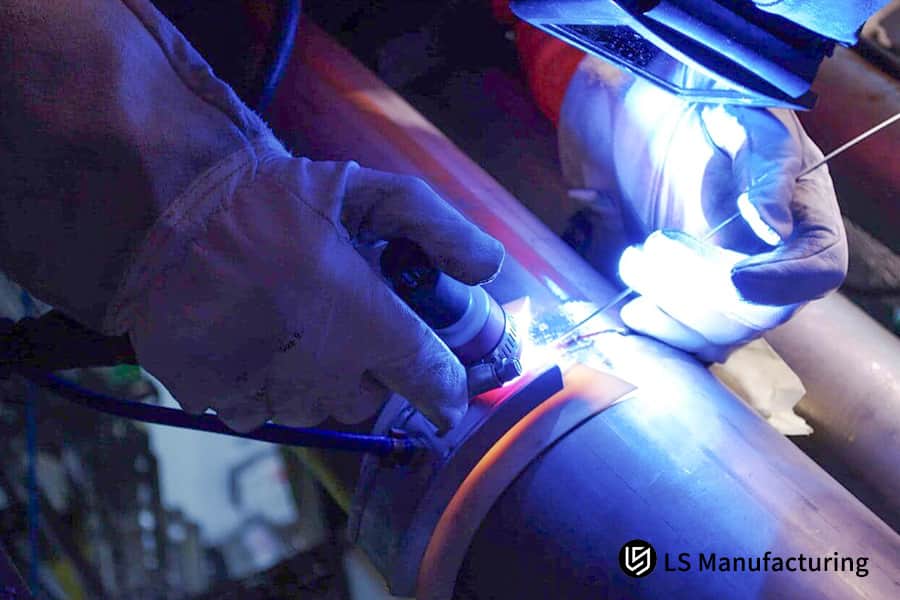
Figure 3: A close-up of a welder performing TIG welding on a large diameter metal pipe with intense blue light.
Can a Custom Alloy Sheet Metal Service Guarantee ISO Standards For Industrial Grades?
In custom alloy sheet metal service, processing specialty titanium sheets like Grade 5, Grade 7, or Grade 12 require extreme care. Any mixing of materials or a change in the trace elements might cause the materials to corrode and fail suddenly. So, in our opinion, a strong traceability system must consist of 100% incoming PMI inspection and error-proof labeling management.
Full-chain Material Traceability System
We carry out full batch traceability management for all the titanium materials coming in. This is the basis procedure for making sure materials meet the requirements in aerospace grade sheet metal fabrication and custom alloy sheet metal service:
Manufacturers provide a material report for each batch of sheets. After the sheets get delivered to the factory, testing of the positive composition is made using PMI equipment to check whether the grade and trace elements conform to the standards.
A unique ID card that tags the workpiece is used during production, which totally excludes the possibility of mixing different grades of materials. At the layout, the bending direction is carefully controlled to be at a right angle to the rolling fiber direction so as not to cause stress concentration and cracking. Simply put, each batch is linked to a unique traceability label, making the entire process traceable and completely getting rid of the risk of mixing materials.
Precision Testing Capabilities Support
We have a complete set of sophisticated testing machines that gives us the ability to thoroughly check whether the dimensions and the performance of the certified sheet metal fabrication and titanium alloy components fabrication comply with international standards:
- Dimensional Inspection: A coordinate measuring machine with an accuracy of ±0.005mm is employed for the full-dimensional verification work.
- Internal Defect Detection: The use of X-ray flaw detectors aims at identifying hidden defects like internal weld porosity and microcracks.
- Material Traceability: Each batch of products has an original material report conforming to EN 10204 3.1.
Stringent quality control is the foundation for the long-term reliable service of custom titanium alloy components. You can contact us to obtain complete quality system certification documents and a list of testing capabilities to understand the quality control process.
How Do Deburring Techniques Deliver Scratch‑Free Surfaces In Titanium Alloy Components Fabrication?
During the titanium alloy components fabrication, titanium alloys are prone to work hardening, and traditional manual angle grinders can introduce harmful local thermal stresses. Advanced surface treatment should use customized wet drum vibration grinding or controlled chemical polishing to ensure that the surface roughness is reduced to below Ra 0.8 μm and does not produce hydrogen embrittlement.
Downsides of Traditional Deburring Methods
Manual angle grinder polishing can generate local high temperatures, causing titanium alloy work hardening and thermal stress, which is a common risk source for ultra clean sheet metal fabrication surface treatment. The residual iron ions in ordinary steel abrasives can cause electrochemical corrosion of parts during service, which can directly lead to product failure in semiconductor and ultra-high vacuum scenarios.
Surface Treatment That Does Not Cause Damage
This post-treatment procedure of titanium alloys is one of our key components through scratch free sheet metal fabrication and high-end titanium fabrication service. The core process consists of what comes next steps:
- Deburring: To avoid any iron ion contamination and thermal stress, wet roller vibratory grinding with non-metallic abrasives is employed.
- Sandblasting: White corundum or glass beads are utilized. Sandblasting pressure and angle are controlled very strictly so that no impurities are embedded into the surface.
- Acid pickling and passivation: The HNO-to-HF ratio is monitored very carefully so that oxide scale is removed and dimensional erosion is kept to the level of micrometers.
As for the detection of iron ion contamination, we perform the so-called blue spot test with our own formula (5g potassium ferricyanide + 10ml hydrochloric acid + 100ml distilled water). If no blue spots are visible after wiping for 30 seconds, this signifies that the sample has passed the test - i.e. one of the qualities of our result is by far the most sensitive, when compared to the industry standard. Reliable surface treatment technology is an inalienable feature of top-grade services, it is also the ultimate phase in the total quality control process of titanium sheet metal fabrication.
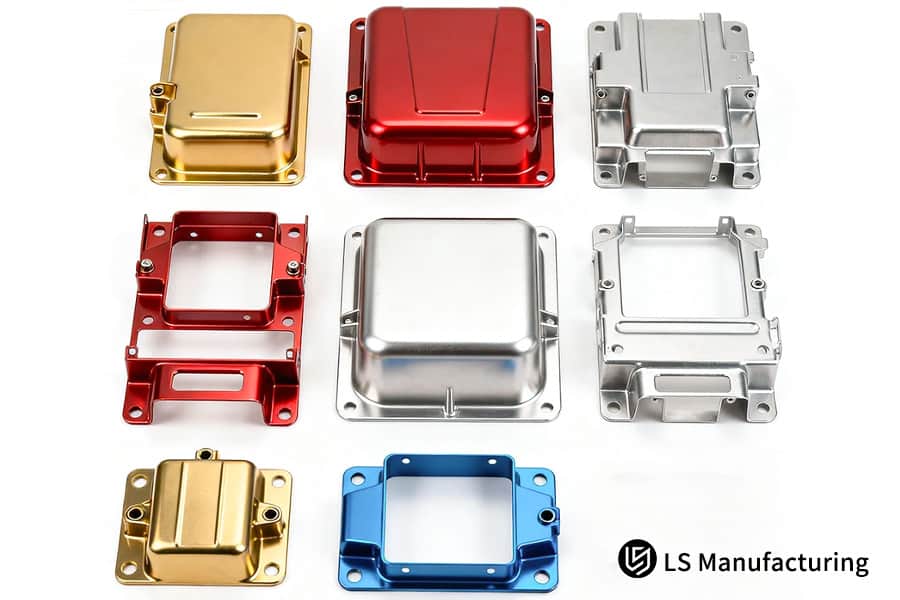
Figure 4: High-quality anodized aluminum enclosures and Hammond-style boxes in vibrant colors for electronics.
What DFM Strategies Maximize Material Utilization During a Rapid Quote Titanium Service Workflow?
In the rapid quote titanium service operation, titanium sheets are considered very precious raw materials and wrong design might lead to very big losses due to waste. Book disassembling and assembling sheet metal parts as well as substitute complex bends by segmented welding, material procurement costs of large-size shell parts may be decreased by 35%.
Ways to optimize material at design stage
Park fabrication and rapid titanium service processes are the most efficient way to reduce the cost of titanium alloy parts-high yield sheet metal fabrication and DFM optimization during a drawing design phase, for example, design tool reducing holes at bending dead angles to prevent cracked bending and reduce waste, large-size multi-bend parts can be dismantled to multiple simple parts for welding that improve Really the sheet metal utilization. In other words, like a jigsaw puzzle where one layouts all parts with the least amount of sheet metal to minimize the waste.
Optimization layout and process path
We optimize materials at the same"time" with quotation stage, and the results are updated to the "material optimized sheet metal fabrication" details. Core directions of the optimization are:
- Intelligent Layout: Using a proprietary layout algorithm, parts are located towars the sheet metal rolling direction for maximizing sheet metal area utilization.
- Structural Optimization: the total cost of integral molding and separate welding for complex, multi-bend parts are evaluated and the best offer is given.
- Process Load Reduction: Process grooves are recommended to be put at easily cracked bending dead angles to reduce scrap rates and rework costs.
These optimization strategies are reflected in the quotation details, allowing customers to visually see the cost reduction and quickly compare cost differences between different solutions using the sheet metal fabrication instant quote.
Case: How LS Manufacturing saved an OEM From 35% Titanium Sheet Metal Fabrication Scrap Crisis
Client Challenge
A multinational manufacturer of high-end industrial equipment and a medical equipment Original Equipment Manufacturer (OEM), producing precision titanium alloy assemblies for extreme environmental conditions, was using 1.2 mm to 3.0 mm thin titanium alloy sheets. Ordinary medical grade sheet metal fabrication methods were unable to fulfill the precision and yield criteria.The structural piece featured seven very small and complicated reverse bends, with the positioning tolerances being regulated within 0.08 mm.
The client had a general sheet metal supplier who lacked the proper expertise in handling the anisotropic rheological stress, leading to several macroscopic cracks and a 20° springback during the cold bending phase. After they were manually ground and corrected, the parts broke during the stress testing, leading to a 35% scrap rate and the project's supply chain being stopped.
LS Manufacturing Solution
When LS Manufacturing took over the project, the company promptly started a full-process validation and improvement of defect free sheet metal fabrication for these custom titanium alloy components.
- The finite element analysis was used to remodel the material strain hardening network model of the workpiece, the K-factor was very accurately corrected, and the lower die opening distance was modified from the unreasonable combination to the proprietary matrix of V≥6t - 8t.
- For the laser-cut edges, we completely left air cutting and brought in high-pressure ultra-pure N laser technology, reducing the heat-affected zone to 0.08 mm.
- On the most important forming stage, we used a CNC servo bending machine which had a completely automatic laser angle closed-loop monitoring system for immediate springback compensation.
- Welding was done in an argon chamber of 99.999% purity, and the oxygen content in the exhaust gas was kept at 50 ppm.
- Our on-the-ground experience in this project has allowed us to raise the material usage rate of this component from 62% to 83% with intelligent nesting optimization alone, which led to a direct decrease in the unit raw material cost.
Results and Value
Due to the overall process upgrade, the bending angle deviation of this order of titanium alloy parts was kept within ±0.5°, while the three-coordinate positioning dimensional deviation was 0.05 mm, which is the level of precision leading the industry in high performance sheet metal fabrication and titanium alloy component fabrication.
During a 100x microscopic examination, the welds showed an aerospace-grade silver-white color and no microscopic crystal cracks were present. In the end, the component's production waste percentage went from 35% to zero, its product fatigue life was tripled, and the unit procurement cost was lowered by 22% thanks to better material utilization.
Similar titanium alloy processing failures are common in high-end equipment manufacturing. You can submit your project challenges, and our senior process experts will provide a one-on-one customized solution evaluation.

FAQs
Q1: What is the minimum order quantity (MOQ) for titanium alloy sheet processing? What support is available for prototype prototyping?
LS Manufacturing is flexible with the minimum order quantity and has no minimum order quantity restrictions, whether you're working on a single R&D prototype or a production run of 10,000 pieces, we can offer the same level of technical support based on our modular intelligent tooling system.
Q2: Why does the final contract price often change after obtaining an instant quote for titanium alloy sheet metal online?
General platform algorithms often overlook special process costs such as titanium alloy welding special argon filling fixtures and cross contamination prevention. We conduct in-depth reviews with our engineers to ensure that what we report is what we get, and we will never increase the price midway.
Q3: For bending Grade 5 (Ti-6Al-4V) high-strength thin sheets, how does your company guarantee that microcracks, which are difficult to detect with the naked eye, will not occur?
When implementing the crystal orientation perpendicular to the bending fiber rule, we also ensure the opening distance of the cold bending die V≥6t-8t, the bending radius R≥4.5t, and carry out 100% penetrant testing after processing to completely eliminate microcracks.
Q4: How does your company ensure the safety of titanium alloy surfaces, addressing the "iron ion cross-contamination" issue that is a concern for precision semiconductor and chemical equipment customers?
We have set apart a separate production line for titanium processing, the tooling is covered with a polymer protective layer. After processing, we do pickling and passivation, and 100% blue point test verifies the absence of residual iron ions, so potential corrosion is prevented.
Q5: What are the optimal surface roughness (Ra) and heat-affected zone (HAZ) achievable through precision laser cutting of thin titanium alloy sheets?
By using high-pressure ultra pure N ₂ cooling laser cutting technology, titanium plates with a thickness of ≤ 2.0mm have a cutting edge HAZ ≤ 0.08mm, an edge microhardness below 450HV, a stable surface roughness within Ra 3.2 μm, and a smooth cutting edge without slag, which can directly enter the forming process.
Q6: When welding custom titanium alloy components, how do you prevent interstitial element contamination that could bring brittle welds?
Our welders follow the process of completely enclosed continued protective gas shield and back gas shield technology, the gas we supply is 99.999% high-purity argon, we measure and keep the oxygen content of the exhaust gas 50ppm, and the weld shows a silvery-white color.
Q7: What international quality certifications has your factory passed? Can you provide third-party material and testing reports?
We have passed ISO 9001:2015 and AS9100 aerospace-grade quality management system certifications, each batch of products comes with a material report and full-size CMM test data in accordance with EN 10204 3.1 standard. All documents are compliant, valid and support traceability and verification.
Q8: How long will it take for me to get a complete quotation including a full DFM assessment after I have submitted drawings?
After uploading STEP/DFF drawings, the system generates preliminary real-time price details within 10 minutes. Senior technical engineers can complete process cross validation within 15 minutes and simultaneously send the complete DFM evaluation report.
Summary
Handling the processing of precision titanium alloy sheet metal can never be just a routine technology that can be easily grasped by general mass-production sheet metal plants or simply online coding platforms. Such cutting-edge technologies as variable bending compensation algorithms to control Grade 5 springback, high-pressure ultra-pure nitrogen laser cutting to suppress HAZ grain coarsening ( 0.08 mm), double-sided welding control with the exhaust oxygen content of 50 ppm to prevent micro-embrittlement, are the core technical points that make products working in the most extreme service environment reliable.
LS Manufacturing is a company well-equipped technically and has transparent and stable dynamic DFM real-time pricing mechanism and manufacturing closed loop strictly following ISO 9001/AS9100 standards, which has made it a technology benchmark supplier trusted by high-end industrial and chemical buyers worldwide.
Do not let manufacturing defects and obscure secondary markups of traditional supply chains slow down your R&D cycle. You may upload 3D models (supporting.STEP,.IGS,.DXF, etc.) and get in 10 minutes an instant and accurate commercial quote for your titanium alloy sheet metal components. Our team of senior engineers will kindly and professionally provide you with a DFM review report for free in 15 minutes, which through the optimization of the material nesting results in a significant increase of your sheet metal utilization to 84% and eliminates the risks of cracking and corrosion at the source.
- Upload your drawings now to get an instant quote for titanium alloy sheet metal work.
- Schedule a one-on-one in-depth consultation with a senior sheet metal process expert from LS Manufacturing.
📞Tel: +86 185 6675 9667
📧Email: info@lsrpf.com
🌐Website: https://lsrpf.com/
Disclaimer
The contents of this page are for informational purposes only. LS Manufacturing services There are no representations or warranties, express or implied, as to the accuracy, completeness or validity of the information. It should not be inferred that a third-party supplier or manufacturer will provide performance parameters, geometric tolerances, specific design characteristics, material quality and type or workmanship through the LS Manufacturing network. It's the buyer's responsibility. Require parts quotation Identify specific requirements for these sections.Please contact us for more information.
LS Manufacturing Team
LS Manufacturing is an industry-leading company. Focus on custom manufacturing solutions. We have over 20 years of experience with over 5,000 customers, and we focus on high precision CNC machining, Sheet metal manufacturing, 3D printing, Injection molding. Metal stamping,and other one-stop manufacturing services.
Our factory is equipped with over 100 state-of-the-art 5-axis machining centers, ISO 9001:2015 certified. We provide fast, efficient and high-quality manufacturing solutions to customers in more than 150 countries around the world. Whether it is small volume production or large-scale customization, we can meet your needs with the fastest delivery within 24 hours. choose LS Manufacturing. This means selection efficiency, quality and professionalism.
To learn more, visit our website:www.lsrpf.com.