English



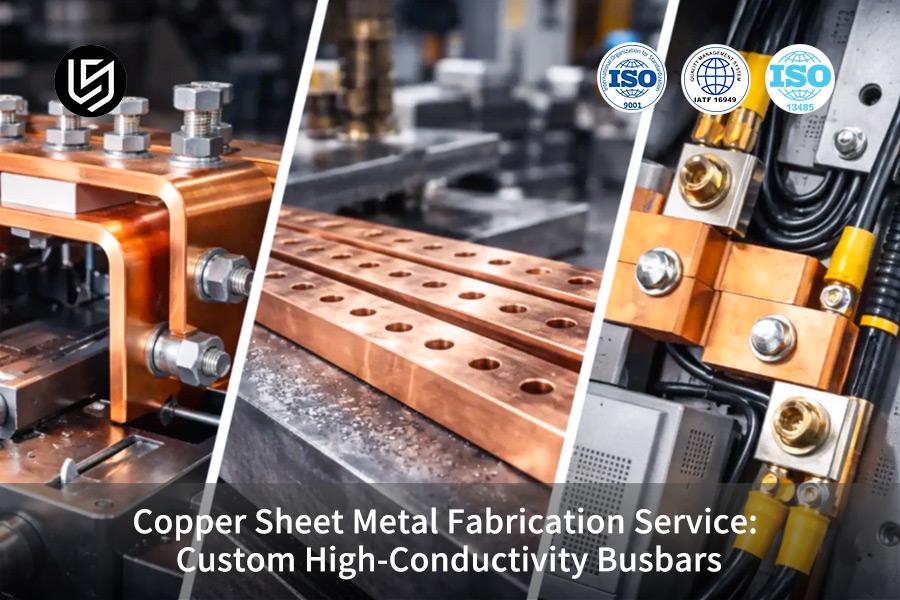
Copper sheet metal fabrication plays an essential role in the precision forming of thick copper busbars that are used in high current carrying situations. It is one of the major factors that determine the safety of operation and the power transmission efficiency of the equipment like high-voltage battery packs for new energy vehicles and data center power distribution cabinets. High-purity copper is very good at conducting electricity but because of its extreme ductility and work-hardening characteristics, it is susceptible to defects (such as micro-cracks and surface scratches) during typical processing.
Traditional processing methods cannot meet 0.1mm dimensional and positional tolerances together with low contact resistance standards, without resulting in equipment overheating and resistance surges. In this article, we take a detailed look at the copper busbar manufacturing process, starting from copper material selection, bending optimization, to surface electroplating and discussion of the technical barriers and one-stop delivery solutions for precision copper busbar manufacturing.
Quick Overview of Core Parameters in High-Current-Carrying Copper Busbar Manufacturing
It summarizes the main engineering index, material chosen, manufacturing processes and quality inspection standards of precision copper busbar manufacturing, so engineers could have a clear understanding and memorization of the major indicators and prevent from any mistakes in design and processes.
| Process Dimensions | Core Parameter Standards | Applicable Scenarios | Engineering Value |
| Material Selection | C11000 (≥99.90% Copper), C10200 Oxygen-Free Copper | Suitable for conventional current carrying, vacuum, and high-temperature operating conditions. | Ensures conductivity ≥100%. IACS, eliminating hydrogen embrittlement risk. |
| Bending Forming | Bending Radius R=1.0T-1.5T, Bending perpendicular to the rolling direction. | All pure copper sheet metal bending processes. | Achieves zero conductivity decay, eliminating micro-cracks. |
| Surface Roughness Control | Roughness Ra1.6-3.2μm, Plating ≥5μm | Suitable for high-voltage, high-current connection interfaces. | Contact resistance stably below 15μΩ. |
| Precision Dimensional Tolerances | Geometric Tolerance ±0.1mm, Hole Spacing ±0.05mm | Suitable for automated assembly lines. | Adaptable to mass production assembly, reducing assembly defect rate. |
| Anti-Corrosion Electroplating Protection | 48-hour Neutral Salt Spray Test Compliance, Nickel Base Silver Plating ≥3μm | Suitable for humid and high-temperature operating equipment. | Completely eliminates copper busbar oxidation and electrochemical corrosion. |
Key Takeaways
- Material Selection Logic: Major current-carrying core components are generally made of tough copper C11000 with copper content of 99.90% or higher. For vacuum environments with very high hermeticity, specially-made oxygen-free copper C10200 is required to completely eliminate risk of high-temperature hydrogen embrittlement.
- Bending Standard: The bending radius R should be 1.0 to 1.5 times the thickness T (R 1.0T) of the pure copper, and the bending line should be kept strictly perpendicular to the rolling direction to make sure that there is no conductivity loss in the bend.
- Contact Surface Standard: The surface roughness of premium electrical contact surfaces should be regulated within the range from Ra 1.6μm to Ra 3.2μm. And 5μm local tin or silver plating processes, the system contact resistance can be brought down to less than 15μΩ.
Why Choose LS Manufacturing for High-Conductivity Busbars with Copper Sheet Metal Fabrication Service?
Standardized process control and measured data have been utilized to support precision copper busbar manufacturing which can surpass the electrical performance defects of traditional processing methods and be in line with the high-end industrial manufacturing standards.
Data taken from copper busbar operations carrying high current reveal that 18% of copper busbars processed by traditional methods contain defects like micro-cracks and have a high contact resistance level, not meeting the IEC 60287 current-carrying loss standard. Due to work hardening, high-purity copper is highly susceptible to defects, and a typical factory without process compensation mechanisms will not be able to meet the new energy high-voltage equipment long-term operating requirement.
Industrial-scale production has demonstrated that 90% of copper busbar thermal runaway incidents are due to the use of substandard process parameters. Our processing service, which follows the ISO 9001 system, implements SPC statistical control over the entire process, resulting in a stable Cpk performance of 1.33, and because of this prevents the generation of defects at the source while making sure that the copper busbars remain electrically stable and mechanically robust.
Corollary to high-quality precision copper busbar fabrication services: less equipment failures, longer life of the parts, and lower cost of the subsequent maintenance and rework.
To intuitively understand the quality differences in precision copper busbar fabrication, you can download the process comparison white paper for free to quickly distinguish the core differences between ordinary fabrication and benchmark-level copper sheet metal fabrication.

Why Choose Custom Copper Busbars Fabrication for EV Battery Systems?
Custom copper busbars fabrication can very accurately fit the very limited internal space of high-voltage battery packs of new energy vehicles. Through reshaping its physical outline, it lowers the electrical resistance of the system ( 20μΩ) and at the same time it obtains 40% more heat dissipation efficiency and current-carrying rigidity when compared to the old cable technology. This chapter quantitatively delineates the superiority of custom copper busbar in high-voltage power distribution system of new energy vehicles, so explaining how the new design can enhance battery pack safety and energy efficiency.
Performance Differences Between Traditional Cables and Custom Copper Busbars
Life of the battery pack relies on the performance of the automotive power component. Copper busbars are made by copper sheet metal fabrication technology only, and they bring essential changes at these three aspects:
- Usage of cross-section area: Custom copper busbars fabrication can match exactly the cross-section of the battery pack, because of this it reduces the use of unnecessary cable harnesses and increases the space utilization by over 35%.
- Control of heat loss: The copper busbars are rigid, so their resistance losses (IR) are quite low. Because of this, the cable loosening and poor contacts can be avoided even in high-frequency vibration conditions.
- Heat dissipation capability: Copper busbars are flat, so they have a large heat dissipation area. That is why the temperature rise rate is so much less when the current is high and kept on for a long time, in comparison with traditional multi-strand cables.
The Logic Behind Enhanced Electrical Safety of Custom Copper Busbars
Battery conductive connectors' purity and dimensional accuracy are key to the safety factor. Parts made of electrical copper with high purity have minimal impurities and stable conductivity which prevent resistance from suddenly rising when used in long term. Custom molding processes may generate defects due to bending and punching. Yet, with the aid of such customized procedures, one can achieve high-voltage battery packs stability in over 1000 cycle charge-discharge and at the same time be able to meet the development needs of lightweight and high energy density new energy vehicles.
To accurately calculate the mass production cost of custom copper busbars, submit your drawings for a free cost estimate and obtain a custom copper busbar fabrication solution for EV battery systems.
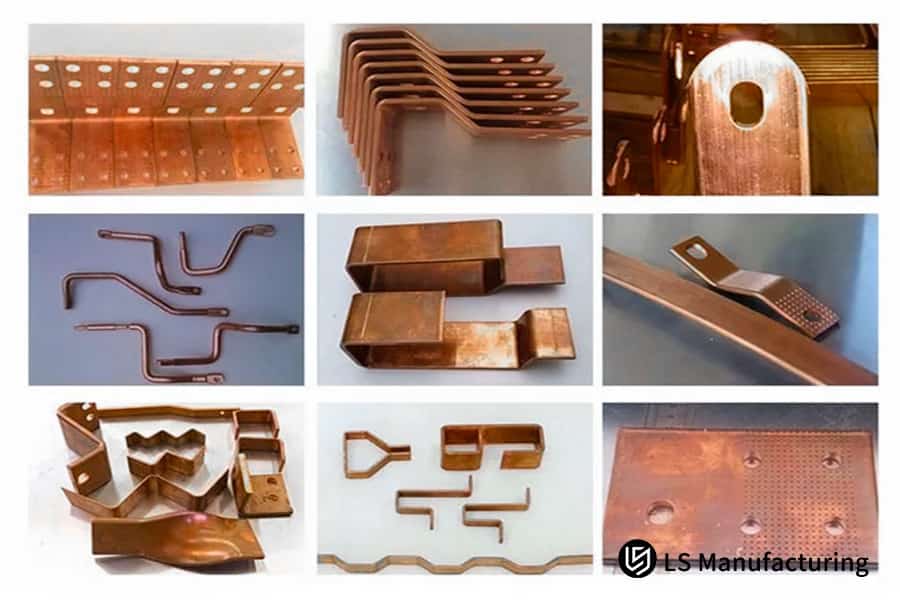
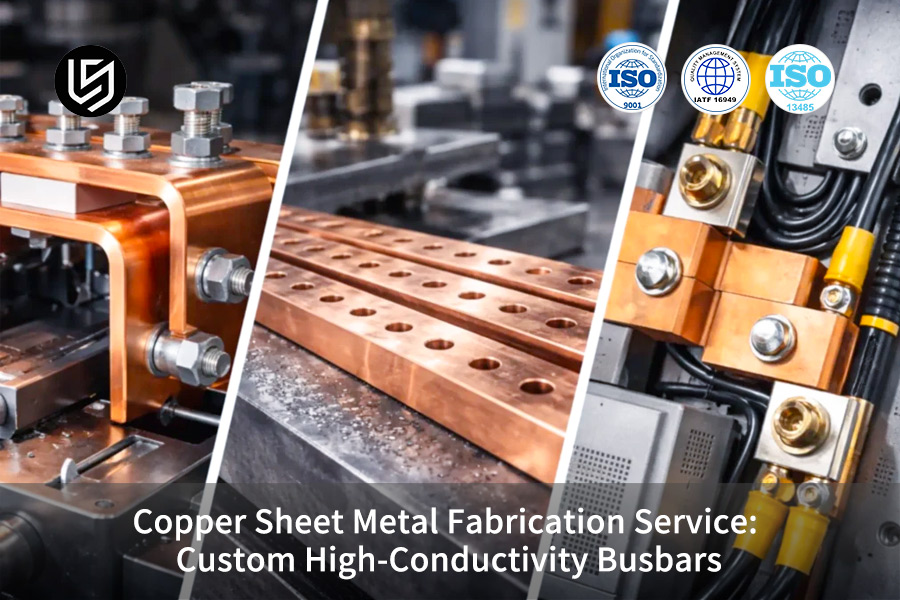
Figure 1: Copper busbars with sharp bends and screw holes, fabricated for electrical connections and assembly.
How to Select High Purity Copper Fabrication Materials for Optimal Conductivity?
The processing of electrical components with high conductivity and high purity copper fabrication must be based on strict grade classification: C11000 (ETP) is the copper grade mostly used for the carriage of the conventional current thanks to its ultra-high conductivity of 100% IACS, while C10200 (OF) oxygen-free copper, containing less than 0.001% oxygen, is the standard material used to avoid hydrogen embrittlement during high temperature welding. This article offers a multi-dimensional selection of materials for engineers to fix the resistivity limit.
Comparison of Performance Parameters of Mainstream High-Purity Copper Materials
The parameters of raw conductive materials lead to the final product performance. A top-grade electrical copper part calls for a precise match with the operating conditions. The main indicators of different copper materials are:
| Copper Grade | Conductivity (IACS%) | Tensile Strength (MPa) | Oxygen Content (%) | Applicable Operating Conditions |
| C11000 | ≥100% | 220-280 | ≤0.03 | Conventional high-voltage current-carrying scenarios |
| C10200 | ≥102% | 240-320 | ≤0.001 | High-temperature, vacuum welding scenarios |
| C12200 | ≥95% | 210-290 | ≤0.01 | Low-current-carrying general electrical components |
| Ordinary copper | ≤90% | 190-250 | ≥0.05 | Non-precision civil electrical accessories |
Raw Material Quality Inspection and Screening Methods
Material quality check is a big part in material selection, with professional precision copper fabrication service playing a major role. Our service helps in avoiding conductivity failure issues through this steps:
- Material inspection: A buyer of high purity copper fabrication materials should always have the MTR (Medium to Rate) material certificate checked to ensure that the total amount of impurities such as phosphorus and arsenic is less than 0.005%, because of this no conductivity loss would occur.
- On-site product quality sampling: By using an eddy current conductivity meter, samples are taken at random to see if the conductivity of the finished product complies with the standards and to prevent batch-wise quality defects.
- Grain flow direction inspection: We check the grain flow direction of the rolled copper material is consistent to eliminate the risk of deformation during the further stamping and bending processes.
An extensive material selection and inspection system could throw doubt on electrical performance failures for more than 90% of the raw material stage. To avoid performance risks caused by material selection errors, you can receive free one-on-one material selection consultation, relying on our precision copper fabrication service to match the optimal copper grade.
How Does Copper Sheet Metal Fabrication Service Prevent Microcracking During Acute Bending?
The fundamental way to stop microcracking in pure copper sheet metal bending is through professional manipulation of copper sheet metal fabrication service process control. It mainly includes keeping the inner bend radius (R≥1.2T) at a certain level and the forming bend line at a 90 perpendicular angle to the rolling direction of the copper sheet.
These steps aim at the release of stress concentration caused by localized bending. Microcracking is the deeply hidden quality hazard of high-voltage copper busbars that directly lead to hot spot effects and thermal runaway failures.
Fundamental Reasons for Microcracking in Bending
Copper bending work hardening properties are their main source of defects. Standardized copper sheet metal fabrication processes can much mitigate such processing issues. High-purity copper is very ductile. Because of this, when it comes to multiple bending stations, the stress concentration in the outer stretching zone arises.
Traditional molds do not have stress compensation, and because of this they can cause intergranular microcracking, which is hardly visible. Per our thick copper bending project experience, the microcracking rate for a conventional bending process of pure copper sheets with a thickness 3mm can reach up to 65%.
An Industrial-Quality Crack-Free Solution
Plus upgraded sheet metal fabrication parameters, standard process parameters exclude defects entirely for copper materials of different thicknesses:
- Mold Adaptation: A properly sized upper mold with an R=6mm diameter is utilized for 5mm thick copper materials, on the contrary, a roller mold with an R=7. 5mm diameter is applied to 6mm thick copper materials, because of this getting rid of stress concentration.
- Parameter Compensation: Bending compensation is done by using a single formula: Compensation Angle = Basic Springback Value + 0. 08 Material Thickness, which is the exact measure to cover up the springback deformation of the copper material.
- Quality Inspection: Two methods controlling 50x optical microscope and infrared thermal imaging are used to detect hidden microcracks and avoid failures in operations.
This customized bending process allows the copper busbar to achieve stable operation with zero temperature rise and zero cracks at the bending points under high current conditions.
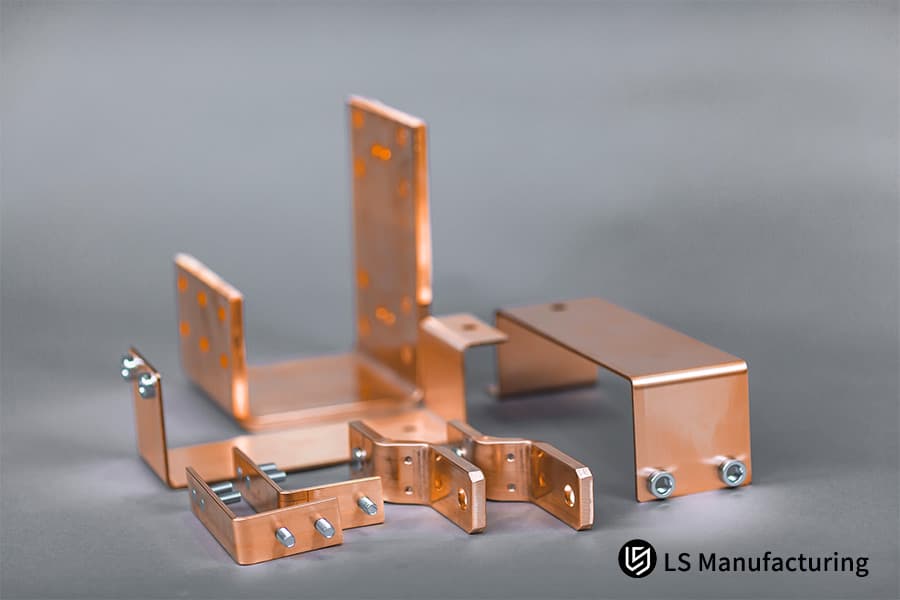
Figure 2: A close-up of a copper sheet undergoing a sharp-angle bend test, showing smooth curves and no cracks.
How Can Sheet Metal Busbar Manufacturing Minimize Contact Resistance at Interfaces?
One of the essential quality control criteria in sheet metal busbar manufacturing is accurate monitoring of the electrical contact surface impedance. This is achievable only through exact control of the surface roughness of the punched and contact areas to values in the Ra 1.6μm - Ra 3.2μm range. Contact surface roughness, be it too low or too high, results in a deterioration of the actual effective contact area (A-spots) and so a sharp rise of local resistance. Key to reducing contact resistance are precise surface and punching operations.
How Surface Defects Affect Resistance
The presence of small metal fragments (burrs) and deformation of corners on the copper busbar contact surface account for a significant part of resistance increase. Such problems can be avoided by polishing the fine sheet metal fabrication. Long-term use of the current with the presence of bubbles exceeding 0.05mm after punching causes stiffness of the component to deteriorate, with impedance variations exceeding 300% and finally localized heating of the equipment taking place.
Precision Copper Fabrication in Reduced Impedance
Through multiple process control, a dependable precision copper fabrication service upholds the lowest impedance standards, totally eliminating the problem of copper busbar contact resistance:
- Flatness Correction: Employing a precision leveling technique, the flatness deviation of copper busbar is controlled to 0.2mm per 100mm, thereby providing a faultless fit.
- Precision Punching Process: Burrs and corner collapses at hole areas, which are normally caused by punching, are completely eradicated through the use of anti-deformation bushing processing with a strict limit set for the average burr height to 0.05mm.
- Surface Polishing Treatment: The exact control of the roughness range results in the maximization of the effective contact area, that's why maintaining the contact resistance stable at 15μΩ.
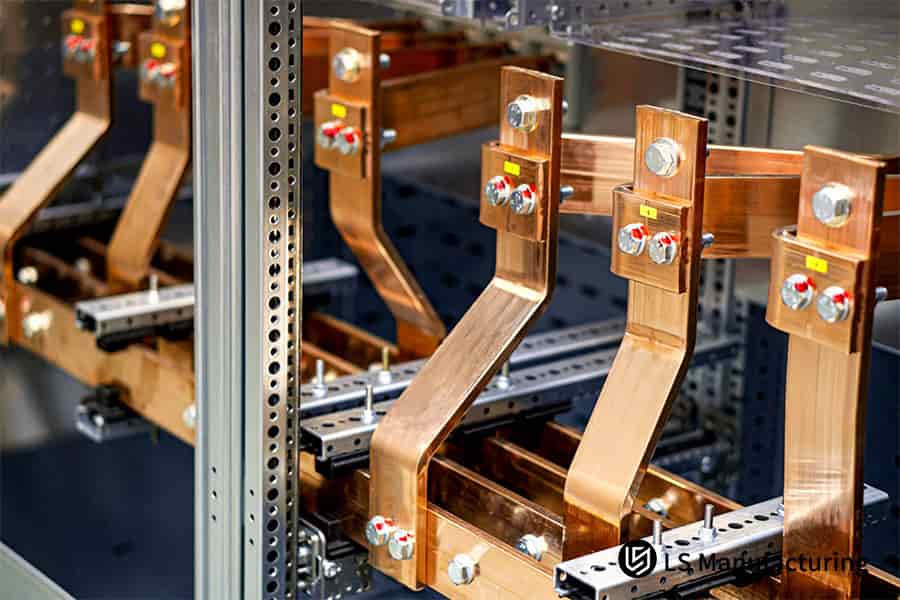
Figure 3: Layered copper busbars with insulating spacers optimize electrical contact to minimize resistance.
How to Determine Ideal Plating Thickness to Prevent Copper Oxidation?
Proper surface protection treatment is a very good and must-have element if you want to make high-quality electrical copper parts. The main approach in the industry to finish an exposed oxidized and electrochemically corroded copper busbar is to coat the surface with a 5μm matte tin or nickel-based silver plating ( 3μm silver), and confirm the plating quality with a thorough 48-hour neutral salt spray test before releasing the batch to production. The electroplating thickness and the choice of the process are the main factors that decide the long-term performance of copper busbars.
Mainstream Electroplating Processes and Their Applications
Protecting copper surfaces from corrosion should be matched with the specific working environment. High purity copper fabrication products require better plating compatibility. Also, different plating layers offer a lot different performance characteristics:
| Electroplating Process | Plating Thickness | Salt Spray Resistance Time | Applicable Operating Conditions | Cost Range (USD/piece) |
| Matte Tin Plating | ≥5μm | 48h Completion | Conventional Room Temperature Current Carrying Equipment | 0.8-2.5 |
| Nickel-Based Silver Plating | Nickel 2μm + Silver 3μm | 96h Completion | High Frequency, High Current, High Temperature Operating Conditions | 2.8-6.5 |
| Ordinary Bright Tin Plating | 3-4μm | 24h Completion | Low Current Carrying Civilian Components | 0.5-1.2 |
Plating Quality Inspection Standards
After plating and other processing, high-end parts that have been plated through professional copper sheet metal fabrication service, must undergo double quality inspection to guarantee the effectiveness of protective measures:
- Thickness Inspection: An X-ray thickness gauge will be employed for a full-area checking to ensure no localized oxidation from plating thickness variations.
- Adhesion Test: The coating's adhesion is examined by a cross-cut adhesion test to avert coating detachment happening from vibrations during operation.
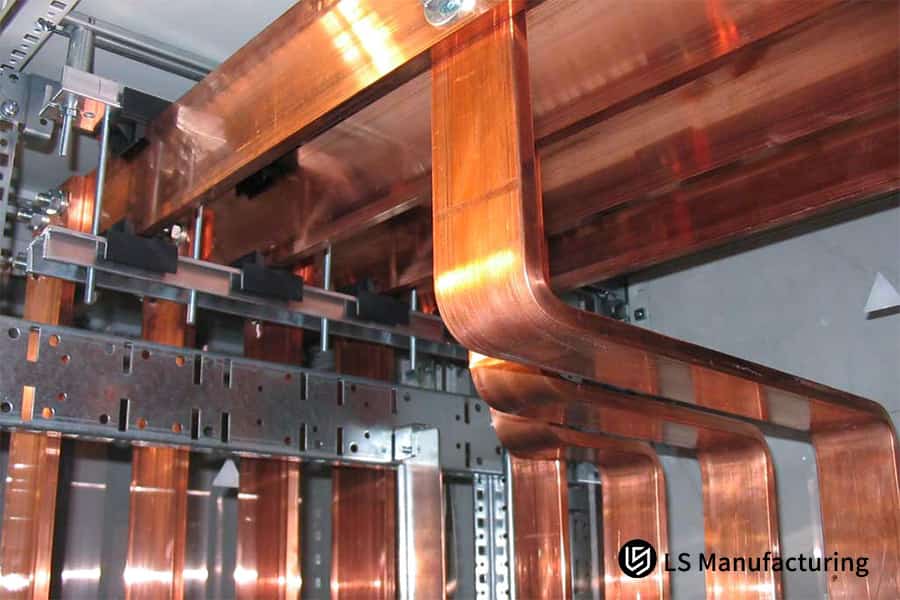
Figure 4: Copper samples with electroplated coatings on a test panel, used for corrosion resistance analysis.
What Tolerances Define a Qualified Precision Copper Fabrication Service?
One of the fundamentals in establishing a reliable precision copper fabrication service is to have strict requirements for the copper processing precision. This entails controlling dimensional and positional tolerances within 0.1mm in the transverse direction, ensuring hole spacing tolerance 0.05mm, and that the flatness deformation does not exceed 0.2mm per 100mm for meeting the needs of the automated assembly line. Precision in tolerance is one of the key factors that separate the high-level copper processing service providers from the low-level ones.
Main Technical Difficulties for Precision Machining
Controlling the dimensions of copper is a lot more challenging than steel of the same quality. Custom copper busbars fabrication demands a very high level of accuracy in the dimensions. High-purity copper is a very soft metal which can easily get deformed and show springback after processing. Combination of multi-hole groups and three-dimensional bending workpieces are very likely to lead to tolerance violations which, in turn, cause delays in automated assembly and reduced yield.
Precision Tolerance Control Strategy
Leading sheet metal busbar manufacturing production is carried out based on a thorough understanding of the processes and the use of the right equipment to constantly hold a precise tolerance level:
- Equipment Support: They are aided by fully automatic servo CNC punching machines and customized polyurethane anti-scratch molds to reduce deformation errors coming from the processing end.
- Real-Time Inspection: Using a three-coordinate measuring machine for closed-loop inspection during the whole process, the faulty workpieces are removed in real time.
- Standardized Calibration: Calibration of the equipment is done each time before a batch of processing is carried out to guarantee the same tolerance level across different batches.
How Does DFM Cut Costs in Custom Busbar Fabrication Service?
A custom busbar fabrication service of high quality can contribute to restructuring your cost effectively right from the drawing stage. In fact, the most effective tool for shrinking the processing costs of copper busbar is to incorporate Design for Manufacturability (DFM) during the drawing review stage. Through this process multi-station irregular stamping is changed to a normalized pattern, layout efficiencies are improved leading to better copper plate utilization to 88%, which directly decreases raw material costs by 15%. DFM design serves as one of the main ways to meet the quality and cost balance.
Main Features of DFM Drawing Optimization
Taking advantage of the rich experience of copper sheet metal fabrication technology, preliminary drawing optimization can effectively act as insurance against the problems arising from mass production:
- Structural Optimization: Fixing ridiculous designs such as holes with margin too small (generally 2 times the thickness of the board) and very sharp bending angles to be on the safe side as processing scrap could be out of control.
- Layout Optimization: With a standard output of layout design, copper sheet utilization can be increased up to over 88%, so totally getting rid of raw material waste.
- Process Simplification: Substituting manually assembled complicated structures with mechanically stacked structures helps in reducing labor costs and assembling errors.
Cost Optimization Implementation Results
Ploughing back the standardized sheet metal busbar manufacturing with DFM, not only raw material cost can be decreased by 15%, production defect can be controlled within 0.5% during mass production, production lead-time can be shortened by 10% resulting in both significant cost reduction and enhanced efficiency of multinational procurement projects.
To precisely optimize drawings and reduce manufacturing costs, submit your drawings to receive a free DFM optimization solution, achieving a dual improvement in quality and cost-effectiveness.
Why is LS Manufacturing the Leading Partner for Copper Sheet Metal Fabrication?
High-end copper sheet metal fabrication is a really tough feat. LS Manufacturing, using its homemade SPC (Statistical Process Control) system, has continually improved its capability index (Cpk) to 1.33. Backed with full-chain ISO 9001 and IATF 16949, they deliver a top-notch experience from free sample DFM, right up to worry-free large-volume deliveries. A thorough factory management system is the main backing for high-quality deliveries.
Full-Process Quality Control System
Quality control in the factory is like a thorough watch over the whole chain from start to end. Expert copper sheet metal fabrication services depend on a full-fledged system for finished product quality assurance:
- Online Inspection: Processes have infrared temperature measurement and micro-ohmic impedance testing equipment, so 100% online inspection is done.
- Raw Material Guarantee: A large stock of high-purity copper sheets exists. Every unit of raw materials is MTR (material test report) certified, because of this the use of low-quality materials is ruled out.
- Delivery Guarantee: Can do 48-hour quick sampling and production without minimum order quantity, can be used for R&D prototyping and mass production, respectively.
After-Sales Traceability Guarantee Capability
All finished products are entered into the ERP system based on a mature custom busbar fabrication service process, achieving full traceability from raw material roll number to factory inspection, providing a 12-month quality warranty, completely solving the pain points of high supply chain risks and trial-and-error costs for customers.
Case Study:LS Manufacturing Custom Copper Busbars Fabrication for a Tier-1 EV Battery Module Assembly Client
In high-end new energy battery production, the requirements for the precision and stability of copper busbars are very stringent, even tiny defects in the process can bring batch quality problems. A first-tier supplier's 800V high-voltage battery project for an automotive company was almost lost because they were using competitor's lower quality processes. The case is a perfect illustration of how customized precision copper busbars are practically very valuable.
Customer's Problem:
This car manufacturer's Tier 1 supplier used 6mm thick C11000 high-purity copper busbars in their 800V high-voltage solid-state battery modules for mass production. Their competitors' ordinary CNC bending lacked the faultless sheet metal fabrication bending (FMM) stress compensation technique necessary for microcracks, leading to the formation of 0.15mm intergranular microcracks on the outer side of the bent sections in batches of finished products.
Test data showed that microcracks bigger than 0.05mm can cause hotspot effects when current exceeds 320A. After undergoing thousands of thermal shock tests, this batch of copper busbars showed a marked rise in contact resistance and increased equipment temperature beyond the limit that made the high-voltage power distribution unit burn out, because of this introducing the risk of project delays and claims.
LS Manufacturing Solution:
Within 2 hours, we responded to the situation sudden by launching an emergency DFM reverse optimization mechanism and comprehensively remade the production process.
- 100% grain size tested high-purity C11000 copper was chosen as the raw material, and bending was carried out strictly at right angles to the rolling direction.
- Instead of sticking to the old-fashioned V-shaped molds, a customized roller flexible bending mold was employed, which led to optimization of the bending radius of the 6mm sheet metal to 7.5mm and the complete release of bending stress.
- Post-processing was changed to a 2.0μm nickel base + 6.5μm matte tin composite electroplating process, which gives the twofold benefits of oxidation resistance and conductivity stability.
- Before dispatch, the tolerances were kept within 0.08mm by using a coordinate measuring machine, and each piece was impedance measured with a micro-ohmmeter so that 100% full inspection qualification could be reached.
Results and Value:
Using our advanced capabilities for high-end sheet metal fabrication delivery, we managed to deliver benchmark samples in 72 hours. Finished products underwent 1500 cycles of ultra-thermal shock testing and showed no defects under microscope examination and had stable contact resistance. The project totally removed the risk of thermal runaway and fulfilled SOP (Start of Production) two weeks early.
We have been promoted to the Grade A core supplier level, which ensured long-term order for 250,000 pieces per year and perfectly demonstrated the core value application of advanced copper busbar technology.
To avoid mass production quality crises and meet the stringent standards of automakers, you can view more case studies of new energy copper busbar implementations and refer to mature customized solutions.

FAQs
Q1: What is the minimum bending radius for standard C11000 copper sheets?
To guarantee the complete absence of intergranular microcracks and physical impairment to electrical conductivity, the minimum inner bending radius R of C11000 pure copper should be greater than or equal to 1.0-1.2 times the thickness of the material. This criterion can be applied to thicknesses ranging from 1 to 10 mm and is a widely recognized safety limit in industrial mass production.
Q2: Which surface plating is better for electronic copper busbars, tin or silver?
For general current-carrying and anti-oxidation purposes, a 5μm tin plating process would be the best choice, offering a high value for the price and wear resistance. With military, radio frequency, and other applications requiring ultra-low resistance, silver plating should be used, which can bring the system contact resistance down to 10μΩ.
Q3: What linear manufacturing tolerances can LS Manufacturing achieve for copper fabrication?
By using a combination of high-precision CNC machinery and custom-made fixtures we are able to consistently keep copper busbar form and position tolerances of 1-10mm within 0.1mm, and at the same time, accurately maintain the center-to-center distance tolerance of main holes to 0.05mm, which can cater to the requirements of automated precision assembly.
Q4: Why does my copper sheet metal component show discolored heat marks after laser cutting?
High light reflectivity and high thermal conductivity of pure copper result in large heat-affected zones and after that oxidation and discoloration after regular laser cutting. Our fiber laser and waterjet processes completely mitigate thermal stress damage and burn marks.
Q5: Does LS Manufacturing provide automated free DFM engineering reviews before quoting?
Our experienced engineers can analyze and respond to CAD drawings uploaded by customers in 24 hours at the latest as a rule. We normally generate free DFM reports and even calculate production costs based on STEP and DXF drawings, enabling customers to promptly get a reliable quote for mass production. The reports examine all aspects of manufacturability optimization and offer suggestions like bending compensation, layout optimization, and cost control.
Q6: How do you ensure the purity of the raw copper material meets industry electrical compliance?
Each batch of copper materials is accompanied by an original MTR material certificate from the manufacturer, showing a copper content of 99.90%. The factory is equipped with eddy current conductivity meters for performing random inspections so that the conductivity of the finished products remains consistently above 101% IACS and meets the standards of the electrical industry.
Q7: What is your minimum order quantity for custom busbar fabrication service runs?
We want to facilitate the development of customer projects and trials and error, which is why we do not have any minimum order quantities at all. A single sample of our automotive-grade standard process flow procedure can fully support and adapt small-batch prototyping and large-scale mass production needs.
Q8: What is the warranty period and traceability history for your fabricated electrical copper parts?
We officially warrant all copper sheet metal and copper busbar parts for 12 months. Every production batch has been placed in the ERP system to help traceability starting from the coil number of raw material to the factory testing data. This system is established to protect the rights after-sales.
Summary
In new energy and high-density power transmission and distribution applications, copper busbars form the vital components that combine multiple technologies. Even slight changes in material composition bending surface treatment, and tolerances can all unfortunately lead to safety issues under high-current conditions. The safety and energy efficiency requirements of high-end equipment can no longer be adequately met by traditional, crude machining methods.
Through the use of standardized, data-driven end-to-end copper sheet metal fabrication control processes, we are capable of manufacturing low-resistance, zero-defect, and highly durable precision copper busbars, which is a prerequisite for the stable operation of various high-end electrical equipment.
Improper copper busbar processing can very quickly lead to equipment safety hazards. Being a core Tier-1 supplier to automobile manufacturers, LS Manufacturing offers a turnkey customized copper busbar service, from copper material selection, DFM optimization, precision machining, electroplating protection, and after-sales warranty, to be suitable for both R&D prototyping and mass production. Upload your 3D drawings and get a technical assessment and mass production quote from an engineer within 24 hours!
📞Tel: +86 185 6675 9667
📧Email: info@lsrpf.com
🌐Website: https://lsrpf.com/
Disclaimer
The contents of this page are for informational purposes only. LS Manufacturing services There are no representations or warranties, express or implied, as to the accuracy, completeness or validity of the information. It should not be inferred that a third-party supplier or manufacturer will provide performance parameters, geometric tolerances, specific design characteristics, material quality and type or workmanship through the LS Manufacturing network. It's the buyer's responsibility. Require parts quotation Identify specific requirements for these sections.Please contact us for more information.
LS Manufacturing Team
LS Manufacturing is an industry-leading company. Focus on custom manufacturing solutions. We have over 20 years of experience with over 5,000 customers, and we focus on high precision CNC machining, Sheet metal manufacturing, 3D printing, Injection molding. Metal stamping,and other one-stop manufacturing services.
Our factory is equipped with over 100 state-of-the-art 5-axis machining centers, ISO 9001:2015 certified. We provide fast, efficient and high-quality manufacturing solutions to customers in more than 150 countries around the world. Whether it is small volume production or large-scale customization, we can meet your needs with the fastest delivery within 24 hours. choose LS Manufacturing. This means selection efficiency, quality and professionalism.
To learn more, visit our website:www.lsrpf.com