English




PEEK injection molding service highlights the challenges faced by engineers when assessing what materials are used in injection molding, as normal plastic cannot withstand excessive heat and corrosion, and aerospace and medical consumers encounter problems such as inconsistent crystallization and dimension changes in tolerance. This is because PEEK has a melting point of around 343°C, requiring sophisticated heating systems and molds, but most traditional vendors do not have simulation knowledge, resulting in internal stresses and part fragility.
At LS Manufacturing, we optimize the PEEK injection molding service production chain using 200°C+ oil temperature control and scientific molding specifications to ensure uniform crystallization of 30%-35% and solve performance failures and heat resistance problems. We offer measurable values for the OEMs to attain consistent mass production, and by reading this guide, you will understand how we make a difference in the challenging PEEK manufacturing process.
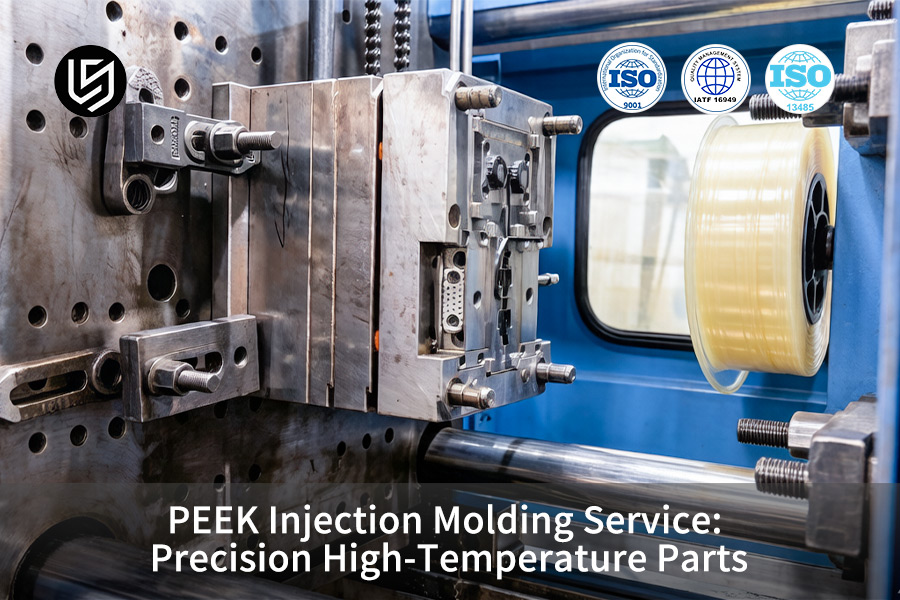
PEEK Injection Molding: High-Temp Parts Quick-Reference
| Molding Challenge | PEEK-Specific Process Control | High-Performance Result |
| Extreme Processing Temperatures | Processes carried out in zones of the barrel between 380–410 °C and hot runners above 350 °C. | Ensures thorough polymer melting without thermal degradation and freeze-up inside the nozzle. |
| Critical Moisture Control | Drying process of the plastic before injection below 0.02% of moisture content. | Prevents hydrolysis, splay marks, and voids; ensures maximum tensile strength and chemical resistance. |
| High Mold Temperature Requirement | High temperatures for mold heaters set within 165–200 °C range. | Ensures optimal mechanical properties, dimensions, and excellent surface quality of parts. |
| Abrasive Polymer Wear | Hardened or coated tool steel used as injection molding components, along with special screw/barrel alloy materials. | Protects tooling from wear and tear, prolongs mold life span, and preserves required dimensions. |
| Our Dedicated Processing | High-temperature engineering plastics processed exclusively on our machines; closed-loop control system of processing parameters. | Ensures consistent and reproducible part quality meeting aerospace, medical, and semiconductor industry standards. |
| Result: Engineered Thermal Integrity | Thermal integrity parts with preserved mechanical characteristics and dimensions at continuous operation above 250 °C. | Provides replacement of metals in harsh conditions, minimizing weight and corrosive impact. |
Key Takeaways:
- Temperature Precision is Non-Negotiable: Precise control of the temperatures of melt, mold, and drying is key to successfully molding PEEK.
- Dryness is a Material Property: Drying issues can render the expensive PEEK injection molding material unusable; this is the main reason for failed projects involving this material.
- Tooling is a Wear Item: Ordinary tooling will not work for this material – only hardened steel tooling can be used successfully.
- Validation is Mandatory: Material certification (CoC) is a must for applications with high reliability requirements.
Why Trust This Guide? Practical Experience From LS Manufacturing Experts
There will be no shortage of PEEK property tables available on the internet. What sets this guide apart from all others is that we at TTI have developed this guide ourselves, knowing firsthand how difficult it is to handle a material with such high melting temperatures and a tough crystalline structure. Our methodical approach to product development is guided by Japanese Industrial Standards (JIS) standards for materials.
The components that we manufacture work right on the fringe: lightweight actuator assemblies in aircraft that experience constant temperatures up to 200°C, chemical pumps with seals resistant to highly corrosive solvents, and MRI machines where precision dimensions are critical. In the extreme conditions faced by our customers in med-tech, aerospace, and energy, there is no room for error, and as such, we need to strictly adhere to the guidelines provided by the IATF 16949 standard.
This experience comes from ten years of production, gaining knowledge not only from flawless cycles but also from failures. We know how to dry the material perfectly so that there will be no voids in your part. The thermal process is optimized to eliminate any warpage, and the gate design ensures strong weld lines in the product. We transfer this valuable knowledge to you, helping to avoid mistakes and create reliable high-temperature PEEK parts without failures at first molding.
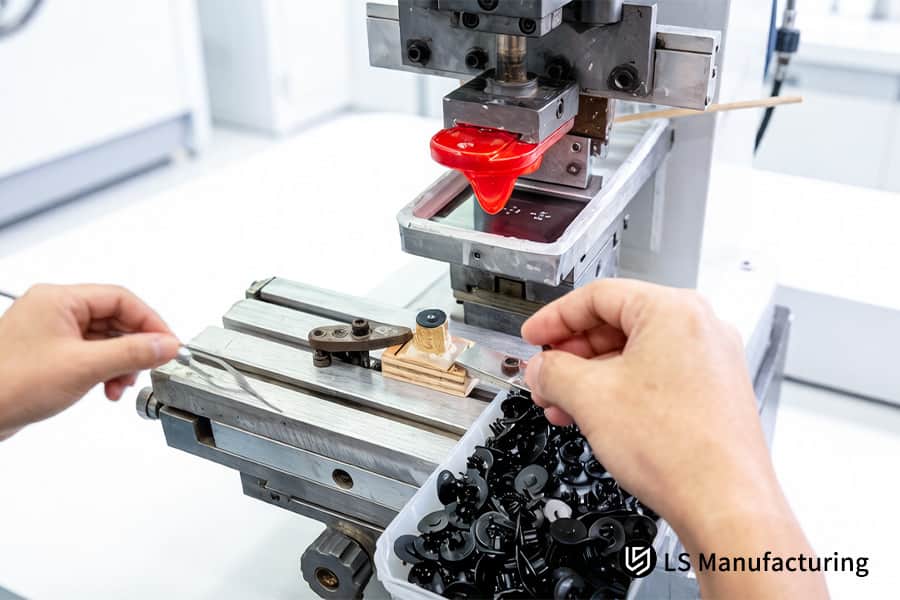
Figure 1: Automated injection molding produces precision PEEK parts for aerospace electrical connectors and sensor systems.
Why Is Choosing A Professional PEEK Injection Molding Service Critical For Aerospace And Medical Spplications?
In aerospace and medical fields, the successful performance of PEEK components is guaranteed by crystallinity in PEEK, which is accomplished by controlling the temperature during the manufacturing process. This report outlines how crystallinity control in PEEK, solving the mentioned problem.
Achieving Predictable Performance via Thermal Management
The mold temperature control of ±1°C in the PEEK injection molding service controls the speed of cooling, which determines the level of crystallinity of the material. This leads to the formation of a consistent structure of semi-crystalline areas with reliable mechanical strength and chemical resistance. There will be no areas of weakness or excess crystals in the material. This is crucial in tight-tolerance injection molding for surgical and aerospace uses.
Ensuring Structural Integrity for Demanding Environments
Failure modes associated with this process are mitigated due to the design. We eliminate the weaknesses by accurately measuring the flow rate and injection pressure relative to mold temperature calibration, which ensures no internal defects or external marks in the parts. Our products will have consistent morphologies, and their characteristics are stable at a fixed 250°C temperature range. This method ensures strength even in OEM high-performance parts.
Guaranteeing Biocompatibility through Process Science
Biocompatibility starts with a regulated process. Scientific molding ensures that the cycle does not degrade the part or produce any external defects. Drying validation, fill-rate management, and temperature regulation maintain biocompatibility. Our final product has a highly polished surface without any pores, ensuring that it can withstand the sterilization process necessary for multi-cavity injection molding of medical devices.
Facilitating Streamlined OEM Certification
Our method creates a strong qualification foundation by ensuring well-documented process validation IQ/OQ/PQ data packages. This data-driven approach clearly explains the control of key parameters that facilitate technical files for submission to FAA or FDA, thereby facilitating the certification of critical OEM injection molding parts.
Specialization in material science and process control makes it possible for our team to provide PEEK injection molding service that involve controlling the properties and ensuring the production of a qualified product out of a polymer material. We focus on the process control, resulting in optimum reliability. To eliminate the risk of uncontrolled crystallinity in your PEEK parts, submit your design specifications today for a guaranteed process validation and a production-ready quotation.

How Can Precision PEEK Injection Molding Achieve Micron Level Tolerances For High Precision Components?
The achievement of micron-level tolerances within the semi-crystalline polymer material, PEEK, follows a thorough approach considering the material behavior. This section outlines the approach followed in tolerance management to ensure micron-level precision of critical parts:
Proactive Design: Compensating for Material Behavior
- Predictive Mold Design: Our simulation enables us to estimate the anisotropic shrinkage (1.4%–2.2%) and make necessary adjustments during the mold designing stage.
- Stress-Optimized Geometry: The optimization of the geometry in order to decrease the stress that will be created due to the flow during the molding process, which can be considered as one of the factors contributing to post-molding warpage.
Precision Tooling: The Foundation of Accuracy
- High Precision Machining: Our mold is made by using high precision machining on 5-axis CNC systems allowing us to make an accurate replica of the surface and geometry.
- Integrated Cooling Analysis: The conformal cooling system helps provide consistent cooling, which is needed to achieve the desired shrinkage in micron-level injection molding.
Controlled, Repeatable Process Execution
- Scientific Process Lock-In: The critical process parameters (packaging pressure, packing profile, and cooling duration) are electronically locked in through DOE studies, thereby ensuring precision PEEK injection molding.
- In-Mold Verification: The precise positioning of cavity pressure sensors enables monitoring to confirm that each cycle is filled and cured identically, assuring absolute consistency for precision multi-cavity injection molding.
Validation Through Metrology and Data
- First-Article Inspection: All first-article pieces are tested through a complete 3D CMM inspection relative to the CAD model to verify the tolerance management system.
- Statistical Process Control (SPC): Measurement of important variables of production batches is carried out in order to forecast and eliminate any deviations, providing constant precision in custom PEEK injection molding.
This example demonstrates that microns of accuracy are obtained not through the inspection process, but through the manufacturing process. It involves predictive correction, excellent tool design, scientific locking, and constant verification. All of this makes up the process control method by which we can ensure our capability of producing precision PEEK injection molding parts in accordance with stringent requirements, thus making use of difficult material.
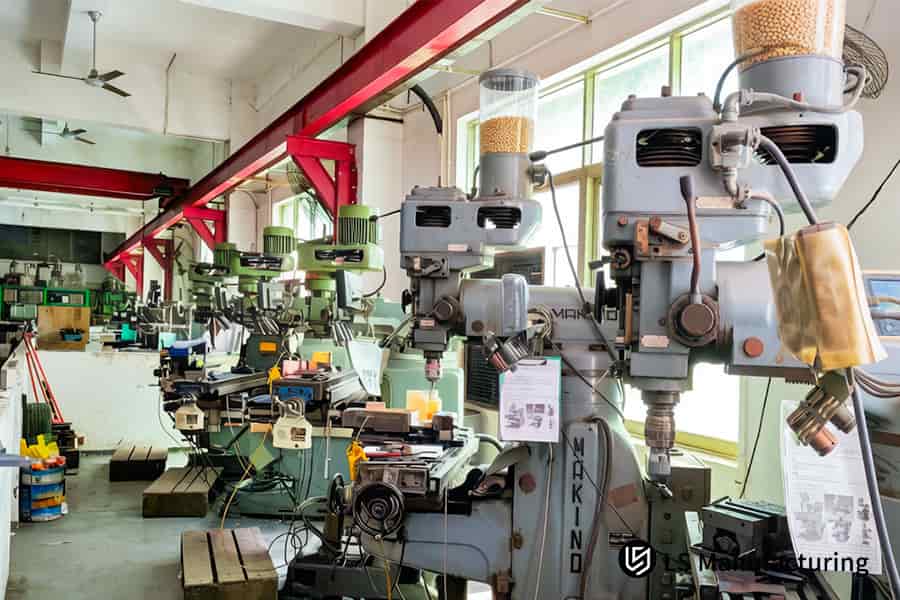
Figure 2: High temperature PEEK molding processes material to form components for automotive and medical applications.
What Technical Parameters Define The Success Of High Temperature PEEK Molding For Industrial Valves?
It is important to point out that the manufacturing process should be properly controlled since its effectiveness depends on how well the molding process is carried out. This will ensure its reliability and durability. The chart provided below provides information about the critical processing parameters along with the explanation of their importance in obtaining a consistent output using high temperature PEEK molding.
| Parameter Category | Target & Control | Rationale & Solved Challenge |
| Thermal Management | Melt 380-400°C, mold 165-185°C | Guarantees complete crystallization without voids which may impact its chemical resistance. |
| Injection & Shear Stress Control | Speed 50-150mm/s (profiled) | Helps prevent degradation through shear stress control and cavity filling. |
| Packing & Dimensional Control | Multistage profile 80% injection | Prevents sink marks in thick parts through complex injection molding. |
| Process Validation | Pressure sensors of cavity monitoring | Ensures consistent leak-proof performance in validated injection molding. |
The solution provided by this technology resolves clients' issues in several ways, specifically concerning sealability without leakage, stress rupture resistance, and appropriate dimensioning for successful assembly. Our process of OEM PEEK injection molding will make it possible to correlate the parameters with higher durability and lower risks of failure. This paper reflects our technical skills, and at the same time, gives a systematic approach to the selection of high temperature PEEK molding applications.
Why Should Custom PEEK Injection Molding Projects Prioritize DFM Analysis To Reduce Long Term Tool Wear?
The abrasiveness of PEEK and the required processing temperatures require a design-first approach to avoid premature mold failures. An exhaustive DFM analysis is imperative to transition part design to mold design, ensuring mold longevity and manufacturing consistency. Below is an overview of our process:
Material Selection: The Foundation of Durability
The preferred base materials include hard S136 steel or H13 steel (with HRC of 52-54). This hard substrate will be required to withstand the abrasive nature of the PEEK material properties. Apart from the choice of the base material, part geometry is studied to determine areas requiring inserts made of even harder material such as carbide, thus building durability directly into the mold, vital for high-volume injection molding.
Gate Design: Controlling Flow to Manage Wear and Warpage
The gate design addresses more than one issue. Using computerized simulations of the mold and flow, we strategically locate the gates to have the least possible flow path length, thereby reducing injection pressures and clamp tonnage. The latter automatically reduces erosive wear. Moreover, well-placed gates help avoid any adverse effect on fiber orientation. This minimizes anisotropic shrinkage and part warpage, thereby making the final custom PEEK injection molding part dimensionally stable.
Runner System & Cooling Optimization
Runners with full round cross-sections and hydraulically balanced flow are used for consistent melt distribution to all cavities at low shear rate and pressure drop. The flow balance avoids excessive packing of certain cavities that cause wear on molds. On the other hand, the conformal cooling path is designed to facilitate efficient cooling and heat dissipation from the mold. Effective cooling is essential in controlling the semi-crystallinity of PEEK and minimizing residual stress, factors that influence part quality and mold longevity.
Executing the DFM: A Collaborative, Data-Driven Process
The DFM analysis is more than just documentation; it is a dynamic process. Annotated 3D models along with simulation outputs (fill, pack, warpage, and cooling) are presented to illustrate potential challenges and corrective designs, including draft angles, wall thickness, and radius. A consensus approach enables all parties to recognize the importance of making changes in the design stage to avoid future problems in tooling and production, resulting in a production-ready injection molding process.
Our expertise in technical know-how is evident through the transformation of PEEK material properties into practical and preventative design guidelines. We tackle both cost and reliability issues in the long run through designing the mold and process for longevity from the beginning. Our proactive DFM analysis for custom PEEK injection molding helps you ensure that your tools will last, parts will be high-quality, and most importantly, your schedule and budget are safe.
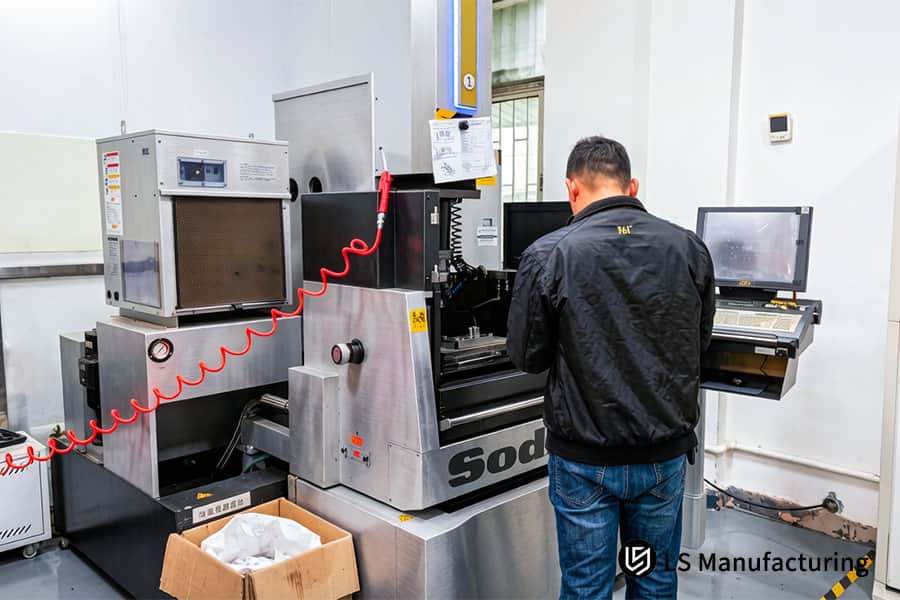
Figure 3: Custom PEEK injection molding operates multiple presses to fabricate parts for high volume OEM orders.
How Does LS Manufacturing Solve The Challenges Of Surface Quality In Injection Molded PEEK Parts?
Surface perfection of injection molded PEEK parts is another technical difficulty since any imperfections such as black specks, splay, or gloss can render the parts ineffective if used in applications within the cleanroom or implantable environment. The following are our solutions to achieve the highest surface quality by resolving the factors behind contamination or degradation:
Eliminating Volatiles and Trapped Gasses
- Advanced Tooling Design: Vacuum venting systems are included near the end of the fill process and in areas of potential traps to force out air and volatiles before burns and splay can occur.
- Material Pre-processing: We have a validated drying procedure (i.e. drying of materials in a desiccant dryer for four to six hours at 150 °C) to remove moisture, which is one of the main reasons behind surface imperfections.
Preventing Polymer Degradation at Source
- Precise Thermal Management: We control barrel temperatures in different zones and nozzle heaters to avoid cold spots and material hang-up and therefore, degradation of the material.
- Residence Time Control: Our process ensures a maximum shot to barrel ratio and cycle time monitors are used to keep material from overheating and causing carbonization that results in black specks.
Executing a Controlled, Gentle Fill
- Injection Velocity Profiling: We implement a process that involves slow initial fill, allowing vents to work, then a quick primary fill to prevent jetting and shear heating effects that would otherwise dull the surface.
- Mold Temperature Excellence: The optimal, constant mold temperature (>160°C) is achieved through highly precise circulators that ensure proper flow of the melt and achieve replication of the tool's finish flawlessly, which is one of the most important aspects of high precision molding that is essential for cleanroom injection molding.
Ensuring Tool Surface Integrity
- Premium Tool Steel & Polish: The molds are produced from premium quality corrosion-resistant tool steel polished to at least #3 Diamond or better finish, which transfers the impeccable finish to the finished product.
- Robust Maintenance Protocol: The mold is cleaned and inspected regularly to avoid accumulation of contaminants and ensure uniform surface quality of every lot, facilitating accurate multi-cavity injection molding of flawless products.
These issues can be addressed by addressing the root cause of the problems, including gas vacuum venting, thermal degradation avoidance, and flow kinematics management. The methodology used to high precision molding allows for flawless surface finish to Ra 0.4μm without the need for any secondary operations. Our company guarantees that the surface quality for injection molded PEEK parts meets the necessary standard for critical close-tolerance injection molding applications.
What Quality Standards Ensure That PEEK Molding For High Temp Parts Meets Zero Defect Requirements?
Defect-free PEEK molding for high temp parts requires a move away from the traditional final inspection method. Below is a brief overview of the various quality standards needed to produce parts based on precise specifications.
| Control Pillar | Core Implementation | Direct Outcome & Value |
| Systemic Foundation | IATF 16949 certification of manufacturing process, covering all the processes, including mandatory layered process audit. | Preventive approach that removes systematic weaknesses and increases reliability for high-performance injection molding. |
| Real-Time Process Control | Special Process Control (SPC) for cavity pressure and timing parameters, with alert for any deviations by 0.01 seconds. | Flawless output in real time, maintaining accuracy in each successive batch. |
| Validation & Measurement | Inspection of initial and subsequent products using CMMs and custom-made gauges to verify micrometer accurate tolerance levels. | Concrete evidence that all components meet the required dimensional and material requirements. |
| Full Traceability | Material and process traceability (lot-by-lot) in combination with documentation (PPAP, CPK). | It is evidence that serves as proof of qualifications of the company, showing it is a high precision PEEK manufacturer. |
The quality assurance approach that we apply resolves the issues that our customers have regarding risk and auditing. These issues include defect prevention, traceability and working within the framework of the IATF 16949 certified management system. This is what a high precision PEEK manufacturer does in medical-grade injection molding and aerospace industry.
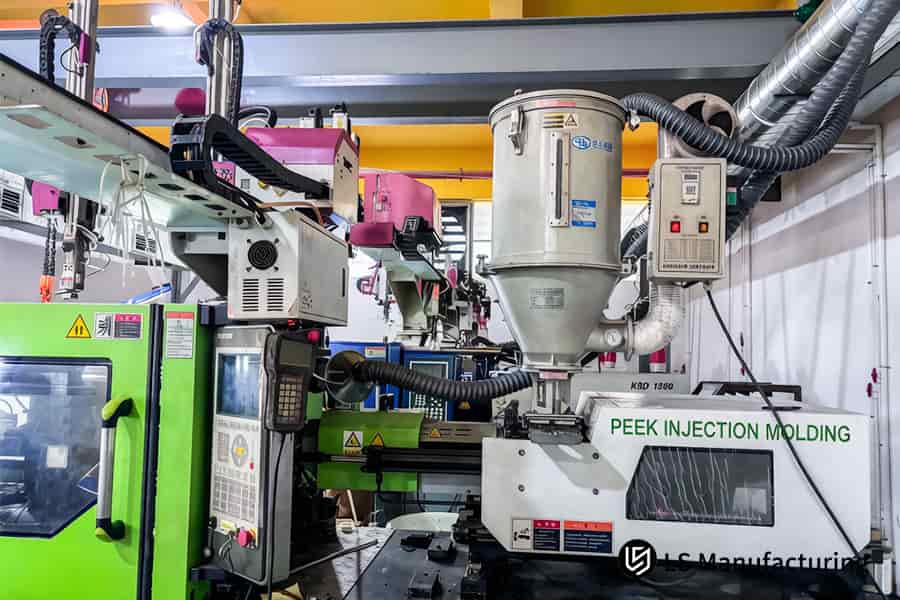
Figure 4: High precision PEEK injection molding controls material flow and temperature via a digital panel interface.
Why Is LS Manufacturing The Preferred High Precision PEEK Manufacturer For Complex Geometries?
There are some difficulties that need to be tackled before manufacturing complex geometry using PEEK such as poor flow of melts, degradation in thin regions, and warping. As a high precision PEEK manufacturer, we address these problems through careful design of tools and processes to optimize properties of materials used and manufactured parts:
Optimizing Melt Delivery for Enhanced Flow
The customized hot-to-cold runner systems provide the PEEK melt in its optimum condition. The melt is kept at its highest temperature all along the runner system till it reaches the cavity. Volume balancing in the runners ensures even distribution of the melt in all cavities, which is important for injection molding. Fill pressures are reduced and stress is minimized.
Precisely Managing Shear to Preserve Properties
Shear degradation causes the weakening of mechanical properties of PEEK. Based on rheology data, we can simulate and limit the rate of shear to 1000 per second within the runners and gates. By employing certain gating techniques and injection velocity control, the chain length of the polymer is protected, thus ensuring that it enjoys full tensile and impact strength.
Validating Design Through Advanced Simulation
This all begins with flow simulations when designing. With our process, the analysis of the filling pattern, weld line formation, and cooling rates in relation to the complex geometry is achieved. With the help of our process in carrying out virtual prototypes, we will be able to optimize the gates, wall thicknesses, and conformal cooling designs to minimize sink marks and prevent warpage.
Executing a Dialed-In, Scientific Process
In this process stage, we employ Design of Experiments (DOE). Our process involves the empirical validation of the simulated models developed by us. At the same time, we adjust certain parameters like melt temperatures, injection speed curves, and packing pressures so that we get the optimum filling, packing, and cooling of the specific part geometry. The empirical approach allows us to create a highly robust process that is useful in multi-cavity injection molding.
We solve the challenges inherent in complex geometry by proper design and process of the mold using the rheology of PEEK. Our solution method that involves precise control of melt distribution, shear rate, simulation, and process validation ensures complete filling, preservation of physical properties, and minimization of warping. Such a comprehensive solution is at the core of our PEEK injection molding service, enabling us to deliver high-performance complex parts for any injection molding application.
Case Study: LS Manufacturing Medical Industry PEEK Bone Screw Precision Custom Molding Project
Innovative solutions outside the norm are necessary for the manufacture of high-performance medical devices. The following is an LS Manufacturing case study of our contribution towards overcoming a serious challenge with crystallinity of a particular product faced by a medical device manufacturer:
Client Challenge
The international orthopedics firm faced major inconsistencies in manufacturing of spinal fusion screws using the PEEK-OPTIMA™ material. Specifically, the OEM PEEK injection molding showed low level of crystallinity consistency (±8%), leading to 25% scrap rate as a result of failed mechanical tests. Inconsistencies caused by poor crystallinity resulted in delayed clinical trials, disrupted supply chains, and high costs as well as prevented the release of an innovative product line.
LS Manufacturing Solution
Our solution involved employing scientific injection molding and paying close attention to proper temperature and pressure control. Our scientific approach included use of multiphysics conformal cooling to maintain core temperature at 172°C ±1°C. At the same time, our scientific injection molding allowed for independent control of all phases of the molding process, ensuring injection pressure within ±0.2 MPa to achieve consistent polymer crystallinity in complex thin-wall injection molding.
Results and Value
The variability in crystallinity was reduced to ±1%, and the yield went up to 99.8%. That alone resulted in annual savings for the customer amounting to $180K due to quality failure. Our ability to provide such consistent service enabled the customer to speed up his regulatory filings using perfectly validated batches, thus setting a new benchmark in high-reliability injection molding. It secured our business relationship, transforming us from simple suppliers to engineers providing critical parts for the customer.
It is clear from the above example that reliability in the manufacturing of medical devices is achieved through process control and not inspection. Since we were able to address the problem of crystallization variability by precisely controlling temperature and pressure parameters, we delivered reliability as well as financial benefits. This case study is a perfect illustration of why our PEEK injection molding service is essential to a medical device manufacturer.
Quantify your own savings with a validated, high-yield PEEK process. Share your part parameters to receive a detailed crystallization analysis and a firm production quotation.

FAQs
1. What is the maximum operating temperature for parts made by your PEEK injection molding service?
Our PEEK parts will withstand temperatures up to 250 degrees centigrade with spikes up to 300 degrees centigrade without compromising their superior mechanical strength, rigidity, and chemical resistance. They make excellent components for use in aerospace, automotive, and industrial machinery.
2. How does LS Manufacturing ensure the tolerance of precision PEEK injection molding?
We ensure tight tolerances by utilizing 5-axis machining for ultra-precise mold fabrication and implementing closed-loop pressure and temperature compensation technology during molding. This allows us to consistently control dimensional tolerances within a critical range of ±0.01mm, even for complex geometries.
3. Can LS Manufacturing provide custom PEEK injection molding for small-batch prototypes?
Yes, we expertly support projects from rapid prototype development starting as low as 100 units, all the way to high-volume production in the millions. Our rapid tooling solutions and modular mold systems make small batches economical, and all projects include a complimentary DFM review.
4. Why is high-temperature PEEK molding more expensive than using standard materials like ABS?
PEEK molding is more expensive due to the need for specialized high-temperature presses (capable of 400°C) and expensive, heat-resistant steel tooling. However, the ability to create complex, single-piece components often eliminates multiple assembly steps, leading to a lower Total Cost of Ownership (TCO).
5. How do you prevent internal voids in injection-molded PEEK parts?
We prevent voids by employing advanced vacuum mold venting systems to remove trapped air and utilizing a scientifically calculated, two-stage holding pressure profile (typically 100–150 MPa). This process ensures complete cavity fill and excellent internal density, critical for part strength and performance.
6. Is LS Manufacturing an ISO-certified PEEK injection molding supplier?
Yes, we are a certified supplier, strictly adhering to the IATF 16949 standard for automotive and the ISO 13485 standard for medical devices. For traceability, we provide a comprehensive First Article Inspection (FAI) report and full material certification for every production batch.
7. How can I optimize my design for PEEK molding to create high-temperature parts?
For optimal results, maintain uniform wall thickness with variations under 25% and incorporate draft angles of at least 1.5° to facilitate ejection. Our team will provide specific, actionable recommendations during the complimentary DFM review stage to ensure manufacturability and performance.
8. How can I get a quote from LS Manufacturing for OEM PEEK injection molding today?
To receive your detailed quote, please upload your 3D CAD files in STEP or IGES format via our secure portal. Our team of senior PEEK application engineers will then provide a comprehensive quotation, including a DFM analysis and cost breakdown, within 24 hours.
Summary
The success of PEEK injection molding relies not only on the material, but on a partner’s obsessive attention to process details. Through end-to-end precision molding, LS Manufacturing solves chronic issues like crystallinity variation and dimensional drift, building a robust quality-efficiency defense with a data-driven system. As our cases show, true cost and efficiency gains come from technical intervention that eliminates manufacturing variables.
Ready to end high-temperature failures and costly scrap rates? Contact LS Manufacturing to start your zero-defect journey. Click “Upload Drawings for Free Evaluation” for an exclusive in-depth DFM feasibility report. We pledge to deliver not only a transparent quote within 24 hours, but also a full assessment of design-related manufacturing risks—making your PEEK process safe, reliable, and highly efficient.
📞Tel: +86 185 6675 9667
📧Email: info@lsrpf.com
🌐Website: https://lsrpf.com/
Disclaimer
The contents of this page are for informational purposes only. LS Manufacturing services There are no representations or warranties, express or implied, as to the accuracy, completeness or validity of the information. It should not be inferred that a third-party supplier or manufacturer will provide performance parameters, geometric tolerances, specific design characteristics, material quality and type or workmanship through the LS Manufacturing network. It's the buyer's responsibility. Require parts quotation Identify specific requirements for these sections.Please contact us for more information.
LS Manufacturing Team
LS Manufacturing is an industry-leading company. Focus on custom manufacturing solutions. We have over 20 years of experience with over 5,000 customers, and we focus on high precision CNC machining, Sheet metal manufacturing, 3D printing, Injection molding. Metal stamping,and other one-stop manufacturing services.
Our factory is equipped with over 100 state-of-the-art 5-axis machining centers, ISO 9001:2015 certified. We provide fast, efficient and high-quality manufacturing solutions to customers in more than 150 countries around the world. Whether it is small volume production or large-scale customization, we can meet your needs with the fastest delivery within 24 hours. choose LS Manufacturing. This means selection efficiency, quality and professionalism.
To learn more, visit our website:www.lsrpf.com.