English



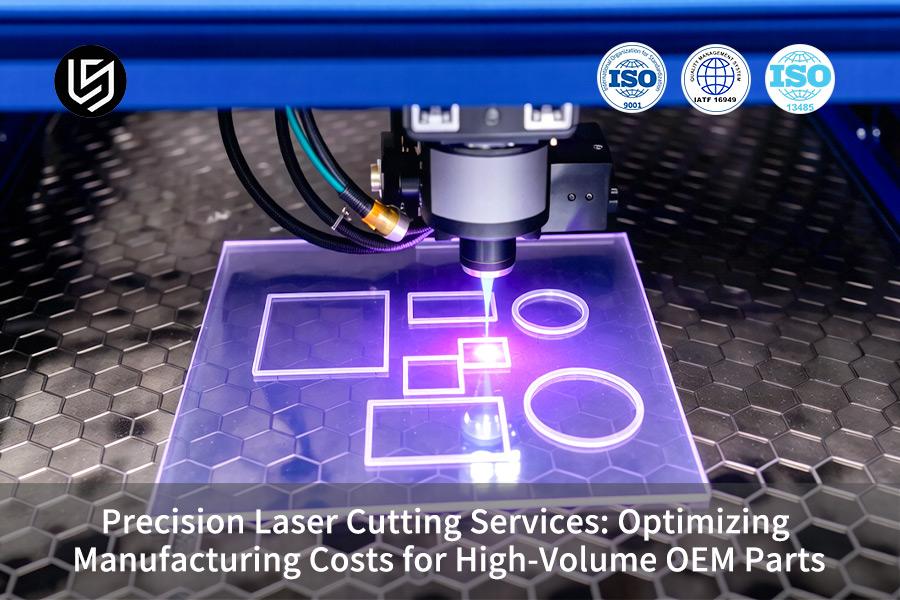
Precision laser cutting services need to be provided by the manager researching on how to choose a local laser cutting supplier: avoid these mistakes, who usually focus on proximity and yet fail to understand how small defects in process multiply the expenses in bulk manufacturing, like when there’s a 20% scrap because of poor thermal control. More than that, large batch laser cutting suppliers are not able to model stress digitally or monitor quality in bulk processing, thus operating on a primitive “cut to print” basis without optimization based on DFM.
The way LS Manufacturing provides precision laser cutting services using ultra-high power of 20,000 W lasers, as well as nesting algorithms, shows how one can solve this problem by lowering production costs by 15%-25%, thanks to DFM-based optimization in laser cutting processes. The following technical analysis will give insight into how specialized laser cutting suppliers make use of highly engineered solutions to ensure profitability in the manufacturing phase.
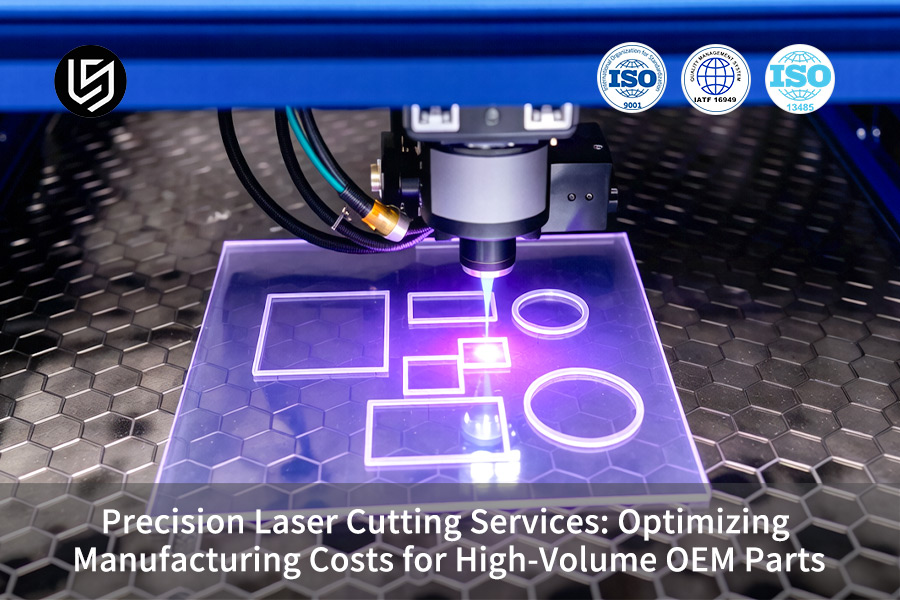
Precision Laser Cutting: High-Volume Cost Optimization Quick-Reference
| Cost Factor | Optimization Strategy | Business Outcome |
| Material Utilization | Nesting software helps us get the most out of each sheet, which lowers waste of raw materials. | Laser cutting material cost due to efficient utilization and less waste handling expenses. |
| Machine Throughput | Fast laser cutting with higher power and automated part manipulation means higher cutting speed. | Higher throughput leads to less fixed cost being allocated to each part produced. |
| Secondary Operations | Lasers leave clean edges, meaning that sometimes no additional work is required after cutting. | Labor savings and equipment costs reduction from avoiding secondary operations. |
| Consumable Management | Predictive maintenance of nozzles and optimized assist gases usage means less costs. | Very low cost of consumables per production order. |
| Our Volume Analysis | We optimize our sheets by batching multiple part types together to achieve economies of scale. | Economies of scale lead to unit price reductions on high volume jobs. |
| Predictable Unit Economics | Convergence of all above-mentioned cost-cutting techniques allows for consistent per-part cost. | Ability to accurately forecast unit costs and plan budgets effectively. |
| Supply Chain Efficiency | Precise just-in-time production allows us to lower the cost of inventory and logistics. | Lower overall cost of goods sold and minimized working capital. |
Our solution addresses the problem of optimizing the cost of mass OEM laser cutting processes. It is characterized by the maximum material utilization, equipment productivity, and absence of additional operations, which allows obtaining the minimum sustainable cost per unit, timely delivery, and a simple logistics chain for your metal parts.
Why Trust This Guide? Practical Experience From LS Manufacturing Experts
With all the content about laser cutting that can be found online, why should you choose our guide? We are not theoreticians but practitioners. All advice provided in this article is based on practical experience from the real workshop where we struggle with challenging materials, demanding deadlines, and complex geometry. We do not "know" the optimal parameters of laser cutting; we use them every day to produce accurate fuel cell plates and medical stents.
Precision laser cutting solutions in applications such as aerospace and medical devices have been perfected in our company through years of experience. Thanks to our process intelligence, based on the latest validation by NIST Materials Data and Additive Manufacturing (AM) principles, each strategy can be executed knowing its basis in advanced material science and manufacturing technologies.
It has all come to us as a result of many years of experience in using artificial intelligence solutions in material cutting operations for achieving 15% more efficiency when cutting aluminum; maintaining temperature control during the cutting operation to avoid warping of titanium pieces; cutting with an accuracy of ±0.001" for 10,000 parts, among other results. The intelligence we share is the same intelligence that works for you at reducing costs and ensuring process reliability.
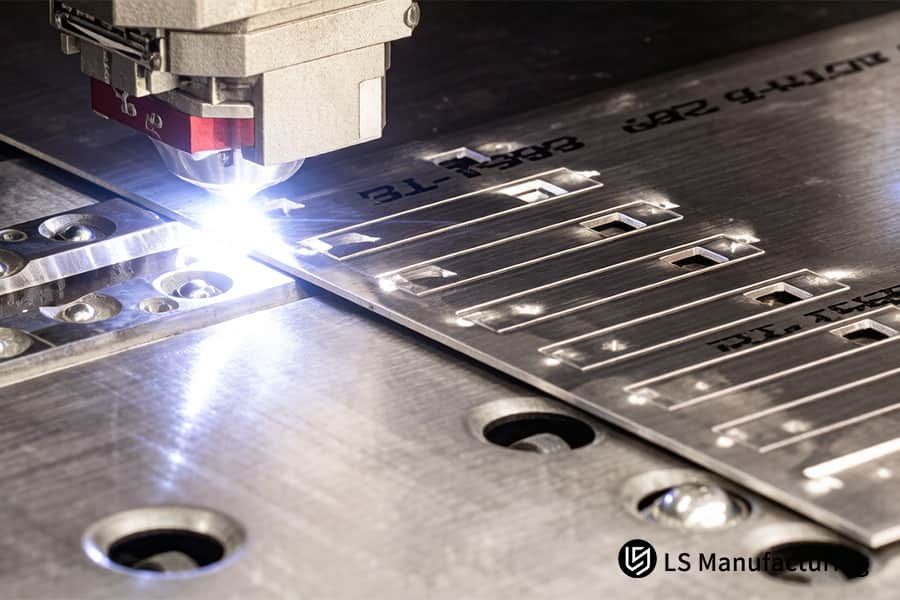
Figure 1: Laser cutting head etches technical markings on 6061 aluminum plate for automotive component identification.
Why Is LS Manufacturing The Premier Choice For High Volume OEM Laser Cutting In 2026?
Ensuring repeatable and micron-accurate performance during high volume OEM laser cutting operations at the lowest possible per unit cost represents a major challenge. This paper outlines the approach we have developed in order to address this challenge using an automated approach alongside real-time optical corrections and statistical process control. We ensure stable CPK stability in mass production as follows:
Implementing 24/7 Unmanned Production for Cost Foundation
As a result of implementing an automated material handling system together with fiber laser cutters, we have been able to implement light-out manufacturing. This is because instead of concentrating on only improving the cutting speed, we opted to put more emphasis on ensuring proper material logistics. This has been made possible by using automated cranes and bar-coded pallets, which allow us to feed raw materials and sort out the finished parts without any human intervention. This is, therefore, what is required for our precision laser cutting services to survive in the competitive market environment.
Ensuring Micron-Level Accuracy with Dynamic Optical Correction
Maintaining the consistency of the cut perpendicularity at less than 0.05mm cut perpendicularity across millions of cuttings is made possible through closed-loop control. The coaxial vision sensor makes measurements of the kerf width profile at a frequency of 1kHz. The software program then uses this data to continually adjust the focus point and nozzle positioning of the cutting head throughout the cutting process. This dynamic correction cancels out thermal drift and wear effects, ensuring that the cuts are accurate within automated laser cutting systems for complicated parts.
Guaranteeing Lot Consistency via In-Process Monitoring
Rather than implementing quality control after the manufacturing process, it is now done through predictive analysis while it is being done. Parameters like gas pressure, beam mode, and the temperature at which the cutting head operates are analyzed, while at the same time the data is being fed into the digital twin simulation. Any deviation is detected, and thus the machine is adjusted before even starting the whole process. It guarantees that all the statistical process control measures, including the CPK value, will be above 1.33 for each batch for high-speed laser cutting processes in automotive and aerospace manufacturing.
From the technical side of things, the document clearly shows how serious we are about tackling engineering challenges and not just operating machines. Adaptive optics, predictive analytics, and automation comprise our methodology. As you can see, LS Manufacturing takes a deep technical approach to laser cutting process control to ensure unrivaled CPK stability and total cost leadership in high volume OEM laser cutting projects.

How Can Laser Cutting Cost Optimization Reduce The Total Cost Of Ownership For OEM Projects?
Real laser cutting cost optimization not only involves the efficiency of machines but also addressing the issue of material wastage in manufacturing on a large scale. In this document, we outline the technical process of our approach regarding optimal material utilization through algorithmic nesting to explain how this leads to lower costs of your project. Cost reduction is our engineering strategy:
Multi-Constraint Algorithmic Nesting
- Our Approach: We employ special nesting software that can manage multiple constraints at once during fiber laser cutting.
- Solves: The algorithm considers the geometry of components, the orientation of parts, the heat distortion of material, and the remaining sheets to achieve more than 91% material utilization in 2.0mm stainless steel, above the industry norm of 75%.
Automated Design-to-Production Workflow
- Our Integration: CAD files are automatically analyzed and nested by the program, which controls the automated laser cutting process.
- Solves: The layout optimization will be implemented flawlessly without any mistakes, ensuring that there will be cost reduction for each batch produced.
Dynamic Nesting for Mixed-Volume Orders
- Our Capability: We have the ability to nest multiple batches of various materials simultaneously on a single sheet.
- Solves: This allows for maximum utilization of the purchased sheets, reducing inventory and wastage costs, which is very crucial for precision laser cutting and manufacturing operations.
Transparent Cost-Benefit Analysis
- Our Method: Every quote has a comparative nesting analysis that reflects the percentage and cost savings for every part in custom laser cutting orders.
- Solves: This gives a solid foundation of quoting services, showing the advantages of OEM laser cutting service over its unit price.
This method clearly demonstrates that significant cost reduction is the direct outcome of engineering. In concentrating on laser cutting cost optimization using nesting methods and process integration, we can realize cost reductions that are both quantifiable and visible. This document will outline our method to solve the core challenge of costs for high-volume OEM production using maximum material utilization, thereby lowering the real cost for our OEM laser cutting service quotations.
Why Should Engineers Prioritize Custom Laser Cutting Services For Complex Aerospace Components?
With aerospace parts of critical importance, the core challenge extends beyond accuracy in dimensioning but also involves preserving the integrity of the metal during the cutting process. This article elaborates on our engineered method of achieving ultra-low HAZ control in custom laser cutting services for the structural integrity of aerospace parts. We have a technology that can produce an ultra-low Heat Affected Zone (HAZ) of below 0.02 mm, effectively preventing micro-cracks from forming under dynamic conditions. Our engineered method follows as below:
| Objective | Method & Key Metric |
| Minimize Total Heat Input | Utilize pulsed advanced laser cutting technology, with specific parameters, to reduce the energy density, which is critical when aerospace laser cutting titanium alloys applications. |
| Ensure Process Consistency | Use a closed-loop method of thermal control, employing a coaxial pyrometer, to ensure consistency in results with high-precision manufacturing. |
| Maximize Heat & Dross Ejection | Apply a specially designed nozzle that enables high-pressure gas flow to rapidly cool the cutting zone. It is essential for precision OEM parts laser cutting. |
| Validate Material Integrity | Conduct micro-section analysis after laser cutting to verify that the heat-affected zone does not exceed 0.02mm for pulsed laser cutting applications. |
Our custom laser cutting services are designed to solve the problem of thermal degradation, which can cause in-service failures in aerospace parts. With a proven scientific approach to HAZ control, we provide precision OEM parts laser cutting with edge verification. The following document explains our scientific approach to high-precision manufacturing. To achieve the under 0.02mm HAZ required for flight-critical parts, submit your aerospace component design for a validated laser cutting process solution and material integrity report.
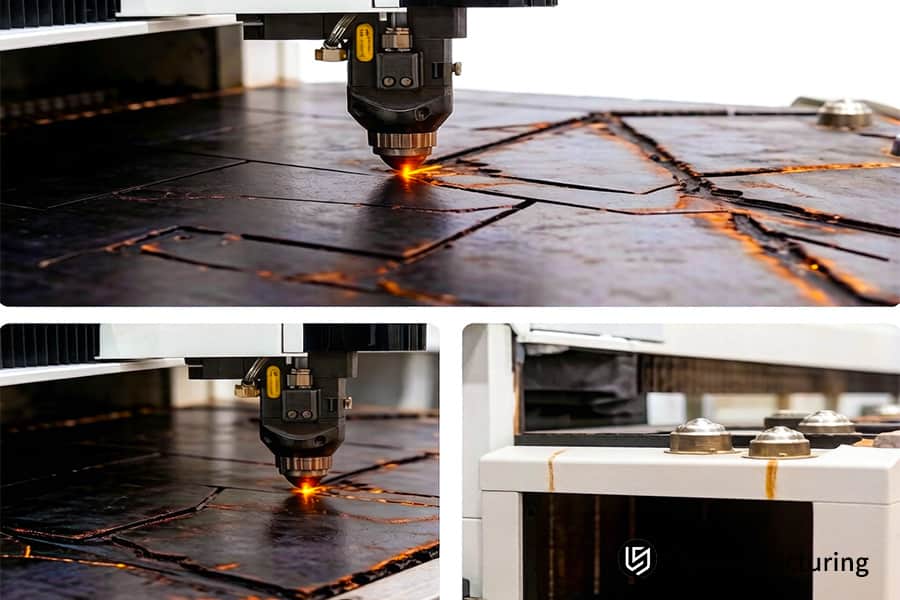
Figure 2: Laser cutting system shapes rectangular metal panels from 316L stainless steel for industrial machinery enclosures.
What Determines The Excellence Of A Large Batch Laser Cutting Service For Automotive Parts?
Large batch laser cutting success for automotive components depends on solving process stability issues, especially in relation to highly reflective materials like aluminum alloy 6000 series. The following is our solution that eliminates the problem associated with reflectivity, and ensures that we deliver a constant level of quality without causing unexpected downtime. In turn, this protects your production throughput and optimizing manufacturing cost laser cutting:
Proprietary Anti-Reflection Optical Path Design
In order to circumvent the high reflectivity of aluminum greater than 90%, a specialized optical system was developed. The system design includes a specific laser beam delivery arrangement along with the appropriate lens coating and nozzle configuration in order to interfere with the reflection plume of the plasma. This will ensure a consistent energy input into the workpiece and set the foundation for high-volume laser cutting components.
Adaptive Parameter Synchronization with Material Feedback
A real time feedback system that monitors the back reflection signal and then controls the laser energy and frequency input according to the optimization window is used in order to provide optimal cutting regardless of changes in the surface characteristics of the material being cut. It is necessary to maintain a certain level of efficiency in the industrial laser cutting process.
In-Line Dimensional Verification for Zero-Defect Batches
Individual pieces cut are compared against their respective twins through a vision system analysis. As soon as measurements fall outside of the narrow tolerance levels, the process will be immediately stopped for analysis to prevent further movement into the assembly stage. All individual pieces cut can now be assured to be ready for assembly in the large batch laser cutting.
Predictive Process Capability (Cp/Cpk) Analytics
Data generated on the production floor will help us calculate process capability indices for important dimensions. In doing so, we shall be able to spot possible issues with tooling or optical distortions before impacting product quality so we can conduct preventive maintenance. The application of this predictive technique is necessary to ensure effective production throughput in order to avoid scrap in our laser cutting project.
The structured process of overcoming difficulties in working with the material in question is what makes us technically knowledgeable. We address the inherent stability issues in cutting reflective alloys using adaptive optics and predictive analytics to guarantee flawless large batch laser cutting of automotive components. This method is designed to protect your production throughput and reduce overall manufacturing cost laser cutting by preventing quality-related downtime.
How Can A Professional Manufacturing Cost Laser Cutting Strategy Eliminate Secondary Processing Fees?
A truly optimized manufacturing cost laser cutting requires the exclusion of secondary processing operations. In general, the challenge is achieving a sufficiently smooth surface that will be ready for application without any further processing, specifically, an Ra finish below 6.3µm on stainless steel instead of polishing through manual means. The following details provide information about our process for obtaining a “cut and ready” surface, which will make secondary process reduction unnecessary:
Optimized Parameter Matrix for Controlled Melt Layer
- Our Method: Our technique involves the use of a database which matches the grade and thickness of material with specific parameters such as peak power, pulse frequency and duty cycle.
- Solves: We produce a melt layer with low viscosity to ensure a smooth solidification process, providing an Ra finish below 6.3µm after the fine laser cutting procedure.
Dynamic Gas Nozzle and Pressure Control
- Our Approach: The application of a convergent-divergent nozzle with pressure regulation while cutting.
- Solves: We generate laminar flow with high speed of gas to shear off the molten materials without leaving dross to provide a sharp edge required for structural laser cutting of visible components.
In-Process Kerf Quality Monitoring
- Our System: This is achieved through the use of a coaxial optical sensor that detects the plasma plume and kerf emissions.
- Solves: This enables anomaly detection before rough patches are created, ensuring necessary adjustments are made to achieve consistent finishes in sheet metal laser cutting.
Validated Finish Consistency Across Batches
- Our Validation: Carry out regular tests using the touch profilometer method and correlating with machine sensors.
- Solves: Creates a predictive tooling maintenance system that guarantees that the first piece produced and the one-thousandth have the same finish, hence assured secondary process reduction.
Our precision laser cutting services address the issue of post-processing costs in their root cause. Through understanding the interaction between the laser beam, materials, and gas dynamics, we produce an “as cut” finish to functional specifications. This scientific approach aimed at manufacturing cost laser cutting delivers secondary process reduction, turning multiple steps into a single cost-effective process in our precision laser cutting services.
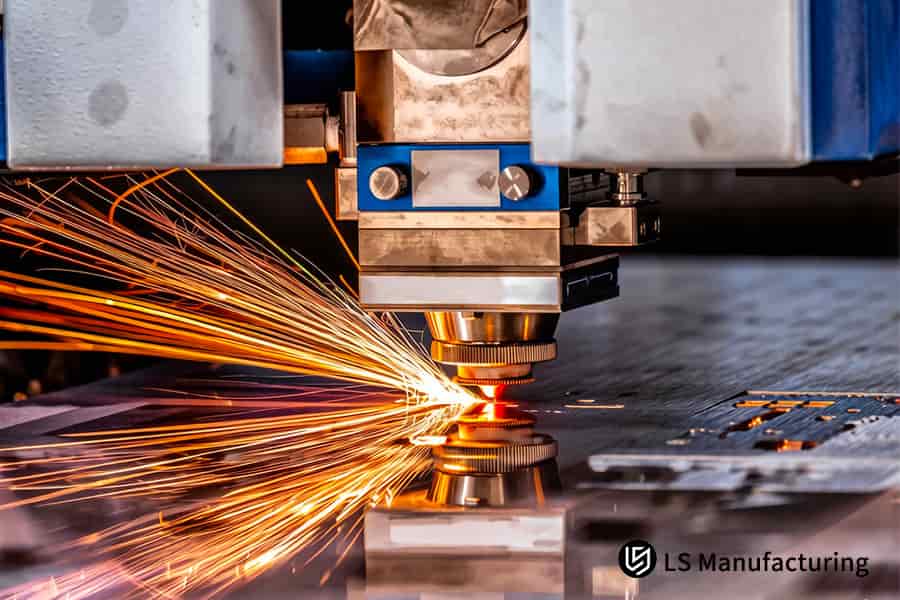
Figure 3: Laser cutting torch slices through 6mm carbon steel plate for construction equipment manufacturing.
Why Is An OEM Laser Cutting Service Provider With DFM Expertise Vital During The Quoting Stage?
The real cost of an OEM laser cutting service is established prior to the start of any production. Poor part geometry or inefficient nesting can contribute directly to increased cycle times, scrap, and quality risks. This report outlines our process of DFM optimization during the quoting phase when designing interventions will provide value from an optimized manufacturing perspective:
| DFM Focus Area | Our Intervention & Quantifiable Impact |
| Geometry Optimization for Speed | Optimization of internal geometry such as internal corners and narrow slotted features helps to avoid over burning, thereby increasing cutting speed by as much as 20% during prototype laser cutting and manufacturing operations. |
| Feature Modification for Stability | Unstable micro-features such as thin tabs are identified and modification solutions provided so as to ensure consistency of output in high-mix laser cutting. |
| Nesting & Cutting Path Strategy | The design of the cutting path and skeleton is optimized for minimal distortion and reduced non-cut time, thereby increasing the efficiency of your custom laser cutting services. |
| Material & Specification Alignment | Material specification is compared against its functional use. In many cases, we may recommend another material grade or thickness to help improve the cut quality and reduce low-volume laser cutting costs. |
The following document will illustrate the value added by using our OEM laser cutting service to provide essential engineering support by solving manufacturability issues even before manufacturing begins. Using DFM optimization to optimize your design for manufacture, we offer predictability and peace of mind with guaranteed lead times that can only be provided by an OEM partner focused on custom laser cutting services.
Can Precision OEM Parts Laser Cutting Mitigate Assembly Risks In Medical Equipment Manufacturing?
A major concern in fabricating complex and thin-walled medical components through precision OEM parts laser cutting technology is the issue of thermal distortion that affects the assembly process and function of the component. The following document outlines our technological solution to regulate heat input for dimensional stability during manufacturing of medical grade titanium and stainless steel components, guaranteeing first-time assembly success:
Segmented Cooling and Cutting Process
In the manufacturing, we follow a patented "cut-cool-cut" approach where short bursts of cutting at high speeds are alternated with programmed pauses. This results in dissipation of any heat generated by the cut into the local area, thus addressing the thermal gradient issue. It keeps the titanium stents, measuring 0.5mm in thickness, at less than 0.05mm out of shape during high volume OEM laser cutting.
Optimized Cutting Path for Stress Distribution
A pre-programmed approach is followed when deciding on the cutting path. We start cutting from inside and move our way towards outside to ensure that no local heating takes place. This is a crucial factor in sheet metal laser cutting of enclosures and support structures because it ensures dimensional stability once separated from the sheet.
Laser Parameter Micro-Tuning for Minimal HAZ
Energy densities of our ultrashort pulses have been carefully calibrated to achieve just enough heat energy to remove material without substantial thermal conduction. Such micro-adjustments are crucial in achieving precision laser cutting of fine meshes and filters and minimizing the Heat-Affected Zone (HAZ), which is the main factor causing the warping of thin geometries.
In-Situ Metrology and Closed-Loop Correction
This non-contact, inline flatness detection sensor detects the flatness of the component during the cutting process right after critical cutting processes. Information is fed into the system to optimize future cutting parameters in a closed loop system that assures dimensional stability in micro laser cutting systems.
The methodology ensures that the problem of assembly risk due to thermal distortion is solved. Using optimized toolpaths, segmenting the processes, and adjusting the parameters, we produce components at the medical grade with proven geometric fidelity. In this document, we highlight the technical complexity, engineering expertise, and verifiable results associated with our precision OEM parts laser cutting.
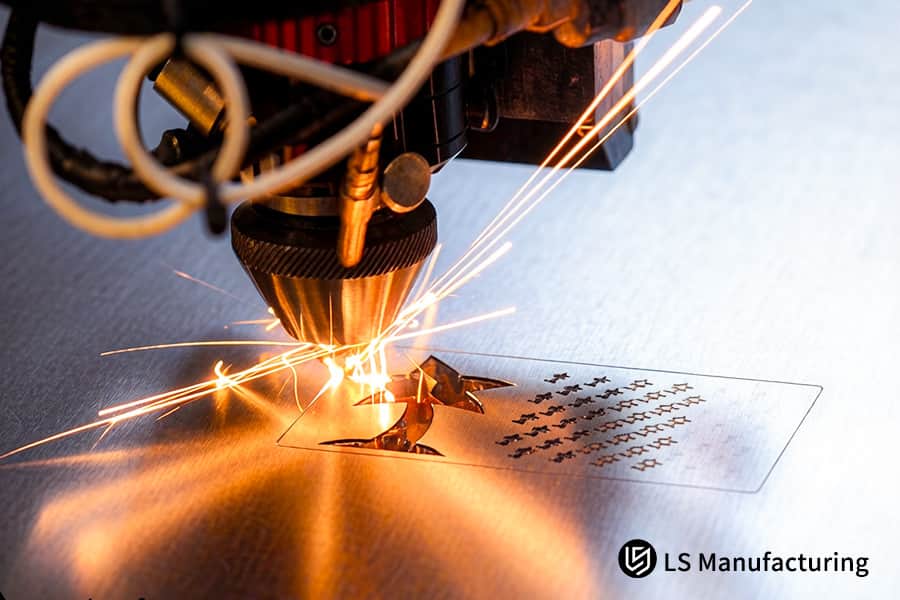
Figure 4: Laser cutting machine carves star patterns on 304 stainless steel sheet for electronic device decoration.
Case Study: LS Manufacturing Medical Aerospace Titanium Structural Support Precision Custom Solution
LS Manufacturing has used its precision laser cutting services and engineering expertise to help solve a fatigue-life problem with a key aerospace component. Using advanced process simulation and design-for-manufacturing techniques, we were able to turn an expensive manufacturing dilemma into a robust supply chain success story:
Client Challenge
An established aerospace Original Equipment Manufacturer was unable to qualify 10,000 customized titanium laser cutting brackets (Ti-6Al-4V). The existing supplier’s manufacturing process was causing micro-cracks measuring 0.1mm in size on the cut edges of the material, limiting fatigue life to just 70% of the desired specification. There was a 25% cost overrun because of excessive scrap and the required stress-relief annealing process.
LS Manufacturing Solution
The solution provided by our team to meet the requirements of the aerospace laser cutting process was through simulation, gas dynamics, and DFM. We designed the digital twin that helped us optimize the laser’s energy envelope. It was complemented with a high-pressure gas assist at 70 Bar. One of the DFM optimization measures suggested was to make a transition from sharp corners to R0.5mm fillet to relieve thermal stresses.
Results and Value
This case study is a prime example of our micro laser cutting philosophy: using technical acumen to address the fundamental engineering issues. Our offerings are not just components but proven manufacturing solutions that guarantee reliability, efficiency, and mitigate risks associated with your most challenging precision laser cutting projects.

FAQs
1. Why choose LS Manufacturing for my high-volume OEM laser cutting project?
Our 24/7 machine operation delivers outstanding machining accuracy of up to ±0.03mm while reducing per-piece labor costs by 40%. This combination ensures exceptional consistency, efficiency, and overall value for your high-volume production needs.
2. What is the primary difference in laser cutting cost optimization for large batches?
By leveraging economies of scale and intelligent nesting systems, we maintain material waste under 10% to significantly cut costs. Our optimized processes maximize sheet utilization, directly lowering your overall material expenditure for large orders.
3. How fast can I get a quote for precision laser cutting services from LS Manufacturing?
Simply upload your STEP files, and our engineering department will promptly provide an official quotation with detailed DFM guidelines within 12 hours. This rapid, informative response accelerates your project planning and final decision-making timeline effectively.
4. Does LS Manufacturing provide material traceability for custom laser cutting services?
Yes, we are ISO 9001 certified and provide original Material Test Reports (MTRs) with complete digital traceability documentation for all batch orders. This comprehensive paperwork ensures material authenticity and fully supports your rigorous quality audits.
5. Can your OEM laser cutting service handle exotic alloys like Nitinol or Inconel?
We utilize a proprietary database of laser settings optimized for specialty metals, preventing adverse phase changes during the cutting process. This careful approach preserves the intrinsic mechanical properties of challenging alloys like Nitinol and Inconel.
6. Why are manufacturing costs for laser cutting lower at LS Manufacturing compared to local shops?
This is due to our vertically integrated process chain and the use of high-power 20,000W laser cutters, which operate three times faster than regular equipment. The resulting efficiency gains and lower energy consumption significantly reduce your costs.
7. How do you handle design revisions for large-batch laser cutting orders?
Design revisions can be made by conveniently editing your DFM parameters through our online platform, provided the metal sheets are not yet loaded into our planning system. This flexibility accommodates necessary last-minute changes early in the production cycle.
8. What quality reports are provided with precision OEM laser-cut parts?
With every order, we deliver a complete FAIR, CPK statistics, and Ra surface roughness analysis reports. This thorough documentation guarantees 100% compliance with your specific audit criteria and verifies dimensional accuracy and process capability.
Summary
In today’s competitive environment of 2026, laser cutting is far more than an ordinary procedure—it involves cost estimation and precision engineering. At LS Manufacturing, profit is guaranteed when we achieve 0.01mm accuracy while making the most out of every material to its 15% level. From prototyping to full-scale manufacturing, only working with professionals who know their stuff will give you the best possible result.
Your unique designs deserve the perfect fabrication process. Don’t allow your profits to be cut into pieces because of unreliable suppliers and unnecessary steps. Click on the "Get Instant Laser Cutting Quote" button below to upload your 3D files instantly. Our senior engineers at LS Manufacturing are ready to perform a complimentary "Cost Breakdown Analysis & DFM Review" for your project within 24 hours.
📞Tel: +86 185 6675 9667
📧Email: info@lsrpf.com
🌐Website: https://lsrpf.com/
Disclaimer
The contents of this page are for informational purposes only. LS Manufacturing services There are no representations or warranties, express or implied, as to the accuracy, completeness or validity of the information. It should not be inferred that a third-party supplier or manufacturer will provide performance parameters, geometric tolerances, specific design characteristics, material quality and type or workmanship through the LS Manufacturing network. It's the buyer's responsibility. Require parts quotation Identify specific requirements for these sections.Please contact us for more information.
LS Manufacturing Team
LS Manufacturing is an industry-leading company. Focus on custom manufacturing solutions. We have over 20 years of experience with over 5,000 customers, and we focus on high precision CNC machining, Sheet metal manufacturing, 3D printing, Injection molding. Metal stamping,and other one-stop manufacturing services.
Our factory is equipped with over 100 state-of-the-art 5-axis machining centers, ISO 9001:2015 certified. We provide fast, efficient and high-quality manufacturing solutions to customers in more than 150 countries around the world. Whether it is small volume production or large-scale customization, we can meet your needs with the fastest delivery within 24 hours. choose LS Manufacturing. This means selection efficiency, quality and professionalism.
To learn more, visit our website:www.lsrpf.com.