English



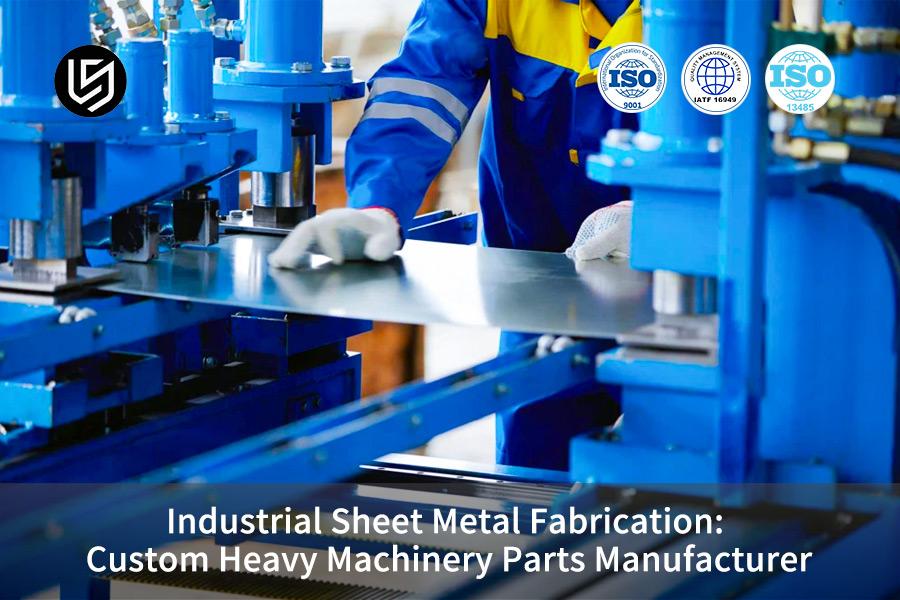
Sheet metal fabrication service is a fundamental support in heavy machinery manufacturing, and the accuracy and the reliability of it directly impact the service life and the operational safety of the final machinery.
LS Manufacturing's sheet metal fabrication service aims at solving heavy machinery sheet metal processing pain points, i.e.high rework cost and great poor durability, assists buyers cutting down hidden costs and accelerating project efficiency. In the heavy machinery manufacture, the buyers even meet the "precision trap". This guide will give you profound discussion on how to reach the UHP in heavy duty sheet metal fabrication with professional technology and system solution.
Key Aspects of Sheet Metal Fabrication Service
| Core Dimensions | Technical Solutions | Key Data | Customer Benefits |
| Precision Compensation | CNC Feedback + Springback Compensation | Bending angle error ±0.2°,25% increase in first-pass yield | 30% reduction in rework costs |
| Welding Efficiency | AWS D1.1 Standard + Pulse Welding | 25% reduction in heat-affected zone deformation | 40% extension of structural component lifespan |
| ROI | DFM Design Optimization | Avoids 80% of post-assembly risks | 22% reduction in total lifecycle costs |
| Surface Corrosion Protection | Sa2.5 shot blasting + 120μm zinc-rich coating | Corrosion protection up to 10 years | 15% reduction in maintenance costs |
Key Takeaways:
- Accuracy Compensation: Locked in a CNC feedback system, the bending angle error of large size parts is controlled within 0.2° which has achieved 25% higher first piece yield.
- Welding Efficiency: Complying with the AWS D1.1 standard and employing pulse welding technology are successful in decreasing deformation of the heat affected zone to 75% which will be really helpful for enhancing fatigue life of structural elements.
- Procurement ROI: Focusing first on evaluating suppliers' DFM capabilities during the previous stage, would avoid 80% of subsequent assembly risk during the prototype period, and lower lifecycle cost of parts.
How Does LS Manufacturing's Sheet Metal Fabrication Service Handle Demanding Operating Conditions?
With years experience as a professional heavy machinery parts manufacturer, our main principle of improvement of the harsh working conditions we work in is controlling the detail of material and process strictly, not the thicker material we use. We have solved fatigue cracking of the heavy structure parts for tens of Tier 1 machineries manufacturers. Our strictest applied the AWS D1. 1 welding standard.
in the port crane chassis project, we used RF (robotic pulse welding VSR stress relief technology, welding current variation by plusmn, to make the parts off 1200 hours under continuous load test which calmed the problem of weld cracking. Another important point is to correctly recognized the behavior of high strength materials like Q690 and Hardox.
To this purpose, a dedicated mechanical database was created to foresee springback and thermal distortion, controlling tolerances following ISO 13920 Class B to prevent parts fitting problems during assembly due to temperature sensitivity, and having the components ready for the harsher working environments.
The customer doesn't need to be concerned about the precision level causing cost and delivery time increase. For our modular DFM optimization, all three can be balanced. For a wheel loader chassis project, five total welded parts were converged into two integral bending parts. Average delivery time decreased 20%, average bill cost decreased $1200 per unit while even welds went down 18%.
Avoid additional costs due to poor quality when choosing a professional sheet metal fabrication company. If your component fails, cracks or distorts during operation under rigorous conditions can be sent to us straight away for free one to one machining solution to your drawings. We will tailor an extremely flexible and cost effective machining solution to your requirements.

Why Does Industrial Sheet Metal Fabrication Service Prioritize Stress Relief In Heavy Structures?
Welding residual stress which influences long-term durability of heavy machinery shall be thoroughly removed. Failure of fatigue fracture can be caused by micro cracks in the weld heat-affected zone if avoidance of residual stress cannot be achieved for structural components. Residual stress damage is invisible and irreversible and even further directly endangers operation safety of equipment. Industrial sheet metal fabrication service ought to treat removal of this as a basic process core.
Causes of Residual Stress in Heavy Duty Sheet Metal Fabrication
The primary source of residual stress in heavy duty sheet metal fabrication comes from the cutting process and welding operations. The laser cutting process applied to metal plates which have thicknesses exceeding 20mm produces stress because it operates at high temperatures in a confined area. The welding process for high-strength steel operates at a temperature of 800℃ between the weld zone and the surrounding base material which results in permanent residual stress when the material later cools down. The particular component has a direct impact on the overall lifespan of the equipment.
The process of professional heavy steel sheet fabrication requires operators to manage this phase with complete accuracy and they must perform the high-precision laser cutting operation with exacting standards.
- Cutting Stage: The 12kW laser cutting process at its cutting stage produces a heat-affected zone which extends from 0.3 to 0.5mm although this range falls below the heat-affected zone created by plasma cutting.
- Welding Stage: The welding process experiences increasing stress which originates from the expanded weld volume. The residual stress which exists in welds that extend beyond 3-meter distances reaches 350MPa which exceeds the yield strength threshold of Q355B steel.
Practical Application of Residual Stress Elimination Technology
Our primary approach to residual stress elimination uses vibration aging (VSR) combined with prestressed inverse deformation methods which we select according to the structural requirements of each part. The mining truck frame project achieved an 85% reduction in residual stress through the combination of these two methods which represented a 30% increase in effectiveness compared to using a single method while maintaining the precision sheet metal parts stability and improving the customized metal welding process.
| Residual Stress Relief Methods | Applicable Parts | Stress Relief Rate | Processing Time | Cost Advantage |
| Vibration Aging (VSR) | Chassis, Boom | 70-80% | 2-3 hours/piece | Low, $150/piece |
| Prestressed Reverse Deformation Method | Beam, Support Frame | 80-90% | 4-5 hours/piece | Medium, $300/piece |
| Combined Method | Heavy-Duty Core Parts | 85-95% | 5-6 hours/piece | High Cost-Effectiveness |
The correct removal of remaining internal tension from materials will help to prevent components from developing fatigue fractures while decreasing their maintenance expenses and increasing their operational lifetime.
For precise control of part stress risks, you can apply for a free customized residual stress relief technology solution and white paper. The technical team will create a process plan according to the specifications of the part material and size and its operational environment.
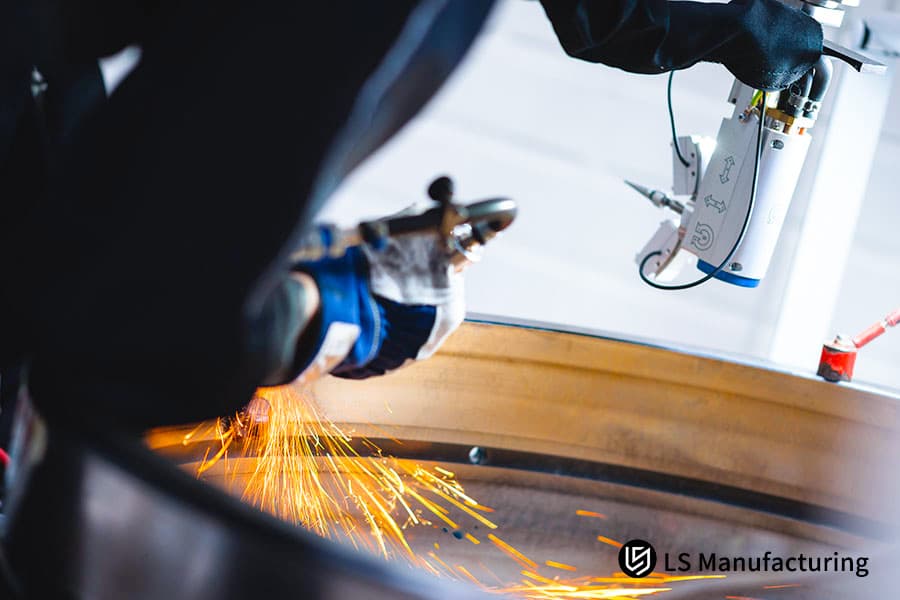
Figure 1: Worker performing residual stress relief on heavy sheet metal parts, sparks flying at the treatment point.
Can Custom Heavy Machinery Parts Fabrication Maintain ±0.5mm Tolerance During Multi-Axis Bending?
The thick plate bending process needs to deal with a precision problem because different areas of the plate experience different springback behavior. The professional service requires an 800-ton CNC bending machine which uses live angle compensation technology to correct springback errors across all dimensions that comply with assembly standards, while producing heavy machinery equipment.
Material Characteristics Determine Bending Precision According to Their Properties
Different material's springback rates vary greatly, In particular high-strength steel sheet used with heavy equipment.For thick plate bending, temperature has a large influence on the springback rate, which is one of the main difficulties of custom sheet metal bending.
| Material Type | Thickness (mm) | Temperature (°C) | Springback Rate (%) | Compensation Method |
| Q355B | 20 | 25 | 3.2 | Angle Compensation |
| Q355B | 20 | 5 | 5.8 | Angle + R-angle Compensation |
| Hardox 450 | 25 | 25 | 4.5 | Hydraulic Deflection Compensation |
| Q690 | 30 | 25 | 6.1 | Comprehensive Compensation |
Core Technologies for Ensuring Bending Tolerances
This variation manufactured a 0.5mm tolerance of multi axis bending, three popular know-how core technology should be utilized to produce a uniforming a bending part in batch-for-assembly without secondary operation, which will contribute a lot of improvement into sheet metal fabrication efficiency and rework cost.
- 800 t CNC bending machine: CNC controller has real-time feedback of bending angle, so bending angle can be controlled within 0.01°, hydraulic deflection compensation can cancel the slider deformation.
- Specialized Springback Compensation Algorithm: It is formed on a material database to foresee the degree of springback and can take an active correction of the bend angle for a target angle be achieved after springback.
- Radius Correction Technology: For plate up to 20mm in thickness, the radius (R-angle) is maintained at 1.5 times of the plate thickness, while for thicker plate, the radius is 2 times of the thickness, to avoid micro-crarks on the outer side of the plate.
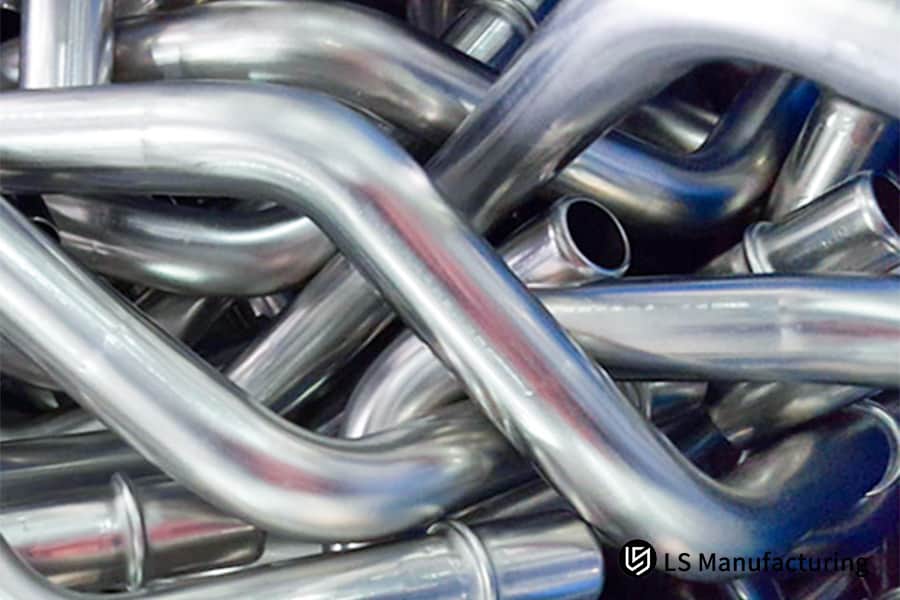
Figure 2: Collection of precisely bent metal parts, showcasing multi-axis bending capabilities for heavy machinery.
How To Optimize The ROI Of Heavy Machinery Sheet Metal Service Through DFM Assessment?
Real cost cutting should not be at the expense of performance. Improving design for material uses, (DFM), can help to avoid the risks from later stages, lowering the investment costs of heavy machinery sheet metal service from the initial design stage.
Core DFM Optimization Measures
DFM evaluation is an integral method of process design, materials (or tools) selection and cost control. It can lower the cost of a group of parts (the entire process) by 18-25% without degrading parts quality, performance, and aesthetic, which is very important for the attainment of ROI.
It also brings optimized sheet metal part design to fulfill the necessary processing.
- Achieving complex parts by welding multiple parts into one bent part will cut down on the number of weld seams, and will also cut down on the cost linked to it's production. Also in the final product the strengthen of the structure is increased.
- Improves efficiency on cutting layout. For example, professional nesting software will optimize the usage of cutouts to increase material efficiency on 20mm thick plates by 75% to 88%.
- Material Substitution: The reduction of material costs by 12% is achievable by substituting high cost materials with high performance materials for meeting the performance requirements.
Cost Comparison Before and After DFM Optimization
| Optimization Item | Before Optimization | After Optimization | Unit Cost Reduction (USD) | Efficiency Improvement |
| Part Consolidation | 5 welded parts, weld length 1200mm | 2 integral parts, weld length 800mm | 350 | 30% |
| Cutting and Layout | Material utilization rate 75% | Material utilization rate 88% | 280 | 17% |
| Material Substitution | Hardox 450, 100kg/piece | Q690 + partial Hardox 450, 100kg/piece | 420 | No efficiency impact |
DFM assessment can significantly reduce the cost of heavy machinery sheet metal projects, avoiding various hidden costs from the design stage. Upload existing part CAD/STEP drawings to receive a free professional DFM optimization analysis report and cost reduction plan, accurately improving ROI.
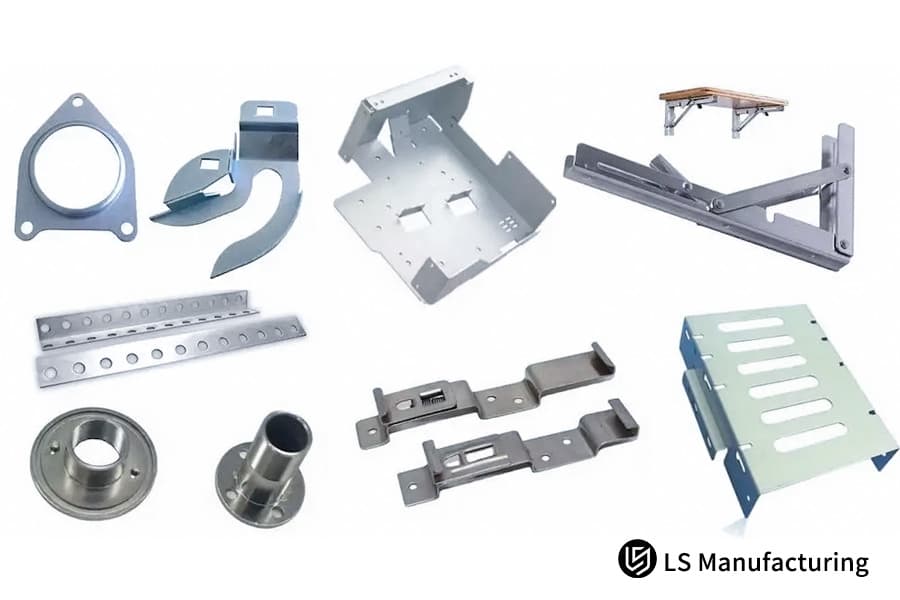
Figure 3: Various precisely bent sheet metal parts displayed, components for heavy machinery.
Why Is LS Manufacturing Ideal For Tier-1 Makers Needing Strict Quality Traceability?
An LS Manufacturing's origin 100% digital process recording with end-2-end anchoring of ISO 9001 quality puts every critical part traceability in place to help Tier 1 equipment manufacturers reduce quality risks whilst satisfying worldwide supply chain compliance standards.
End-to-End Digital Traceability System
We use the ERP system to ensure complete traceability of any process from the receipt of a part all the way through to its dispatch. Details of critical processes are always available for inspection.
The traceability of critical parts with a 10-micron accuracy allows the quality problems to be traced to their origin and gives full control over the industrial sheet metal parts processing quality.
- Raw Material Traceability: A Part Spectroscopic Analysis (PMI) report is provided for each batch of raw materials. Details are recorded in an ERP system in combination with a part number.
- Process Traceability: Automatically records process parameters, processing times, processing employees, using machines and everything related to cut bend weld, etc. processes.
- Inspection Traceability: results from the Coordinate Measuring Machine (CMM) and Non-Destructive Testing (NDT) are recorded in the system, and reports from the inspection are available at any time.
Global Supply Chain Compliance Support
We are able to offer third party NDT reports to outside customers across the world, as international standards. We are accredited to the ISO 9001:2015 quality system, and our sheet metal fabrication facility fully complies with the quality demands of Tier 1 suppliers around the world.
What Technical Standards Ensure Long-Term Durability For Heavy Duty Sheet Metal Fabrication In Harsh Environments?
The combination of Sa2.5 grade shot blasting pretreatment and zinc-rich anti-corrosion coating which requires a minimum thickness of 120μm serves as the necessary protection measure for environments which experience high salt spray and high abrasion. Heavy duty sheet metal fabrication achieves its long-lasting strength through the combination of precise surface treatment processes and proper scientific material selection.
Surface Treatment Technical Standards and Indicators
Surface treatment functions as an essential process which establishes corrosion protection for heavy duty sheet metal fabrication. We enforce its strict standards because corrosion-resistant surface treatment protects parts for extended use in extreme conditions which outdoor sheet metal components require.
- The Sa2.5 grade shot blasting pretreatment process achieves surface roughness between 40 and 70 micrometers while it eliminates rust and scale and oil materials to enhance coating adhesion.
- The coating requirements demand a zinc-rich primer with 120 micrometers and a topcoat with 80micrometers which results in a total thickness of 200micrometers while the adhesion level needs to follow 1.
- The coating thickness gauge system tracks the coating thickness of large structural components through real-time monitoring which ensures compliance with standards in inaccessible regions.
Material Selection Recommendations for Different Working Conditions
Different working conditions have different material performance requirements. We will provide targeted material selection recommendations. The selection of materials for harsh environments directly determines how long heavy machinery components will function.
| Working Condition | Recommended Material | Surface Treatment Solution | Expected Service Life |
| Mining (High Wear, High Dust) | Hardox 500 | Sa2.5 Shot Blasting + Zinc-Rich Coating + Wear-Resistant Topcoat | 8-10 years |
| Port (High Salt Spray, High Humidity) | Q355B + Hot-Dip Galvanizing | Sa2.5 Shot Blasting + Zinc-Rich Primer + Anti-Corrosion Topcoat | 10-12 years |
| Construction Site (Complex Environment) | Q690 | Sa2.5 Shot Blasting + Zinc-Rich Coating | 7-9 years |
Case Study: 20% Cost Reduction For An Excavator Chassis Project Via LS Manufacturing Technical Intervention
A customer who was dealing with fatigue cracking in a Q690 high-strength steel chassis made by one of the global players in construction machinery. We showed our professionalism in custom heavy machinery parts fabrication by redesigning welding strategy and stress simulation and developing light-weighted members with drastic performance enhancement.
Client Challenges
Main beam weld area test found 3-5mm fatigue crack appeared in 800 hours heavy load test, delay the project, the 15mm Q690 excavator chassis was produced by world famous construction machinery manufacturer.
Enlarged the weld was impossible (increased the weight of chassis 10%, 15%) to require, failed to meet the design requirements, needed heavy metal fabrication technology professionals to support.
Client Core Needs: Finish fatigue cracking, need to finish the 1200 hours heavy-load test successfully, and reduce weight 5%, cost, and deliver 45 days.
LS Manufacturing Solution
Professional engineering team of us examined this problem and drew the conclusion that welds quality was unreasonable and the stress was accumulated heavily was the reason that caused fatigue crack. From this solution, we put forward a three-step method to address the problem.
- Generated excellent welded quality: Conventional manual welding process was replaced with robotic pulse weld with a welding heat input was controlled at 18~22 kJ/cm, which displaces of heat-affected zone is decreased by 25%. AWS D1.1 specification was followed precisely.
- Part redesign: The original three-piece welded part was redesigned as a single piece integral bending part to remove three stress concentration locations and remove the risk of weld cracking. This integral bending part was then machined onto an 800 Ton CNC bending machine with tolerances controlled to 0.3 mm for ease of assembly.
- Elimination of residual stress: Vibration aging (VSR) and prestress anti-deformation methods can remove 88% residual stress. Fatigue cracking, the main impact factor of stress concentration, can be avoided. All the stress relief grooves were added at the weld root.
Results and Value
The chassis successfully completed 1200 hours of intense testing after its installation because it showed no cracks which fulfilled all design specifications. The following results describe the specific outcomes of the study:
- Performance Improvement: Chassis fatigue life increased by 40%, and maximum load capacity increased by 15%, far exceeding customer requirements. The system performance improvement originates from better precision metal welding process which underwent optimization and enhancement.
- Weight Optimization: The single-machine chassis now weighs 8% less than its original weight which exceeds the customer's expected 5% weight reduction. The weight decrease results in 5% less fuel consumption for excavators.
- Cost Reduction: The overall cost per machine decreased by 22%, which resulted in $1800 savings for each unit, and this led to $900,000 annual cost savings for the customer who purchased 500 units.
- Delivery Guarantee: The project achieved its sampling and mass production goals before the deadline which allowed the project to proceed on its original schedule.
This case demonstrates that we can solve the core pain points of heavy machinery parts through process optimization, structural improvement, and stress control. You can submit your project requirements to receive customized technical solutions and precise cost estimates if your equipment parts face similar issues. The solution process enables cost reductions while improving efficiency for your organization.

How To Evaluate Robotic Welding In a Custom Sheet Metal Service Provider?
Overall quality of huge-volume orders depends on the offline programming feature of 6 axis robotic welding station. Parameterization through digitalization is the prerequisite to ensure the quality of welding joins has achieved continuous quality of welding order(Quality of order and working efficiency).
Core Indicators for Evaluating Robotic Welding Capabilities
Apart from a number of other investment criteria, this three indicators are critical for assessing the robotic welding strength of a custom sheet metal service provider, which also indicate the degree of their advanced technology level and magnitude of their local supply requirement.
- Process capability index (Cpk): A robotic welding Cpk should be 1.33. Cpk of our welding station is 1.45, which is better than the industry standard. This shows our welding quality is stable.
- Offline program capability: Provide the ability to program complex parts offline, reducing programming time by 60%. Programming a 6M weld can be accomplished in 2 hours.
- Skill for Laser vision tracking system: The laser vision tracking system can automatically compensate the error of the laser position, and the maximum tracks precision is 0.1mm.
Comparison of Robotic Welding and Manual Welding
Compared with manual welding, robotic welding has advantages of higher consistency quality, higher production efficiency and lower cost. It is mostly suitable for processing of large-size heavy machinery parts, and brings great increase to industrial sheet metal welding efficiency and reduce sheet metal welding cost.
| Evaluation Indicators | Robotic Welding | Manual Welding | Advantages of Robotic Welding |
| Cpk Value | ≥1.33 | ≤0.8 | Higher Stability |
| Welding Efficiency | 8-10 meters/hour | 3-4 meters/hour | 2-3 times Efficiency Improvement |
| Weld Defect Rate | ≤0.01% | ≥1.5% | Significantly Reduced Defect Rate |
| Labor Cost | $200/day | $350/day | 43% Cost Reduction |
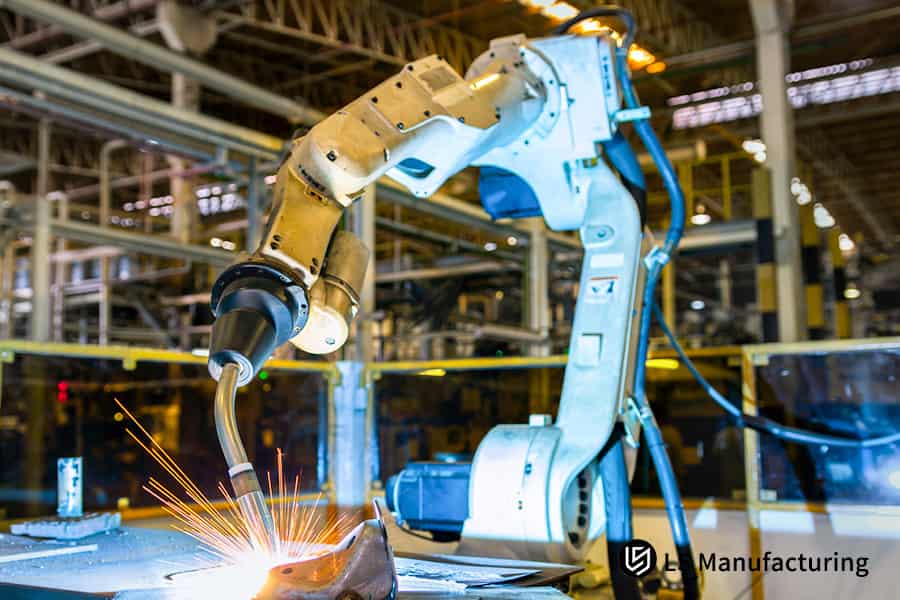
Figure 4: A robotic arm performs precision welding on sheet metal parts in an industrial factory.
Why Do Global Sourcing Managers Trust LS Manufacturing For Urgent Heavy Machinery Parts Fabrication?
Delivery in time is the life line of a supply chain. Our raw material pre-stocking and 24/7 lights-out manufacturing gives a 30% faster response time than the industry average for emergency downtime repair projects. This explains the reason why global purchasing managers have the confidence in us.
Efficient Emergency Response Mechanism
We have set up an adequate emergency response sequence, which is able to handle the quick booking of urgent orders, reducing the losses that originate from critical heavy machinery parts delivery's equipment down time.
- Raw Material Pre-stocking: Extra 500tcis of high strength steel of regular specification from raw materials are stocked to cover the urgent requirements for 24 hours.
- 24/7 Lights-out production: With intelligent equipment, there is a constant 24 hours production, with an increase in efficiency by 40%.
- Rapid Response Team: Expedite action on order review, process development and production scheduling in less than 4 hours.
Stable Supply Chain and Professional Packaging & Logistics
In close cooperation with world leading logistic firms, we deliver parts to our customers on the safest and fastest way and always on time. Finally, for long-distance transportation, we apply VCI vapor phase corrosion protection packaging to prevent rust, and mass production large parts with customized anti-collision packaging.
For high end customers, we provide dedicated project managers, providing timely information feedback on the progress of production and logistics to ensure the quality of custom sheet metal parts during the whole process.
The stability of our emergency response and supply services have been testified by world purchasing managers, facilitating us to deal with all kinds of urgent and high-precision orders. If have urgent fabrication demands for heavy machinery parts, we are ready to link with you right away with 4-hour response and quick scheduling and production and delivery to save the downtime losses.
FAQs
Q1: What is the peak throughput of your company's industrial sheet metal fabrication process?
We own XL table laser cutting equipment and 800-ton bending equipment, which can process ultra-large heavy industrial components of up to 5 tons in weight and 12 meters long, completely satisfying the processing requirements of heavy machinery components.
Q2: Does LS Manufacturing provide DFM analysis for custom heavy machinery parts fabrication?
Yes, all queries have a DFM review carried out by senior engineer, giving a comprehensive report outlining material substitutions, process optimization solutions, to help the customer to reduce costs and increase profit efficiencies.
Q3: How do you deal with the welding warpage during heavy duty sheet metal fabrication process?
We use a combination of forced cooling tooling, robotic pulse welding and prestressed reverse deformation techniques to tightly control the welding process parameters to achieve large part shape tolerances within the limits of BS ISO 13920 Class B.
Q4: Within 24 hours would you be able to supply me with a quote for a custom sheet metal service work piece?
Yes, do you need to upload your STEP/CAD drawings.Our quotation system and engineering team will make a promise to customers that we will finished the cost calculation and will offer the detailed quotation in 24 hours with a succeed shot to gain the quotation and move on with the project schedule.
Q5: Which non destructive testing methods your company (heavy machinery parts manufacturer) use?
We also have for use as required magnetic particle testing (MT), ultrasonic testing (UT) and dye penetrant testing (PT) for 100 % qualification of all critical structural welds to ensure that the quality of the Machinery is of the high standard required.
Q6: Is LS Manufacturing able to perform a small batch sample run for the production of sheet metal parts?
Yes we do.We are very familiar with the rigor of the R&D stage and have R&D teams to be exact focused on assisting with R&D (for example, producing 1-5 rapid samples). We also provide comprehensive measurement reports for design verification to help customers optimize and shorten design/ R&D time cycles.
Q7: Is your sheet metal fabrication service following AWS?
Yes, our welding system is entirely meet standards including AWS D1.1(with steel structure) and AWS D1.6(with stainless steel). Combined with new productions, we utilize this kind of specification, and we can be supplied following the customer's requirements.
Q8: How does your company brings corrosion protection for export orders of your heavy machinery sheet metal services?
Sa2.5 grade shot blasting pretreatment, high quality anti-corrosion materials, VCI vapor phase corrosion inhibitor packing, we can provide parts without rust, ready for immediate use, to meet the long distance of the sea freight.
Summary
What decides the lifetime of heavy machines is the quantitative design and the welder reliability of the sheet metal parts. LS Manufacturing does more than processing the parts, and with the benefits of customers as priority, we deconstruct the secret cost problems from design to assembly through technologies like springback compensation, stress control and DFM optimization, keeping heavy-duty machine running stably.
Say no to second rate processing quality and hope for a "zero-defect" solution for your large machinery parts and equipment.
Upload your STEP/CAD drawing, our team of professionals will deliver a free DFM report and quotation within 24 hours. Use our professional, state-of-the-art technology to save your rework cost to help you be more competitive in you industry!
📞Tel: +86 185 6675 9667
📧Email: info@lsrpf.com
🌐Website: https://lsrpf.com/
Disclaimer
The contents of this page are for informational purposes only. LS Manufacturing services There are no representations or warranties, express or implied, as to the accuracy, completeness or validity of the information. It should not be inferred that a third-party supplier or manufacturer will provide performance parameters, geometric tolerances, specific design characteristics, material quality and type or workmanship through the LS Manufacturing network. It's the buyer's responsibility. Require parts quotation Identify specific requirements for these sections.Please contact us for more information.
LS Manufacturing Team
LS Manufacturing is an industry-leading company. Focus on custom manufacturing solutions. We have over 20 years of experience with over 5,000 customers, and we focus on high precision CNC machining, Sheet metal manufacturing, 3D printing, Injection molding. Metal stamping,and other one-stop manufacturing services.
Our factory is equipped with over 100 state-of-the-art 5-axis machining centers, ISO 9001:2015 certified. We provide fast, efficient and high-quality manufacturing solutions to customers in more than 150 countries around the world. Whether it is small volume production or large-scale customization, we can meet your needs with the fastest delivery within 24 hours. choose LS Manufacturing. This means selection efficiency, quality and professionalism.
To learn more, visit our website:www.lsrpf.com.