English



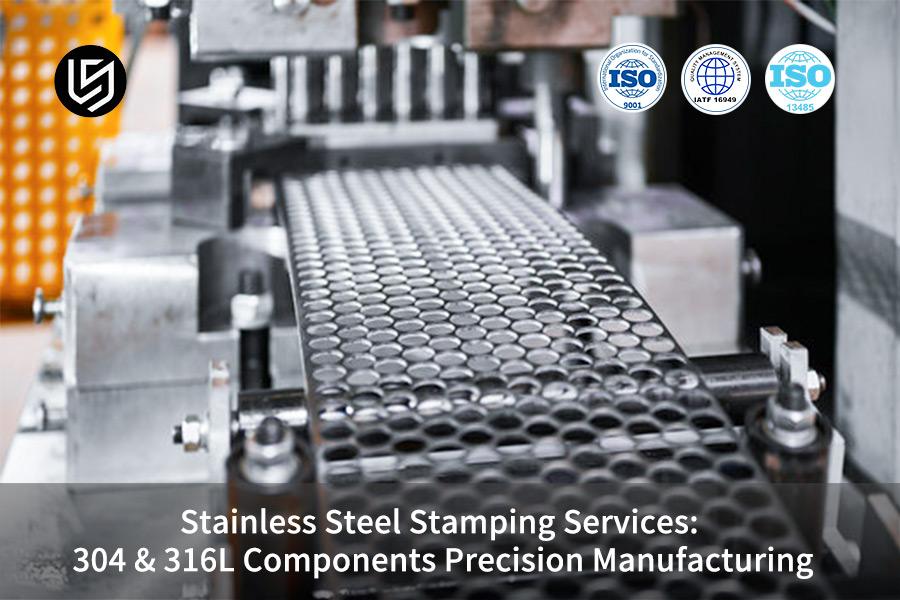
Stainless steel stamping services are sophisticated machining method that integrates FEA simulation and servo closed-loop control. It is capable of resolving the issues commonly encountered in stamping of 304/316L stainless steel for medical, aerospace, and high end food machinery like large springback, surface scratches, and high thinning rates. Springback tolerance can be stabilized within a range of 0.01-0.03mm, and a single die can withstand 500,000 cycles or more. This allows companies to boost their assembly yield to over 99.8%.
Hardening of the material during the processing of stainless steel stamping on a large scale may cause the product to deviate from the desired dimensions and result in a high percentage of defective items. A tailor-made professional process can deliver the triple optimization of accuracy, running time, and expenses, besides it will be capable of satisfying the mass production needs of high precision parts.
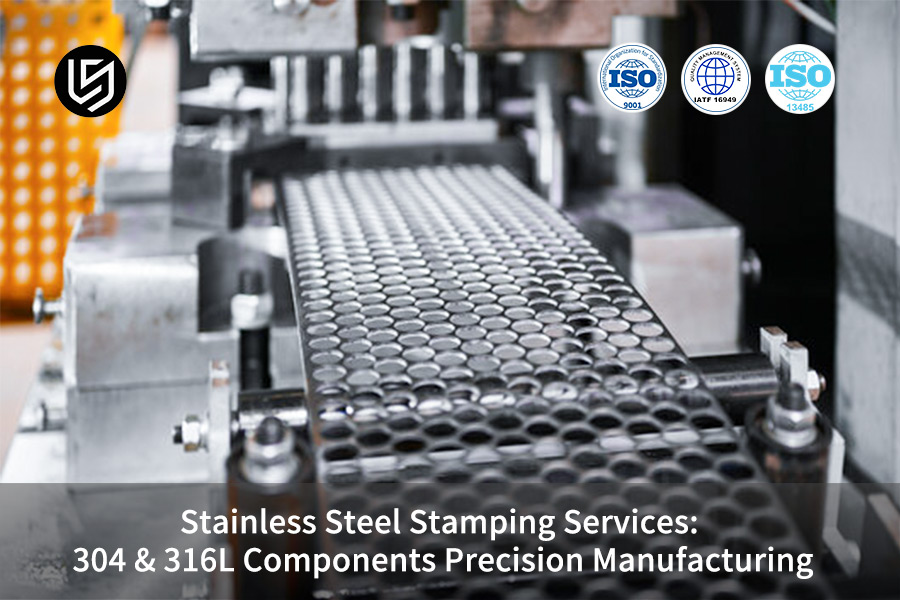
Overview of Core Technologies in 304/316L Precision Stainless Steel Stamping
This section summarizes the core technologies, parameters, and practical benefits of stainless steel stamping, providing a clear reference for material selection and process optimization.
| Core Processing Pain Points | Precise Solutions | Core Technical Parameters | Customer Benefits |
| Stamping Springback Dimensional Deviation | Over-bending compensation + servo closed-loop control. | Springback tolerance ±0.01-0.03mm. | Nearly zero assembly defect rate. |
| Workpiece Surface Roughness and Scratches | DC53 mold steel + CVD/TD coating treatment. | Mold life ≥500,000 cycles, Ra≤0.4μm. | No need for secondary polishing, improving product texture. |
| High Mass Production Costs | DFM optimization + multi-station progressive die. | Material utilization ≥75%, cost reduction 15%-25%. | Significantly reduces long-term procurement costs. |
| 316L Deep Drawing Cracking and Thinning | Controllable stretching coefficient + dynamic blank holder force adjustment. | Strength coefficient 0.5-0.55, thinning rate ≤15%. | Eliminates micro-cracks, improves finished product qualification rate. |
| Excessive Burrs on Part Edges | Precise blanking clearance control + precision post-processing. | Blanking clearance 6%-10% of plate thickness. | Avoids assembly short circuits and equipment scratches. |
Key Takeaways:
- Over-bending compensation and servo closed-loop control are the two main techniques used to confine spring-back tolerance in the range of 0.01-0.03mm when working with precision stamping of 304 and 316L stainless steel.
- By equipping the die with TD-coated or CVD-coated DC53 die steel, which also preserves the stainless steel surface against scratches and burrs, the die life can be extended to 500,000 cycles or even more.
- Besides enabling higher machining accuracy, early DFM design optimization combined with a multi-station progressive die method has also led to a 15%-25% decrease in total procurement costs.
Why Choose LS Manufacturing's Stainless Steel Stamping Service for Precision Components?
Our expert stainless steel stamping service replaces traditional manual trial and error with quantified processes, always reaching micron-level mass production standards and fully complying with IATF 16949 quality system specifications.
304 and 316L materials have a very high strain hardening capability, because of this, ordinary stamping processes cannot meet micron-level tolerance mass production requirements. Stainless steel processed with general-purpose molds have larger dimensional deviations than those with specialized molds, this way they are unsuitable for assembly standards of high-end medical and aerospace components. Besides, our processes are fully compliant with ISO 13857:2019 stamping safety specifications.
LS Manufacturing has created a data-driven, end-to-end quality control system, deeply engaged in the precision stamping field, and thoroughly understands stainless steel forming principles. We offer tailor-made exclusive processes for sheet thicknesses ranging from 0.05-3.0mm, strictly following ASTM A240/A240M-24 standards to achieve quantified control throughout the entire process.
What we do best is standardizing and stabilizing non-standard precision stamping, because of this completely resolving the prevalent problems of fluctuating supplier quality and unstable mass production yields in the industry.
To quickly verify the mass production feasibility of your parts, you can obtain a free, customized DFM manufacturability report, for a direct reference to the implementation results, you can view successful case studies in the high-end medical industry.

How Does FEA Simulation Calculate Springback for Custom Stainless Steel Stamping?
In order to control springback, one must exactly calculate the yield strength ratio and the strain hardening index of 304/316L through FEA. In fact, at the stage of mold design, an allowance of over-bending by 3-5 is made and then using a servo press the tolerance is fixed at 0.02mm at the bottom dead center, this way the problem of springback deviation in custom stainless steel stamping is solved right from the source. Instead of manual mold modification and trial and error, FEA simulation is capable of achieving precise mold opening and forming at one-time only.
Core Simulation Parameter Input Standards
Calibration of the mold parameter is at the center of simulation accuracy that only comes after proper basic parameter input, is key to achieving simulation results. To do professional metal stamping simulation calibration we most of the time, use two leading software programs, AutoForm and PAM-STAMP.
To get rid of calculation deviations due to generic parameters, we insert stainless steel-specific performance parameters. Based on our deep involvement in stamping manufacturing of 304 and 316L, we are committed to ensuring forming accuracy and bringing out qualified precision metal stamping components.
- Corrected the entry of 304 and 316L-specific anisotropy coefficients (R-value) and strain hardening exponents (N-value) to represent the material's genuine forming characteristics accurately.
- Entered exact sheet thickness data between 0.5 and 3.0 mm to reflect the stress and deformation features of workpieces of various specs.
- Brought in mass production stamping speed and pressure parameters to reflect real mass production scenarios.
Dynamic Springback Compensation Adjustment Logic
Stress release prediction allows for an accurate forecast of the stress release trend following work hardening. When integrated with the precise metal stamping springback tuning, this leads to a noteworthy increase in the metal forming success rate. Drawing from our hands-on experience with medical thin walled parts stamping, we have found that when the sheet thickness is increased by 0.5mm, the bending compensation should be raised by 0.4 at the same time. This was a parameter that our team alone has measured and optimized.
Put simply, this shows stainless steel sheets of varying thicknesses should not be given a compensation angle of the same magnitude, otherwise, the springback deviation will occur. This is the core technical aspect of high-precision metal stamping services.
LS Manufacturing dynamically adjusts the R-angle of the punch and die based on simulation data, completing the bending compensation design in one go. This keeps the springback tolerance of parts stably locked within ±0.01-0.03mm, completely eliminating assembly failure issues for precision parts.
How To Prevent Severe Galling In High Volume Stainless Stamping Operations?
Avoiding galling is only possible by using HRC 62 high hardness die steel together with TD and CVD physical coatings and extreme pressure anti-friction lubricants. Such a solution is well adapted for scenarios of high volume stainless stamping mass production, which is currently facing the problem of stainless steel's strong adhesion and the formation of nodules and galling.
Comparison of Mainstream Die Coating Performance
Optimizing coating friction is the first and most important step in determining the surface quality of the workpiece. A proper metal stamping surface protection plan is able to keep the workpiece's visual appearance accuracy even after a long time. Various coatings show big differences not only in their wear resistance and friction reduction capabilities but are also suitable for completely different mass production scenarios. Mass production of high-quality precision metal stamping components mainly depends on the stable quality of stainless steel stamping services.
| Coating Process | Surface Hardness (HV) | Coefficient of Friction | Tear Resistance | Suitable Mass Production Frequency |
| TD Thermal Diffusion Coating | ≥2500 | 0.12 | Extremely Strong | 15-35 times/minute |
| CrN Coating | 2200-2400 | 0.18 | Excellent | 10-30 times/minute |
| DLC Diamond-like Carbon Film | 2000-2100 | 0.15 | Good | 10-25 times/minute |
| Conventional Chrome Plating | 1000-1200 | 0.35 | Average | ≤15 times/minute |
Key Points for Mass Production Process Standard Control
Continuous stamping stability is a fundamental element for mass production. Properly optimizing metal stamping speed allows to balance production capacity and product quality. We have maintained a stable surface roughness of the parts around Ra 0.4μm through parameter control standardization. Inspired by the well-developed 304 316L stamping manufacturing processes, we have entirely tackled the issue of surface defects for mass production.
- Fixed stamping speed range: In mass production, the speed is strictly limited to 15-35 strokes/min to prevent material sticking which is caused by speed excessive.
- Optimization of mold cooling channel layout to continuously dissipate the high temperatures during stamping and because of this lowering the chance of mold-workpiece adhesion.
- Application of a specially formulated extreme pressure anti-friction lubricant to further minimize stamping friction resistance.
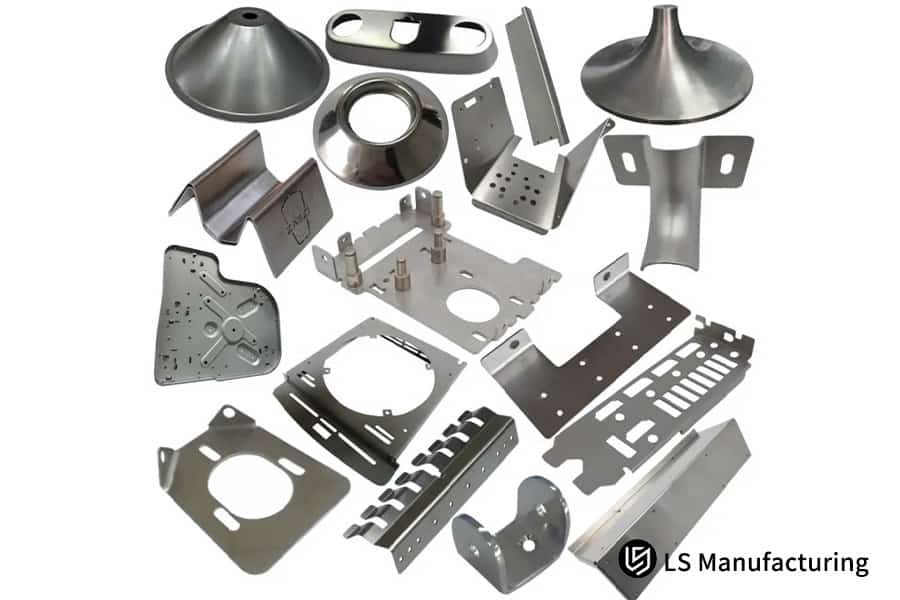
Figure 1: A display of various stainless steel stamped parts with precise shapes and holes.
Which Material Yields Better Results Between 304 Stamping Service And 316L Choices?
304 stainless steel offers excellent strength and is very cost-effective, while 316L, which includes molybdenum, is much more corrosion resistant but also experiences greater work hardening. The scenarios in which these materials are appropriate are so different that 304 remains the main material for 304 stamping service, which not only affects stamping difficulty but also determines the lifespan of the finished product.
Comparison of Core Mechanical Properties
Matching mechanical properties is a fundamental principle in material selection. Identifying the right metal stamping material can help in avoiding the possible problems in mass production. A very accurate comparison of data prevents clients from the risks of mass production due to wrong choices. For either standard custom stainless steel stamping or high-end precision custom processing, material selection is the first and the most critical step, which directly determines the end product quality and the stability of finished precision metal stamping components.
| Performance Parameters | 304 Stainless Steel | 316L Stainless Steel | Performance Differences and Their Impact |
| Tensile Strength | ≥515MPa | ≥485MPa | 304 has superior structural strength. |
| Elongation After Fracture | ≥40% | ≥40% | Both have similar tensile deformation capabilities. |
| Molybdenum Content | None | 2%-3% | 316L has significantly improved corrosion resistance. |
| Work Hardening Rate | Medium | High | 316L has greater difficulty in controlling stamping springback. |
| Welding Performance | Good | Excellent | 316L has no risk of subsequent carburization corrosion during welding. |
Scenario-Based Selection Guidance
Application scenario targeting supports clients with making cost-effective selection decisions that are also highly adaptable. A well-rounded metal stamping cost budget system can effectively keep the expenses of the project under control. Expert stainless steel stamping services accurately determine the appropriate metals based on the use cases, thereby tremendously lowering the challenge in mass production and cost of 316L precision stamping.
- 304 stamping service is selected for general industrial applications, food machinery, and ordinary electronic components because it gives a good balance between strength and cost-effectiveness resulting in lower procurement costs.
- 316L precision stamping is used for marine, medical implant, and environments of high chloride ion corrosion due to in reality it works with molybdenum to increase corrosion resistance and thereby, also the product lifetime.
What Factors Dictate Custom Stainless Steel Stamping Pricing And Quotation Structures?
Custom stainless steel stamping quotes depend heavily on how efficiently the material is used, the amortization of the mold, the optimization of the layout, and the running of secondary processes. All fees are transparent and can be easily traced, there are no hidden costs, so clients can precisely plan the budget for their mass production.
Mold Type Cost Break-Even Analysis
Calculating the die cost balance is a fundamental step towards controlling production costs at large. Planning the metal stamping process resistant to stress by scientific means can bring reducing the costs of the production process and at the same time maintaining the quality of the final product. The MOQ (minimum order quantity) for different types of molds may vary really, which in turn has a very strong effect on the overall procurement costs. That means, cost control is mainly important for high volume stainless stamping production projects and is a main principle of pricing for a high-quality precision metal stamping service.
| Mold Type | Mold Amortization Cost (USD) | MOQ | Material Utilization | Mass Production Efficiency |
| Single-Process Engineering Mold | 0.35-0.5 | 100-1000 pieces | 60%-68% | Low |
| Composite Mold | 0.15-0.25 | 1000-10000 pieces | 68%-72% | Medium |
| Multi-Station Progressive Mold | 0.05-0.12 | ≥10000 pieces | ≥75% | Extremely High |
Value-Added Service Cost Explanation
Post-processing standardization leads to higher compliance in resulting product quality, while close control of metal stamping wall thickness aids in maintaining stable part dimensions. All charges related to secondary processing are not only standardized but also openly disclosed, a fundamental benefit that sets apart upscale 304/316L stamping manufacturing from ordinary processing.
- Surface passivation, ultrasonic cleaning and precision deburring: Pricing per batch is fixed, no additional cost.
- Material traceability, full-size inspection and salt spray test: These are standard procedures for premium orders and are not individually charged.
For accurate mass production quotes, upload your drawings to customize a quote, for advance planning of mass production costs, download the cost accounting white paper for free.
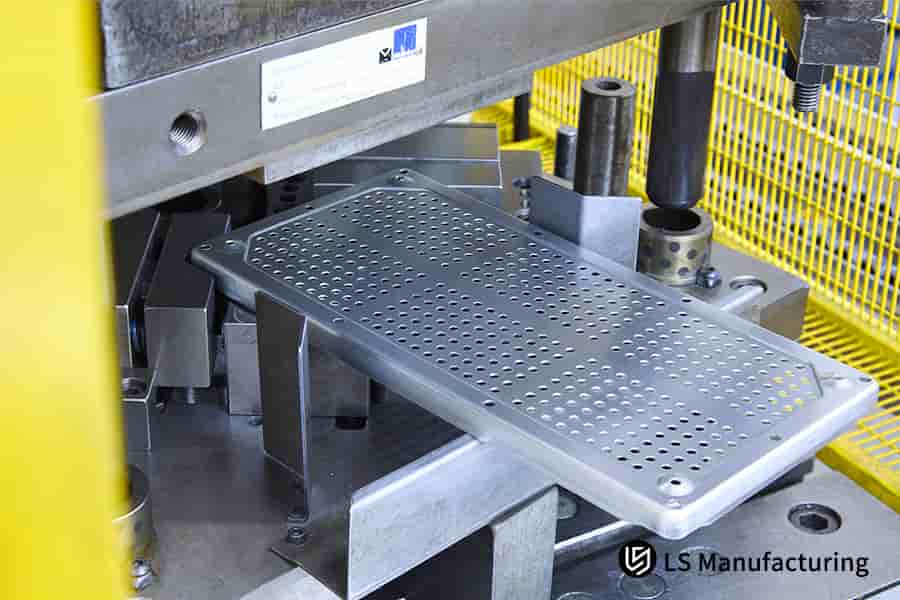
Figure 2: A stamping press over a perforated steel sheet on a custom die in a factory.
How Does a Precision Metal Stamping Service Achieve Flawless 316L Deep Drawing?
The deep drawing of 316L involves the control of the elongation factor in the narrow safe range of 0.5-0.55, together with the use of dynamic servo blank holder force and specialized drawing oil, leading to an effective resolution of the problem of cracks. It is one of the most critical processes in high-end precision metal stamping service, fully through the quality of deep-drawn products.
Multi-pass Stress Relief Process
Stress gradient adjustment is a method that works through adjusting material stresses in a way to lower the load during single drawing. Together with the use of a professional metal stamping defect inspection, it is possible to prevent forming defects proactively.
By such a process, a single high strength drawing can be divided into several lightweight drawings, allowing a gradual release of material's internal stress and avoiding cracks that are due to excessive instantaneous stress. This method is most commonly used for the mass production of 316L precision stamping parts and can be tailored for various deep drawing needs for custom stainless steel stamping.
- With the help of 2-3 passes of staged stretching, gradual shaping is achieved thereby avoiding stress concentration from a single stretching.
- 1050℃-1100℃ solution annealing is used to clear work hardening completely and is interspersed with the stretched passes.
- Directly after annealing is lead to rapid cooling which restores the original ductility of the raw material.
Precise Control of Die and Pressure
Die gap matching directly decides how uniform the wall thickness of deep drawn products will be. Ensuring consistent metal stamping batch positioning really helps with the uniformity of different batches. The group keenly controls the wall thickness reduction rate at 15% by highly accurate polishing of die radius corners and gap matching at a micron-level.
At the same time, changing the servo blank holder force dynamically, which is a response to the wrinkling and tearing problems caused by uneven blank holder pressure, guarantees stable production of high-quality metal stamping components for all sorts of high end deep drawing mass production scenarios.
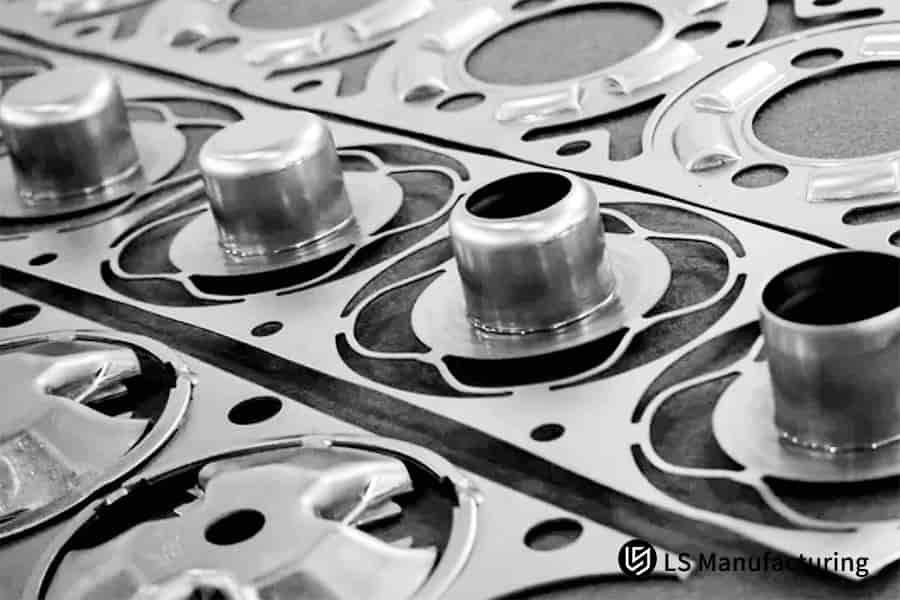
Figure 3: Deep-drawn 316L stainless steel parts with smooth, metallic finishes and intricate shapes.
What Strict Inspection Criteria Validate Medical Grade 316L Precision Stamping Parts?
Medical-grade 316L precision stamping inspection relies on CMM dimensional verification, NDT non-destructive testing, and passivation residual oil detection to reach zero defects in parts. It is compatible with high-end international medical standards and responds to the core requirements for compliant mass production of medical components.
Dimensional and Defect Detection System
Full dimension rechecking makes it possible to achieve 100% full quality assurance of mass-produced parts. A comprehensive metal stamping malfunction detection system greatly lowers the defect rate. It acts as the base service standard for high-end stainless steel stamping services, ensuring the factory quality of lots of precision metal stamping components in a comprehensive manner.
- Employs CMM (Coordinate Measuring Machine) equipment for whole-dimensional validation, checking that all tolerances are in the approved range.
- Performs NDT (Non-Destructive Testing) method to locate tiny cracks and internal defects in the materials.
- Has AOI (Automated Optical Inspection) machines on hand for batch-sorting of parts that have surface scratches and other defects.
Corrosion Resistance and Compliance Testing Standards
Corrosion resistance check assures the components are compatible with sterile medical environment.Standard metal stamping edge finishing allows better assembly fit.All final products are tested per the ASTM B117 salt spray standard and show a rust-free operation time of 96-240 hours. Formal testing of passivation and residual oil, together with a 100% Material Quality Assurance (MTR) traceability system, are key quality control steps to a genuine 304/316L stamping manufacturing.
Send your specifications to get a compliance report for specialized medical grade testing services, to acquire the entire, detailed quality control procedure, please see the Medical Industry Testing Standards Handbook, it's free.
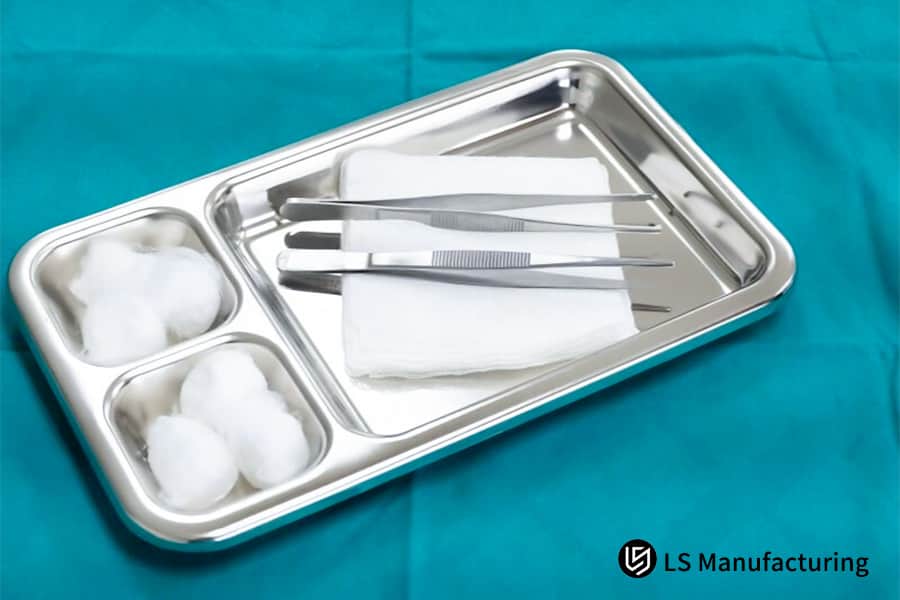
Figure 4: Stainless steel tweezers and medical supplies arranged on a green sterile cloth or tray.
Why Choose Progressive Dies Over Transfer Tools For High Volume Stainless Stamping?
Progressive stamping dies are capable of performing multi-station continuous processing on a single press, and they can reach a mass production efficiency of 60-120 strokes/min. This not only ensures that different batches are dimensionally consistent, but also cuts down the labor cost. Then again, they are well suited for mass production of high-volume stainless stamping and retain all the advantages of traditional dies and more.
High-Precision Positioning Mass Production Advantages
Accurate pitch positioning is the fundamental condition for dimensional consistency in batch manufacturing. It is possible for metal stamping batch production with a high level of precision to have micron-level batch replication. Progressive dies have precision guide pins, which provide a pitch positioning of 0.005mm, removing dimensional deviations in mass production, and producing a high level of uniformity in precision for tens of thousands of precision metal stamping parts. This represents a major hardware edge of professional precision metal stamping areas.
Loss and Safety Management Advantages
Automatic error detection cuts down losses and safety risks tremendously in mass production. Plus that, smart metal stamping process monitoring gives you the opportunity to have control over mass production at any time. Copper foils mass production of 304 316L stamping manufacturing are safeguarded, leading to a highly efficient reduction of the defect rate of customized stamping mass production.
- The machine is able to detect misfeed and material overlap through sensors to prevent production accidents in real time.
- The combination of different materials in a single handling process leads to a drastic reduction of material waste and better use of material.
- When the workstation is completely automated, the probability of errors and the expenses resulting from manual intervention are lowered.
If you want to find out if your mass production molds are fit for use, you may get a mass production process planning solution free of charge, for the calculation of the overall cost of your mass production, please get in touch with our engineers for an accurate quote.
How to Eliminate Edge Burrs in Custom Stainless Steel Stamping Shearing?
Caring exact control of the shearing gap on both sides of the mold within 6%-10% of the plate thickness, and use of sharp cutting edges and accurately after-processing, can thoroughly eliminate the problem of edge burrs in custom stainless steel stamping, this way preventing safety hazards such as assembly scratches and equipment short circuits.
Accurate Shearing Gap Calibration
Shear gap measurement is a big part that decides the likelihood of burr formation, accurate tuning of the metal stamping gap can effectively eliminate the production of defects at their roots. The company uses high-precision wire EDM (WEDM) made molds to guarantee consistent and stable blanking clearances on both sides, strictly following the sheet thickness ratio.
This reduces the chances of burr formation at its origin, preventing the shear fracture zones. This technique is ideal for 304 stamping service and various precision processing stainless steel situations, and it is capable of making the finished products comply with the high-end precision metal stamping component standards.
Integrated Deburring Post-Processing
Integration of surface finishing ensures that parts have zero-burr edges. Metal stamping post processing at a refined level will greatly improve the overall product quality. As a post-processing step, it is a must-have for stainless steel stamping at a very high-end level, which can especially increase the assembly compatibility of the products that are mass-produced.
- Primary Operating Conditions: Fine edge burrs can be quickly removed with vibratory grinding.
- Highly-Precise Operating Conditions: Electrochemical deburring is implemented, where the part remains undamaged by contact, so preserving its precision.
- Ultrasonic precision cleaning will finally and thoroughly eliminate residual debris even from edges and corners.
LS Manufacturing Custom 316L Precision Stamping for Medical Endoscope Components: A Success Story
This medical real-world mass production example is a proof of the power of top-level 316L precision stamping and also gives a great solution to the industry's unsolved problems like thin-wall hardening, too much springback tolerance, and the emergence of micro-cracks. So, it is a demonstration of our custom stainless steel stamping mass production capabilities.
Client Challenges
The client is a German medical device manufacturer ranked among the top five worldwide. Their main R&D product, stainless steel 316L precision housing for endoscopes, is of only 0.4mm wall thickness and has been suffering from quality issues of their original European and American suppliers.
Secondly, due to the very strong work hardening nature of 316L material, micro-tears often occur when the parts are stretched and formed, and with springback tolerances going beyond 0.07mm, far exceeding the client's drawing requirement of 0.015mm. The consequences of this problem are that the customer's overall assembly defect rate has reached 12.5%, which has severely impacted the launch of new products and the company suffered quite a few losses also due to the downtime and rework.
LS Manufacturing Solution:
- As soon as they came into contact with the problem, LS Manufacturing technical team rolled out a series of DFM design optimization measures at a rapid pace. We gave up the use of old-fashioned general-purpose molds and instead created a very precise and 14-station completely servo progressive die.
- The die is mainly made of imported DC53 steel, to which is added a special CVD-CrN ultra-pure coating, thereby surface roughening and adhesion problems on thin walled precision metal stamping components are completely eliminated.
- Our staff performed FEA rheological stress simulations three times, deciding at last on a specialized 3.8 bending relief angle that would accurately counteract springback deformation of the material.
- In the meantime, an ultra high pressure closed-loop extreme pressure lubrication system was installed so that the forming needs of thin walled parts could be satisfied. Besides forming, the next stage in the process is a fully automated ultrasonic citric acid passivation production line and 100% optical intelligent self-inspection that altogether allow complete quality control from the beginning to the end.
Results and Value
Subsequent to checking 50,000 production runs, the solution has invariably controlled the partspringback tolerance within 0.01mm, thinning rate has been lowered to 11%, cracks and burrs have been completely eradicated, and only assembly defect rates have been eliminated. Overall project cost has been reduced by 22%, delivery time has been greatly shortened, and at the same time, it fully meets the high volume stainless stamping mass production standards.
The project successfully implemented continuous cooperation with the long-term client who highly appreciates our manufacturing technology of professional 304 316L stamping manufacturing and capability of mass production delivery.
To replicate the same medical-grade precision stamping solution, you can submit part drawings to customize your exclusive process, to learn more about high-end mass production cases, you can view the complete case library for free.

FAQs
Q1: What lead time can one expect for custom stainless steel stamping toolings at LS Manufacturing?
The normal lead time for manufacturing an engineering die is 3-4 weeks, while multi-station progressive dies of a higher complexity level may take 5-6 weeks. The overall procedure comprises DFM optimization, FEA simulation, and several prototyping testing sessions, which together guarantee the die mass production stability and the finished product yield.
Q2: What method does LS Manufacturing employ to effectively manage the severe springback effect during 316L precision stamping?
Through FEA simulation, the deformation features of 316L material can be accurately determined, this way allowing 3-5 overbending compensation to be set aside at the forming station. The combination of this with a multi-stage locking process utilizing a fully servo press means that the material springback deformation can be precisely counteracted, thereby securing a stable control of the part precision tolerances.
Q3: Does your stainless steel stamping capabilities include the making of extra-thin components with a thickness below 0.2mm?
We furnish stainless steel stamping of every specification from 0.05-3.0mm. When it comes to ultra-thin parts below 0.2mm, we rely on micron level wire cutting to control the die gap which in turn, helps to effectively avoid warping and deformation issues while ensuring forming accuracy and appearance quality.
Q4: What kinds of mold surface treatment are your company implementing to prevent your production components from galling?
For mass production, we generally adopt TD thermal diffusion hardening or CVD professional coating processes, resulting in a mold hardness of HV2500 or even higher. By doing so, we are able to completely solve high-frequency defects in stainless steel stamping, such as cold welding, nodules, and surface roughening, which are the production defects that happen during high-speed mass production. This, in turn, guarantees the quality of the product's appearance.
Q5: Can you please tell me how LS Manufacturing is able to guarantee 100% material traceability for 304 and 316L stamping manufacturing?
To implement batch traceability control of raw materials using barcodes, we rely on an ERP system. Every batch of finished goods is issued a full MTR material quality certificate. This certificate contains sub-details of material chemical composition and mechanical properties and is the evidence for verification of full traceability and compliance.
Q6: What is your MOQ for the production of custom precision metal stamping?
Generally, we set the MOQ for mass production of progressive dies as 10,000 pieces. But, our company is also capable of instantly making products for customers who need R&D prototyping and small-batch trial production, and the support for customized processing of hundreds of pieces is totally in line with the production needs of entire project development, trial production, and mass production stages.
Q7: How do you manage to meet the very high cleaning standards of medical or food grade 304 stainless steel components?
We have a state-of-the-art, fully automatic, closed-loop pure water ultrasonic cleaning production line. This, together with our standardized passivation processes, can completely remove surface contaminations and residual oils from the parts, thereby fully complying with the strict cleanliness production standards of medical and food industries.
Q8: Is it possible to upload our custom 3D STEP drawings to LS Manufacturing for a quick DFM evaluation?
We allow you to upload various 3D drawing formats like STEP, IGS, and DXF. So you can upload your drawings to get accurate quotations. Once the order is confirmed, our skilled stamping engineers will offer a complimentary professional DFM manufacturability analysis report within 24 hours, enabling clients to rapidly realize their projects.
Summary
One cannot rely on experience alone when it comes to stamping 304/316L stainless steel. Simulation backed by data and a set of standards in the production can very effectively handle the typical problems of springback, roughening, and cracking in the stainless steel during stamping. Outsourcing professional stainless steel stamping can change the game in quality and more stable production and at the same time lead to cost reduction and higher efficiency of operation in the scenarios of high-end manufacturing while at the same time provide solutions to the core problems of the mass production process.
In case you face 304 and 316L stamping manufacturing process bottlenecks or need supplier replacement, we are also able to provide you with technical support to be exact tailored to your needs. Upload your CAD/3D drawings and get free DFM analysis and mass production price quotations within 24 hours, book a one-on-one technical consultation, and have your very own stamping solution tailored to your needs.
📞Tel: +86 185 6675 9667
📧Email: info@lsrpf.com
🌐Website: https://lsrpf.com/
Disclaimer
The contents of this page are for informational purposes only. LS Manufacturing services There are no representations or warranties, express or implied, as to the accuracy, completeness or validity of the information. It should not be inferred that a third-party supplier or manufacturer will provide performance parameters, geometric tolerances, specific design characteristics, material quality and type or workmanship through the LS Manufacturing network. It's the buyer's responsibility. Require parts quotation Identify specific requirements for these sections.Please contact us for more information.
LS Manufacturing Team
LS Manufacturing is an industry-leading company. Focus on custom manufacturing solutions. We have over 20 years of experience with over 5,000 customers, and we focus on high precision CNC machining, Sheet metal manufacturing, 3D printing, Injection molding. Metal stamping,and other one-stop manufacturing services.
Our factory is equipped with over 100 state-of-the-art 5-axis machining centers, ISO 9001:2015 certified. We provide fast, efficient and high-quality manufacturing solutions to customers in more than 150 countries around the world. Whether it is small volume production or large-scale customization, we can meet your needs with the fastest delivery within 24 hours. choose LS Manufacturing. This means selection efficiency, quality and professionalism.
To learn more, visit our website:www.lsrpf.com