English



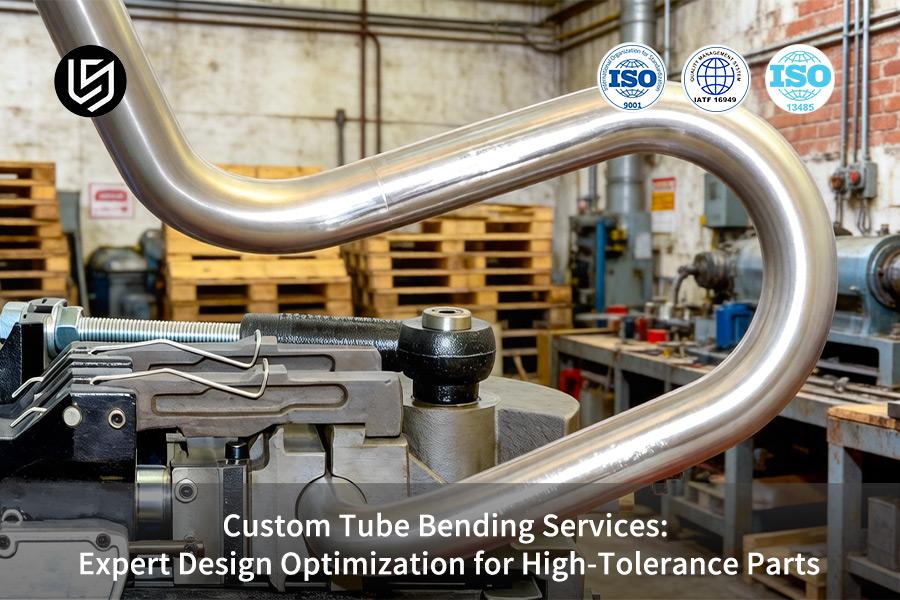
Custom tube bending services are faced with demanding quality requirements when making high-tolerance parts and where mere knowledge about fundamental tube bending design tips becomes inadequate. Although prototypes might pass, mass production encounters problems with deviation as much as ±0.1mm, resulting in bottlenecks in the assembly line. This is because the design process does not take into account the nonlinear stress characteristics of materials and their grain alignment, resulting in cracking.
The solution to this problem through the deterministic approach of LS Manufacturing consists of the integration of "multi-physics stress simulation" and "3D laser compensation." In particular, we explain why design optimization for tube bending will allow us to reach first-pass yield of up to 99.8% with consistent walls even when the R/D ratio is high.
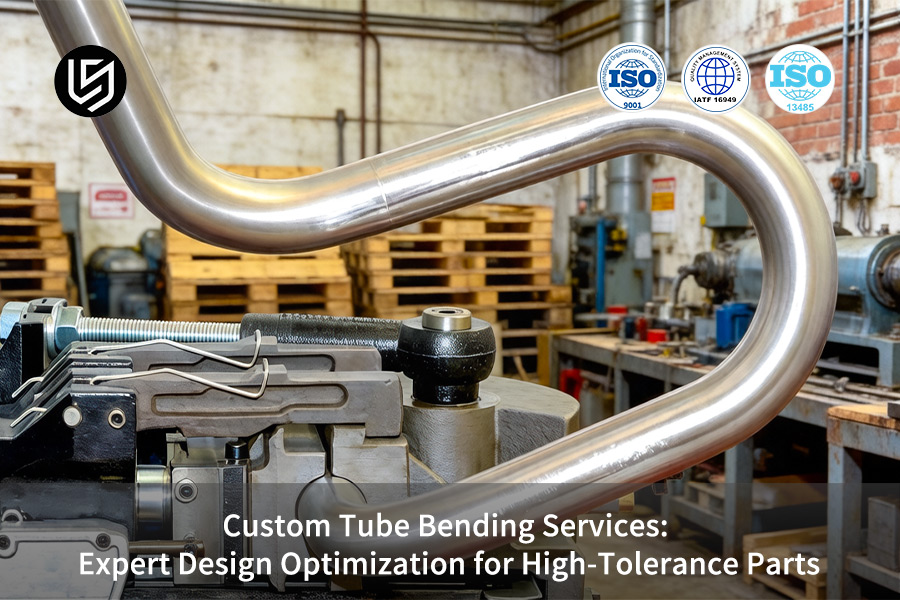
Custom Tube Bending Services: Design Optimization Quick-Reference
| Key Design Consideration | Engineering Solution for Precision |
| Minimum Bend Radius Determination | Minimum safe bend radius is calculated depending on metal bending material, thickness, and tooling, so that there are no kinks or collapses. |
| Bend Sequence & Plane Management | The bend sequence and change in planes are determined by us to ensure there is no tooling collision and that the entire tube shape remains intact. |
| Straight Length Requirements | Straight lengths between bends and end sections are considered in order to allow proper clamping, sealing, and interfaces for assembly purposes. |
| Our CAD Simulation & Prototyping | Full CAD simulation of our bend process produces a tube sample to check for any clearance issues before starting full production. |
| Tolerance Stack-up Analysis | The tolerances resulting from all the bends and straight lengths are reviewed to ensure that the final product matches print dimensions. |
| Result: First-Time Fit | Provides bent tubes that match up perfectly with installation points and other components without requiring modification. |
| Result: Optimized Flow & Function | Maintains flow properties inside the tube for gas/liquid tube bending applications, or space requirements when applicable. |
We provide solutions to the design and manufacturing complexities involved in metal bending. With our knowledge and understanding of bend sequencing, radius selection, and tolerance considerations, your tube designs will be not only producible but effective as well. Our services ensure precise, well-fitting and dependable parts, making your assembly process easier than ever before. No more time-consuming prototype development; instead, expect excellent quality right out of the manufacturing process.
Why Trust This Guide? Practical Experience From LS Manufacturing Experts
There are many guides on tube bending out there, but why should you choose this one specifically? Our team has direct experience working in a challenging environment where we deal with tough metals and tight tolerances needed for aerospace and medical components. Unlike academic experts who write on the subject matter, we have practical experience in it that could save you big trouble.
We have spent over fifteen years perfecting the techniques that will ensure your success: the best tools for specific materials, the fine-tuning of machines for the proper springback control, and the methods for ensuring consistency during mass production. Everything we say comes from practical experience and our own hard-won mistakes. We have developed techniques that are fully compliant with the best industry practices, taking into account the experience gained from Additive Manufacturing (AM) techniques used by such companies as 3D Systems.
What this means is that our insights have been tested under the toughest conditions possible, including the presence of coolant and metal chips and strict quality control procedures. We have already learned the hard way how to avoid the most common mistakes, and we want to teach you how to do things the right way.
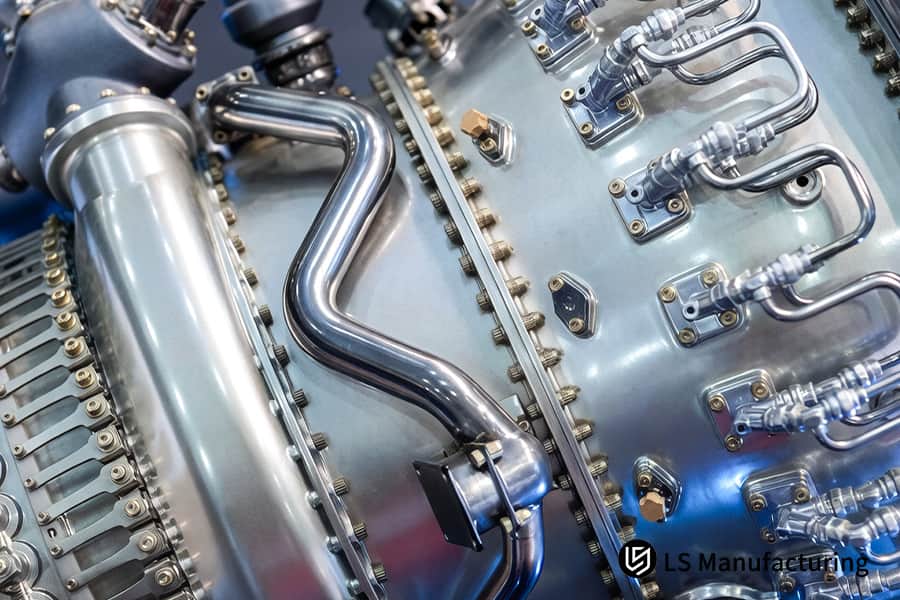
Figure 1: Forming a complex titanium alloy tube for aerospace engine manifolds with expert design optimization.
Why Should Engineers Prioritize Custom Tube Bending Services With Integrated DFM Evaluation?
Incorporating DFM analysis as part of the quoting process is a smart decision aimed at keeping TCO down. The benefits we offer by performing a DFM analysis at the outset include identification and removal of manufacturing restrictions resulting in tangible cost reductions and precise component manufacturing. Our unique process shifts the burden of cost to the design phase as follows:
Proactive Material & Tooling Optimization
The procedure we undertake first involves a thorough simulated analysis of manufacture for design optimization for tube bending. Through the assessment of bending operations, clamp positions, and the choice of mandrels to reduce stresses and material wastage, we create an effective groundwork for the tight-tolerance tube bending. Our preliminary simulations usually cut down material wastage by about 15%.
Real-Time Compensation for Material Variance
One key issue in complex tube bending in the quality of materials from different production lots. This problem has been solved in our machines using real-time force measurement that can spot the difference in hardness right away. The feedback control process will then make necessary adjustments to the parameters of the bend to ensure that each bend stays within ±0.2° of angular tolerance.
Ensuring Predictable Assembly Outcomes
The precise results obtained through deterministic processes allow us to produce assembly-ready parts. Since we ensure accurate angular and linear tolerances, there is no need for any fittings or manual rework during the assembly stage. It is important for advanced tube bending operations, and the result is a proven 30% decrease in assembly time.
Streamlined Prototyping to Production
The integrated nature of our DFM process allows us to create a smooth transition from the prototype to the production process. The optimized and tested bend program used during prototyping will serve as the proven recipe for volume production. This means that the level of quality achieved with the first article will be retained for all other items produced.
The above documentation highlights one of the key differences between what we offer and conventional tube bending services. Custom tube bending services incorporate simulation and process control loops. All technical details presented above—ranging from compensating for materials characteristics to Total Cost Optimization—create a determinate solution space where any uncertainty can be quantified.

How Can Precision Tube Bending Services Eliminate The Risk Of Wall Thinning In Aerospace Parts?
Thinning of walls along the outer radius of the bend poses severe threats to the pressure capability and fatigue resistance of the tube used in aircraft. While tube bending services offer uncertain performance, particularly with tight-radius bends, our patented boost pressure control technology takes control of the material flow through an axial assist mechanism to guarantee conformity with high standards and greater margin of safety:
Core Principle: Synchronized Axial Assist
- Challenge: Spontaneous stretching on the outer part of the bend during tight-radius tube bending.
- Our Method: Coordination of axial boost pressure applied by the tube pusher with the rotational speed of the bend die.
- Outcome: Application of predetermined compression force to overcome tensile stress and avoid thinning.
Technical Implementation & Calibration
- Process Control: Servo-hydraulic control of tube pusher force in real-time depending on angle of bend and material properties.
- Material-Specific Profiles: Establishing distinct pressure profiles for specific material (e.g., titanium tubes and stainless-steel tubes).
- Validation: Process monitoring ensures that force application corresponds with expected material flow.
Quantifiable Results in Extreme Conditions
- Test Case: Bending tubes to produce high-strength tube bending at a highly aggressive bend radius of R=1.5D.
- Data Point: Our precision tube bending services consistently achieve a wall thinning rate of ~9.2%, well within the 8-12% aerospace window.
- Benefit: We create a safety margin, meaning that components will be able to survive higher pressure pulses without breaking.
Integration into Quality Assurance
- Predictable Outcomes: The technique turns the variation of wall thickness into a controllable parameter.
- For Critical Applications: The controllable parameters are mandatory in aerospace tube bending, as well as in all other types of high-pressure tube bending.
- Documentation: With each order, clients receive a document certifying wall thinning in accordance with the simulated model.
In the following, you will find the information about the actual process that sets apart our custom metal bending services. The solution to this important problem of material science allows us to transform a key potential threat into a controllable result. This level of control represents the core of our business – we offer you not only the part but also its performance parameter.
Which Parameters Define Expert Tube Bending Design For Complex Medical Device Frames?
Frame parts for medical devices require strict standards of surface perfection and accuracy, since even minute defects could significantly influence the device's functioning. This paper describes special techniques used for high tolerance tube bending necessary for satisfying these demands. A technique is described below that guarantees perfect surface finishing and accurate geometry of space forms:
| Parameter Category | Implementation & Outcome |
| Surface Finish Integrity | Implementing proprietary polyurethane mandrels and a self-lubricating system to avoid any tool marks and scratches while maintaining original surface finish roughness (Ra ≤ 0.4μm). |
| Spatial Geometry Assurance | Applying expert tube bending design principles in coding that prevent any interference in multi-bend parts, thereby making sure that all features remain within the stipulated 3D envelope. |
| Dimensional Validation | Use of automatic CMM contour scanning process, which compares each component with its digital twin and ensures positional accuracy tolerance of ±0.15mm. |
| Process for Complex Frames | Our custom tube bending services for medical-grade tube bending integrate these parameters into a single, validated workflow from digital simulation to finished part. |
The result is a standard procedure for complex tube bending that requires high standards of biocompatibility and precision. We address our clients' problems in terms of getting parts with sterile surface finish and first-pass assembly fits right out of the box, and we do it using precision CNC tube bending technology.
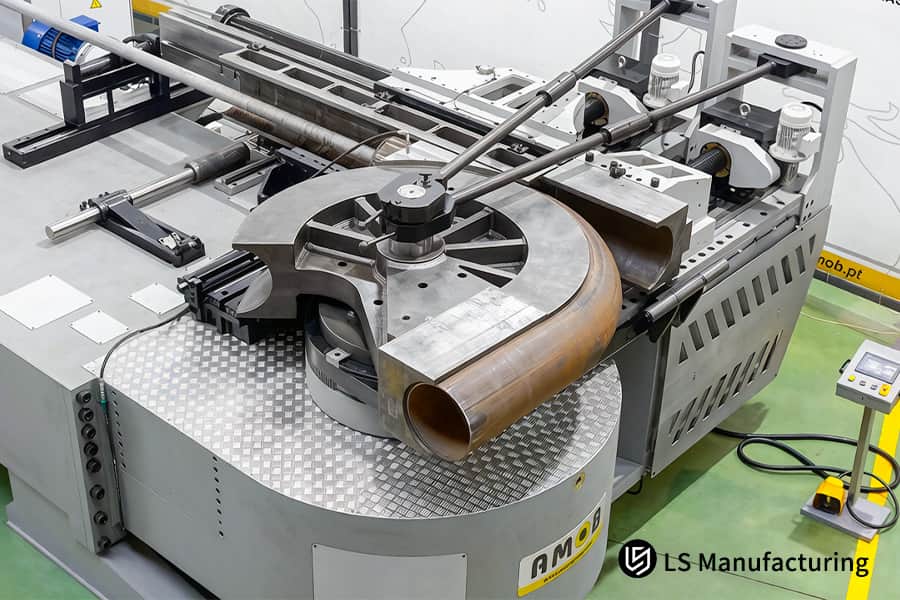
Figure 2: A CNC mandrel bender precisely curves stainless steel tubing for heavy machinery hydraulic lines.
Why Is High Tolerance Metal Bending The Key To Long Term Reliability In High Pressure Systems?
Reliability in high-pressure systems involves more than proper fit. Ovality is an example of dimensional deviation, which causes turbulences and stress raisers responsible for fatigue crack initiation through repeated stresses. Proper design must therefore use manufacturing processes that emphasize good material condition and exact geometry beginning with the first bend:
Controlling Geometry to Mitigate Fatigue
The primary focus is on maintaining the tube's circular cross-section. We implement a high tolerance metal bending process that actively controls and corrects for ovality during forming, ensuring it remains below 5%. This precise geometry minimizes turbulent flow and prevents the localized stress risers that are the primary cause of premature fatigue failure in hydraulic and pneumatic lines.
Preserving Material Integrity in Exotic Alloys
For difficult metals such as titanium and Hastelloy, conventional bending techniques can result in micro-fractures. The remedy for this is our precision metal bending technique with thermal aid. The heat applied in the process lowers the yield strength, hence enabling deformity without altering the crystal structure, preventing microscopic fractures that will cause fatigue cracks in the future.
Validating Performance Through Rigorous Testing
Performance testing is the best way to prove a system's worth. Our techniques are proven through rigorous pressure cycle testing. In important high-pressure tube bending processes, we have tested the components with 10,000 cycles without failure. This proves the reliability built into each piece, transcending just the printed specifications.
A Holistic Approach to System Longevity
Our custom metal bending services combine all these approaches into one coherent strategy. Each bend is not just a single step, but an essential part of creating lasting durability for the whole system. Every decision about material choice and pre-bend evaluation through post-bend verification is made with the aim of maximizing longevity and safeguarding the reputation of the brand of the ultimate user.
The following text sets out our approach to engineering systems for durability. The solution to the core problem of converting strong metals into durable parts lies in a deep understanding of the interaction between geometry, materials, and process controls. It is precisely our proficiency in tight-tolerance tube bending that allows the performance of a fluid system to be determined by its design rather than its manufacture.
How Does LS Manufacturing Manage Springback Consistency During High Tolerance Tube Bending Orders?
Dimensional inconsistencies caused by inconsistent springback are responsible for assembly and performance problems in high-production runs. The sole approach of compensating for this problem through constant overbend angle is not enough because of fluctuations in yield strength of materials used and environmental conditions. The process of LS Manufacturing makes it possible to convert the springback into a predictable parameter, which helps maintain consistency throughout mass production from piece number one to thousandth:
Core System: Real-Time SPC & Closed-Loop Feedback
- Challenge: Variations in yield strength between batches and within single coil.
- Our Method: Continuous control of material bending force in real time and calculation of the exact yield strength of each tube section.
- Outcome: The feedback loop system provides necessary data to the CNC controller for automatic correction of the overbend angle and elimination of its cause.
Proactive Design Phase Integration
- Foundational Strategy: Management of the springback phenomenon starts at the digital level. Our design optimization for tube bending uses FE analysis for each material.
- Benefit: The result of this procedure gives us the possibility to determine an optimal tooling method and machine parameters from the start.
Dynamic Compensation for Environmental Factors
- Real-World Variable: Ambient temperature changes causing variations in material elasticity (modulus of elasticity).
- Our Process: Our solution actively adjusts key parameters to account for temperature drift, a very important variable when producing precision tube bending services in uncontrolled climates and long manufacturing runs.
Quantifiable Outcome in High-Volume Production
- Result: The proposed process achieves determinism. In 1,000 consecutive parts produced, the first and the last parts have statistically identical dimensions.
- Data Point: The Cpk metric of critical bends is always >1.67 in all parts, ensuring a measurable “quality moat” for OEM clients.
This flow describes a closed loop, data-driven manufacturing process. The inconsistency of the springback problem is solved through active measurement of the material characteristics and environment followed by corrective adjustments in real time to the machines. It is the degree of control exercised during complex tube bending and tight-radius tube bending that makes the high tolerance tube bending.
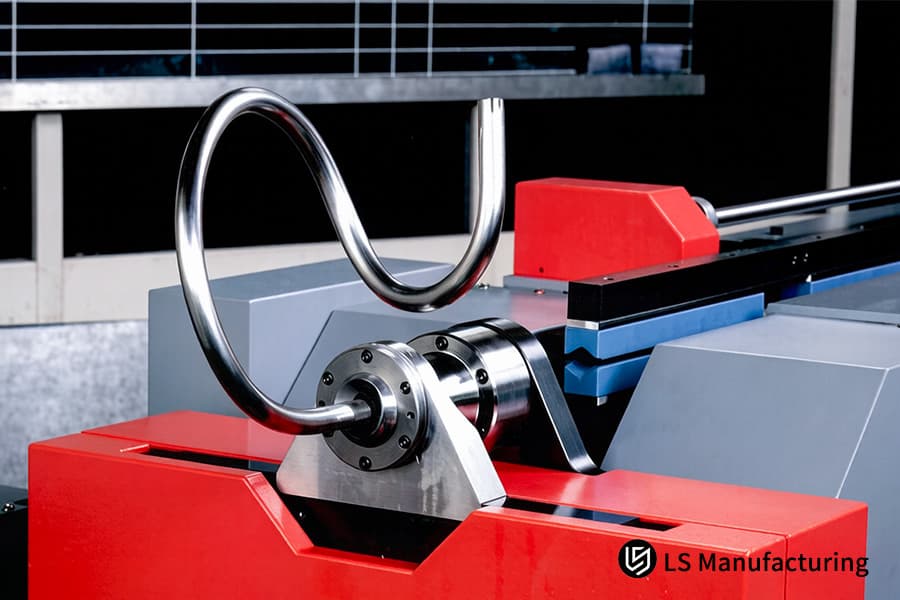
Figure 3: Bending a 6061 aluminum tube into a U shape for aerospace or lightweight vehicle chassis fabrication.
LS Manufacturing — Optimization Case Study Of Precision Tube Bending For Medical-Grade 316L Stainless Steel Surgical Robot Support Arms
A global surgical robot company encountered major issues regarding the assembly and sterile process of their multi-jointed surgical robot arm support structures. Custom tube bending services have been unable to fulfill the requirements for repeatable high precision and an impeccable internal surface condition. In this case study, it is explained how LS Manufacturing's engineering solution was successful due to:
Client Challenge
A bend angle tolerance of ±0.5° was required by the client for the supports of the joints, made using 316L stainless steel. This was because springback was not consistent, producing angles within ±1.5° of tolerance. In addition, internal wrinkling within the wall made cleaning impossible, hence risking its sterility. The initial first-article acceptance rate was a mere 65%, causing significant assembly delays and jeopardizing the product launch timeline for this tube bending components.
LS Manufacturing Solution
Our intervention began with a deep design optimization for tube bending audit. We introduced our unique hydraulic mandrel bending system for optimal inner support and used a smart elastic compensation algorithm of ours. But most importantly, we used the vacuum stress relief heat treatment method after the bending phase. In addition, we have performed three rounds of multi-physics forming simulations before production and predicted springback with an unprecedented 3.5% deviation from the actual result, leading to our precision-first bends procedure.
Results and Value
Final components achieved a bend angle tolerance of ±0.2°, exceeding specification. The internal surface was free of visible wrinkles, ensuring full cleanability. The first-article acceptance rate reached 100%. For the client, this reliable high-volume production translated to a 4-day reduction per unit in final assembly time and the consolidation of their entire metal structural component supply chain with LS Manufacturing, based on this demonstrated custom tube bending process innovation and executional certainty.
In this scenario, an expensive manufacturing process bottleneck has been transformed into a competitive advantage through engineering precision. LS Manufacturing surpasses basic manufacturing capabilities by utilizing process simulation and unique tooling to provide more than parts. It offers guaranteed reliability and ready-to-integrate assemblies in the most challenging high tolerance tube bending applications in the medical device industry.
Struggling with ±1.5° bend variation? Let's engineer a solution guaranteed to hold ±0.2°.

How Can Custom Metal Bending Services Reduce The Total Assembly Cost For Electronics Enclosures?
Standard processes for making electronics enclosures involve welding individual stamped pieces, which adds costs, complications, and variable quality control factors. This report highlights the economics behind "bending over welding" and shows how custom metal bending services streamline components. The objective is to produce excellent flatness and aesthetics, while minimizing the total cost per unit of production:
| Aspect | Traditional Welded Assembly vs LS Manufacturing's Integrated Bending Solution |
| Process & Part Count | Multi-part construction, involving 4 welds, versus monolithic structure, manufactured via complex metal bending. |
| Primary Cost Driver | Expensive labor costs associated with the fixture, welding, and grinding operations versus lower direct labor costs due to fast forming process. |
| Technical Outcome | Distortion from heat-affected zone (HAZ) leading to inconsistent flatness versus absence of HAZ with guaranteed flatness within 0.1mm/m ensured via high tolerance metal bending. |
| Quantifiable Benefit | Increased individual part cost and inconsistency in quality versus 22% decrease in part cost and higher aesthetic quality. |
From this analysis, we see that there is a way of lowering costs through the proper design of manufacturability. Assembly labor issues, weld warping issues, and quality consistency can be resolved by designing with one-piece parts. Utilizing our expert tube bending design principles and precision sheet metal bending is a competitive edge for OEMs looking to lower structural parts manufacturing costs.
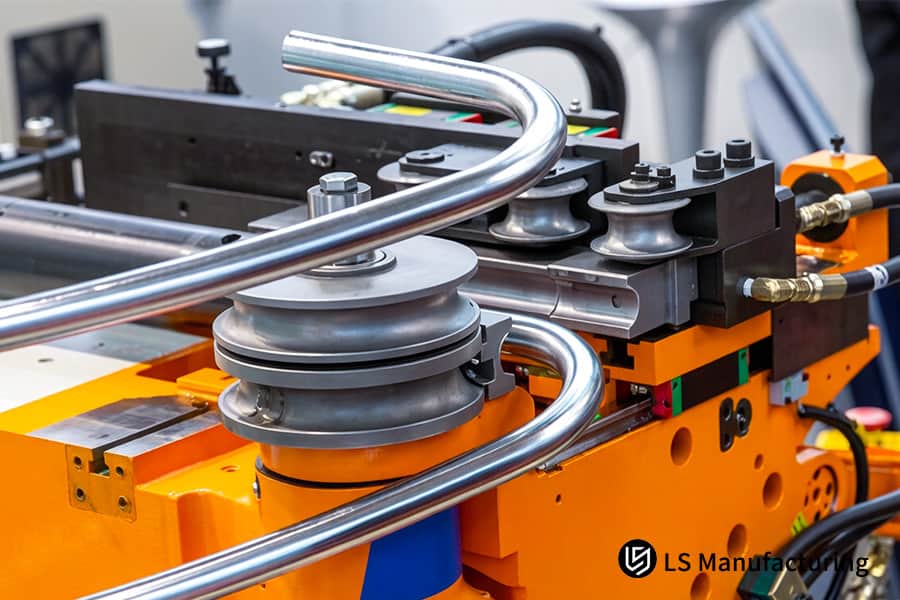
Figure 4: Bending a 304 stainless steel exhaust tube with a CNC machine for automotive tube bending services.
What Factors Should You Evaluate When Auditing A Precision Tube Bending Services Manufacturer?
Selecting the proper manufacturing partner to supply critical components requires more than just the apparent capabilities of a company but assessing its technological soundness and process transparency. A genuine engineering partner minimizes the potential risks involved in your project by being certain in its data rather than making guarantees. Below are a few of the key differences between an average business partner and an engineering partner:
Material Traceability and Certification
Begin by verifying material source control. A qualified partner employs spectroscopic analysis for positive material identification (PMI) upon receipt. This ensures alloy grade compliance, a fundamental requirement for mission-critical tube bending in regulated industries. It eliminates the risk of performance failure or certification issues downstream due to incorrect material.
Process Monitoring and Compliance
Audit the manufacturer’s process control framework. Look for an IATF 16949-aligned system with real-time Statistical Process Control (SPC) dashboards monitoring key parameters like bend angle and pressure. For high-volume tube bending, this live data stream is essential, demonstrating proactive control over variation rather than relying on final inspection to catch defects.
Quality Data Transparency and Delivery
Receive quality digital inspection reports and not just a certificate. Our partner provides 100% digital first-article reports with overlay data provided by CMM inspection over the 3D model. The degree of customization provided by our custom tube bending services is intended to provide engineers with an opportunity to review the dimensions involved and make the inspection certificate an engineering discussion tool.
Technical Expertise and Collaborative Engineering
Comment on the quality of their problem-solving method. True partners will do DFM reviews at the beginning of the project. The group needs to be able to explain how their physics dictate their tool choices in order to solve problems related to tube bending services, including what mandrel is selected based on the D/t ratio, showing that they base their problem solving methods on engineering, not intuition.
Our audit system refocuses procurement away from capabilities and towards control. Our suppliers create value for us by exposing your supply chain to our tube bending process, which includes alloy verification, SPC in real time, and digitized product inspections. The degree of control gained by precision tube bending services transforms procurement from procurement into engineering collaboration.
FAQs
1. What is the range of tube diameters that LS Manufacturing's precision tube bending services can handle?
CNC machines in our possession have the capability of accommodating tubes within the outer diameter range of Φ3mm to Φ150mm, which includes stainless steel, aluminum, titanium, and copper with up to 12mm thickness walls.
2. How do you ensure angle consistency for every single tube in large-volume orders?
LS Manufacturing has strict standards regarding the use of SPC. The closed-loop vision system we use enables us to alter the compensation parameters to ensure that our CPK ratio remains above 1.33 at all times.
3. Do you support rapid prototyping for small-batch orders?
Absolutely. There is a team assigned solely to rapid response who will give you the prototype after 3 to 5 days following your acceptance of the drawings.
4. What drawing formats do you require for complex 3D spatial bending projects?
Drawings are expected to be in STEP or IGS format, and the contour data for the three-dimensional form needs to be included in the drawings. In 24 hours from then on, our engineering team will conduct an interference check on the drawings and offer suggestions for optimizing DFM.
5. How does LS Manufacturing address the issue of wall thinning at the bend points?
The boost pressure is meticulously controlled by our engineering team to ensure that the material is guided towards the outer radius of the bend to prevent excessive thinning of the walls beyond the safety margin of 10%.
6. Do your precision tube bending services include end-forming processes (such as flaring or swaging)?
Yes, our company offers a full service, including cutting, bending, flaring, swaging, punching, and accurate TIG welding assembly.
7. How do you ensure that the geometric integrity of export orders remains undamaged during transit?
LS Manufacturing employs specially designed positioning trays and high impact resistance wrapping to preserve the original geometrical shape of all the components of the tubes sent to you.
8. How long does it typically take to receive a formal quotation that includes design optimization suggestions?
In a period between 4 and 24 hours after submitting your complete technical requirements, our cost analysis team will provide you with a quotation with an added process feasibility evaluation.
Summary
Precision tube bending is a complex systems challenge integrating materials science and digital compensation. At LS Manufacturing, we embed deep engineering expertise into every custom bending stage. We deliver exceptional parts and, through DFM optimization, tight tolerances, and a transparent data loop, build a risk-free, efficient supply chain foundation. Our micron-level scrutiny of tube walls ensures your equipment remains steadfast under extreme conditions.
Looking to solve production issues in precision projects? Contact LS Manufacturing for a free DFM audit and cost savings analysis. We will examine your 3D CAD to detect any springback threats and offer informed solutions. Upload your STEP files for a no-cost evaluation or book a meeting to give your product an edge in data-driven competition.
Achieve 100% yield for your high tolerance tube bending. Let us provide a free DFM analysis.
📞Tel: +86 185 6675 9667
📧Email: info@lsrpf.com
🌐Website: https://lsrpf.com/
Disclaimer
The contents of this page are for informational purposes only. LS Manufacturing services There are no representations or warranties, express or implied, as to the accuracy, completeness or validity of the information. It should not be inferred that a third-party supplier or manufacturer will provide performance parameters, geometric tolerances, specific design characteristics, material quality and type or workmanship through the LS Manufacturing network. It's the buyer's responsibility. Require parts quotation Identify specific requirements for these sections.Please contact us for more information.
LS Manufacturing Team
LS Manufacturing is an industry-leading company. Focus on custom manufacturing solutions. We have over 20 years of experience with over 5,000 customers, and we focus on high precision CNC machining, Sheet metal manufacturing, 3D printing, Injection molding. Metal stamping,and other one-stop manufacturing services.
Our factory is equipped with over 100 state-of-the-art 5-axis machining centers, ISO 9001:2015 certified. We provide fast, efficient and high-quality manufacturing solutions to customers in more than 150 countries around the world. Whether it is small volume production or large-scale customization, we can meet your needs with the fastest delivery within 24 hours. choose LS Manufacturing. This means selection efficiency, quality and professionalism.
To learn more, visit our website:www.lsrpf.com.