English



3D printing vs CNC machining service is a decisive choice in rapid prototyping and we here at LS Manufacturing address the main issue of delayed deliveries and structural tests by incorporating pre-quote DFM reviews, something that is not done in almost 80% of cases and is the cause of failure of 90° internal sharp corners, wall thickness of less than or equal to 0.5mm or surface finish Ra of less than or equal to 0.4 micron failing under thermal stress or tool interference during the process of 3D printing or CNC machining respectively.
Our solution delivers ±0.1mm 3D printed prototypes and ±0.005mm multi-axis CNC parts using a proprietary 8-dimension matrix that links geometry complexity to material removal rates and dynamic load performance, cutting your total prototype cost by up to 35%. Follow LS Manufacturing’s senior engineers through this matrix to ensure zero-defect delivery on your next project.
3D Printing VS CNC Machining: Prototype Process Selection Guide
| Decision Factor | 3D Printing (Additive) | CNC Machining (Subtractive) |
| Dimensional Tolerance | ±0.1mm to ±0.2mm; chance of 0.3% thermal deformation for parts bigger than 50mm. | ±0.005mm to ±0.01mm; coaxiality ≤0.02mm in 5-axis machining. |
| Mechanical Properties | Z-Axis strength is 20-35% less than X/Y axes; risk of delamination due to cyclic loading. | Isothermal; maintains properties of original metal/alloy (Al 6061-T6 tensile strength ≥310 MPa). |
| Surface Roughness | As-machined roughness Ra 3.2-6.3μm; finishable down to Ra 0.8μm. | Direct Ra 0.8μm; polishable to Ra 0.2μm mirror finish. |
| Geometric Complexity | Unrestricted; suitable for complex 3D printing geometries like internal lattices, channels, and organic shapes. | Limited by tool path routing capability; 90° internal angles require EDM. |
| Optimal Volume | 1-5 components; constant part cost with no mold/tooling required. | 20-500+ parts; per-part cost drops 30-50% vs 3D printing at scale. |
| Material Versatility | Limited to proprietary powders/resins; changes HDT and dielectric properties. | Engineering materials in full spectrum; material characteristics unchanged. |
Key Takeaways:
- Tolerance Drives Process Choice: If a design needs tolerances below ±0.01mm, then CNC machining is necessary. 3D printing can meet requirements if the tolerances are within ±0.1mm.
- Load-Bearing Parts Demand CNC: Any load-bearing prototype that will experience pressures of at least 10 MPa or rotational speeds above 3000 rpm requires CNC machining to ensure uniformity in material strength.
- Complexity is 3D Printing's Advantage: In cases where prototypes have features like holes, lattices, or topology optimized features, 3D printing becomes advantageous since it does not depend on tool access.
- Volume Determines Cost Curve: From 1-5 units, 3D printing becomes more economical and quicker compared to CNC. With 20-50 units or more, however, CNC provides 30-50% savings per unit in cost.
Why Trust This Guide? Practical Experience From LS Manufacturing Experts
There are many articles in which 3D printing and CNC machining are compared. The key difference between this article and others is that it was prepared by our manufacturing engineers who actually apply both techniques in their projects on an everyday basis. Our methodology of comparison is based on the standards established by ASTM International (ASTM) and thus allows us to rely on measurable data rather than marketing propaganda.
The clients we work with are in fields in which mistakes with processes can lead to losses of time and money: aerospace brackets with tolerances of ±0.02mm, medical prototypes made of biocompatible materials, and even production where price per piece is important. All of our validations of both techniques comply with international quality and management systems standards established by the International Organization for Standardization (ISO).
Our experience is built on many projects in which we have had to strike the right balance between fast turnaround and precision manufacturing. We know the exact conditions under which the part created by 3D printing can replace a milled part for performance evaluation, the surface roughness capabilities of the processes, and where the hidden costs of secondary operations lie. To benefit from our experience of making parts that work, avoid the waste of specifying excessive tolerances or underestimating lead times.
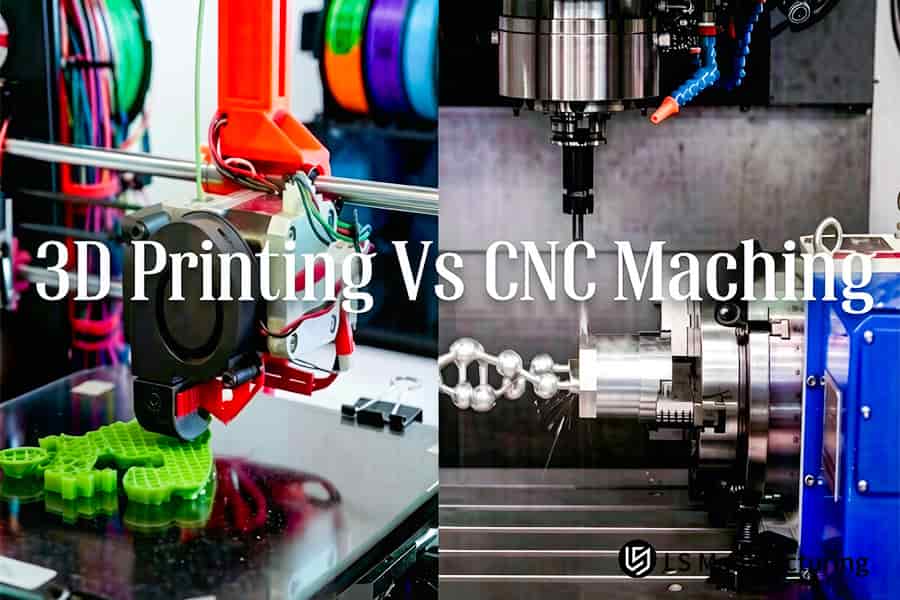
Figure 1: 3D printing vs CNC machining service creates an aluminum bracket and a resin prototype for aerospace testing.
Which Factors Determine The Prototype Dimensional Accuracy Between Custom 3D Printing And Precision CNC Machining Service?
For engineers evaluating prototype fabrication, dimensional accuracy determines whether a part passes assembly fit tests without costly rework. This analysis directly compares achievable tolerance limits between custom 3D printing and precision CNC machining service using quantifiable data—including insights from industrial SLA 3D printing—to help you assess interference risks and select the optimal process.
| Parameter | Precision CNC Machining Service (Haas/Mazak 5-axis) | Custom 3D Printing (Industrial SLA/SLS) |
| Achievable Linear Tolerance | ±0.005mm to ±0.01mm on Aluminum 6061-T6 & Stainless Steel 304 | ±0.1mm to ±0.2mm because of shrinkage and layers |
| Geometric Tolerance (Coaxiality) | ≤0.02mm, compliant with aerospace bearings and hydraulic spools seal requirements | >0.05mm due to anisotropy, distortion because of layer-based 3D printing |
| Large-Part Stability (>50 mm) | Warpage negligible (under 0.01%) with rigid fixture | Usually ~0.3% warping and shrinkage because of thermal effect |
| Key Limitation | Limited tool access to deep internal cavities | Cumulative error because of post-processing shrinkage and layer adhesion for prototype 3D printing |
The comparison of CNC machining tolerances with those of additive manufacturing can lower the risk of failure during assembly by as much as 90%. You should choose a precision CNC machining service where micron-level precision is required, but go for 3D printing if the shape takes priority, although you will have to leave a clearance of 0.2-0.3mm. Using such an approach will save you time, efforts, and resources, since there will be no need to make assumptions or undergo multiple cycles.

How Do Mechanical Properties Under Dynamic Loading Vary Between Custom 3D Printing VS CNC Machining Service?
If the loading on your prototype consists of rotations, impacts, or high pressure, material anisotropy becomes a crucial problem. There is no similarity between their mechanical properties: the CNC machining manufacturer produces parts with the retained grain structure to achieve isotropic strength, whereas custom 3D printing forms interlayers which cannot withstand cyclical loading.
Eliminate Anisotropic Weakness in Load-Bearing Parts
Manufactured using CNC machining services from wrought stock provides a homogeneous strength profile (minimum 310 MPa for Aluminum 6061-T6). You can expect a constant level of yield regardless of the angle and force applied. In contrast, on-demand 3D printing offers a bonding capacity in the z-axis 20-35% less than that of the X-Y plane.
Secure Fatigue Resistance for High-Cycle Applications
The grain flow retained by machined metals will provide fatigue resistance up to 10 million rotations in rotating shafts. What does this mean for your part? It is guaranteed to last long under load. With high-precision 3D printing, microporosity between layers becomes stress concentrations and reduces fatigue endurance up to 40%.
Guarantee Test Data Integrity Under Pressure and Speed
Prototypes requiring pressures of ≥10 MPa or ≥3000 rpm require isotropic stiffness. The choice between 3D printing and CNC machining service is obvious – components made through machining will retain dimensional accuracy throughout dynamic load tests to accurately assess their properties. Even production-level 3D printing fails to provide isotropic characteristics at such loading, leading to misleading data and costly modifications.
By opting for CNC machining for prototypes that will be subjected to dynamic loads, one gets rid of any potential anisotropy, guarantees the durability of up to 10⁷ cycles, and provides reliable information on prototype performance under extreme conditions. Even functional 3D printing does not meet the requirements when it comes to isotropic performance of rotating components. For prototypes facing rotation, impact, or high pressure, specify CNC machining from wrought stock. To match your test data to production reality, discuss your loading conditions with our engineers for a process recommendation and a firm quote.
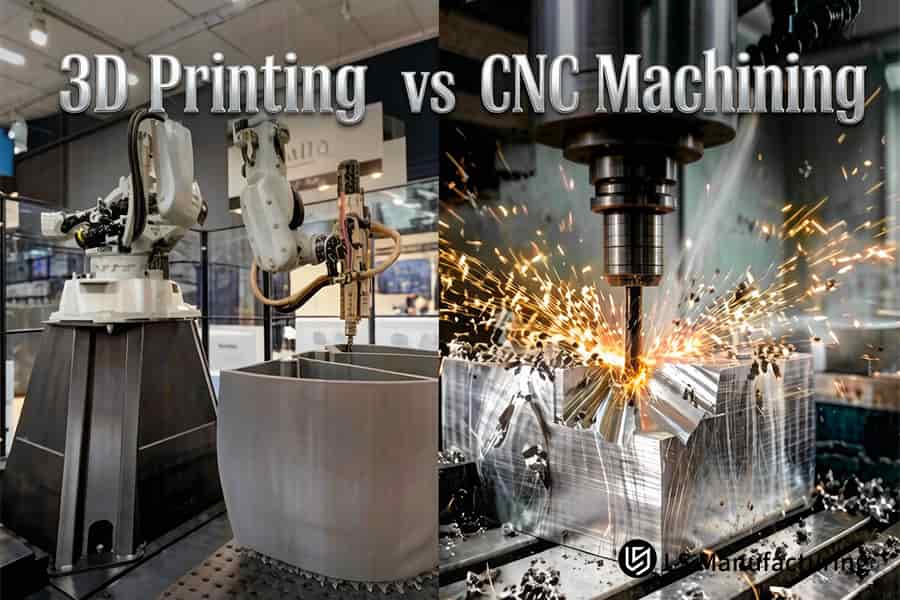
Figure 2: Custom prototyping service quote shows 3D printed and CNC machined ABS housings side by side.
Why Does Surface Roughness Constraint Dictate Your Selection Of A High Precision CNC Machining Service?
The roughness of surfaces controls friction, sealing, and appearance in functional prototypes. Industrial 3D printing gives an as-printed roughness of Ra 3.2-6.3 μm because of particle sizes (15-45 μm) used, whereas precision CNC machining service produces roughness down to Ra 0.8μm immediately and Ra 0.2 μm through grinding. This discrepancy will decide whether your prototype will meet medical, optical, or hydraulic requirements – a difficulty that only professional 3D printing can’t resolve. This is how machining deals with surface roughness requirements:
Feed Rate and Tool Geometry for Sub-Micron Finish
- Parameter optimization: Feed per revolution decreased to 0.03mm with extremely fine carbide inserts (R0.1mm tip radius).
- Client benefit: Ra≤0.8μm accomplished in one cut, which saves post-processing sanding and reduces production time by 25%.
Material-Specific Cutting Strategies
- Approach: Diamond turning for PMMA(Ra=0.05μm); CBN grinding for stainless steel 304.
- Outcome: Achieves ISO 1302 N5 finish without additional polishing. Commercial 3D printing can’t remove sub-surface porosity.
Single-Setup Elimination of Re-clamping Errors
- Process: Combining roughing and finishing on a 5-axis machine without the need to realign the workpiece.
- Value: The dimensional tolerance of ±0.005mm along with surface quality is achieved at once. Desktop 3D Printing would entail the process of removing supports and vapor smoothing, requiring 2–3 extra days.
Mirror-Grade Capability for Extreme Demands
- Technique: Progressive grinding with abrasive wheels of 400#, 800#, and 1200#, followed by lapping with diamond paste.
- Result: Mirror finish with Ra 0.2µm, suitable for use in hydraulic cylinders as well as optical reflectors. Affordable 3D Printing does not achieve less than Ra 1.6 µm even when chemically polished.
Choosing this method of machining surfaces allows you to circumvent the minimum surface quality limit inherent to custom 3D printing. With this technique, one can get a guaranteed finish with values between Ra 0.2–0.8μm, with no secondary finishing required. Even the most precision 3D printing service falls short in surface control compared to machining.
When Does Geometric Complexity Make Rapid Prototyping 3D Printing Cost More Competitive Than CNC Milling?
When your part has deep cavities, hollow lattices, or conformal cooling channels, subtractive CNC faces severe tool interference and high corner-cleaning costs. A hydraulic manifold with spiral cooling requires complex fixtures, multiple setups, and 48+ hours, with scrap rates exceeding 30%. In contrast, rapid prototyping 3D printing cost drops sharply: metal SLM consolidates 300+ components into one part in 24 hours with >95% material utilization. 3D printing unlocks savings for complex geometries.
| Critical Cost Driver | 5-Axis CNC Machining | Metal SLM 3D Printing |
| Tool accessibility for deep cavities & internal channels | Necessitates use of EDM or dedicated tooling; lots of inaccessible areas | Unrestricted; every conceivable internal passage can be formed additively (advanced 3D printing) |
| Fixture complexity & setup count | Need several dedicated fixtures; 3-5 setups on average | None; only single build plate required; no need for re-fixturing |
| Scrap rate due to cumulative tolerance | Greater than 30% for >15 internal passages | Less than 5%; all parts made in a single process |
| Lead time for hydraulic manifold with spiral cooling | Over 48 hours (manufacturing + fixture setup + quality control) | Overnight process (just print + minimal finishing) |
| Material utilization | 10%-30% (material chip removal) | >95% (near-net shape) |
Analyzing CNC machining vs 3D printing cost at this degree of complexity will highlight the advantage of additive manufacturing. For parts requiring more than 15 internal features or having conformal cooling requirements, Scalable 3D printing reduces cost up to 40-60% and delivery time from several weeks to just days. Evaluate your part’s feature count: if CNC needs more than three setups, switch to additive and request a custom prototyping service quote that reflects immediate cost and lead-time savings.
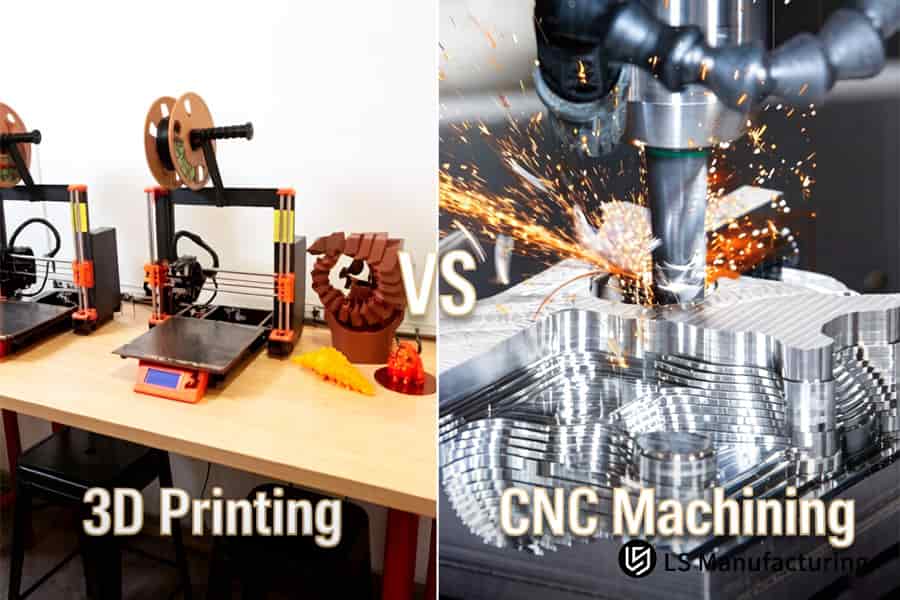
Figure 3: Precision 3D printing and CNC machining produce PEEK components for surgical instrument development.
How Can Pre-Production DFM Review Optimize Custom Prototyping Service Quote And Minimize Design Delivery Risks?
Approximately 90% of delays in developing prototypes and overspending occur due to unmachinable design characteristics. The DFM check by experienced engineers will spot potential problems in terms of corner radii, deep holes, and overhang angles. Such a preventive measure helps avoid 25% unnecessary expenses and saves 2 to 3 days. Orientation optimization in direct 3D printing is also improved by DFM optimization. The following examples illustrate how DFM optimization provides predictable results:
Internal Corner Radius Compliance
A minimum internal radius of R ≥ 1.5mm is required, otherwise the part should be redesigned or undergo EDM. This way you avoid unforeseen secondary processing steps that require $200-$500 and extra 1-2 days of work. You pay exactly what your quote says since only necessary manufacturing efforts will be made for your custom prototyping service quote. In the case of a manifold shape, it prevents 10% increase in manufacturing cost.
Deep-Hole Aspect Ratio Control
Ratios beyond 5:1 lead to drill breakage problems, and hence other approaches like gun drilling and different diameters have been suggested. This helps avoid the 15% to 20% wastage problem and ensures timely delivery. Custom 3D printing vs CNC machining service makes such holes obsolete, making it unnecessary to drill. The process also reduces inspection time for internal features.
Overhang Angle Optimization for Additive
Angles below 45 degrees require supports, and thus orientation of parts has been changed accordingly. This saves post-processing times up to 30% to 50% and ensures that the finish of the down face is maintained. Low-volume 3D printing also takes advantage of this guideline in terms of better quality prints. Orientation helps save 0.1mm in dimensions.
Wall Thickness Uniformity Enforcement
Thinner walls below 0.5mm pose a risk of deformation while machining or printing. For better protection, increase the thickness according to the material characteristics. The reduction of thin-wall scrap will be achieved up to 80%, particularly for housing or enclosure. Quick-turn 3D printing requires the design to have enough rigidity. By adding ribs or gussets, additional strength may be provided to the model without adding weight.
Integrating DFM optimization at the quoting stage gives you a custom prototyping service quote that reflects true costs — no surprises. Each issue gets actionable fixes, cutting project risk by 70% and ensuring first-article success. Whether you choose additive or subtractive, your design becomes production-ready, saving 25% in costs and 2–3 days. Request a DFM review with your next prototype for 100% delivery predictability.
What Volume Threshold Shifts The Decision From Precision 3D Printing Service To Batch CNC Manufacturing?
Quantity of goods produced influences the marginal cost curve. In terms of 1-5 pieces, precision 3D printing provides no tooling with constant unit cost, which is beneficial in terms of concepts testing. However, as soon as the quantity passes 20-500 pieces, the scenario changes: CNC technology takes the lead by providing fixtures, saving time of creating programs and reducing time per cycle to several minutes. More than 50 pieces makes total cost 40% lower than with additive manufacturing. Cost-effective 3D printing is cheaper only in case of small quantities. The following table illustrates how to use an inflection point:
Initial Validation Phase (1–5 Units)
- Zero tooling investment: Cost per piece is unaffected by quantity.
- Rapid iteration: Standard 3D printing is applied without the requirement for fixture purchases.
Small-Batch Production (20–500 Units)
- CNC scaling: Setup time decreases twice when using fixtures.
- Unit cost drop: Reduced by 30-50% compared to additive technology. Medium-volume 3D printing becomes uneconomical.
Volume Inflection Point (>50 Units)
- Cost crossover: At 50 parts, CNC machining vs. 3D printing cost difference is 40%.
- High OEE: Barcode system ensures planning and 85% of equipment utilization at lower costs. High-volume 3D printing is too costly.
Decision Framework
- Rule: Below 5 – additively; 20-500 and moderately complex – CNC; Above 500 – CNC is obligatory.
- Partner value: A 3D printing and CNC machining manufacturer provides objective recommendations on volume optimization.
Following this rule enables choosing the most economical solution for both prototype and mass production stages. Additive manufacturing is less expensive when it comes to small volume production, while CNC reduces cost by 40% and more at only 50 pieces produced. Partner that offers both types will ensure an easy transition between them without additional bidding on the project.
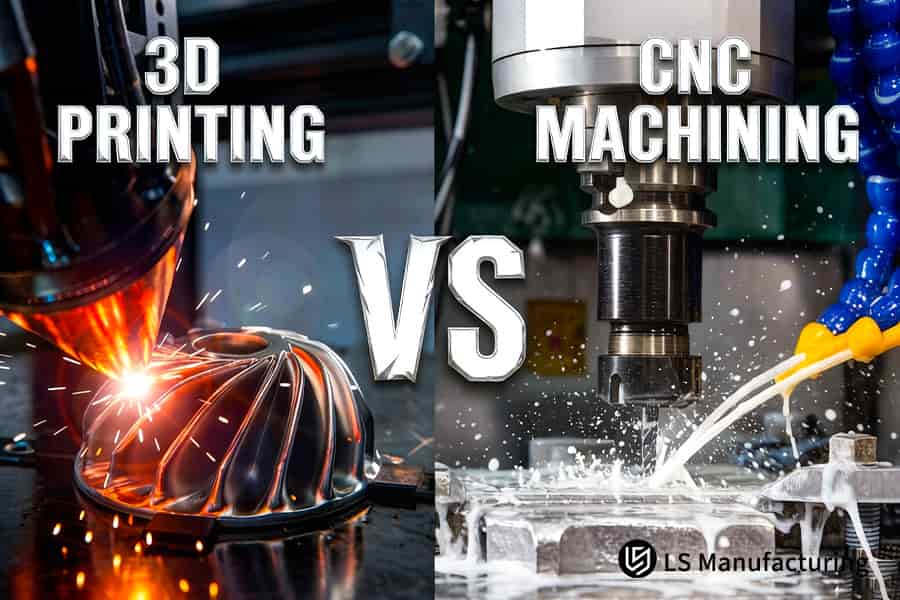
Figure 4: Rapid prototyping 3D printing cost is compared to CNC machining for PA12 and aluminum ducts.
Why Is Material Versatility Critical When Choosing A Qualified 3D Printing And CNC Machining Manufacturer?
Practical tests require prototyping with exactly the same physical qualities as the eventual part will have. The diversity of materials permits testing under conditions such as high vacuum, 200°C temperature, or corrosion. Even though custom 3D printing increases material options, variations in powders influence HDT and dielectric constant. Precision CNC machining service is performed from actual wrought stock with all original material characteristics preserved. While medical-grade 3D printing is suitable for anatomical prototypes, actual material is necessary for testing purposes.
Preserve Original Material Properties for Accurate Validation
Parts machined from guaranteed bar stock materials (PEEK, Ti-6Al-4V, 316L) guarantee mechanical parameters stated in public literature. There is no change in physical properties of your parts due to additives used in specialized filaments. Machining allows PEEK to keep HDT ≥240°C at temperatures up to 200°C. Reinforced grades have a lower threshold by 15-25°С, and engineering-grade 3D printing can't provide such thermal stability.
Avoid Hidden Property Deviations in Additive Materials
Some specialized filaments (PA12-CF, cobalt-chrome) include additives that affect thermal or electrical characteristics. It leads to failed tests in RF enclosures or heat exchangers. Check your material table in order to be aware of situations when CNC machining of virgin material is required. Although reliable 3D printing may offer similar specifications, don’t forget to confirm its HDT and resistance to chemicals.
Access 50+ Engineering Plastics and Metals from One Source
Materials inventory includes all types of plastics and metals (POM-C, Ultem 1010, brass C3600, mold steel H13). Ordering becomes much simpler and more transparent. Vendor management costs decrease by 30-40% for complex orders involving different types of materials. High-temperature 3D printing cannot yet guarantee such variety of guaranteed alloys.
Decision Guide Based on Test Environment
If working at temperatures greater than 150 °C, in corrosive environments, or under fatigue loads on metals, select CNC. If you need complex internal channels or room temperature testing, opt for additive. A 3D printing and CNC machining manufacturer has the knowledge base to provide objective advice. Make sure to verify the material data sheet.
By picking an additive and CNC manufacturer with expertise in materials, you can be assured that prototypes will act just as real devices would act. Anatomical models may use biocompatible resins, while load-bearing implants require CNC with certified stock. Use this checklist to prevent erroneous test results and get to market faster.
How LS Manufacturing Solved A Critical Medical Endoscope Titanium Camera Housing Medical Device Prototyping Challenge?
A German medtech company sought a titanium alloy Ti-6Al-4V micro camera housing for its advanced endoscope. Specifications called for 0.4mm thick walls, 0.3mm inner micro-channels, diameter tolerance ≤±0.008mm, surface finish of Ra 0.4μm without any internal burrs. Three different additive manufacturing companies in Europe had failed to meet the specifications, producing scrap rate at 80%, due to thin-wall distortions from uneven heat contraction. CNC machining was not successful either because titanium is prone to work-hardening:
Client Challenge
The design needed to incorporate three critical factors - 0.4mm walls, 0.3mm channels, and tolerance of ±0.008mm. All previous micro 3D printing efforts resulted in 80% scrap due to distortion of thin walls during thermal shrinkage. The inability to machine thin walls and channels combined with tool damage caused by work-hardening made CNC unfeasible. Client faced a six month clinical trial delay worth millions of dollars.
LS Manufacturing Solution
The collaboration involved experts from both five-axis CNC and metallic 3D printing in a joint DFM analysis. In the first process, titanium 3D printing using selective laser melting (SLM) with micron Ti-6Al-4V metal powder produced the internal channels as well as the blank of the device, with 0.2mm finish allowance. The part was transferred for machining on a Swiss Mikron five-axis machine equipped with diamond-coated micro-cutters at 70 bar coolant pressure.
Results and Value
The first 15 units met a tolerance of ±0.005mm (better than ±0.008mm), a surface roughness Ra of 0.35 μm, zero burr defects, and complete leak-proofing upon steam sterilization at 134°C. Delivery was compressed to nine days of working time, from four weeks, with a cost saving of 45 percent compared to five-axis machining. The additive 3D printing created complex features inside, while CNC guaranteed precision outside. The customer completed the clinical approval application three months ahead of schedule, gaining the first-mover advantage.
This case shows the distinctive ability to address complex medical engineering issues using hybrid manufacturing processes. By merging the advantages of additive manufacturing with high-precision CNC to address internal and external needs respectively, we are able to provide a solution that neither additive nor subtractive manufacturing alone is capable of providing. Our biocompatible 3D printing solution could not have met these demands otherwise. If you have a tough medical device prototyping job, try us out!
When single-process approaches fail, hybrid manufacturing succeeds. To explore a combined additive and CNC solution for your prototype, contact our engineering team for a feasibility review and a rapid quotation.

FAQs
1. What is the absolute minimum wall thickness for custom CNC machining service?
In the machining of aluminum alloy, stainless steel parts, our CNC subtractive precision machining technique can keep the wall thickness up to 0.5mm without deformation. In the precision turning and milling of plastic parts such as PEEK, we can produce local thin walls up to 0.3mm.
2. Can industrial 3D printing materials achieve the exact same mechanical strength as CNC milled parts?
They are not completely equal. Even though metal DMLS 3D printing is capable of achieving more than 99.5% density as well as base material-like tensile strength after HIP treatment, its Z-axis dynamic fatigue life is still about 15%-20% less compared to wrought and forged CNC products of the same alloys.
3. How does production quantity dynamically affect CNC machining vs. 3D printing cost curves?
When talking about a batch of only 1-5 items, the lack of need for fixturing in 3D printing makes this process highly economical. Nevertheless, with batch sizes of 30-500 items, there is an extensive amortization of the set-up costs for CNC machining, which causes its price to fall exponentially—up to even 30%-50% cheaper than additive manufacturing.
4. Which finishing post-processes are available at LS Manufacturing to improve the surface roughness of precision 3D printing?
We provide an entire range of post-production treatments, such as microbead blasting, CVD polishing, manual grinding and polishing, electrochemical polishing, and Teflon roller polishing. This allows for reducing the initial 3D printing roughness of Ra 6.3 µm to values under Ra 0.8µm.
5. Why does a 90-degree sharp internal corner significantly increase the cost of precision CNC machining?
As any CNC milling machine’s rotational cutter will always generate an arc (R-angle) equal to the cutter’s tip radius. In order to have a precise 90° internal angle, expensive Electrical Discharge Machining (EDM) operations or dedicated plunge milling must be applied, leading to an overall cost increase of more than 200% compared to models having larger R-angles.
6. What is the maximum dimensional scaling limit for a single-piece metal 3D printing project?
LS Manufacturing uses advanced industrial metal SLM printers capable of manufacturing one-piece metal components of a size up to 400 mm x 400 mm x 450 mm. If your project exceeds this scale, we advise printing the part in segments and then CNC-welding it into its required geometry.
7. How long does it typically take to receive a detailed custom prototyping service quote from your engineering team?
Once you have provided us with complete STEP/IGS file drawings along with prints and PDFs of your model’s dimensions and tolerance, our experienced engineers will prepare a detailed quotation within 24 hours after an analysis of your model’s manufacturability.
8. Is LS Manufacturing certified to manufacture flight-ready aerospace prototypes or ISO 13485 medical components?
Yes. LS Manufacturing has obtained full quality certification including AS9100D for aerospace industry, ISO 13485 for medical equipment, and ISO 9001:2015. All the prototype parts are delivered with full documentation of CMM inspection data and material certificates for full traceability.
Summary
Additive 3D printing and CNC precision machining are the best pair that is able to help your project achieve its goals. If you need rapid prototyping with highly complex geometry, use 3D printing services to minimize costs. When your project moves on to the next stage of verification or requires mechanical properties above 100MPa, tolerances below 0.01mm, or production quantity of 50-500 units, CNC machining will be the best choice for your product. Wasted time is wasted money.
Do not make any mistakes while manufacturing prototypes and losing valuable time. LS Manufacturing will provide its experienced team of more than 50 senior engineers for your project. Click here to get a quick quote and attach your STEP/IGS/PDF files. After 24 hours, we will contact you with our competitive multi-tiered price list and a DFM report for your part.
📞Tel: +86 185 6675 9667
📧Email: info@lsrpf.com
🌐Website: https://lsrpf.com/
Disclaimer
The contents of this page are for informational purposes only. LS Manufacturing services There are no representations or warranties, express or implied, as to the accuracy, completeness or validity of the information. It should not be inferred that a third-party supplier or manufacturer will provide performance parameters, geometric tolerances, specific design characteristics, material quality and type or workmanship through the LS Manufacturing network. It's the buyer's responsibility. Require parts quotation Identify specific requirements for these sections.Please contact us for more information.
LS Manufacturing Team
LS Manufacturing is an industry-leading company. Focus on custom manufacturing solutions. We have over 20 years of experience with over 5,000 customers, and we focus on high precision CNC machining, Sheet metal manufacturing, 3D printing, Injection molding. Metal stamping,and other one-stop manufacturing services.
Our factory is equipped with over 100 state-of-the-art 5-axis machining centers, ISO 9001:2015 certified. We provide fast, efficient and high-quality manufacturing solutions to customers in more than 150 countries around the world. Whether it is small volume production or large-scale customization, we can meet your needs with the fastest delivery within 24 hours. choose LS Manufacturing. This means selection efficiency, quality and professionalism.
To learn more, visit our website:www.lsrpf.com