English



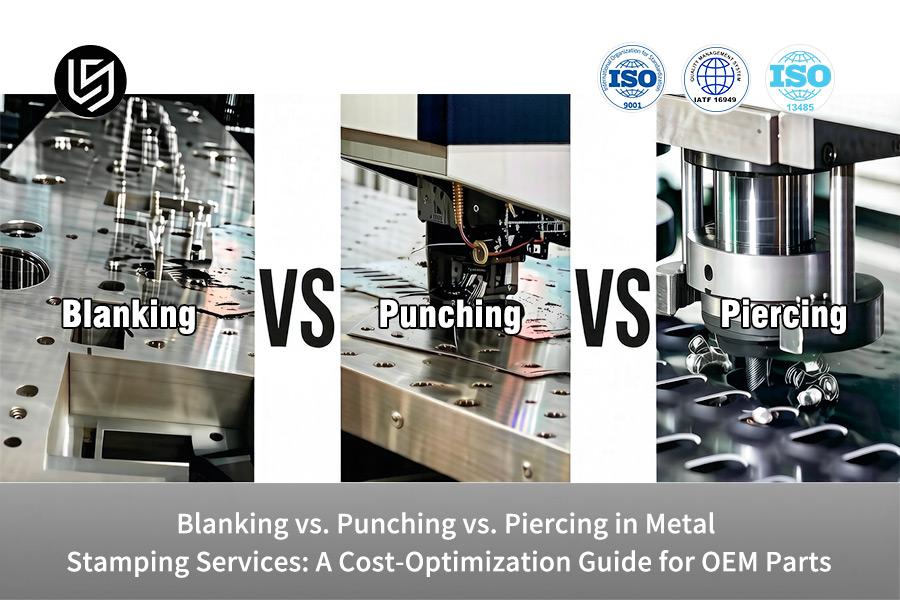
Metal stamping services start off with the research on blanking vs. punching vs. piercing, but the real dilemma is in selecting services which ensure the absence of waste or assembly problems due to ineffective blanking. The major issue here comes down to generic suppliers' inability to use digital shear-to-fracture technology and to find an optimized blanking route which allows for post-processing without any additional costs.
At LS Manufacturing, we solve this problem using closed-loop servo control and digital DFM review to perform cost optimization metal stamping, achieving the perfect balance between hole placement and the effectiveness of blanking in correlation with post-processing to make sure that no extra costs arise. This will be described in our further technical analysis of the efficiency of these processes in 2026. Your R&D quotes will definitely stay competitive.
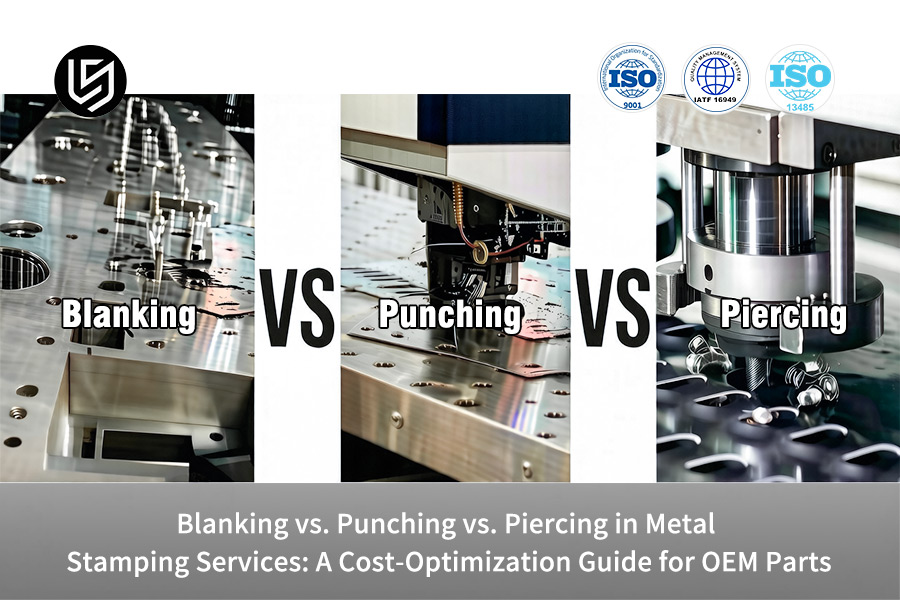
Blanking VS Punching VS Piercing: Stamping Cost-Optimization Guide
| Process | Core Function | Primary Cost Driver | Best OEM Application |
| Blanking | Shapes the external profile of the part from the sheet metal. | Yield rate and nesting. | High-volume production of flat parts such as brackets and contacts. |
| Punching | Creates holes or cut-outs in the part. | Complexity and number of hits per stroke. | Filling additional requirements for mounting holes on a shaped part. |
| Piercing | Creates holes by removing material without a slug. | Tool wear resistance and burr control. | Tiny vent holes or lubrication holes with small burrs allowed. |
| Our Integrated Strategy | Combination of operations in progressive dies. | Balancing between metal stamping tooling costs and processing time per piece. | High variety and high volumes of assembled parts using different features. |
| Result: Optimized Per-Part Cost | The optimal usage of materials with the smallest amount of secondary operations. | Making a product cost-efficient with an integrated approach. | Producing cost-effective parts suitable for assembly automation. |
| Result: Production Scalability | Efficient production of pieces in volumes up to millions of parts. | Continued cost-effectiveness of production regardless of volume. | Availability of parts for Just-In-Time production. |
Solve the process selection problem to optimize the cost of your OEM metal stamping parts. Our experience in blanking, punching, and piercing guarantees effective material usage, optimal tooling performance, and high-quality finished components. The outcome includes reduced costs per piece, decreased waste, and parts within specification that don’t require extra work. We will help you find the right balance between an initial investment in tooling and further savings on manufacturing.
Why Trust This Guide? Practical Experience From LS Manufacturing Experts
There is no shortage of articles about metal stamping on the web; however, why read ours specifically? We are professionals, not researchers – we operate on a daily basis in our shop. In our shop, every single choice whether it be blanking, punching or piercing will affect the result significantly, leading to either failure and extra costs or success and savings.
We take our work seriously, bringing together the stringent requirements of the Society of Manufacturing Engineers (SME) and the specifications put out by SAE International. This pragmatic system, which we’ve honed over the course of producing large volumes of parts, is how we achieve true cost optimization metal stamping, striking the delicate balance between die clearance, material usage, and subsequent operations to protect your investment.
Everything in this list has been forged in the crucible of the shop floor, from examining the shear zones to tuning the presses. We offer this distilled knowledge to ensure you can specify your process with confidence, ensuring that the parts meet your needs, are reliable, and can be manufactured effectively.
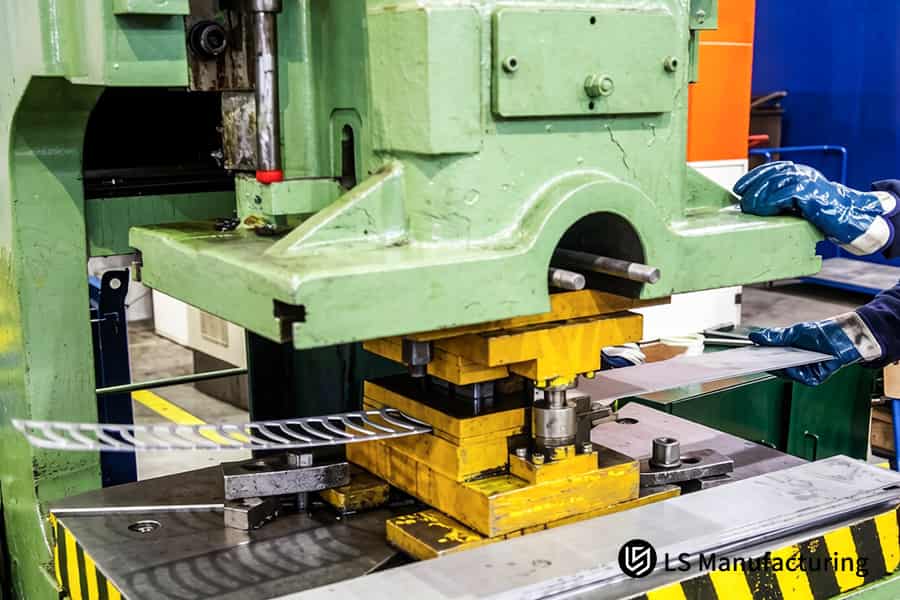
Figure 1: Workers load steel blanks into presses for automotive bracket production.
Why Is LS Manufacturing The Premier Choice For Precision Metal Stamping Services In 2026?
LS Manufacturing sets the new standard for precision metal stamping services by addressing the universal issue of dimensional shift in multi-hole components. Our unique solution, which features a combination of high-tonnage servo press clusters and in-die vision technology, attacks the cause of error from the very beginning. As a result, we deliver parts that fit into assemblies without any problem, saving our customers' costs significantly:
Synchronized Control of Heavy-Tonnage Servo Press Clusters
Our high-speed metal stamping lines ranging between 200T and 2500T work together as an integrated system, rather than individual machines. The controller continuously adapts the ram stroke of every press according to feedback data, which eliminates variations due to harmonics and forms the basis for consistency.
In-Die Sensing for Instantaneous Deviation Correction
This means that our micro-displacement and thermal sensors are built-in right into the stamping die. In every cycle, our system performs an automatic micro-precision metal stamping analysis by comparing the stamped parts against their virtual prototypes. Any detection of a move towards tolerances will cause this system to make a one micron adjustment of the toolpath on the servo press before the next cycle takes place, and thus CPK stability is maintained.
Data-Driven Optimization for Predictive Process Stability
Every adjustment and sensor measurement goes into making an exclusive process model that predicts how fast the tools wear out and how much they expand due to heat. By using this information beforehand, LS Manufacturing is able to always maintain a CPK greater than 1.67, making their precision metal stamping services into a predictable process.
The following is a guide of a structured process that goes beyond the description of equipment to include sensing, controlling, and predicting aspects. The uniqueness of our process is in providing the auditable loop of the metal stamping process, which will address the problem of accumulation of error in manufacturing at high volume production. We make sure that through precision metal stamping solutions, all parts work perfectly and no additional costs arise.

How Can A Strategic Blanking VS Punching VS Piercing Decision Optimize Your OEM Part Cost?
Choosing the right stamping process - blanking, punching, or piercing - is a vital and costly decision that needs to be made during the design stage. Mistakes will result in over-engineering, material wastage, and unnecessary operations. With our innovative metal stamping cost guide, we will present you with an analytical and quantifiable approach to making the best decision, based on your unique circumstances and design requirements. We will show how you can save money with a proper cost-to-value analysis at the design stage.
| Dimension | Blanking | Punching | Piercing |
| Primary Function | Trims the profile of a component out of sheet metal. | Cuts holes or cutouts inside the outline of a part. | Holes and cutouts are created to allow airflow or provide fastening points. |
| Key Cost Driver | Effectiveness in material utilization in strip; scrap generated. | Tool longevity; level of accuracy required. | Life span of the high-speed drill; possibility of burring. |
| Tolerance & Edge Quality | Controls the profile of the final component; edge finish is important. | The accuracy of the inner dimensions of the component and its holes. | The hole diameter tolerance and burring have to be small. |
| Impact on Assembly | Has an immediate effect on the final component assembly process. | It acts as a method to guarantee the proper alignment of the parts to the hole. | The air flow or the weight of the component will be affected. |
| DFM Optimization Path | Nesting optimization and the design of progressive dies. | Co-locating various operations into a single step. | Utilizing in-die monitoring for complex metal stamping operations. |
This document provides a deterministic framework for OEM metal stamping services, transforming the blanking vs punching vs piercing decision into a strategic cost-calculation. For instance, integrating processes in a progressive die for a precision shim cut unit cost by 22%. Our cost-to-value analysis, based on a proprietary metal stamping cost guide, equips clients to minimize total cost from the design phase. Unlock the optimal blanking, punching, or piercing decision with our proprietary cost-to-value framework and expert analysis. Contact us now to transform your design into documented savings.
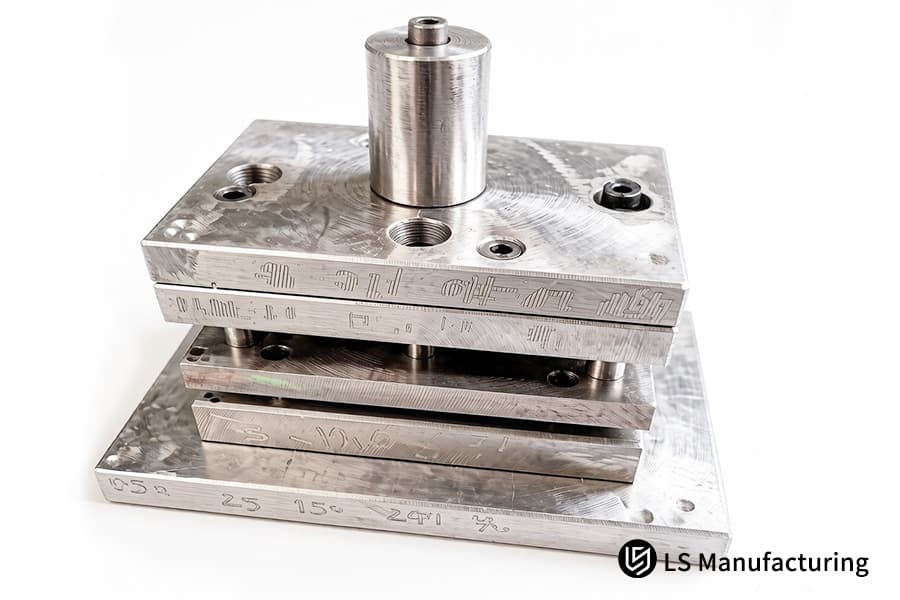
Figure 2: Progressive dies stamp 303 stainless steel into sealed automotive sensor enclosure housings.
Why Should Engineers Prioritize Cost Optimization Metal Stamping For Thin Walled Electronic Components?
When it comes to thin metal enclosures or shields, warpage after stamping will adversely affect automated surface mount assembly because of misalignment issues. The following explains our strategy on how we effectively warpage control in our precision metal stamping service that enables the manufacturing of stamped flat parts as a primary engineering specification. We achieve this by optimizing the mechanics of shear to create flat components suitable for SMT assembly:
Precision Clearance Optimization: The Foundation of Shear Quality
- Targeted Range: We optimize the ratio between punch and die clearance for 5-8% of material thickness, a crucial range when working with thin stainless steels.
- Outcome: It eliminates any form of uneven plastic deformation and formation of burrs as a result of the advanced metal stamping process. ot cause of internal stress-induced warpage.
Dynamic Blankholder Force Control for Material Flow Management
- Method: Application of a servomotor-driven blankholder with zone-specific pressure adjustment.
- Function: This applies pressure to control material flow during the complex thin metal stamping process and prevent wrinkling and ensure uniform metal drawing, keeping the part flat.
In-Die Stress Relieving Through Sequential Cutting
- Strategy: Delaying the application of the cutting forces on the thin metal part by staggering the operation of the punches.
- Benefit: This will ensure that cutting stresses are not applied at once to the thin part, which is an important consideration in achieving high-volume metal stamping.
Predictive Simulation for Proactive Process Calibration
- Tool: Using finite element analysis (FEA) to model metal flow, stress and its distribution, and expected spring back prior to tool fabrication.
- Result: This will ensure proactive adjustment of the die design, such that the first piece comes out within the ±0.02mm flatness tolerance range to ensure reliable cost optimization metal stamping without trial and error.
Inherently flat parts are achieved via predictive control of shearing mechanics that involve optimal clearance, force, and sequence. This addresses the issue of SMT-line compatibility and ensures flat parts from the press to the assembly line, and this is the ultimate form metal stamping. Our warpage control method is the benchmark of precision metal stamping services for thin-walled parts.
What Defines The Technical Edge Of Custom Metal Stamping Services In Achieving Zero Burr Piercing?
The biggest problem in precision piercing operations is the elimination of burrs and micro-cracks, particularly in hardened materials, as they affect component integrity and performance after processing. In this paper, we describe the engineered solution to zero-burr processing that we offer, which addresses both the issues of thermal drift and edge quality in order to provide validated parts for vital uses via our custom metal stamping services:
Optimized Cutting Edge Geometry & Surface Treatment
We design our punches with unique edge treatment and superhard, smooth surface finishes such as diamond-like carbon (DLC) coating. The result is a smooth, continuous shearing of material above HRC 45, thereby avoiding material ripping that causes burrs and micro-cracks under the surface, which is necessary for ultra-precision metal stamping of critical parts.
Active Thermal-Drift Compensation Technology
High frequency piercing produces local heating leading to thermal expansion of the die and drifting of the hole diameter. The in-die thermal sensor is part of our system that sends feedback to the press controller, which adjusts the punch stroke position by microns based on temperature variation to maintain hole size accuracy—an essential feature of our high-accuracy metal stamping process.
In-Process Monitoring and Adaptive Tool Maintenance
Aside from the initial setting, we make use of acoustic emission probes to track the cutting noise of each stroke. A discrepancy in the expected signature is flagged as potential wear in the edge before burrs have even formed. This allows for predictive scheduling of edge micro-polishing, thus guaranteeing continual zero-burr processing and stable output of our long-run hardened metal stamping solutions.
Full-Dimensional Verification and Data Traceability
Each production lot receives fully automated optical inspection, where the data automatically gets fed into FAI reports. This ensures irrefutable quality assurance and full traceability, not just confirming the zero-burr processing, but creating a feedback loop of continuous improvement, in line with our strict requirements for metal stamping services for both automotive and medical applications.
Our technical superiority involves combining tool design engineering, real-time thermal management, and predictive maintenance within one closed loop system. This technique eliminates both burr creation and dimensional variance from the start by tackling the fundamental problem of achieving burr free and stable piercings on hard alloys. It is the only way to achieve consistent product quality assurance for your part in custom metal stamping services.
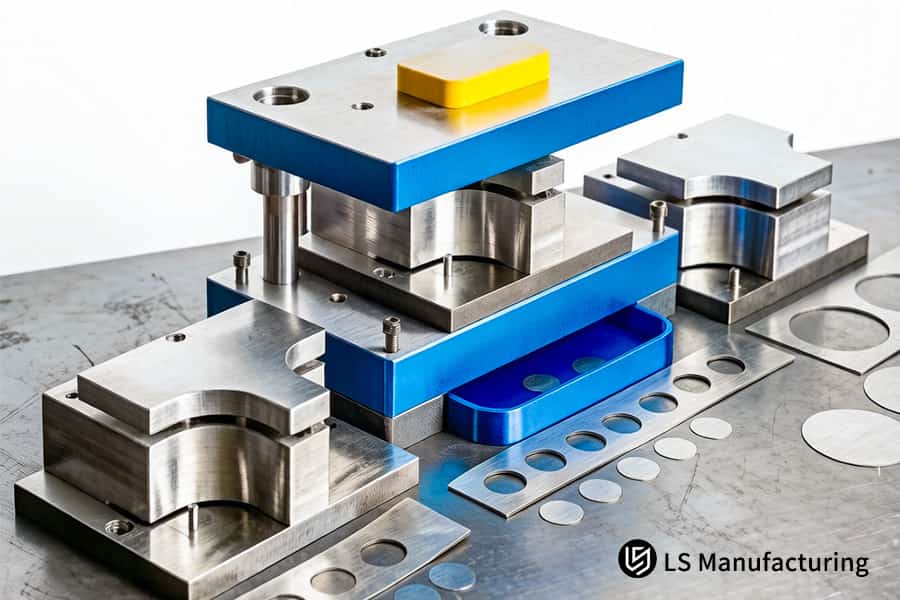
Figure 3: Hydraulic stamping presses form 1018 steel plates into heavy-duty gearbox mounting components.
How Does Blanking Punching Piercing Comparison Impact Material Utilization For High End Alloys?
In case of valuable materials like copper and aluminum used in aircrafts, the material cost constitutes a significant portion of the component cost. Traditional stamping design leads to material efficiency of about 20% to 30%. The current paper highlights the engineering-based approach to material efficiency, thus turning blanking punching piercing comparison into more than just process selection; it turns into an effective way for us to reduce costs. This is how we lead in providing custom metal stamping services to your needs:
Advanced Algorithmic Nesting for Optimal Layout
- Core Method: Nesting process through software that examines the shape of the part and dynamics of strip feeding.
- Specific Action: The software automatically turns the part and narrows the web width (distance between parts) down to 1.2 times the material thickness, which is regarded as the benchmark in advanced metal stamping solutions.
Process Integration to Reduce Intermediate Scrap
- Design Philosophy: Blanking, punching, and piercing integrated into a single efficient flow process.
- Key Benefit: By following this approach, there is no need for extra waste material blanks, hence increasing material efficiency directly and enabling high-efficiency metal stamping parts.
Implementing Common-Cut and Scrap Bridge Re-Use
- Technical Tactic: Design common cuts on parts wherein the skeleton web serves as the carrier for the smaller parts within it.
- Quantifiable Outcome: By using this technique, there is an achievement in the recovery of scrap materials, thereby increasing the material utilization rate by 11%, from 78% to 89% for the copper busbar case in automotive metal stamping and volume production processes.
Direct Cost Modeling and Transparent Quotation
- Customer-Facing Process: The exact material utilization percentage that we come up with based on our nesting optimization process simulation is a vital component of our cost analysis.
- Result: The savings realized from improved material utilization are evident in your unit cost.
Moving from a general process selection strategy to a knowledge-based geometric process that helps in saving on raw material wastage. Our competitive edge lies in the nesting optimization process algorithm, together with intelligent tooling that helps us to achieve savings which ultimately result in our custom metal stamping services.
Can Custom Metal Stamping Services Reduce Secondary Processing For Intricate Medical Housings?
Acquiring a biocompatibility edge finish Ra < 0.8µm for housing units is costly because it requires secondary operations. Through this document, we will demonstrate how incorporating fine blanking into our custom metal stamping services enables us to meet the necessary standards without performing additional processes on intricate medical grade enclosures:
| Comparison Dimension | Integrated Precision Fine Blanking Process | Conventional Stamping with Secondary Finishing |
| Core Methodology | Blanks simultaneously cut and compressed using a three-stroke press fitted with a V-ring indenter. | Blanks and punches first, then deburred and polished in a secondary process. |
| Achievable Surface Finish | Produces a completely sheared and burnished cut with a surface finish of Ra 0.6-0.8 µm utilizing the die itself. | Creates a fractured edge with burrs that require secondary finishing to produce a similar surface finish. |
| Process Consistency & Control | Produces a surface finish that is a constant machine-controlled value, thereby ensuring perfect uniformity from piece to piece. | Finish quality relies on the skill of the operator or secondary process. |
| Impact on Part Integrity | Creates compressive stresses in the part near the cut that increase fatigue resistance to be acceptable for implant-grade metal stamping. | Over-polishing, dimensional changes, and risk of contamination. |
| Validation & Compliance | The process can be validated and controlled, providing direct proof during audits for medical grade compliance. | Requires separate validation of secondary process. |
| Total Cost & Lead Time Impact | Reduces subsequent processing stages, cutting cost per piece by 15-30% and accelerating production in cleanroom metal stamping operations. | Creates added cost, effort, and machinery investment in final processing operations. |
The above assessment highlights that the effective implementation of fine blanking technology is a proven and predictable engineering approach. It addresses the crucial problem of obtaining a verified biocompatibility surface finish in one validated process. Incorporating this process within our precision metal stamping services enables us to deliver a fully managed and auditable manufacturing process that avoids additional processing costs.
Why Is A Comprehensive Metal Stamping Cost Guide Vital For Long Term Supply Chain Stability?
Choosing a vendor only based on the unit price ignores the major long-term issues such as unexpected downtime and sudden increases in price, which affect the stability of manufacturing operations. Hence, the true metal stamping cost guide needs to be based on the Total Cost of Ownership (TCO), considering factors that go beyond the quotation stage. The following describes how we use our systems to ensure that every component is built to guarantee reliability and transparency in costs and availability of parts:
Guaranteed Tooling Lifecycle Through Engineered Durability
We design and build tooling with a verified minimum lifespan of 1 million cycles, using premium tool steels and specialized surface coatings. This contrasts with the sub-100k-cycle life typical of low-cost OEM metal stamping services, which leads to unplanned tool failure, production stoppages, and hidden surcharges. Our guaranteed lifecycle provides a foundation for predictable long-run machining costs and schedules, directly mitigating financial and operational risk.
Full Material Traceability from Mill to Part
Our method begins with PMI spectroscopy testing of all incoming coils, thereby generating a material certificate in a digitized format. This ensures there is no failure because of hidden defects arising from use of undocumented or non-conforming materials that lead to poor quality of parts. Chain of custody is an essential feature when it comes to high-integrity metal stamping and forms a fundamental basis in supplier selection and quality assessment.
End-to-End Digital Process Monitoring for Predictive Action
Proprietary software tracks all parameters of pressing such as tonnage, feed, and temperature with relation to the unique part serial number. As a result, there is no longer need for post-event investigations as everything can be monitored instantly and addressed immediately, making the manufacturing process an entirely transparent one. This kind of traceability is essential for modern risk mitigation and prevents small problems from becoming big ones.
Corrosion Performance Validation as a Standard Deliverable
Long-term part reliability comes not from promises but through hard evidence. Randomly selected parts from each production batch are put through a standardized salt spray test that lasts 480 hours (ASTM B117) – accompanied by a certificate attesting to the results of said test. Such preemptive testing ensures that your parts will remain risk-free at the point of use and is a mandatory requirement for our mission-critical metal stamping parts.
The approach of our methodology changes the nature of the metal stamping cost guide by eliminating the principal cause of variability in the supply chain. This is achieved through the provision of tooling that is guaranteed to last, and through full digital traceability and performance verification. This transforms supplier selection from a price-based decision into a strategic partnership for risk mitigation and ensures stable, predictable production.
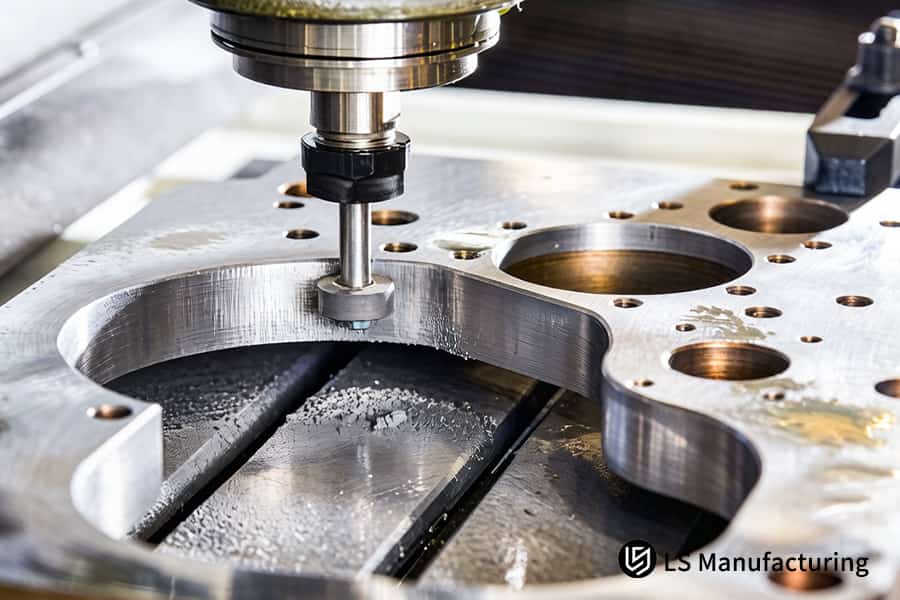
Figure 4: A punch presses through steel coil to blank out a complete flat washer for automotive assembly.
Case Study: LS Manufacturing Automotive Structural Component Precision Custom Solution
A Tier-1 global supplier experienced defects and increased costs with their 1200MPa boron steel door beam reinforcement. The current manufacturing method was causing micro-cracks and low material yield. LS Manufacturing was able to address this challenge with an innovative approach, illustrating how our custom metal stamping services can offer more value than OEM metal stamping services:
Client Challenge
The part, an essential door beam structure fabricated from 1200 MPa boron steel, failed 10G vibration tests due to micro-cracking on the edges of the pierced holes. In the incumbent supplier's method, blanking followed by piercing caused stress concentration issues that resulted in greater than 5% product defects. Combined with the low material yield ratio of 65%, the part became more expensive by 30% than the target cost, risking the schedule of SOP and feasibility of high-strength metal stamping.
LS Manufacturing Solution
To address the issue, our first step was running simulations through the digital twin model to study the flow of stress. Our approach involved switching the sequence from blank-to-pierce to pierce-to-fine blank in a three-station progressive die. Doing so enabled us to ensure stress relaxation inside-out during trimming. We incorporated a vacuum chip evacuation process in the design to avoid recast layers, and we managed the punch clearance within 7% of material thickness.
Results and Value
The new procedure removed any micro-cracks, and all samples successfully passed the 10G vibration durability test. The material yield rate reached 86%, thus reducing the material cost burden. As the second reaming step was removed, the product price was decreased by 25%. The customer's standard operating procedure was shortened by three weeks, and LS Manufacturing was selected as the only supplier for the series of this structural metal stamping component.
LS Manufacturing uses physics-based process redesign to tackle difficult failure modes, instead of relying on small improvements. Here's what makes us different; we offer you an engineered solution for your complex problems, all the way from inception to verified manufacturing – providing precision-stamping solutions and secure supply chains that characterize a good partnership, compared to our competitors' OEM metal stamping services.
Eliminate micro-cracks and ensure 10G vibration durability for your safety-critical stampings. Submit your design for a proven progressive die solution and quote.

FAQs
1. Why choose LS Manufacturing for my OEM metal stamping service needs?
Our company, with more than 20 years' experience in precision stamping processes, is ISO-certified and always strives to maintain tolerances as precise as ±0.01mm, while also keeping costs low.
2. What is the primary difference in cost optimization for large-volume metal stamping orders?
We make use of fully automated nesting technology, enabling us to increase material yield up to 85%. In addition, we have fast die change systems that help lower hourly labor costs.
3. How quickly can I receive a quote for precision metal stamping services?
Simply upload your STEP file, and we will send you a precise quote—including a detailed cost analysis—within 12 to 24 hours.
4. Can LS Manufacturing handle both blanking and punching operations for high-strength stainless steel?
We have an available 2,500 tons of high tonnage stamping line designed for precise cutting of high strength stainless steel plates measuring up to 12mm thick, ensuring cut edge perpendicularity meeting industrial standard.
5. Does LS Manufacturing provide material traceability for custom metal stamping services?
With each production run, we deliver 3.1b material certification and complete digital production record so that our customers can carry out their own site audit or remote material traceability process anytime.
6. Why are precision metal stamping services more cost-effective than laser cutting for high-volume production?
Metal stamping process is capable of producing up to 120 pieces per minute. Though the cost of tooling is relatively higher, in manufacturing runs of over 10,000 pieces, the cost allocated to each piece stamped is just 15%-30% of the cost of laser cutting.
7. Can you help optimize my part design to meet specific blanking, punching, and piercing requirements?
Our senior engineers conduct a free Design for Manufacturability (DFM) analysis as part of the quotation stage. With the use of process reduction and design optimization, we may assist you in saving up to 20% on your raw materials costs.
8. What certifications does LS Manufacturing hold as a global manufacturer?
LS Manufacturing possesses ISO 9001, IATF 16949, and ISO 13485 certifications. Our manufacturing processes conform entirely to EU RoHS directives and FDA regulations applicable to essential elements.
Summary
When it comes to precision metal fabrication, opting for blanking, punching, or piercing demonstrates great appreciation for material physics. In the case of LS Manufacturing, we translate intricate shearing processes into measurable advantages using technological monitoring, value chain cost assessment, and DFM analysis. Collaborate with a reliable stamping service provider who not only recognizes but respects industry standards, material science, and multi-step procedures.
Don't let inconsistent blanking quality slow down your final assembly process any longer. Your precision OEM designs deserve to be realized with physical perfection. Click the "Instant Quote" button below right now to upload your design drawings (STEP/PDF). LS Manufacturing’s senior metal stamping application engineers are standing by to provide you with a complimentary, personalized "Process Selection Report and DFM Review," helping you secure a highly competitive, direct-from-manufacturer quote within just 24 hours.
📞Tel: +86 185 6675 9667
📧Email: info@lsrpf.com
🌐Website: https://lsrpf.com/
Disclaimer
The contents of this page are for informational purposes only. LS Manufacturing services There are no representations or warranties, express or implied, as to the accuracy, completeness or validity of the information. It should not be inferred that a third-party supplier or manufacturer will provide performance parameters, geometric tolerances, specific design characteristics, material quality and type or workmanship through the LS Manufacturing network. It's the buyer's responsibility. Require parts quotation Identify specific requirements for these sections.Please contact us for more information.
LS Manufacturing Team
LS Manufacturing is an industry-leading company. Focus on custom manufacturing solutions. We have over 20 years of experience with over 5,000 customers, and we focus on high precision CNC machining, Sheet metal manufacturing, 3D printing, Injection molding. Metal stamping,and other one-stop manufacturing services.
Our factory is equipped with over 100 state-of-the-art 5-axis machining centers, ISO 9001:2015 certified. We provide fast, efficient and high-quality manufacturing solutions to customers in more than 150 countries around the world. Whether it is small volume production or large-scale customization, we can meet your needs with the fastest delivery within 24 hours. choose LS Manufacturing. This means selection efficiency, quality and professionalism.
To learn more, visit our website:www.lsrpf.com.