English




Precision metal stamping vs CNC machining service represents an expensive problem of precision versus unit cost for procurement when the yearly volume varies wildly between 5,000 to 500,000 units per year, causing more than 30 percent premiums or time delays. The main problem is the use of just batch sizes and nothing else while ignoring material utilization ratios, tolerance limits based on geometric shape, and costs involved in secondary machining.
Based on decades of data collected by LS Manufacturing, our study compares in detail the fundamental differences in tolerance maintenance, initial die amortization, and conservation of material physical characteristics. In addition, we provide a process selection matrix that allows us to state what we can do: determine a definite cost limit that allows you to know your return on investment right from the start of the project.
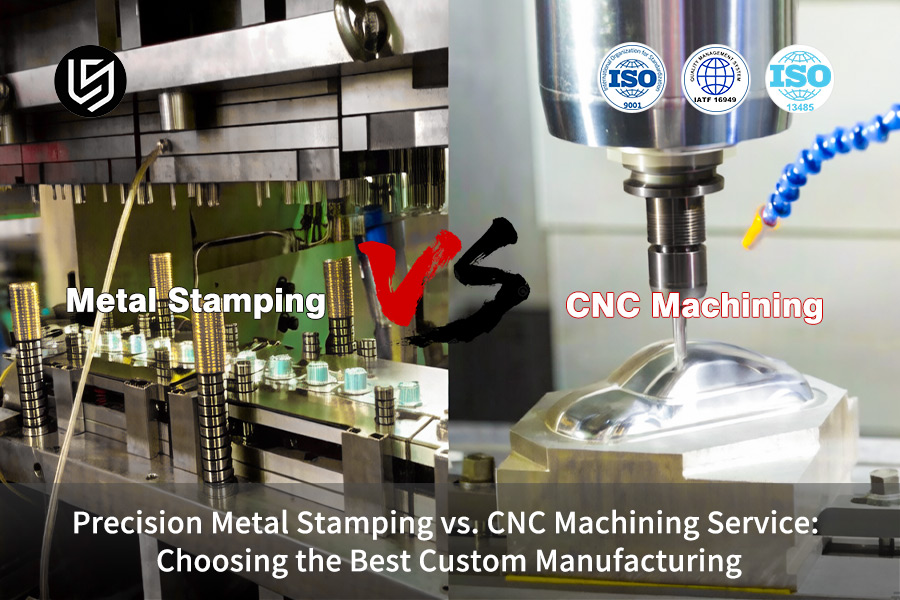
Precision Metal Stamping VS CNC Machining: A Selection Guide
| Key Factor | Metal Stamping | CNC Machining |
| Production Volume | Lower unit costs when production quantity is large (thousands to millions). | Unit costs minimized at smaller production quantities (prototypes to thousands). |
| Part Geometry | Suitable for simple 2D/3D geometry, shallow features, and sheet metal components. | Best for more complex 3D geometry, deep pockets, and prismatic solids machined from block stock. |
| Setup & Tooling Cost | Higher upfront tooling cost but very low per part cost in volume. | Lower or zero tooling cost but higher per part machining cost. |
| Material Form | Requires sheet metal stamping or strip. | Requires solid stock in block form. |
| Our Advisory Process | We suggest stamping for volume production of formed sheet metal parts. | We suggest machining for complex parts, smaller volumes, and tight tolerances from solid block stock. |
| Result: Optimized Unit Cost | Attains the most economical per-piece cost for appropriate designs in large volume applications. | Offers the best value for intricate designs and smaller batch sizes. |
Let us provide you with a decision on which option is best for your custom components – metal stamping vs. CNC machining. Our assessment takes into account the volume of production, geometry of the parts, and cost to give you the best possible recommendation. This guarantees that you get the most effective manufacturing method that suits your needs.
Why Trust This Guide? Practical Experience From LS Manufacturing Experts
Among the numerous analyses that attempt to compare precision metal stamping vs. CNC machining, there is an analysis that deserves special attention as it is created by actual professionals, not theoreticians. Each day, our shop floor struggles with difficult materials and tight deadlines, and in such a situation, it becomes essential to use the correct process, otherwise risking the part's integrity and cost management.
Through experience with difficult projects involving aerospace brackets and medical enclosures, we have been able to identify at what point stamping becomes highly efficient due to volume or where CNC machining becomes necessary for intricate shapes. In doing so, we provide you with an effective framework that is both easy to implement without undergoing unnecessary trial and error.
Our experiences from both successful projects and failures give us a unique perspective on how to choose the right manufacturing processes, such as tooling for stainless steel and feed settings for metal alloys. We draw from industry best practices, incorporating lessons learned from the Robotic Industries Association guidelines for automation and Additive Manufacturing (AM) principles to understand how they relate to traditional manufacturing.
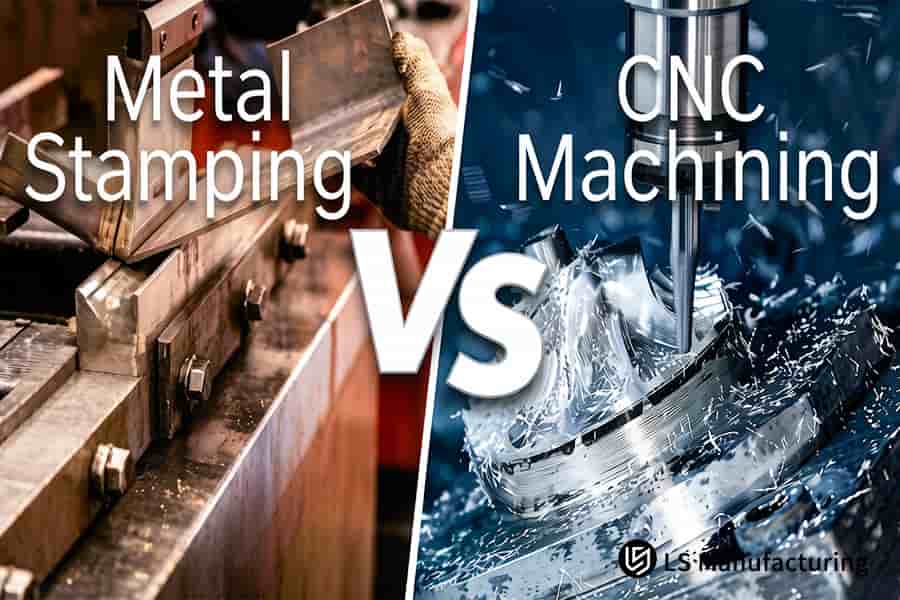
Figure 1: The metal stamping vs CNC machining diagram displays CNC cutting hardened steel molds for injection industry.
Why Is The Annual Volume The Decisive factor For Choosing Metal Stamping Service Over CNC Machining?
Where there is large volume component production, the initial upfront tooling cost of the metal stamping service is greatly offset and hence proves to be much more cost-effective than per piece CNC machining service cost. The following is an attempt at breaking down this process selection decision through LS Manufacturing's C-V Curve approach that will demonstrate a concrete methodology of process selection. The following is an insight into the technical process involved in reaching the conclusion:
Deconstructing the Cost-Volume (C-V) Crossover with Quantifiable Precision
Cost analysis is done through a direct comparison between the cost incurred for fixed tooling and the cost for variable machining time. For a part made from 2.0mm thick stainless steel, the study shows that there is an unmistakable point of crossover around 15,000 parts. After which, the cost for high volume manufacturing using stamping will go significantly lower because the fixed cost of making the precision metal stamping die is totally covered.
Front-Loading Manufacturing Strategy via Proactive DFM Engagement
Ideal economics is set during the design stage. We conduct a manufacturability analysis of your design which provides an optimal design that is suitable for mass production in terms of geometrical design. This will ensure the ideal starting point for custom metal stamping parts which will ensure cost-effective custom parts at scale.
System-Wide Optimization Beyond Unit Cost Calculation
The tactical benefit goes beyond the mere metal stamping CNC cost comparison process. We develop the complete system, combining the metal stamping fabrication process with automation inline. This results in not only cheaper costs but also better quality and productivity, making the economic case for volume manufacturing stronger.
This report offers a deterministic process selection model, considering economic crossover and design-for-manufacturing principles that can be implemented. Prove the stamping cost advantage for your volume production. Share your part design and annual quantity to receive a tailored C-V analysis and formal quotation.

How Can High Precision Stamping Services Maintain 0.02mm Tolerance For Complex Geometric Components?
Achieving a tolerance of ±0.02mm in high precision stamping services for complex geometry stamping contradicts the belief that high precision is the sole domain of machining. This paper describes the system integration of die engineering and real-time process control required to achieve this at more than 200 strokes per minute. The solution is not in any one element but in a harmonized hierarchy of technology:
Foundational Stability: Die Engineering for Micron-Level Repeatability
- Core Strategy: Employ a solid, hardened die using precision metal stamping dies made of tungsten carbide for durability.
- Implementation: Include guidance through pilot pins and shoulder bolts in the metal stamping die design to prevent lateral movement and ensure precise strikes.
In-Process Control: Real-Time Compensation for Dynamic Variables
- Core Strategy: Install pressure and acoustic emission sensors in the die to gauge the force applied during forming.
- Implementation: The metal stamping process control system recognizes even slight variations and automatically adjusts the press accordingly to account for any changes in materials or tooling.
System Synchronization: Integrating Press, Feed, and Die as One Unit
- Core Strategy: Consider the press, servo-feed system, and die together as one finely tuned digital system.
- Implementation: Closed-loop coordination between the precise servo-feed and the press cycle ensures perfect timing and strip positioning, thereby providing consistent progressive die tolerances.
This approach goes beyond stamping into a closed-loop, sensor-based manufacturing cell. The problem of precision is overcome using a tiered method that begins with perfectly made and rigid tooling, compensating for process variables in real time, and perfectly syncing all components in the system. This report presents the technical expertise required to produce machining-quality results in a high-speed metal stamping.
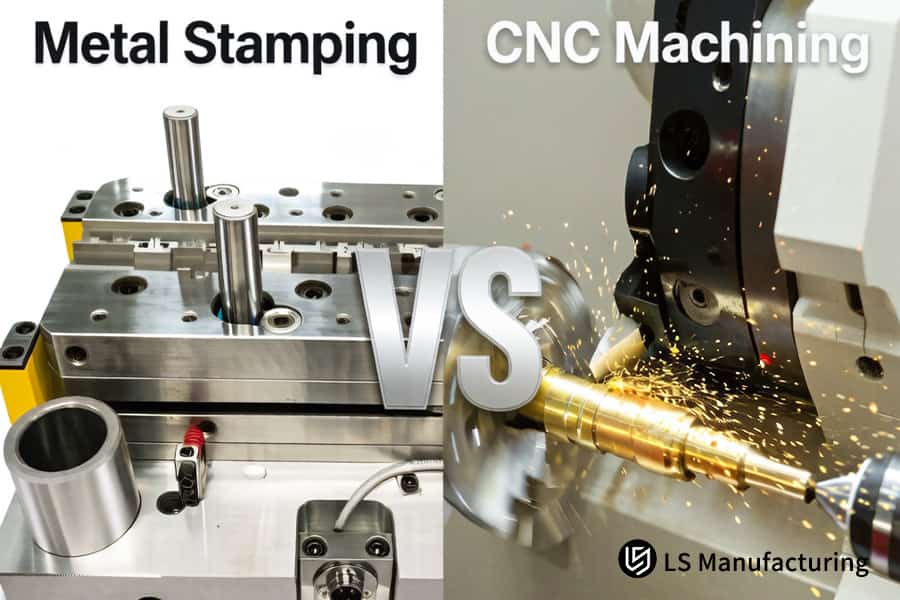
Figure 2: The metal stamping vs CNC machining chart illustrates stamping brass terminals with holes for connectors.
Which Process Offers Better Material Utilization For Expensive Medical Grade Titanium Or Nickel Alloys?
For high-end alloy components used in medical devices and aviation industry parts such as Titanium and Inconel parts, optimization of material utilization efficiency is a critical factor in keeping down costs. Selection of one process type over another will have a huge effect on the cost of raw materials. This paper presents a numerical of precision metal stamping vs CNC machining service comparison.
| Aspect | CNC Machining (Subtractive) | Precision Metal Stamping Service (Formative) |
| Process Principle | Material removal from a solid billet results in a huge amount of waste. | Material shaping from blanks produces little waste through optimized nesting. |
| Typical Scrap Rate | Approximately 60% – 80% of the billet turns out as chips and waste. | Scrap percentages as low as 15% can be obtained using medical device metal stamping designs. |
| Cost Impact Example | In the case of Ti-6Al-4V implants, more than 60% of the material cost goes to waste, hence becoming the primary driver of cost. | Advancements in metal stamping nesting optimization can yield over 85% material efficiency, significantly reducing per-part costs. |
| Technical Enabler | Gains in efficiencies are limited to optimizing toolpaths using the same subtractive process approach. | Efficiency will be gained through upfront DFM in formability and advanced progressive die stamping design. |
The above analysis clearly shows that for premium alloy materials, the selection of forming processes should be considered as a strategic move to control the economics of material input. We offer you our expertise in metal stamping DFM analysis and simulation to deliver an optimized nest strategy to leverage our superior material utilization efficiency over conventional CNC machining for medical parts.
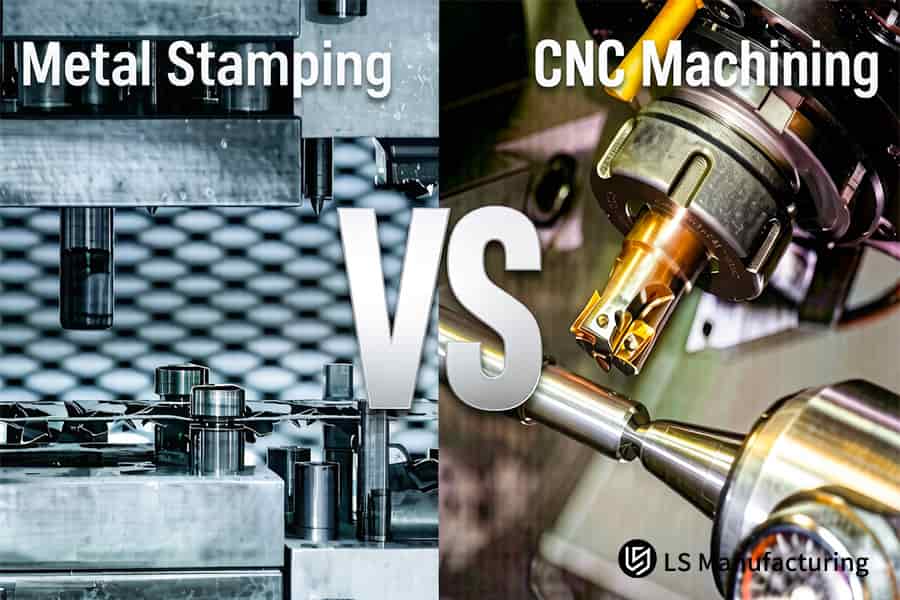
Figure 3: The metal stamping vs CNC machining process demonstrates CNC grinding aluminum alloy shafts for robotics systems.
When Does The Geometric Complexity Of CNC Machining Service Outweigh The Speed Of Metal Stamping?
While metal stamping is highly effective in terms of speed and cost-effectiveness at high volumes, some geometrical characteristics require more flexible approach in machining. This paper provides the guidelines on the limits of metal stamping, i.e., the areas where the level of geometrical complexity, attainable through 5-axis CNC machining, will make the latter process superior:
Resolving Internal and Undercut Features
Metal stamping processes are fundamentally limited in forming features that are not in the line of press action. We recommend and employ CNC machining service for non-symmetric blind holes, internal pockets, and complex undercuts, as these cannot be formed with standard punch-and-die tooling. This ensures the full design intent for intricate complex part design is achieved without compromise.
Creating High-Aspect-Ratio and Threaded Features
The production of high aspect ratio and threaded holes is another fundamental metal stamping limitations process. The suggested solution relies on 5-axis CNC machining technology for milling such cavities and drilling corresponding threads in one operation. Such approach will ensure the required level of straightness, surface quality, and precision unachievable by forming technologies.
Machining Thick and Variable Cross-Sections
Components that have thick walls (greater than 8.0mm) or very variable walls are among those that present an extremely difficult formability problem during deep draw metal stamping operations. The ability of CNC to remove material is used to machine such parts by starting from solid pieces, thus overcoming the problems involved with stamping such parts.
Through our technical advice, a clear criteria-based selection is made based on the geometric aspects that must lead to a CNC manufacturing process. The purpose is to prevent clients from falling into the trap of using precision metal stamping when a CNC manufacturing process would be more appropriate. This ensures that the client obtains the best possible manufacturability, cost, and performance, especially for their most challenging complex part design.
Can Custom Stamping VS CNC Comparison Reveal Hidden Costs In Secondary Finishing And Surface Treatment?
A comprehensive custom stamping vs CNC cost analysis must account for the distinct finishing demands each process creates. The initial part condition directly dictates the complexity and cost of achieving a final, spec-compliant finish. This document deconstructs the post-processing steps for both methods, quantifying the often-overlooked surface finishing cost drivers and providing a framework for total cost of ownership, especially critical for high-volume metal stamping production runs.
| Aspect | CNC Machined Parts | Custom Metal Stamping Parts |
| Initial Surface Condition | All surfaces bear consistent tool marks (Ra ≈ 1.6 - 3.2 μm), necessitating substantial material removal. | Surfaces tend to be smooth, yet edges need heavy metal part deburring due to natural burrs that form along sheared edges. |
| Primary Deburring Focus | Deburring is specific to sharp machined edges, while surface polishing is the primary objective to eliminate tool marks. | The key issue is the efficient and uniform treatment of edges when manufacturing high-volume custom metal stamping parts, usually utilizing automated metal stamping tumbler lines. |
| Surface Refinement Process | Polishing surfaces to a consistent Ra 0.8μm surface condition is usually a multi-step process that takes extra time. | Following deburring, surfaces and edges can be treated using a more moderate vibratory or electrochemical technique. |
| Total Post-Processing Impact | Higher cost results from either labor-intensive work or long machining times for consistent material removal; however, it is relatively straightforward. | The best cost outcome occurs through the efficient deburring process combined with automated production, with edge quality being considered during the design stage. |
We offer comprehensive, holistic analysis that looks beyond part cost to incorporate the crucial step of necessary post-processing services. Our approach allows us to foresee potential finishing problems for each process up front, making design and production choices that reduce surface finishing cost and complexities. A critical part of our approach is required to ensure predictability and manage the high cost of finishing-intensive metal stamping parts.
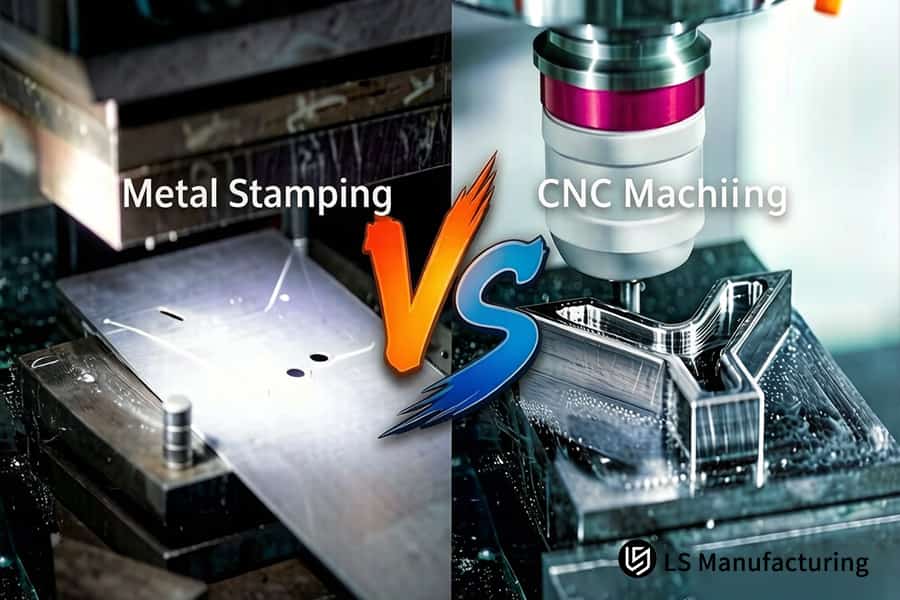
Figure 4: The metal stamping vs CNC machining comparison shows dies forming stainless steel sheets for automotive panels.
How Does LS Manufacturing Optimize The Lead Time For High Precision Stamping Through In-House Tool Design?
For product introductions where speed is critical, the industry-standard 8-week lead time for high precision stamping is often prohibitive. LS Manufacturing attacks this delay at its root through integrated metal stamping development, collapsing the timeline by merging simulation with in-house tooling. Our methodology transforms the development process:
Front-Loading Risk Mitigation with Virtual Prototyping
- Strategy: Utilization of modern CAE modeling software for die design and formability study during the design process.
- Action: In this way, metal flow, stresses, and possible flaws can be analyzed by simulation in advance, allowing us to iterate on the design without wasting time and resources on physical trials.
Parallel Processing via Vertical Integration
- Strategy: Complete internal control of all processes involved in tooling, from design and machining to tryout.
- Action: We offer a concurrent engineering process where while polishing the design, we simultaneously acquire standard components and pre-machined die bases for an accelerated metal stamping process.
Accelerated First-Attempt Success for Sample Delivery
- Strategy: Strive to deliver the first sample which is already ready for production.
- Action: The dies used are machined through 5-axis CNC at tight tolerances. The first sample run confirms the tool and yields parts, resulting in a 3-4 week turnaround time and significantly shorter manufacturing lead time
Lead time is reduced by streamlining the process of designing, simulating, and manufacturing into one streamlined process. This is done through cutting out the delays that come from using a fragmented supply chain model. We make development less risky while ensuring our clients have a significant edge when entering the market, making us a custom manufacturing partner for turnkey metal stamping solutions.
Why Should Engineers Consider Hybrid Manufacturing Solutions For Precision Stamping For Custom Parts?
Due to the need to balance economy of scale with precision when manufacturing components, there is a necessity to choose one over the other, thereby limiting the options available. Using hybrid manufacturing ensures both are achieved. The hybrid manufacturing process combines the benefits of both precision stamping for custom parts and CNC machining for custom parts. This report outlines the method involved.
Strategic Feature Decomposition for Process Allocation
This systematic dissection of part geometry distinguishes between the form and precision intensive features of the part. While the primary form and bends and embosses go into advanced metal stamping, precision critical features like mounting holes and sealing surfaces receive the CNC finish treatment. Such meticulous dissection is the basis of good process optimization.
Integrated Execution: A Thermal Management Case Study
In order to manufacture an aluminum shell for the communication heatsink, complex metal stamping is used to create all of the fins and walls at once, with integrated pilot datums. Then the part is moved to the CNC machine where these datums are used to accurately mill the mounting plane and drill tapped holes. This process stamping and machining integration reduces overall costs by 60% compared to a fully CNC manufacturing process.
Ensuring Dimensional Fidelity with Unified Referencing
It is dependent upon the existence of a universal coordinate reference system. The stamping die is designed with precision machined locators that become incorporated into the stamped blank. The subsequent CNC fixture will clamp directly to these same locators. This concept of "datum transfer" ensures the secondary machining operation is in perfect alignment with the first formed geometry, avoiding tolerance accumulation and guaranteeing final assembly compatibility for high-volume metal stamping hybrid components.
We achieve maximum manufacturability through technical analysis of the component and assignment of each attribute to the process most proficient in accomplishing it. Our capabilities are evident in designing for the combination—designing stamping dies that facilitate accurate secondary machining operations and manufacturing fixture designs.
Case Study: How LS Manufacturing Solved A 35% Failure Rate For An Automotive Tier-1 Supplier’s Sensor Housing?
A Tier-1 automotive manufacturer was confronted with several major problems with their mass-production sensor housing: exorbitant costs of using CNCs as well as unacceptable 35% of the failure rate in leak tests threatened the entire project’s feasibility. In this LS Manufacturing case study, you can find out how process improvement enabled to solve both problems by switching to automotive metal stamping:
Client Challenge
The critical component in question was a sensor housing made out of stainless steel (AISI 304) that needed to maintain a maximum of ≤0.05mm of flatness in its critical sealing surface. Previously, the sensor housing manufacturing processwas carried out using exclusively CNC machining operations, resulting in the creation of residual stresses. These led to the distortion of the housing after machining operations, causing an unacceptable 35% rejection rate due to leaks.
LS Manufacturing Solution
Our engineering team redesigned the part for progressive metal stamping and continuous annealing performed inline with the metal forming operations. During progressive metal stamping, the housing is formed into its final dimensions and the stress is released through controlled annealing. Automated in-process vision inspection is then implemented in the stamping die, allowing 100% critical dimensions verification.
Results and Value
The novel method of high-volume metal stamping brought about a 48% cost reduction per unit produced and a productivity increase of 300%. Importantly, the first-time yield in the leak test jumped from 65% to 99.8%, ensuring no quality leakage. Lights-out production was also made possible due to integration with automated inspection. The savings achieved by our client amounted to around $250K a year, proving significant cost reduction and reduced risk of the supply chain.
This case study demonstrates our approach to problem-solving that includes identifying a root cause, creating an integrated solution, and process controls. We assist clients to choose best custom manufacturing processes by providing exceptional technical performance and economic transformation for challenging applications utilizing metal stamping and finishing solutions.
Solving high leak rates in sensor housings? Our integrated stamping and annealing process ensures 99.8% yield. Contact us to discuss a feasibility study and cost-saving analysis.

FAQs
1. Which is faster for small-batch prototyping: metal stamping services or CNC machining?
For small batches, CNC machining is substantially faster as it requires no tooling, enabling delivery of initial parts in 3-5 days. Metal stamping, while excellent for high volumes, incurs a much longer lead time due to the essential mold design and fabrication phase.
2. What is the maximum sheet metal thickness that LS Manufacturing can process via stamping?
Our precision stamping machines process cold-rolled coils from 0.1mm to 6.0mm thick, depending on material hardness. This extensive range supports everything from delicate electronic shields and contacts to robust automotive or appliance structural brackets.
3. Why is the unit price for custom parts produced via CNC machining consistently higher than that for stamped parts?
CNC machining is a subtractive process with a consistent, slower cycle time per part, leading to a higher unit cost. Stamping involves significant upfront tooling investment, but the subsequent high-speed production dramatically reduces the per-part cost at volume, creating economies of scale.
4. Is it possible to achieve fine threads—similar to those produced by CNC machining—on precision stamped parts?
Yes. Our proprietary "In-die Tapping" technique integrates thread forming directly into the progressive die sequence. This allows for simultaneous stamping and precision threading in a single, highly efficient operation, eliminating a secondary processing step.
5. In a cost comparison between metal stamping and CNC machining, which process is more suitable for Stainless Steel 316?
If the part design is suitable for forming, stamping is significantly more cost-effective for Stainless Steel 316. CNC machining this material causes rapid tool wear, increasing consumable costs, whereas stamping distributes the tooling cost over thousands of parts.
6. Does precision metal stamping impose specific requirements regarding material hardness?
Yes, optimal stamping materials are ductile with moderate hardness to allow for forming without cracking. Extremely hard or brittle alloys are not formable via stamping and are better suited to subtractive processes like CNC machining.
7. How does LS Manufacturing ensure mold stability during large-scale stamping production runs?
We ensure stability with an inline infrared inspection system that automatically checks critical dimensions every 10,000 cycles. This is combined with a rigorous preventive maintenance schedule for all tooling, preventing drift and ensuring consistent, high-quality output.
8. When choosing the best custom manufacturing solution, which type of engineer should I consult first?
We recommend consulting our Design for Manufacturability (DFM) engineers. Using your 3D CAD files, they will perform a thorough comparative analysis of stamping versus machining, providing a data-driven recommendation and a corresponding metal stamping quote for the most efficient solution.
Summary
The choice of either precision stamping or CNC machining encompasses an overall approach, which takes into account not only the material properties but also mechanical design. Thanks to the seamless combination of our progressive precision stamping and CNC technologies on multiple axes, we can eliminate all process obstacles to make sure that every component we manufacture functions perfectly.
Don’t waste time thinking about complicated manufacturing questions any longer. Simply click on the button below to submit your CAD drawings for free and receive your own DFM analysis report along with competitive quotes from several different manufacturing technologies at LS Manufacturing from our expert engineers. Let us assist you in optimizing your design while saving up to 20% to 50% off manufacturing costs.
📞Tel: +86 185 6675 9667
📧Email: info@lsrpf.com
🌐Website: https://lsrpf.com/
Disclaimer
The contents of this page are for informational purposes only. LS Manufacturing services There are no representations or warranties, express or implied, as to the accuracy, completeness or validity of the information. It should not be inferred that a third-party supplier or manufacturer will provide performance parameters, geometric tolerances, specific design characteristics, material quality and type or workmanship through the LS Manufacturing network. It's the buyer's responsibility. Require parts quotation Identify specific requirements for these sections.Please contact us for more information.
LS Manufacturing Team
LS Manufacturing is an industry-leading company. Focus on custom manufacturing solutions. We have over 20 years of experience with over 5,000 customers, and we focus on high precision CNC machining, Sheet metal manufacturing, 3D printing, Injection molding. Metal stamping,and other one-stop manufacturing services.
Our factory is equipped with over 100 state-of-the-art 5-axis machining centers, ISO 9001:2015 certified. We provide fast, efficient and high-quality manufacturing solutions to customers in more than 150 countries around the world. Whether it is small volume production or large-scale customization, we can meet your needs with the fastest delivery within 24 hours. choose LS Manufacturing. This means selection efficiency, quality and professionalism.
To learn more, visit our website:www.lsrpf.com.