English



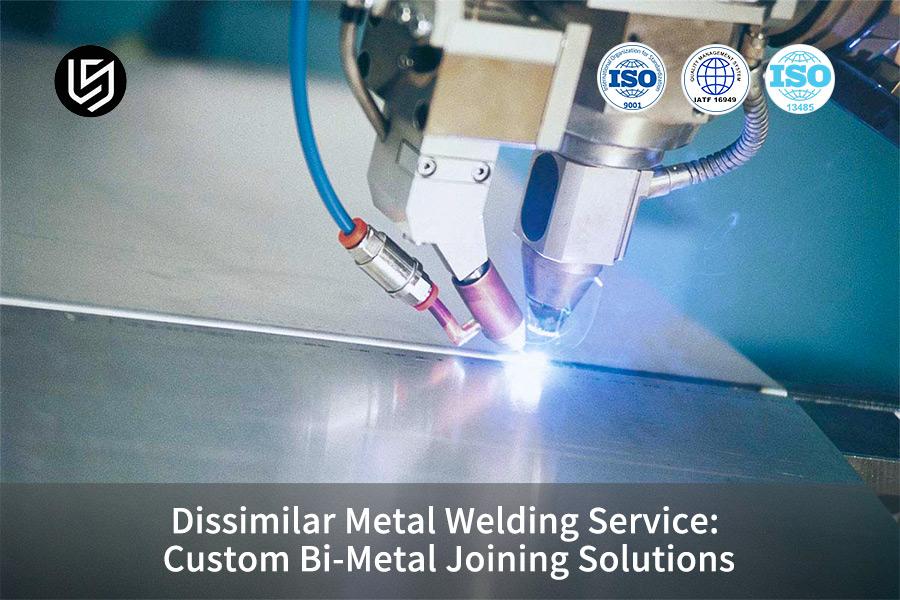
Dissimilar metal welding service act as the best accompaniment to precision dissimilar metal welding services. LS Manufacturing's dissimilar metal welding service leverages multiphysics numerical simulation alongside a custom laser waveform control technology to offer clients an end-to-end experience from material selection to DFM (Design for Manufacturing) evaluation. It has the capability of addressing issues such as connections' unreliability caused by sizable differences in melting points and dissimilar metals' mismatched coefficients of linear expansion. Besides that, it can ensure that the joint's tensile strength is greater than 90% of the base material and the helium leak detection rate is less than 1×10⁻⁹ mbar·l/s.
Different metals need to be joined by engineers very often, e.g. a copper-steel pair or an aluminum-stainless steel pair. The old-fashioned welding method results in the formation of brittle intermetallic compounds that eventually lead to the joint being broken. This service very accurately caters to this issue.
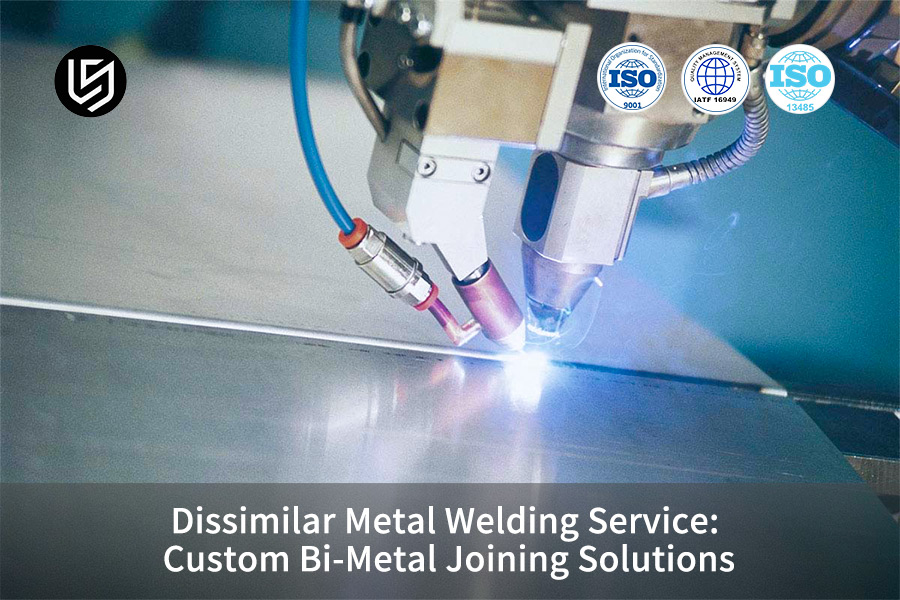
Quick Overview of Core Answers for Precision Dissimilar Metal Welding
The table clearly presents the core information of the service, helping clients quickly grasp the key points and accurately match their needs.
| Core Service Dimensions | Specific Solutions | Key Performance Parameters | Core Customer Benefits |
| Process Selection | Electron beam welding, frequency-modulated laser, CMT, etc. | Brittle layer thickness ≤10μm. | Avoids brittle fracture of joints, improving product lifespan. |
| Quality Assurance | ISO 9001, IATF 16949 certification, 100% helium mass spectrometry leak detection. | Tensile strength ≥90% of base material, deformation ±0.03mm. | Meets industry standards, reducing quality risks. |
| Cost Control | DFM evaluation at the prototype stage, flexible fixture design. | Reduces process failure costs by 30%, prototyping cycle 5-7 days. | Reduces overall procurement costs and shortens R&D cycle. |
| Applicable Scenarios | New energy, semiconductor, medical, aerospace. | Withstands alternating environments from -196°C to 500°C. | Adapts to extreme working conditions in multiple industries. |
Key Takeaways:
- Process Optimization: To deliver micron-level accuracy, electron beam welding with a frequency-modulated laser are the primary means to eliminate the formation of brittle phases during the process.
- Quality Standards: Being certified to the ISO 9001 standard and using 100% helium mass spectrometry leakage experiments are among the methods by which we make sure that the strength of the interface is always higher than 90% of that of the base material.
- Cost Strategy: Evaluation of a part for DFM at the prototype stage will be able to decrease the costs related to process failure by 30% in the later stages.
How Does LS Manufacturing's Dissimilar Metal Welding Service Achieve Reliable Connections?
By taking full advantage of our technical expertise and hands-on experience, we were able to deliver very secure joining of dissimilar metals through metal welding service. Our main point is the exact controlling of the phase forming and heat dispersing, giving us a high-reliability product.
In a project involving the battery cooling plate of a new energy vehicle, we were told that fracture brittleness occurred during joining 3003 aluminum alloy and stainless steel. It was essential to control the heat input. We turned to customized laser waveform control technology to strictly control the heat input within 200-300 J/mm. Also, multiphysics numerical simulation was utilized to prevent the formation of brittle intermetallic compounds.
Our metal welding service is carried out under the strict compliance with ISO 9001:2015, having real-time imaging monitoring for ensuring that welds are perfect. Having a Zeiss metallographic microscope at our disposal, we made sure the thickness of the brittle layer was 10μm, which is a level of accuracy ordinary suppliers are hardly able to match.
To solve the problem of copper and stainless steel welding having high reflectivity, we decided to work with a 515nm green laser and blue light preheating, enhancing the shear strength of the joint by 45%. Besides, by adopting the IATF 16949:2016, we are able to manufacture at the highest level and are recognized as a source of reliable solutions by more than 200 clients worldwide.
Clients need not worry about the reliability of dissimilar metal joining, our technology and experience translate into product competitiveness, reducing R&D and production risks. If you are struggling with joining challenges, contact our senior engineers for free technical consultation and to unlock a customized metal welding solution.

Why Choose a Specialized Dissimilar Metal Welding Service Over Standard Joining?
Dissimilar metal joining is a complex chemical process through which atoms move and phases are controlled. If you decide on a professional dissimilar metal welding service company, you will get customized energy input to control the brittle layer thickness at interfaces like aluminum-steel and copper-stainless steel to within 10μm, which will help avoid structural brittle fracture. In this part, I will compare the differences and discuss the main value of professional services.
Comparison of Conventional Welding and Precision Dissimilar Metal Welding Services
| Comparison Dimensions | Conventional Welding | Precision Dissimilar Metal Welding Service | Customer Benefit Differences |
| Brittle Layer Control | ≥20μm, prone to brittle fracture | ≤10μm, excellent ductility | Product lifespan increased by over 60% |
| Heat Affected Zone (HAZ) | Wider, prone to deformation | Narrower, deformation ±0.05mm | Reduced subsequent processing, lower costs |
| Airtightness Guarantee | No professional testing, prone to leakage | 100% helium mass spectrometry leak detection, leakage rate ≤1×10⁻⁹mbar·l/s | Suitable for extreme scenarios such as vacuum and high pressure |
| Metal Combination Compatibility | Only suitable for common combinations, limited | Suitable for multiple combinations such as aluminum-steel, copper-aluminum, and titanium-aluminum. | Meeting the needs of multiple product designs and enhancing flexibility. |
Core Methods for Precision Welding Control of Expansion Coefficient Mismatch
Expansion coefficient mismatch is a main issue in welding dissimilar metals and can cause microcracks. We deal with this issue in a few ways:
- Melt Pool Thermodynamic Monitoring: Using a real time imaging system that is capable of taking the molten pool temperature changes and based on that adjusting the laser energy to avoid local overheating or excessively rapid cooling. Aluminum steel thermal control is a major technology support.
- Customized Energy Density Strategy: Different energy densities are designed for each metal combination, for example 150-250 J/mm for titanium-aluminum welding and 250-350 J/mm for copper-aluminum welding. This would give a very tight atomic-level diffusion bonding.
- Preheating and Cooling Optimization: The preheating of low melting point metal is to be done by medium-frequency induction to 100-150℃ and then the gradient cooling will follow welding to effectively reduce thermal stress and that's why minimize the microcrack formation.
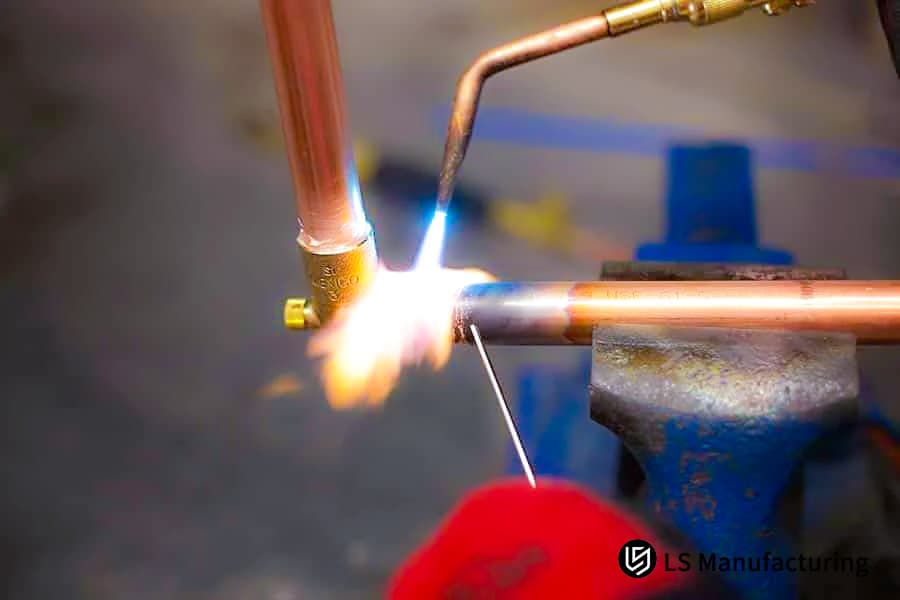
Figure 1: Close-up of a brazing torch applying a blue flame to join two copper pipes on a vise.
How Does Our Bi-Metal Joining Service Resolve Material Melting Point Gaps?
In bi-metal joining service, if materials are combined whose melting points differ by more than 800℃, the offset beam method and energy pulse waveform modulation allow us to melt the higher melting point metal without burning the lower melting point substrate, resulting in atomic-level diffusion bonding.
Precise Operation Logic of the Offset Beam Method
The offset beam technique is the fundamental method for solving the problem of melting point differences. The main idea is to equalize heat intake by moving the beam. Controlling the laser beam offset guarantees exact operations, which helps to raise the level of metal welding accuracy:
- Beam Offset Control: In stainless steel and copper welding, respectively having a melting point difference of about 740℃, to ensure that the stainless steel is properly melted without the copper being burnt through, the beam center is offset by 0.2mm from the copper towards the stainless steel.
- Energy Ratio Optimization: As per the metal melting point difference, the energy distribution is changed. Take aluminum-stainless steel welding (melting point difference 740℃+) as an example, the energy ratio is 7:3 and the beam is shifted to the aluminum alloy side to enable melting at the same time.
Laser Scanning Path and Preheating Parameters
The laser scanning path and preheating parameters directly affect bi-metal welding durability. Specific parameters are as follows:
| Metal Combination | Laser Scanning Path | Medium-Frequency Induction Preheating Temperature | Heat-Affected Zone Hardness Gradient |
| Stainless Steel-Copper | Figure-8 | 120°C | ≤200HV |
| Aluminum-Stainless Steel | Spiral | 150°C | ≤180HV |
| Titanium-Aluminum | Linear Reciprocating | 100°C | ≤220HV |
| Copper-Aluminum | Circular | 130°C | ≤190HV |
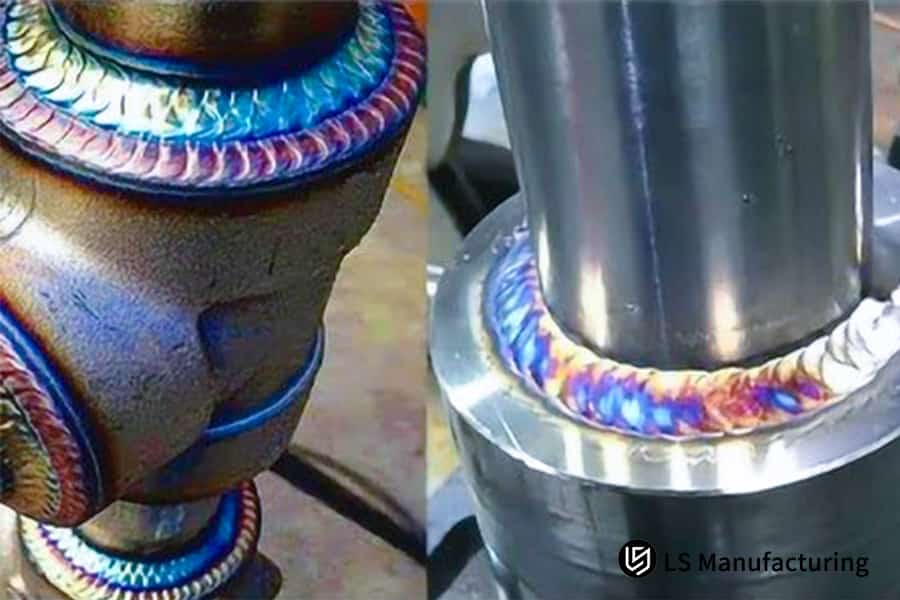
Figure 2: A complex, colorful weld bead on metal, indicating quality welding.
Can Precision Dissimilar Welding Achieve Zero-Leakage In Vacuum Components?
The presence of pores can compromise the integrity of the materials in vacuum environments In particular in ultra high vacuum. Working in 10 mbar vacuum, we get almost no gas interference using electron beam welding. At the 316L-pure copper connection, we achieved a helium leak detection level of less than 1x10 mbarl/s. This section deals with the problem of air-tightness in precision dissimilar welding and discusses the strategies that have been implemented to improve it.
Major Features of Environmental Control in Vacuum Welding
The level of cleanliness in the vacuum environment has an immediate influence on the weld airtightness. Environmental control really helps in vacuum metal welding:
- Control of Ambient Vacuum: It is necessary to keep the ambient vacuum at a constant level of 10 mbar when performing welding to remove the effects of air, moisture, and other contaminants, which would otherwise cause porosity.
- Standard Procedures of Surface Treatment: Use of plasma cleaning has been proven to be effective in breaking down oxide layers and degreasing metal surfaces. Surface scrubbing must in no way be less than 5 minutes to guarantee maximum cleanliness of the interfaces.
- Oxygen Leftover Level Management: Keep residual oxygen concentration in the welding ambiance under 50 ppm to avert oxidation process which may result in weld defects and impair airtightness.
Airtightness Testing and Deformation Control Parameters
We will guarantee no leakage of vacuum components by using a series of tests and very precise control, also with a combination of laser cutting precision technology. Some of the parameters are:
- Helium leak detection standard: Helium leakage detection rate 1×10⁻⁹ mbarl/s, suitable for the requirements of aerospace-grade vacuum components.
- Deformation control: By using a coordinate measuring machine (CMM), deformation resulting from welding, can be kept within 0.03mm and allow pipework suitable for semiconductor applications to be manufactured from.
- Inspection method: Every batch is 100% helium leak tested, and X-ray non-destructive testing is also carried out on critical parts to make sure there are no hidden defects.
Precision dissimilar welding airtightness is among the top in the semiconductor, aerospace and other high-end fields. If you need a zero leak welding solution for vacuum components, send your product design drawings, and you will get a free 24-hour DFM assessment.
What Are The Strategies For Steel To Aluminum Welding Without Brittle Failures?
The biggest hurdle to steel to aluminum welding is the Fe-Al intermetallic compound. We use cold metal transfer (CMT) or friction stir welding technologies that lead to lower heat input. As a result, the bond layer has excellent ductility and can pass even a 180-degree bending test. The details and data of the specific strategies are given below.
Aluminum-Steel Welding: The Best Process and Parameters
Generally, different processes are good for different situations. We offer variations per clients' requirements. The parameters of steel to aluminum welding directly affect the aluminum steel welding precision, as shown below:
| Welding Process | Heat Input Range | Shear Strength | Applicable Scenarios |
| CMT Cold Metal Transition | 150-200J/mm | ≥180MPa | Electric Vehicle Chassis Structural Components |
| Laser-Brazing Hybrid Process | 200-250J/mm | ≥200MPa | New Energy Battery Cooling Plates |
| Friction Stir Welding | 100-150J/mm | ≥220MPa | Lightweight Aerospace Components |
Tips for Selecting Intermediate Layers in Aluminum-Steel Welding
We enhance wettability by using specially designed intermediate layers, plus the metal stamping precision to control substrate accuracy and because of this prevent the formation of Fe-Al brittle compounds. Below are some tips on how to select aluminum steel intermediate layers:
- Intermediate layer material: Zinc-based or aluminum-silicon-based alloy coatings are a good choice and their thickness should be controlled within 5-8μm range to effectively isolate the direct reaction between Fe and Al.
- Test date: Aluminum/steel joints with LS custom technology show a 45% stronger shear strength against traditional MIG welding, and they are also capable of withstanding a 180-degree bending test without cracking.
- Mass production advantages: Electric vehicle chassis structural components can achieve 35% weight reduction without compromising on strength, because of this meeting mass production requirements.
How To Select The Optimal Custom Metal Welding Service For Medical Devices?
Medical applications require a very high level of biocompatibility and extremely small, micron-scale weld seams. Our micro-laser custom metal welding service is capable of welding ultra-fine wires having a diameter of 0.1mm (e.g. welding Nitinol to stainless steel wire), with no spatter or carbonization contamination. Below is a discussion of the main selection points and benefits.
Main Criteria and Suitable Medical Welding Solutions
Medical device welding is required to be biocompatible and highly accurate. In medical metal welding, th requirements are the most important:
- Control of Cleanliness of the Welding Process: Welding should be carried out without spatter and with no carbonization contamination. Surface roughness of the weld Ra 0.05μm, i.e. compliant with medical-grade standards.
- Control of Heat-Affected Zone: The degradation of shape memory alloys (Nitinol, for example) is prevented by adjusting the pulse duration (0.1-0.5ms).
- Biocompatibility: The materials used in welding are ISO 13485 compliant, do not contain harmful impurities, and are appropriate for human contact.
Key Advantages of LS Medical Welding Services
We To be exact designed our custom metal welding service to meet the needs of the medical industry. Below are the main advantages of our service:
- Capability for precision welding: We can weld very thin wires of 0.1mm diameter, with accuracy within 0.005mm. This is mainly useful for making very precise parts like endoscopes and surgical tools.
- Compliance with standards: We rigorously follow ISO 13485 standards, every welding operation is recorded and we also supply complete inspection reports.
- Personalized service: We tailor the entire material chain from the raw material itself to the welding operations closed user group to the specific requirements of the medical device. Our welding dissimilar metals service is compatible with various medical metal combinations.
Case Study: LS Manufacturing Custom Bi-Metal Welding Solution For EV Battery Cooling Plates
The welding quality of cooling plates in new energy vehicle batteries is one of the main factors determining battery safety and service life. This section presents a case study of how we tackled the difficulty in connecting aluminum to steel and obtained mass production with a top global battery pack supplier, thereby proving the worth of our custom bi-metal welding solution in a real-life scenario.
Customer Dilemma
While creating a new type of liquid cooling plate, a top global supplier of new energy vehicle battery packs was confronted with the issue of sealing and welding a 3003 aluminum alloy mainboard to a stainless steel fluid connector. Their need for a proper custom bi-metal welding solution was quite pressing.
Traditional brazing is susceptible to electrochemical corrosion, with the end result that residual filler metal contaminates the cooling medium. The prototype leaked during the 500-hour durability test, while the sealing rate was only 88%. The customer was in desperate need of a solution that would be free of filler, highly sealing, highly reliable, and capable of reducing weight by more than 15%.
LS Manufacturing Solution
Shortly after we got the letter, we put together a special technical team and, with the help of multiphysics numerical simulation, we designed a "biased waveform laser welding" method To be exact for the client. This method totally substitutes the conventional brazing method. In fact, it gets rid of the whole intermediate filler metal media. The exact steps are:
- Energy Ratio Optimization: During simulation studies, the laser beam is skewed towards the aluminum alloy side with an energy ratio of 7:3 to compensate for the different heat absorptions of aluminum (melting point 660℃) and stainless steel (melting point 1400℃+). This avoids the burning through the aluminum alloy substrate while the stainless steel is fully melted.
- Transition Layer Design: At the interface of welding, a nickel transition layer that is only 5m thick is added. It isolates the aluminum and stainless steel from direct contact, so inhibiting the formation of the brittle Fe-Al intermetallic compounds. And, the layer of brittleness is controlled to a maximum thickness of 5m (which is the theoretical limit).
- Tailor-made Process Parameters: The laser power is fixed at 3000W, the welding speed at 5mm/s, and the pulse frequency at 100Hz. The extremely fast cooling rate (100℃/s) also suppresses the formation of the brittle phase and enhances the ductility of the joint.
Results & Value
Major outcomes after the implementation:
- The final version was capable of enduring 1000 hours of changing pressure impacts test and thermal cycling from -40℃ to 120℃, the tensile interfacial strength was 92% of the base material.
- The sealing pass rate was increased from 88% to 99.8%, completely solving the problem of leakage.
- The weight of the cooling component was reduced by 15%, and the unit cost was cut down by $20. It has been mass-produced and deployed to a luxury electric vehicle brand, more than 100,000 units have been delivered and there have not been any quality complaints.
This case is a proof that our precision dissimilar welding and steel to aluminum welding technologies enable us to solve complex joining problems in the new energy sector. If you are experiencing similar problems, you can send us your product specifications to get a personalized solution which can assist you in mass production.

How Does LS Manufacturing Ensure Cost-Efficiency In Low-Volume Dissimilar Metal Joining?
Small-batch production often gets stuck because of fixture costs and losses during debugging. We rely on a combination of flexible laser systems and universal precision fixtures to cut down the first prototyping cycle drastically to 5-7 days, which leads to a significant reduction in unit costs. Below is a detailed examination of our cost control tactics and the return on investment (ROI) estimation.
Cost Control Strategies for Small-Batch Production
We have tailored our bi-metal metal joining service to a small-batch production environment. The leading approaches that help us achieve considerable cost savings in low volume metal welding are:
- Flexible Fixture Design: Leveraging universal precision fixtures, we can efficiently cater to small order sizes of about 50-100 pieces without the necessity of custom-made fixtures for each product, This way reducing fixture costs by more than 30%.
- Early DFM Intervention: At the prototype stage, we offer a no-charge DFM evaluation that helps to restructure the part and As a result minimize the number of weld passes that leads to welding process reductions by 2-3 passes on average and leading to a 30% reduction in failure costs of subsequent processes.
- Optimized Prototyping Cycle: Since the flexible laser system can be rapidly adjusted to change welding parameters for different materials, we are able to shorten the initial prototyping cycle to 5-7 days, this way reducing debugging losses and spreading unit cost amortization.
ROI Cost Calculation Model and Actual Measurement Data
We provide a simple and easy-to-understand ROI model to help customers quickly calculate costs:
TotalValue = (WeightReduction × FuelSaving) - JoiningCost.
Where WeightReduction is the product weight reduction (kg), FuelSaving is the fuel cost saving per unit weight (USD/kg), and JoiningCost is the welding cost (USD).
Actual accountings indicate that in small to medium-sized orders of 50-100 pieces, our 99.5% welding yield rate is by far better than the industry average of 90%, and customers' total purchasing cost is 20% lower than that of suppliers with high scrap rates. For example, for an order of 50 aluminum-steel joints, our unit cost is $80 with a scrap rate of 0.5%, while the industry average is $70 with a scrap rate of 10%, resulting in a $1800 saving in overall costs for our clients.
Our custom metal joining service enables even very small-batch customers to have access to low-price, extremely reliable welding services without the need to pay the premium of high customization. If you are a small-batch customer, call us for a free cost calculation and a customized ROI analysis report.
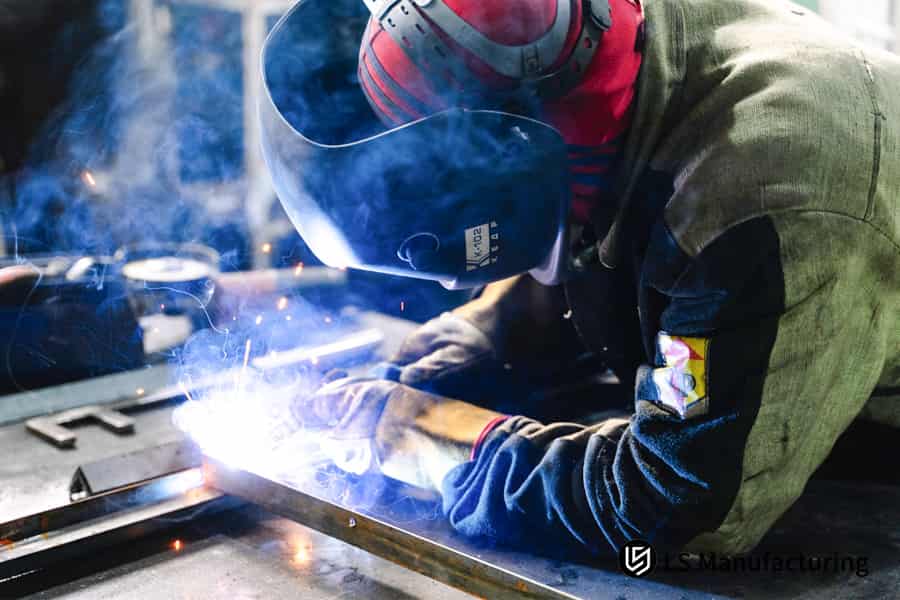
Figure 3: A welder in protective gear joins stainless steel to aluminum parts in a factory.
Why Trust LS Manufacturing As Your Strategic Dissimilar Metal Welding Partner?
Besides offering equipment, our "materials experts + senior welding engineers" approach is our second dual quality assurance method. We also have the complete data chain traceability for each item from raw material analysis to destructive testing.
Our laboratory strength and testing capabilities
We have the best laboratory equipment to guarantee the welding quality you can control, giving you a great reason for dissimilar metal welding quality control:
- Testing Instruments: With our Zeiss metallographic microscope, X-ray nondestructive testing facility, and universal tensile testing machine, we are capable of thoroughly testing the microstructure, internal flaws, and mechanical properties.
- Testing Standard: You will receive full testing documentation with each batch of products, including helium analysis, X-ray, or destructive section reports. All data are in compliance with the international aviation or medical standards.
- Accountability: We have a thorough data accountability system, with files of all steps from the purchase of raw materials to welding operations, for the goal of ensuring product traceability.
Our Core Technical Consultant Advantages
More than just processing, we also consult technically for our clients. Our main strengths have showcased us in these ways:
- Joint Product Development: We get involved in the first phases when our clients are designing their products, giving them advice on the correct materials, improving product joints, assisting clients in avoiding potential design problems, and at the same time reducing their research and development costs.
- Keeping up with Standards: Not only that we have the certifications of ISO 9001, IATF 16949, and ISO 13485, but we also cater to the compliance needs of the most demanding sectors such as that of automotive, medical, and aerospace.
- Privacy System: We adhere to a top-notch privacy system. All clients' blueprints are kept on managed servers, and we are capable of signing NDA agreements that are legally binding to uphold the confidentiality of clients' IP.
FAQs
Q1: What are the most common dissimilar metal combinations you handle?
Our focus is on four primary dissimilar metal combinations: aluminum/steel, copper/aluminum, titanium/aluminum, and stainless steel/nickel alloys. We are capable of accurately controlling the thickness of the brittle phase at the interface within 10μm, which not only helps us guarantee the reliability of the joint connection but also enables us to meet the dissimilar metal connection requirements of various industries.
Q2: How do you ensure that the tolerances of the parts do not exceed the limits after welding?
By employing the characteristic of vacuum electron beam and pulsed laser which ensures extremely low heat input, and using liquid nitrogen compensation fixtures, we can rigorously control the deformations of the parts after welding within 0.05mm tolerance. This way, our work is always aligned with the tolerance requirements of different precision parts and we have no issues with parts going beyond allowable limits.
Q3: How is the vibration resistance of dissimilar metal welded joints?
We obtained the weld strength of more than 90% of the base material using laser modification technology. All the welded joints were submitted to severe vibration and fatigue life tests to prove that they can work stably under long-term vibration conditions and they are sufficiently resistant to vibrations for long-term usage.
Q4: Do you offer DFM technical assistance?
Absolutely, LS Manufacturing will provide free DFM manufacturability evaluation and structural improvement recommendations to customers before going into mass production, to fine-tune locations of joints for best energy absorption, and much cut down chances of process-first failures later.
Q5: What is the Minimum Order Quantity (MOQ)?
A single prototype or tens of thousands mass production, we'll support your development. Workstations that are capable of being reconfigured allow changing welding parameters for different materials so we don't have to pass on the cost of a high MOQ to our customers. You can upload drawings, get quotes and meet any order needs you might have.
Q6: How do you work with welding of highly reflective materials (like copper)?
We use either a 515nm green laser or after the heating by blue light, the mix of fiber laser and blue light completely eradicates the problem of spattering when welding highly reflective materials like copper still guarantees the results of the welding are stable and meet the requirements of welding highly reflective materials.
Q7: Will a test report be provided after welding?
We conduct helium oxide tests, X-rays, and destructive cross-section tests to generate the reports. The provided test pieces and records reflect international standards for aerospace and medical sectors. Besides satisfying factory inspection and certification for welding quality standards, all documentation allow product quality tracing and verification by customers.
Q8: How do you protect my product design privacy (IP)?
We operate a strict confidentiality system in manufacturing under LS Manufacturing. Customer drawings are kept only on restricted servers. Besides that, we are able to sign a legally binding NDA agreement in line with customer requirements to strictly limit customer product design privacy and also exclude their information from leaking.
Summary
Dissimilar metal joining really helps in product performance enhancement and takes a very precise process. Drawing on its knowledge of materials science, LS Manufacturing's welding dissimilar metals service has employed advanced equipment and practical experience to help over 200 customers globally to solve the most difficult bi-metal joining problems by eliminating issues like melting point differences, expansion mismatch, and brittle fracture, resulting in highly reliable connections.
Facing a difficult material joining issue? Don't allow untrustworthy suppliers hinder your R&D.
- Send your design blueprints now: Our experienced engineers will get back to you with a free DFM manufacturability assessment report within 24 hours.
- Arrange a video conference with an expert: Talk about cost cutting methods of dissimilar metal welding with our materials science experts face to face.
Choose option to get quote: Initiate your high-performance precision manufacturing project and discover the professional power of LS Manufacturing now!
📞Tel: +86 185 6675 9667
📧Email: info@lsrpf.com
🌐Website: https://lsrpf.com/
Disclaimer
The contents of this page are for informational purposes only. LS Manufacturing services There are no representations or warranties, express or implied, as to the accuracy, completeness or validity of the information. It should not be inferred that a third-party supplier or manufacturer will provide performance parameters, geometric tolerances, specific design characteristics, material quality and type or workmanship through the LS Manufacturing network. It's the buyer's responsibility. Require parts quotation Identify specific requirements for these sections.Please contact us for more information.
LS Manufacturing Team
LS Manufacturing is an industry-leading company. Focus on custom manufacturing solutions. We have over 20 years of experience with over 5,000 customers, and we focus on high precision CNC machining, Sheet metal manufacturing, 3D printing, Injection molding. Metal stamping,and other one-stop manufacturing services.
Our factory is equipped with over 100 state-of-the-art 5-axis machining centers, ISO 9001:2015 certified. We provide fast, efficient and high-quality manufacturing solutions to customers in more than 150 countries around the world. Whether it is small volume production or large-scale customization, we can meet your needs with the fastest delivery within 24 hours. choose LS Manufacturing. This means selection efficiency, quality and professionalism.
To learn more, visit our website:www.lsrpf.com.