English



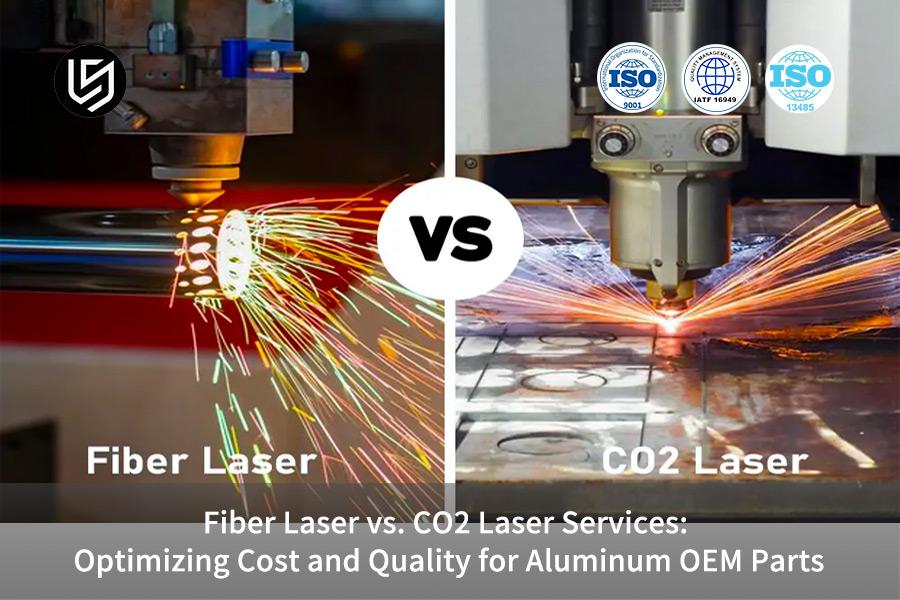
Fiber laser cutting service has become a preferred method for making aluminum OEM parts. LS Manufacturing's 12kW high-power fiber laser cutting service keeps very close tolerances to 0.05mm even while it helps OEM customers to cut their processing cost by around 30%.
Most purchasing managers may have a dilemma when the time comes for them to decide between "fiber laser vs. CO2 laser: which is the better way to cutting aluminum". Such very question between two options often ends up buying them time to consider a cost-quality trade-off. This tutorial will thoroughly explain the problem as well as offering practical solutions to OEM purchasing.
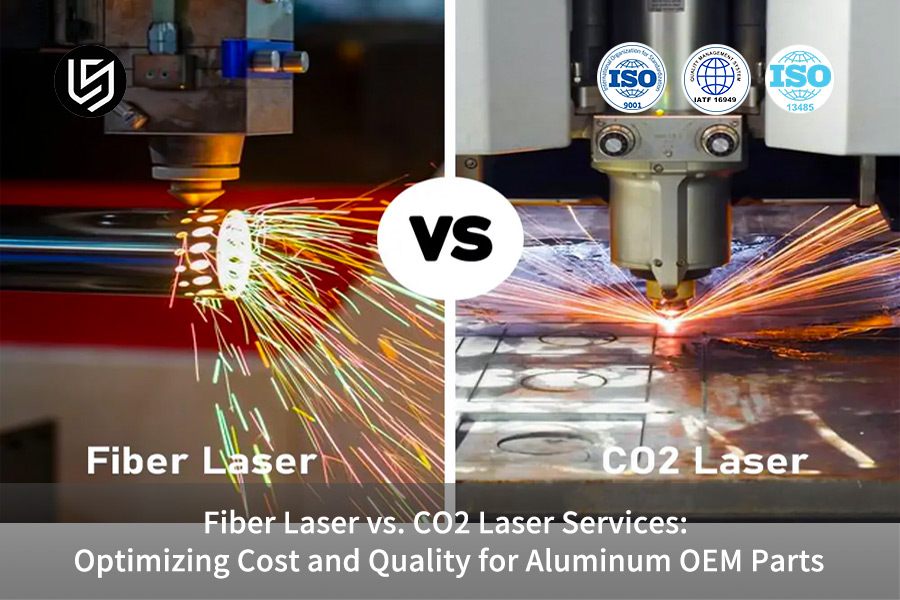
Fiber vs. CO2 Laser Cutting For Aluminum Parts: Core Answer Overview
| Comparison Items | Fiber Laser Cutting Service | CO2 Laser Services | Customer Core Benefits |
| Aluminum Cutting Speed | ≤3mm aluminum cutting speed: 3-5 times faster | Slower speed, suitable for thicker plates | Improved production efficiency, shorter delivery cycle |
| Tolerance Control | ±0.05mm, high precision | ±0.1mm, standard precision | Reduced assembly failures and material scrap |
| Operating Costs | Electro-optical conversion efficiency: 35% | Electro-optical conversion efficiency: 8% | Saves 15%-30% of total processing costs |
| Applicable Thickness | ≤12mm optimal, up to 40mm | ≥20mm optimal | Matches different OEM order thickness requirements |
This guide presents a comprehensive comparison of fiber laser and CO2 laser. It differentiates laser cutting of aluminum by showing how to choose the cheapest laser cutting service according to the OEM's requirements. At the same time, it points out ways to handle common problems like dross build-up and variation in accuracy.
Why Choose LS Manufacturing’s Aluminum Laser Cutting Service? Precision Aluminum Component Manufacturing
LS Manufacturing has 20 years' experience in aluminum laser cutting and has provided over 200 OEM customers in the aerospace, automotive, and electronics industries with high-quality products. It is a certified ISO 9001:2015 quality system organization.
A Tier 1 automotive supplier faced thermal deformation problems (0.5mm flatness) in their 5052 aluminum battery pack brackets after CO2 laser cutting. When they decided to use our 12kW fiber laser cutting service product, the flatness issue was almost completely eliminated (0.1mm), and costs were cut by 22%.
Our machinery for laser cutting complies with ASTM standards. The B209-21 standard provides that aluminum cut quality is consistent with international standards. We have an expert DFM review team capable of intervening at the stage of customer drawing pre-processing, which leads to 20% less sample modification rounds and helps customers to launch new product two weeks ahead of competitors.
We have a proprietary method that guarantees a bright and perfect aluminum cutting surface. No secondary polishing will be required. For our long-term OEM customers, we offer SPC control and raw material traceability, so that they will not need to fear switching suppliers.
If you are looking for a reliable aluminum laser cutting service provider, please contact our senior engineers for a free one-on-one consultation to determine the most suitable cutting solution for your OEM project.

Why Is Fiber Laser Cutting Service Becoming The Industry Standard For High Precision Aluminum Parts?
In the sector of laser cutting for aluminum parts with high precision, the fiber laser cutting service has gradually superseded CO2 laser services and become the standard in the industry. The main reason is the immense superiority of fiber lasers in terms of physical properties and processing efficiency, when it comes to cutting aluminum. Also, it is a major technological advancement that distinguishes laser cutting for aluminum parts from others.
The Difference in Wavelength and Aluminum Absorption
Fiber lasers emit a wavelength of 1.06m, whereas CO2 lasers emit a wavelength of 10.6m. Their absorption rates on aluminum are markedly different: the wavelength of a fiber laser obtains an absorption rate of more than 80%, while that of a CO2 laser is merely around 10%. To put it simply, this is indicative of higher conversion efficiency of laser energy to the cutting power in fiber lasers, thus avoiding wasted energy due to reflection.
Nitrogen-Assisted Cutting Provides Quality Advantage
LS Manufacturing employs nitrogen-assisted high-pressure cutting technology in its fiber laser cutting service, which effectively prevents the aluminum in liquid state from being oxidized during cutting. This technology makes sure that the aluminum parts retain a bright, metallic silver finish at the edges and they can be directly used for welding or assembly without secondary grinding, thus reducing the overall processing costs for the customers.
For OEM customers requiring high-precision aluminum parts, fiber laser cutting services not only improve processing efficiency but also ensure product consistency. You can download our free white paper to learn more about the application details of fiber laser cutting for aluminum parts.
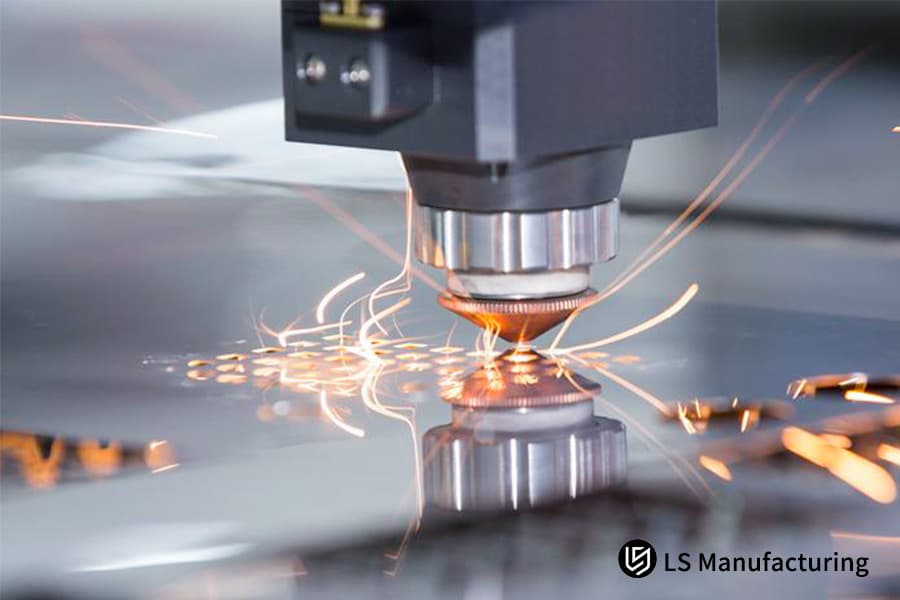
Figure 1: Fiber laser cutting machine working on aluminum plate, sparks flying.
How Can CO2 Laser Services Offer Advantages in Thick Plate Fabrication?
However, fiber laser cutting services lead the aluminum laser cutting market. In fact, professional laser cutting service comparison can demonstrate that CO2 laser services still enjoy certain technical advantages that make possible the production of thick aluminum plates (20mm and above) which are not to be discarded in some special OEM orders.
Advantages of CO2 Lasers in Thick Aluminum Plate Cutting
For OEM orders of aluminum plates thicker than 20mm, the kerf width of certain CO2 laser processes is larger which results in the easier removal of slag, thereby avoiding kerf blockage. According to internal test data from LS Manufacturing, when working on 25mm 5052 aluminum plates, the CO2 laser cut's verticality may actually outperform older low-power fiber optic equipment within a specific range of thickness.
Cost-Saving Alternative: High-Power Air Cutting Technology
Nevertheless, CO2 lasers offer benefits in the field of thick aluminum plate cutting, their running costs are quite a bit higher than fiber lasers. LS Manufacturing has rolled out high-power air cutting technology, which is capable of substituting the expensive CO2 operational mode in most thick aluminum plate cutting situations, thus enabling customers to save 15% on electricity surcharges.
| Aluminum Plate Thickness | CO2 Laser Cut-Section Perpendicularity | High-Power Fiber Laser Air-Cutting Perpendicularity | Cost Savings Ratio | Applicable OEM Scenarios |
| 20mm | 92% | 90% | 15% | Standard Thick Plate Structural Parts |
| 25mm | 93% | 91% | 14% | Heavy Equipment Parts |
| 30mm | 91% | 89% | 13% | Custom Thick Plates |
| 35mm | 88% | 87% | 12% | Low-Precision Thick Plate Parts |
What Drives the Fiber vs CO2 Laser Cutting Decision for OEM Laser Cutting Service Cost?
For OEM suppliers, a deciding consideration for the selection of fiber vs CO2 laser cutting when trying to reduce the unit cost is the total cost of ownership (TCO) rather than just the unit price of the laser cutting service. To get the best return on investment (ROI), one must analyze thoroughly the economic effectiveness of both technologies. Differences in cost and precision are the main distinctions between fiber laser and CO2 laser.
Total Cost of Ownership Comparison
Laser cutting total lifecycle cost comprises gas consumption, electro-optical conversion efficiency, consumable costs, and subsequent processing costs. Fiber lasers have an electro-optical conversion efficiency of around 35%, whereas CO2 lasers only yield 8%, thus fiber lasers require less electricity for the same amount of cutting work.
| Cost Items | Fiber Laser Cutting Service | CO2 Laser Services | Cost Difference per 1000m Kernel Meter |
| Gas Consumption (Nitrogen/Oxygen) | $12 | $28 | $16 |
| Electricity Cost | $8 | $35 | $27 |
| Consumable Cost (Nozzle/Optical Components) | $5 | $12 | $7 |
| Subsequent Processing Cost | $3 | $15 | $12 |
| Total Cost | $28 | $90 | $62 |
Key Factor: Subsequent Welding Success Rate
According to LS Manufacturing, OEM customers are reminded that the high kerf consistency of fiber laser cutting services greatly enhances the success rate of the following robotic automated welding.
The robotic welding qualification rate of fiber laser cut parts can be over 99.5%, whereas CO2 laser cutting only achieves about 95%. This in turn reduces rework and material waste, which is also a significant implicit cost difference in the laser cutting service comparison.
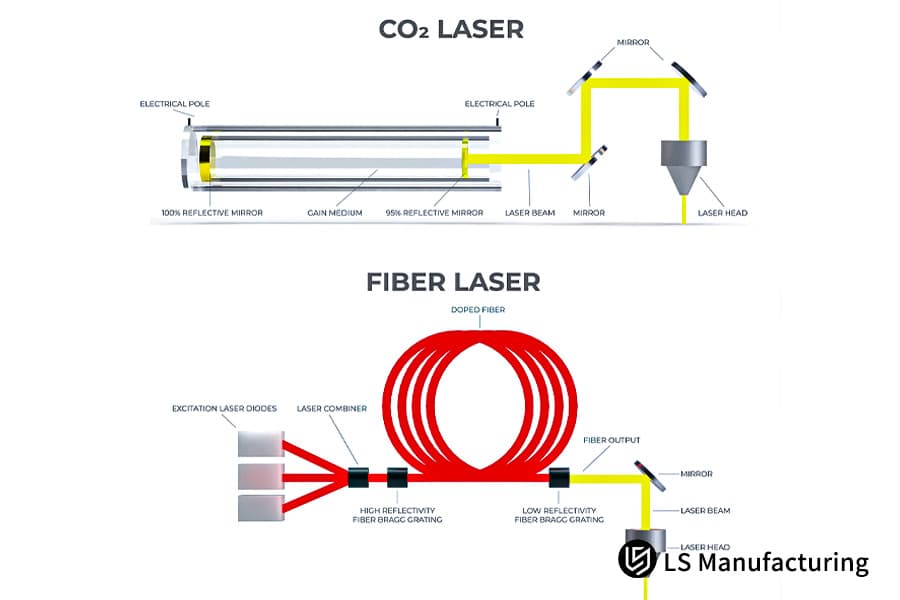
Figure 2: CO2 and Fiber laser system diagrams for cutting service comparison.
How Does LS Manufacturing Ensure ±0.05mm Precision in Custom Aluminum Laser Cutting Service Projects?
Precision in custom aluminium laser cutting service is a major concern for top-tier OEM clients. LS Manufacturing uses a variety of methods to ensure that the precision of aluminium parts cutting is within 0.05mm, thus addressing the problem of dimensional deviation in aluminium cutting. This precision difference between fiber laser and CO2 laser is also one of the main features.
Dynamic Focus Compensation Can Solve Thermal Lensing Effect
The thermal lensing effect is one of the major reasons for the loss of precision in aluminium laser cutting. During long-term operation of the laser cutting head, the rise in temperature causes the lens to deform, resulting in a change of focus position. Basically, the level of cutting precision is inversely proportional to the duration of operation.
LS Manufacturing adopts the technology of dynamic focus compensation to adjust the cutting head height continuously, thus neutralizing the thermal lensing impact. Also, our cooling mechanism can maintain the temperature fluctuation of the cutting head within 1℃ during the 24-hour continuous operation, making sure of the focus position stability.
Strict Process Control and Test Data
- Continuous Processing Test: LS Manufacturing's exclusive test data reveals that even after 24-hour nonstop machining of 6061-T6 aluminum frame parts, the diameter deviation of the hole between the first and the 1,000th pieces is less than 0.02mm.
- Full Inspection Guarantee: Besides, finishing product measurements are done by a Zeiss CMM to ensure 100% compliance to the accuracy requirement.
- Report Retention: Thorough precision test documentation is made available for each batch of products, which supports customer traceability and acceptance, and quality management.
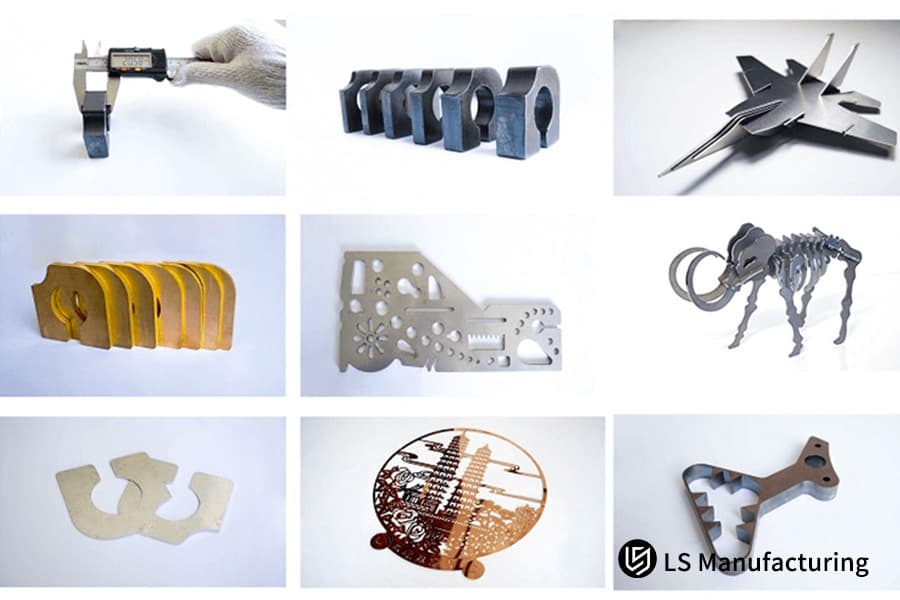
Figure 3: Worker measuring aluminum laser cut part with caliper for precision check.
Can an Experienced Laser Cutting Service Provider Solve Dross and Burr on 6061 Aluminum?
Dross and burrs are the most troublesome issues when laser cutting 6061 aluminum alloy. Several OEM customers, failing to fix these problems, end up incurring heavy costs for additional vibratory grinding, which raises the overall production costs.
Core Process: Optimizing Nozzle and Overhang
- Adjustment of the Nozzle-to-Sheet Distance Ratio: By accurately measuring and doing the calculations, the most suitable diameter of the nozzle to the distance from the sheet ratio was determined. This is the starting point for dross-free cutting.
- Fine-tuning the Overhang Range: If you keep the overhang within the range of 0.5mm-0.8mm, you will attain a high level of cutting performance and, at the same time, the molten slag will not get stuck to the sheet surface.
- Purging with High-Pressure Nitrogen: Employing high-pressure nitrogen gas exceeding 16 bar for purging instantly eliminates the molten slag produced during cutting. This results in "zero dross" cutting of 6061 aluminum alloy.
Proper Focal Position Prevents Formation of Hard Oxide Layer
If the focal position is set incorrectly, a hard oxide layer that is challenging to remove may be formed at the bottom of the aluminum material. Our technicians carefully determine the focus position in accordance with the thickness and material of the 6061 aluminum alloy to deliver a smooth, burr-free cut surface.
This process saves customers $0.80 per piece in subsequent vibratory grinding costs. If you are struggling with dross and burr issues in cutting 6061 aluminum, check out our success stories to see how we help OEM customers solve this pain point in laser cutting for aluminum parts.
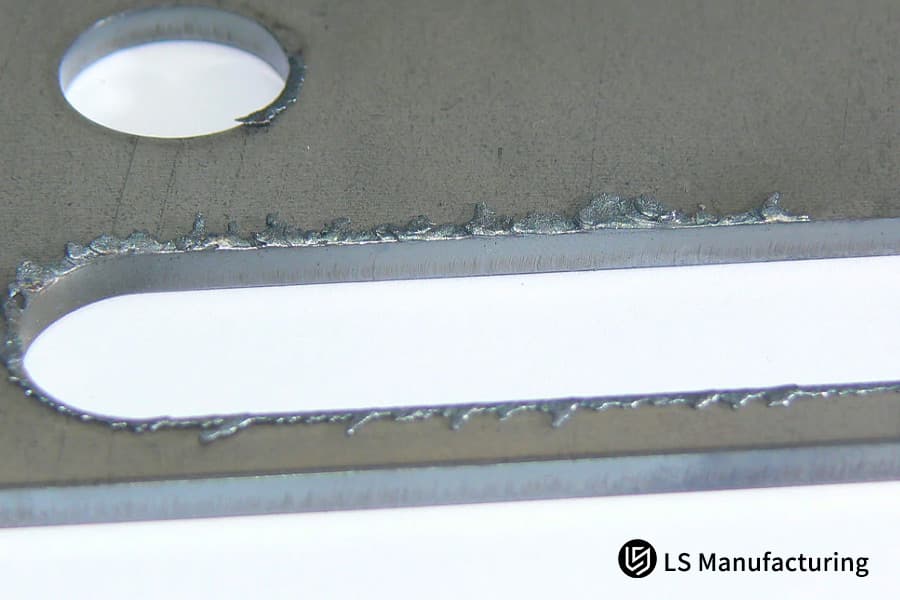
Figure 4: Closeup of laser cut aluminum with dross and burr on edge.
Case Study: How LS Manufacturing Solved 5052 Aluminum Bracket Distortion For a Tier-1 Automotive Supplier?
Automotive OEM parts require very high levels of precision and stability. Thermal deformation is often one of the problems when cutting aluminum brackets. This success story will show how LS Manufacturing, through the use of its expert OEM laser cutting service, helped a tier-1 automotive supplier to solve the problem of deformation of 5052 aluminum brackets.
Customer Problem
A Tier 1 automotive supplier produces 5052 aluminum battery pack brackets to customer specifications only. The first supplier employed CO2 laser cutting which led to a very large heat-affected zone (HAZ) and serious thermal deformation in the thin-walled areas, also the flatness deviations went up to 0.5mm. As a result, the automated assembly line was often stopping which caused production schedule disruptions.
The customer tried a number of times to adjust the parameters of cutting, but the problem did not go away with the rework costs 5.2 USD per unit and also the weekly delivery delays resulted in $12,000 penalties. The customer had an immediate requirement for a dependable laser cutting service provider who could solve the problem and help the mass production stability.
LS Manufacturing Solution
After we got the customer's order, our engineering team started with a thorough study of 5052 aluminum bracket drawings and the initial cutting process. It turns out the main cause of thermal distortion was the low energy level of the CO2 laser and a very problematic cutting path.
- Changing Cutting Tool: We decided on a 12kW ultra-high-speed fiber laser cutting service, which comes with a high energy density and a very narrow heat-affected zone, thus significantly reducing thermal deformation.
- Modified Cutting Path: The "leapfrog nesting" technique was used to separate heat and eliminate heat concentration in the thin-walled areas, thus leading to the reduction of deformation right from the source.
- Improved Assist Gas: Changing to a tailor-made gas mixture not only leads to better stability of the cut but also further narrows the heat-affected zone width.
Results and Value
The flatness of the 5052 aluminum bracket after the process optimization was brought to 0.1mm, which is in line with the automated assembly requirements, the width of the heat-affected zone was cut down by 70%, from 0.8mm to 0.24mm, the cost of unit rework came down to $0.3, showing a 94% reduction, and the customer's unit procurement cost fell by 22%, saving $1.8 per piece.
Because of greatly enhanced product quality and stability, the customer finally gave LS Manufacturing the whole annual order of 500,000 units. This decision brought about lasting mutually beneficial cooperation for both parties. If you also experience aluminum part deformation issues in automotive OEM production, you can submit part details to obtain a customized OEM laser cutting service solution.

Why Does a Professional Manufacturer with DFM Review Reduce Lead Time?
For OEM customers the total delivery cycle of aluminum parts not only covers laser cutting time but also the time for sample modification and design adjustment. Selecting a qualified laser cutting manufacturer with advanced DFM review functions is one of the ways to effectively shorten the total delivery cycle, and the choice of fiber laser vs co2 laser cutting will further impact delivery efficiency.
DFM Review: Reducing Costs through Design Optimization
- Part design optimization: Drawing right-angle changes to small radius corners will result in faster laser turning speed, better cutting efficiency and less stress concentrations.
- Layout adjustment: With a scientific layout, the material utilization rate is raised to more than 85%, which not only minimizes material wastage but also lowers the cost to the customer for procurement.
- Pre-processing Proposal: Drawing on the characteristics of laser cutting, a customer receives from the combination a targeted design suggestion avoiding the issues during the following processes.
Reducing Sample Modification Rounds, Shortening Delivery Cycle
Such pre-processing can reduce the sample modification rounds by 20%, thus preventing project delay topic of three modifications. An electronics industry client, for example, was originally scheduled to carry out five rounds of sample revisions. Our DFM review confirmed that only four rounds would be enough, and this way the product launch was two weeks ahead of the competitors.
How to Evaluate an Aluminum Laser Cutting Service for Long-Term Contract Manufacturing?
OEM customers who rely on contract manufacturing over a long period should consider a number of factors when choosing their aluminum laser cutting service provider. Reliability is one aspect that plays a decisive role in the stability of the supplier in terms of product quality, delivery time, and reducing the probability of supply chain disruption.
Primary Evaluation Metrics
- Independent Testing Certificates: The supplier is expected to share independent testing certificates for cutting precision and product quality to attest the products' conformity to international standards.
- Detailed SPC Process Control Documentation: Having a comprehensive SPC system for process control, the supplier should be able to record key quality parameters for every production batch.
- Traceability of Raw Materials: The supplier should provide Material Quality Reporting (MTR) for each batch of aluminum, enabling raw materials to be tracked back.
LS Manufacturing's Reliability Commitment
LS Manufacturing complies with the above three points of evaluation. We physically check the Material Grade (MTR) for each batch of aluminum material to ensure quality at source, we employ Zeiss CMM for 100% inspection of final products and provide comprehensive reports, our SPC process control data is fully documented and customer-accessible.
FAQs
Q1: What is your fiber laser cutting service's maximum capacity to cut aluminum thicknesses?
LS Manufacturing employ latest 12kW high power equipments and can provide industrial level of aluminum cutting up to 40mm thickness. However, they can achieve the best efficiency and quality of cutting for thickness less than 12mm.
Q2: Will fiber laser cutting introduce heat-affected zone (HAZ) problems on thin aluminum OEM parts?
Since fiber lasers have a much higher energy density and concentrated energy than CO2 lasers, the heat-affected zone (HAZ) in the cut is very narrow, which means that 1mm-3mm thin aluminum parts will not have edge grain growth or deformation.
Q3: What is the price of aluminum laser cutting service compared to waterjet cutting?
Laser cutting for thickness below 10mm is 5-10 times faster than waterjet cutting, on average costing only 60% of waterjet cutting, and no secondary grinding is needed.
Q4: What makes nitrogen the gas of choice over oxygen for high-quality aluminum laser cutting?
Being an inert protective gas, nitrogen keeps aluminum from undergoing oxidation at elevated temperatures. This results in a cut surface free from scale that will be suitable for a direct anodizing process of high standards.
Q5: Can LS Manufacturing provide custom finishing after the laser cutting process?
Absolutely! We can cover the whole process including bending riveting powder coating, and anodizing. This way, the OEM parts will be ready for assembly smoothly immediately after the cutting stage.
Q6: How do you prevent scratches on the surface of polished aluminum parts during laser cutting?
To keep the polished aluminum parts completely scratch-free, especially at the high-end level, we use a combination of special brush supports on the tables or a film-coated cutting process along with a fully automated loading and unloading system.
Q7: What file formats are required for an OEM laser cutting service quote?
We accept .DXF, .DWG, .STEP, and .IGS files. You may upload your drawings, and our DFM team will typically complete a manufacturability assessment and provide a quotation within 24 hours, allowing you to receive a quote quickly.
Q8: Is there a Minimum Order Quantity (MOQ) for your custom laser cutting services?
Yes! We do facilitate quick turnaround prototyping (1-10 pieces) along with large volume production. The flexible production lines of LS Manufacturing can be optimized for order scheduling costs based on different order sizes.
Summary
It's not possible to declare a definite winner between Fiber Laser and CO2 Laser Services - it's always the solution that fits the particular engineering requirements. For aluminum OEM parts buyers who value precision, efficiency, and who want to minimize long-term costs, a fiber laser cutting service is, without a doubt, the best option to obtain ROI given the current state of technology.
By highly accurate regulating of focus, then the gas pressure, and finally kerf compensation, we have been able to supply the aerospace, automotive, and electronics sectors with high-quality aluminum alloy components, addressing the fundamental cutting issues.
Do not let your inefficient production methods be a reason for your supply chain to be unresponsive. If you are experiencing problems like producing burrs on aluminum parts or having unstable precision, you can reach out to our senior engineering team, who will provide you with a free DFM review report along with tailored laser cutting solutions.
📞Tel: +86 185 6675 9667
📧Email: info@lsrpf.com
🌐Website: https://lsrpf.com/
Disclaimer
The contents of this page are for informational purposes only. LS Manufacturing services There are no representations or warranties, express or implied, as to the accuracy, completeness or validity of the information. It should not be inferred that a third-party supplier or manufacturer will provide performance parameters, geometric tolerances, specific design characteristics, material quality and type or workmanship through the LS Manufacturing network. It's the buyer's responsibility. Require parts quotation Identify specific requirements for these sections.Please contact us for more information.
LS Manufacturing Team
LS Manufacturing is an industry-leading company. Focus on custom manufacturing solutions. We have over 20 years of experience with over 5,000 customers, and we focus on high precision CNC machining, Sheet metal manufacturing, 3D printing, Injection molding. Metal stamping,and other one-stop manufacturing services.
Our factory is equipped with over 100 state-of-the-art 5-axis machining centers, ISO 9001:2015 certified. We provide fast, efficient and high-quality manufacturing solutions to customers in more than 150 countries around the world. Whether it is small volume production or large-scale customization, we can meet your needs with the fastest delivery within 24 hours. choose LS Manufacturing. This means selection efficiency, quality and professionalism.
To learn more, visit our website:www.lsrpf.com.