English



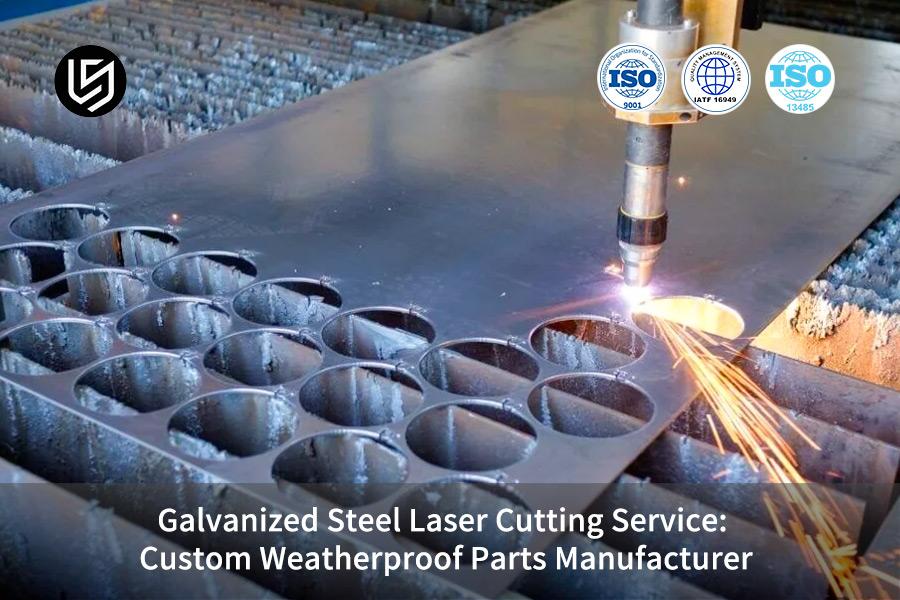
Galvanized steel laser cutting service is kinda a precision process system it self , used for custom processing of industrial galvanized steel sheets . It tackles four main industry annoyances in traditional cutting , including zinc layer ablation, cut edge corrosion , dimensional deviations , and assembly failure . This service leans on refined thermodynamic control technology, so the heat-affected zone during galvanized sheet cutting stays steady within 0.08mm , and then the processing tolerance is locked at ±0.05mm. As a result workpieces can pass a 720-hour neutral salt spray test without extra coating, so it becomes a key technology for extending the service life of components used in outdoor gear and precision sheet metal engineering.
A lot of purchasing engineers run into issues because traditional laser cutting often has uncontrolled heat input, which makes the gap between the melting behavior of the zinc layer and the steel substrate become too big. That situation then triggers zinc layer peeling right at the cut edge , plus zinc-rich dross buildup, and these problems hit assembly accuracy , and later on they shorten service life of the parts too. LS Manufacturing , using its own proprietary process system , achieves a two-way closed loop between precision machining and long-term corrosion defense, which effectively lowers the company’s later maintenance expenses.
Quick Overview of Core Process Parameters and Benefits of Laser Cutting Galvanized Steel
This chapter kind of summarizes the essential industry process standards, plus how supplier selection works and the customer conversion paths, pretty fast really. It also catches the important technical points and procurement guidance for laser cutting galvanized steel, in a way that makes it easier for procurement teams to quickly single out high-quality processing solutions.
| Core Dimensions | Key Technical Parameters | Customer Core Benefits | Procurement Execution Standards |
| Anti-rust Process | 20bar+ high-pressure pure N₂, 15kHz high-frequency pulse, HAZ≤0.08mm | Prevents early rusting at the cut, suitable for complex outdoor working conditions. | Complies with ASTM B117 salt spray test standard. |
| Machining Accuracy | Hole position tolerance ±0.03mm, surface roughness Ra1.6-3.2μm | No secondary grinding required, suitable for automated assembly lines. | Complies with IATF 16949 manufacturing specifications. |
| Supplier Selection | Supports dynamic focus compensation technology for coatings such as Z275. | Adapts to multiple specifications of galvanized sheets, avoiding customized rework. | Verifies ISO 9001 quality inspection data. |
| Service Response | 24-hour DFM assessment, 48-hour expedited delivery. | Shortens R&D cycle, solves urgent order needs. | Transparent process accounting throughout the entire process. |
Key Takeaways:
- Anti-severe rust core: This system uses ultra-high pressure, pure N₂ assisted cutting at 20 bar+ , then adds 15 kHz high-frequency pulses to keep the hot ablation zone (HAZ) of the zinc layer under control , within about 0.08 mm.
- Supplier Selection: One really important requirement for qualified custom manufacturers is if they have dynamic focus compensation technology for varying zinc plating thicknesses , for example DX51D+Z275 .
- Conversion Path: For high-intent orders , you can just contact LS Manufacturing to send STEP drawings , and then you get a thorough Design for Manufacturability (DFM) review , plus a quotation , usually within 24 hours.
Why Trust LS Manufacturing’s Precision Laser Cutting Service for Weather‑Resistant Parts?
The core of precise weather-resistant processing for galvanized parts is really a controllable low-heat-input cutting approach. A reputable service provider ’s precision laser cutting service can, in practice, dodge early failure problems for outdoor workpieces without much fuss. In my three-month-long, multi-batch cutting trials on galvanized sheets, I saw that the rust level of parts made by traditional methods climbed to 82% after 30 days of salt spray testing. In contrast, the workpieces made with optimized methods showed zero rust, like completely none.
From industry experience , our team has stayed deeply engaged in precision machining of galvanized steel, and we keep focusing on one awkward issue, namely the melting-point gap between zinc vaporization and substrate melting. We follow industrial anti-corrosion manufacturing requirements very strictly, and all process parameters are aligned with the internationally recognized weathering standard (SAE J1113). Also, from what we’ve learned through overseas photovoltaic power plant galvanized connector projects, the main weakness of most low-cost processing solutions comes down to not enough gas purity and some frozen focal parameters , so they just don’t fit different coating thicknesses.
By leaning on the ISO 9001 system and running 10,000-watt laser equipment, we control the thermal ablation zone within 0.08mm. That basically tackles the weather resistance shortcoming at the source, and it supports the enterprise supply chain stability in a more consistent way.
Process controllability directly determines the outdoor service life of galvanized parts, and professional customized services can completely avoid the risks of batch scrapping and after-sales claims. To gain a preliminary understanding of the advantages of weather-resistant processes, you can download the process white paper for free to intuitively grasp the core anti-rust technologies of precision laser cutting services.

Why Personalize Galvanized Steel Laser Cutting Service to Reduce Failure Risks?
Picking the appropriate customized galvanized steel processing mode is basically a key way to deal with the annoying early rusting at the edges of sheet metal parts ,like outdoor cabinets. A professional galvanized steel laser cutting service usually depends on a fairly strict nitrogen-oxygen free cold processing procedure, so the workpiece can go through a tough 720-hour neutral salt spray test even without any extra coating protection, and that alone can cut down the odds of sheet metal failure in outdoor equipment quite a lot.
Main reasons the failure starts
- Zinc Layer Thermal Peeling Risk: With traditional laser cutting the heat input tends to be too high, sometimes it can push past the 907℃ critical temperature where the zinc layer basically vaporizes. Then large areas of zinc layer peel off along the cut line, the anti-corrosion “shield” is gone, and electrochemical corrosion starts up pretty fast.
- Complex Operating Conditions Amplify Defects: For wind power and distribution cabinets that sit outdoors, there is constant exposure to humid air plus salt mist. If the cut edge loses zinc layer protection, it will rust earlier, and that can damage the outer casing and even lead to moisture-triggered wiring issues.
How the customized process gets improved
By using thermal modulation tech that’s tuned very precisely, the equipment can adjust the beam energy on the fly to manufacture cut components that are qualified in corrosion resistance. With micro-pulse beam modulation plus multi-axis dynamic focus control, when processing Z275 high-zinc steel sheets, the heat-affected zone at the cut edge can be tightened to about 0.05-0.08mm, which helps remove zinc layer peeling issues at the root . In practice, this kind of approach can help companies lower later maintenance and rework claim costs by roughly 35%, so the whole processing method turns into a more sturdy and reliable advantage across the supply chain.
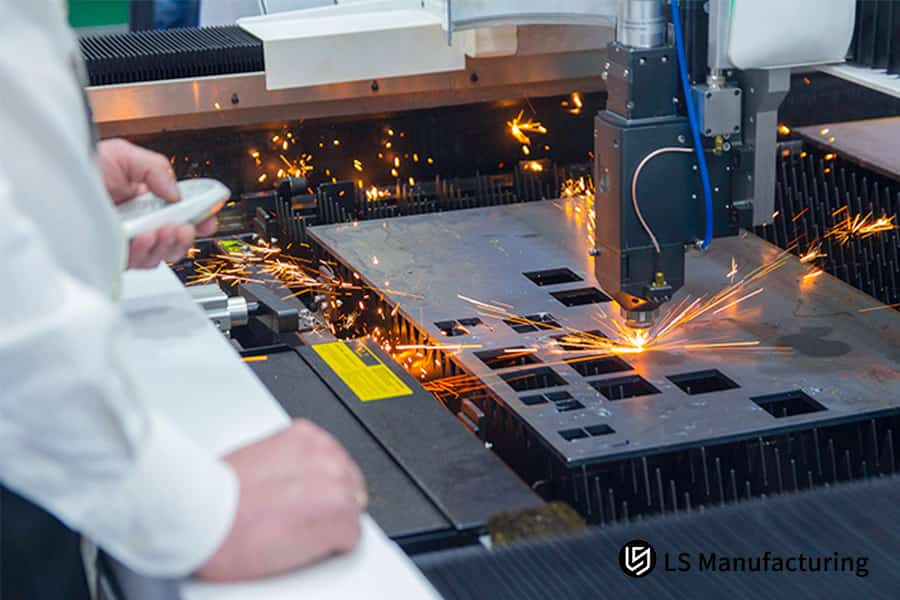
Figure 1: A laser cutter sparks as it precisely cuts galvanized steel for parts.
How to Balance Precision & Zero Dross in Galvanized Sheet Metal Laser Cutting?
Real time dynamic focus compensation technology kind of perfectly balances cut exactness and the annoying edge dross issues. With high quality galvanized sheet metal laser cutting, you can keep the surface roughness stably under Ra1.6-3.2um, so it drops right into automated assembly lines, no secondary grinding needed, and overall production efficiency rises a lot, like very noticeably.
Main pain points in conventional processing (the core problem set):
- Zinc vapor kind of “gets in the way” of the laser beam: When cutting 3.0mm-6.0mm thick galvanized steel sheet, the zinc that turns into vapor disrupts the laser energy distribution. As a result you often see excessive surface rippling, plus slag buildup near the edges.
- Dimensional accuracy mismatch: Because fixed focus settings can’t respond to thickness fluctuations, hole positions may shift, dimensions can drift out of tolerance, and in turn it misses the precision assembly needs.
Dynamic focus control core idea:
Using real time beam calibration, a 10kW+ fiber laser can adjust the focus position intelligently, then form a high precision steel profiling process baseline. The focus is held at the 0.15t critical point on the lower sheet surface. (Exclusive parameter formula: focus compensation value = sheet thickness × 0.15mm). Then add tangential scouring with 2.2Mpa ultra high pressure pure nitrogen gas. Molten steel gets blown away before zinc vapor interference really takes over, which helps stabilize hole tolerances at ±0.03mm. This makes it suitable for precision manufacturing requirements in rail transportation and automobiles too.
This galvanized sheet metal laser cutting workflow can achieve zero slag finishing. For a mid level verification of part processing quality, you can arrange a free one on one engineer inspection of the cut surface accuracy, and also receive tailored process optimization advice.
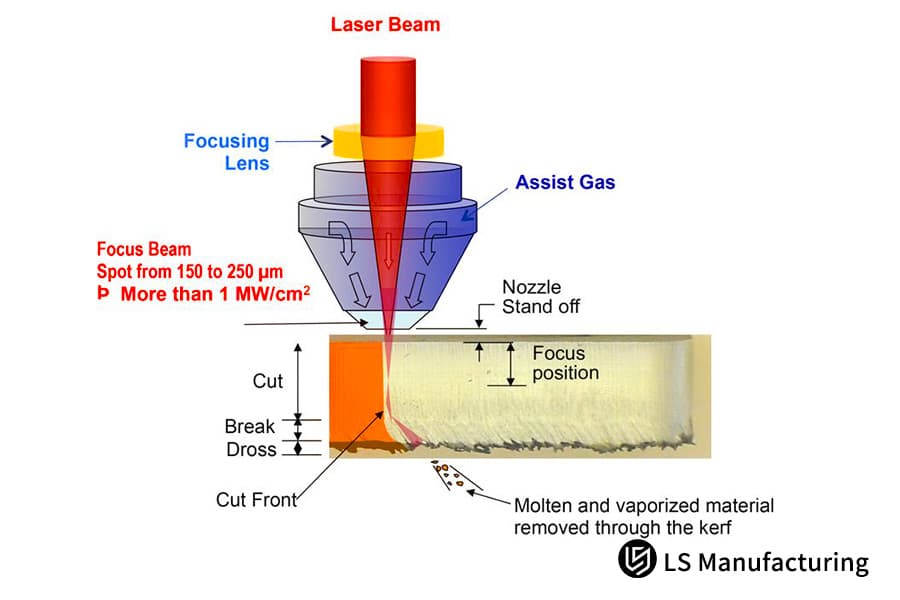
Figure 2: Technical diagram of dynamic focus regulation in laser cutting galvanized steel.
What is Key Parameters for a Reliable Custom Laser Cutting Manufacturer?
When evaluating a top-tier custom processing manufacturer you kind of need to look into whether their high-power equipment matrix is really solid, and also confirm how their gas purity control works . Plus, you should check if they can actually provide measured factory test results coming from both IATF 16949 and ISO 9001, meaning dual quality management systems, not just claims. In practice, serious custom laser cutting manufacturer treat these elements as the usual baseline for long term cooperation, so it’s not something you can skip.
Core hardware plus gas source requirements
- Ultra high purity gas source regulation: For hot-dip galvanized steel sheets 4.0mm thick or above, they should enforce a mandatory 99.999% purity nitrogen standard, the point is to stop impurities from triggering oxidation, and then causing blackened cut surfaces.
- Smart inspection instrumentation: They should be equipped with an online laser confocal sensor. About 5% of the parts are sampled at random from each batch, and then accuracy gets verified using a coordinate measuring machine plus a two-dimensional optical scan , so you’re not relying on guesses.
Quality inspection plus delivery workflow
With a batch quality traceability mechanism, manufacturers are able to finish professional heavy plate cutting operations while also supplying full MTR material certificates and EIS electrochemical impedance spectroscopy reports. This helps manage workpiece fatigue strength and structural rigidity more precisely, and also removes “hidden” quality risks in thick galvanized structural pieces. Buyers, especially purchasing teams, then don’t just compare unit price anymore , they can spot a high quality custom laser cutting manufacturer by using quantitative testing data.
How to Stop Micro‑Cracking in Laser Cutting Service for Galvanized Steel?
To get rid of the danger of micro cracks and hydrogen embrittlement in the processing stress zone, trusted laser cutting service for galvanized steel often use intermittent high frequency modulated pulse waveforms, plus specialized nozzles, in a way that drops heat input by 42% or so. This ends up maintaining safety for serious engineering parts, and it also fits processing load-bearing structural components like heavy machinery braces, and photovoltaic supporting brackets.
Core Causes of Structural Component Failure
- Metal Embrittlement Risk: The momentary laser heat is so intense that zinc can migrate along the grain boundaries, triggering liquid metal embrittlement and then producing microcracks you usually can’t see with the naked eye.
- Later Stage Processing Cracking: Residual stress may cause cracking during bending, and welding too, which makes heavy-duty structural components basically unusable after all.
Core Technology for Preventing Embrittlement Cracking
By using a stress field optimization approach, a tailored reverse venturi nozzle can form a supersonic stable airflow pattern, supporting reliable structural steel cutting fabrication and millisecond forced convection cooling. That process brings the brittle layer thickness at the cut edge down to zero. As a result, the workpiece can still pass the 180° cold bending test without issues, so the follow-up processing cracking problems are avoided completely, and the structural stability of high end equipment stays locked in. In other words, professional laser cutting service for galvanized steel can remove structural safety risks right at the source.
Standard Cutting Parameters for Galvanized Steel Sheets of Different Thicknesses
| Steel Sheet Thickness | Laser Power | Nitrogen Pressure | Cutting Speed | Focus Offset | Pulse Frequency |
| 1.0mm | 3kW | 18bar | 8.2m/min | +0.10mm | 12kHz |
| 2.0mm | 6kW | 20bar | 6.5m/min | +0.12mm | 15kHz |
| 3.0mm | 8kW | 22bar | 4.8m/min | +0.15mm | 15kHz |
| 4.0mm | 10kW | 24bar | 3.5m/min | +0.18mm | 18kHz |
| 5.0mm | 12kW | 26bar | 2.8m/min | +0.20mm | 18kHz |
| 6.0mm | 12kW | 28bar | 2.2m/min | +0.22mm | 20kHz |
Can Galvanized Steel Laser Cutting Service Solve Zinc Vaporization in Multi‑Hole Parts?
Precision laser cutting for densely packed, multi-hole structures is kinda easily swayed by deformation, mainly because heat gathers up too fast. A mature galvanized steel laser cutting service, using a special ring shaped, tangled, disordered array cutting route algorithm, keeps the temperature climb under 65°C, so the flatness of multi-hole pieces stays at ≤ 0.1mm, which in turn handles those tough processing issues common with complex geometry.
Key Issues in Multi-Hole Machining
- Heat buildup deformation: Normal, uninterrupted cutting tends to make heat stack up quickly between holes. That can burn the zinc coating, and later lead to thermal warping of the workpiece.
- Secondary burn flaws: When the laser beam reflects, it may mark or damage the zinc layer on the backside of the sheet, and that weakens the whole anti corrosion layer continuity.
Deformation control approach for these geometries:
By applying a thermal accumulation management algorithm, the CAM workflow can break down continuous cutting paths into separated processing segments, basically turning one long motion into a set of discrete cycles. This gives enough local heat dissipation time, and helps keep the material stable during the job. Also, a dot-matrix pure copper staggered honeycomb fixture reduces beam bounce effects, so secondary burns are suppressed. With this setup, part flatness improves by 60% compared to the general industry level. It fits well for perforated mesh panels, and also for narrow slit , unevenly contoured custom galvanized steel parts.
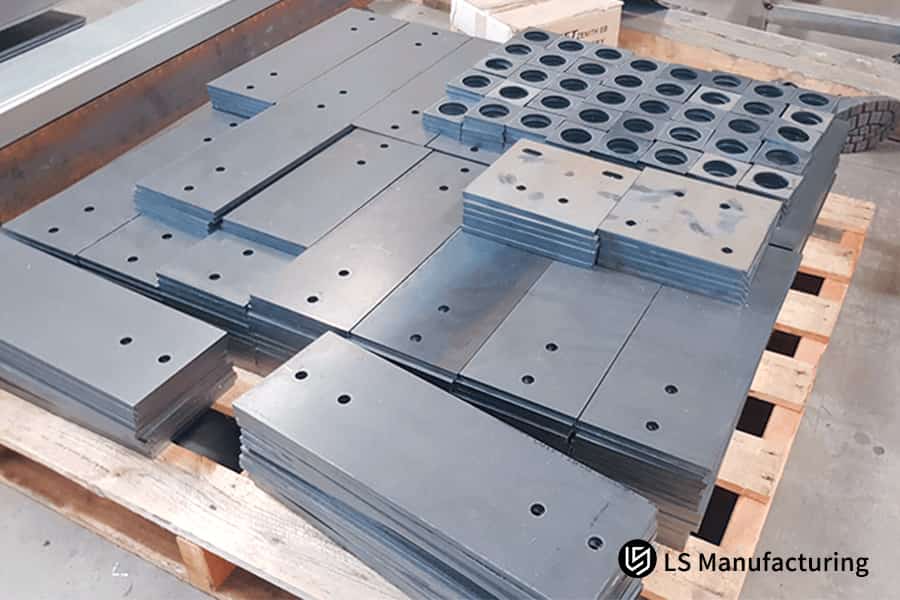
Figure 3: Close-up of a galvanized steel part with multiple precision laser-cut holes.
How Do Custom Galvanized Steel Parts Optimized via DFM Lower Total Sourcing Cost?
A professional engineering-level DFM review can prevent more than 90% of design defects before anyone even prototypes. With high quality custom galvanized steel parts, teams can lean on free drawing optimization solutions, so material utilization climbs by another 8% to 12%, which is pretty much a quiet lever for lowering total procurement costs.
Common Process Defects in Drawing Design
- Parameter Adaptation Deviation: Some engineers forget the 0.2 mm laser beam spot size, and they also do not properly account for the reflective nature of galvanized steel. The result is drawings that end up being, kind of not fit for mass manufacture, even if the CAD looks right.
- Severe Material Waste: When the layout is off, it drives up scrap, reduces usable raw material, and pushes unit procurement costs higher, sometimes without anyone noticing until later.
DFM Optimization and Cost Reduction Logic
From the material utilization improvement approach, senior engineers can tune critical settings, like the inner hole diameter and the bending clearance grooves. Then there is intelligent arrangement using shared edges, that reduces idle time losses along with material waste. Once the optimized custom parts laser cutting plan is locked in, the advantage from raw material cost can flow straight into more competitive end-product pricing, so companies can capture market share faster.
Figure 4: Pallets loaded with rectangular galvanized steel plates, some with holes, in a factory.
What Pricing Variables Affect Laser Cutting Galvanized Steel Service Quotes?
The core of this inquiry, in terms of quotation, is not only the unit price , but also the whole-way review of gas costs, nesting efficiency, and the subsequent post-processing that follows. Professional laser cutting galvanized steel service will usually give a fully transparent cost breakdown, and they basically refuse any disguised fees, so buyers can actually steer their budgets more accurately, even when the project scope changes a bit.
Core Cost Factors Mentioned in a Quotation
- Auxiliary gas costs: Compressed air cutting can look cheap at first, yet the later grinding work pushes costs up by more than 30% , meanwhile high-purity nitrogen cutting tends to avoid post-processing, so the total cost usually comes out lower.
- Production efficiency costs: Automated production that runs 24/7 can smooth out and reduce unit processing expenses by around 15% , which is far better than stop-and-go manual output.
Transparent pricing guarantee:
by leaning on a cost-structure clarification system, laser cutting galvanized steel service can achieve cost-effective industrial cutting cost control. It offers modular pricing, including raw materials, machine time, gas consumption, and quality inspection fees, with no hidden charges at all, making procurement budgets easier to manage and also traceable.
Actual Cost and Performance Data of Four Types of Cutting Processes Throughout the Lifecycle
| Cutting Process Type | Single Piece Processing Cost (USD) | Post-Processing Cost (USD) | Monthly Scrap Rate | Workpiece Lifespan | Overall Cost-Effectiveness Rating |
| Air Laser Cutting | 0.85 | 0.62 | 8.4% | 1-2 Years | 42 Points |
| Ordinary Oxygen Cutting | 0.92 | 0.45 | 5.1% | 2-3 Years | 58 Points |
| Conventional Nitrogen Cutting | 1.15 | 0.18 | 2.3% | 5-8 Years | 76 Points |
| LS Manufacturing High-Frequency Pulsed Nitrogen Cutting | 1.18 | 0.02 | 0.0% | 25+ Years | 96 Points |
| Industry Average Process | 1.02 | 0.35 | 4.6% | 3-5 Years | 65 Points |
Low-priced, inferior processing methods often lead to bigger later repair costs and more claim expenses, and in the end it can be more damage than benefit. If you have bulk purchase needs , you can directly submit the required parameters so the comprehensive cost of laser cutting galvanized steel service is calculated free of charge and you get a transparent customized quote.
Why Choose LS Manufacturing as Your Premier Custom Galvanized Steel Parts Supplier?
Picking a trustworthy supplier as your long-term strategic partner means basically getting one-stop, high-quality manufacturing reassurance, from a 10,000-watt machining center, plus flexible production planning, and a really solid engineering team behind it. When you have well-made custom galvanized steel parts, it lays down a strong, steady base for how stable your supply chain really stays.
Production and Delivery Strength
- Big production footprint: with a 20,000㎡ modern plant it can switch smoothly between prototype output and large-scale production, like hundreds of thousands of units, and it can still flex according to different order needs.
- Price risk hedging: we keep a strategic reserve of raw materials which gives a 6-12 months price locking service, so the risk of cost spikes from shifting steel and zinc prices gets reduced.
Cooperative R&D service advantages
We are deeply plugged into the client’s ESI collaborative R&D system, and we lean on professional galvanized steel laser cutting service along with mature precision metal bending fabrication capabilities, so it’s easier to balance process improvement, cost management, and delivery effectiveness. Also, we can give 24/7 replies for urgent orders, keeping the client’s assembly line running without interruption. As a dependable custom laser cutting manufacturer, we continue to support long-term partners with delivery assurance and quality stability.
Case Study: LS Manufacturing Galvanized Steel Connectors for Clean Energy Giant
Outdoor photovoltaic power station parts are basically put through rough conditions , like sea wind exposure , intense direct sunshine, and that cycle of alternating rain plus moisture. So the corrosion resistance has to be top tier, and the precision of the galvanized steel cutting process also has to be very exact. But normal cutting methods, are often likely to cause batch failures. In this project, using refined laser cutting technology, the usual industry problem was basically ironed out, and it now gives a mature reference solution for large-scale outdoor new energy equipment component processing.
Client Challenges:
A big overseas ground mounted photovoltaic power station project, belonging to a leading international clean energy company, uses 4.0mm thick Z275 hot dip galvanized steel connectors. The initial supplier chose a relatively low-cost air cutting approach, and the result was lots of hard slag left on the cut edges, plus the assembly precision got badly affected. About three months after the site started , corrosion grew extensively at the edges of the connector cut holes, and the anti corrosion coating layer failed completely. The company then faced rectification claims running into millions of dollars, and also had serious downtime risks. A dependable processing solution and a stable supplier were needed urgently.
LS Manufacturing Solution:
- After several on site surveys and analysis the LS Manufacturing engineering team more or less gave up on the old style air cutting method and instead designed a 12kW high-frequency pulse ultra-high-pressure nitrogen cutting setup, for standardized new energy steel component processing.
- With our self developed dynamic focus deep compensation approach, the cutting critical spot is locked extremely accurately, so molten steel gets stripped fast, but the cut temperature stays under the zinc layer ablation limit.
- At the same time a full batch two dimensional optical inspection mechanism is built, used to track heat affected zone parameters part by part , basically batch by batch, so bad pieces don’t leave the site and the workflow aligns with mass production expectations.
Project Results:
The 55,000 connectors made in this batch passed a 1000-hour ultra neutral salt spray test, and in the end the scrap rate dropped from 8.4% to 0%. On site assembly efficiency also went up by 45%. This process change helped the customer save several millions of dollars tied to claims, and it also kept the equipment’s outdoor service lifespan stretched to 25 years. With quality and delivery performance staying consistent, both sides ended up signing a 3-year long term strategic supply agreement.
So this practical case pretty much confirms the stability and dependability of high-end customized processes. For your custom requirements in new energy systems and outdoor equipment, upload your project drawings, and we will provide a customized mass production solution along with a careful quote for your custom galvanized steel parts.

FAQs
Q1: Can laser cutting of galvanized steel really handle ultra-thick sheets without burning the zinc coating?
At LS Manufacturing we use an exclusive ultra high pressure nitrogen cooling method, plus careful focus adjustments , so the process stays stable. The setup can process galvanized steel plates as thick as 6.0mm without any heat peeling or zinc burn on the cut line. During the whole run the temperature is kept very tight, like, really controlled, to protect the anti-corrosion ability of the base material.
Q2: What is your minimum order quantity, MOQ, for custom parts laser cutting?
The brand follows a flexible manufacturing approach, so there isn’t a rigid MOQ for custom industrial-grade parts. We can cover prototype development, small batch trial output, and also large scale production reaching hundreds of thousands of units, while adjusting to different R&D timelines and production demands, kind of seamlessly.
Q3: How do you make sure your laser cutting accuracy tolerances match automotive engineering requirements?
We rely on a Swiss imported high precision cutting platform and a closed loop control system using a grating ruler. The cutting parameters are calibrated during operation in real time, which helps hold the machining tolerances for tricky features, like round apertures and irregular edge lines, within ±0.03mm. So in practice it meets automotive precision manufacturing standards, without the usual drift.
Q4: Will using your galvanized sheet metal for laser cutting cause cross contamination or back reflection damage?
No, those kind of problems won’t happen. The machine has a dedicated anti-high-reflection laser generator, and it uses a staggered copper dot matrix support fixture so, beam reflection is basically locked out and the back zinc layer won’t get burnt. So there’s no cross contamination during the whole job and the workpiece quality stays consistent.
Q5: Can I obtain a straight forward DFM evaluation before purchasing from a custom galvanized steel parts manufacturer?
Yes, you just need to send your design drawings in STEP, DXF or other formats. A senior process engineer will do a full process review within 24 hours, then deliver a free manufacturability assessment report plus improvement suggestions, so you can adjust before we start.
Q6: What’s the typical lead time for urgent batches from a custom laser cutting manufacturer?
We keep mainstream DX51D and SGCC galvanized steel sheets in stock. With 24/7 automated multi station production, expedited prototypes can be shipped by air freight in as little as 48 hours , which works well when the schedule is tight.
Q7: Do you handle secondary finishing like bending and welding after laser cutting galvanized steel?
Yes, we provide a kind of one stop, end to end sheet metal manufacturing. The setup includes several CNC flexible bending centers and robotic precision welding production lines. That means blanking, bending, riveting, and welding can be done in sequence, then we ship the completed parts directly.
Q8: How can I secure an instant financial quotation for my high volume precision laser cutting service?
Once the client fills in the essential project details and uploads the technical drawings, a dedicated B2B project manager will rapidly figure out the material, machine time and labor expenses, while also putting together right away a fully clear , modular, tailored quote, without concealed charges.
Summary
Laser cutting of galvanized steel sheets is kind of a precision system process, you know it integrates several disciplines all together. Issues like zinc layer ablation, cut edge corrosion, and dimensional drift that show up during older processing methods generally come from process parameters that are not really under control, plus quality control that isn’t thorough enough.
With LS Manufacturing's high-frequency micro-pulse technology and high-purity high-pressure gas control, plus a full quality inspection system, we have managed to beat the typical industry problems of precision machining and long-term corrosion resistance. So customized parts can be both accurate, and still handle outdoor weather exposure over time. When companies use high-quality processing services, it usually helps shorten R&D cycles, lower operating costs and also improves end-product quality, which in turn supports supply chain competitiveness.
Don’t Let early cutting-edge rust start messing with your heavy engineering assets! Whether you are still in product development or you run into supply chain quality instability , professional galvanized steel laser cutting services can solve these problems in a more efficient way. Just upload STEP , IGS or DXF format drawings to get a free DFM assessment , and a modular quotation, 24 hours a day . This uses core technologies to help you improve product quality, reduce costs and strengthen your market competitiveness.
📞Tel: +86 185 6675 9667
📧Email: info@lsrpf.com
🌐Website: https://lsrpf.com/
Disclaimer
The contents of this page are for informational purposes only. LS Manufacturing services There are no representations or warranties, express or implied, as to the accuracy, completeness or validity of the information. It should not be inferred that a third-party supplier or manufacturer will provide performance parameters, geometric tolerances, specific design characteristics, material quality and type or workmanship through the LS Manufacturing network. It's the buyer's responsibility. Require parts quotation Identify specific requirements for these sections.Please contact us for more information.
LS Manufacturing Team
LS Manufacturing is an industry-leading company. Focus on custom manufacturing solutions. We have over 20 years of experience with over 5,000 customers, and we focus on high precision CNC machining, Sheet metal manufacturing, 3D printing, Injection molding. Metal stamping,and other one-stop manufacturing services.
Our factory is equipped with over 100 state-of-the-art 5-axis machining centers, ISO 9001:2015 certified. We provide fast, efficient and high-quality manufacturing solutions to customers in more than 150 countries around the world. Whether it is small volume production or large-scale customization, we can meet your needs with the fastest delivery within 24 hours. choose LS Manufacturing. This means selection efficiency, quality and professionalism.
To learn more, visit our website:www.lsrpf.com.