English



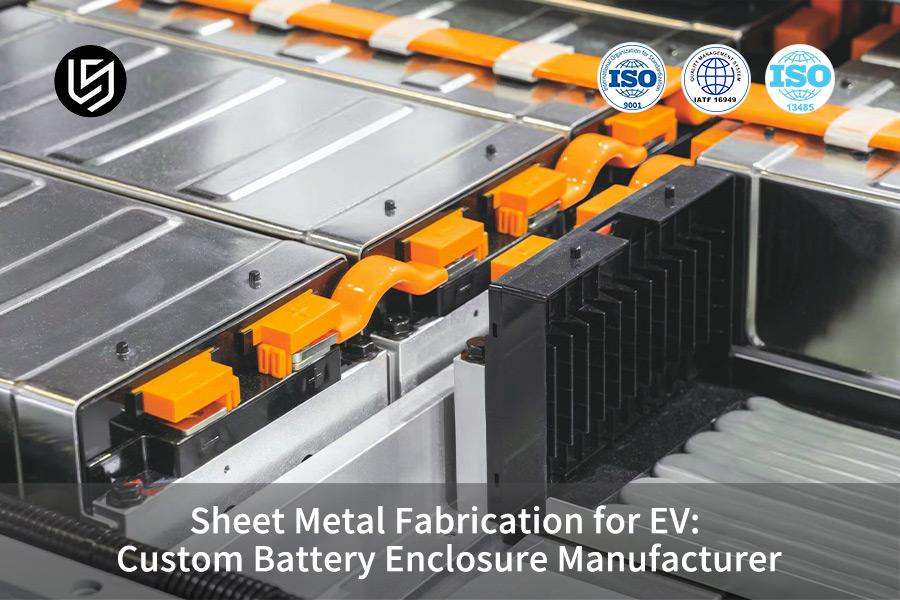
EV sheet metal fabrication service is a high-precision sheet metal processing service in the electric vehicle sector. Welding deformation and sealing failure of power battery boxes are two main issues that this service is aimed at addressing. Replacing the material with AL5052-H32 and using laser CMT composite welding can make the heat deformation during welding less than 40%.
By achieving Cpk>1.33 stamping tolerance, the B2B technical solutions for the automotive supply chain is provided with an IP67 sealing rating. The power battery box is the main safety compartment, and it is very unlikely that traditional processes can meet the requirements. This article analyzes the main processes for preventing production defects.
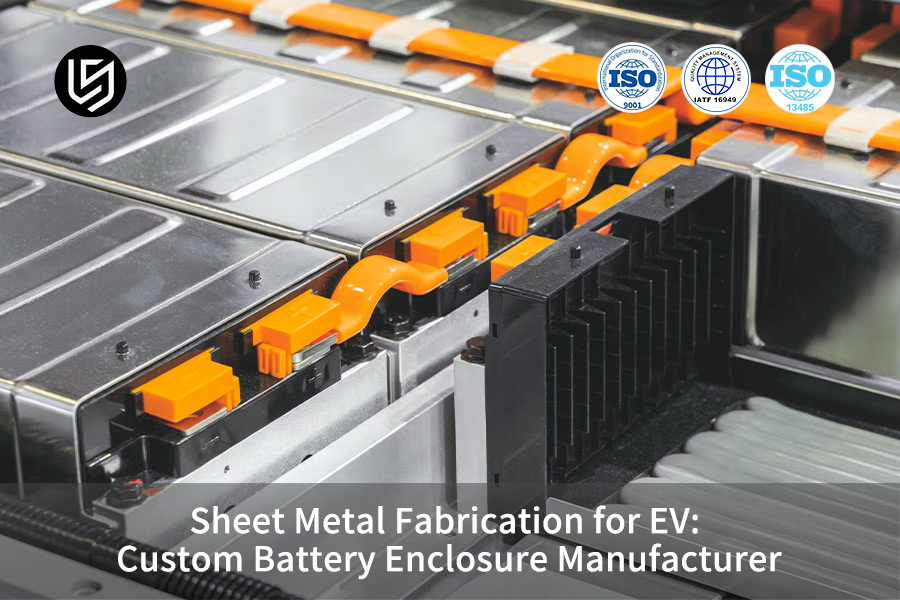
Quick Overview of Core Conclusions in EV Battery Box Sheet Metal Manufacturing
This table summarizes the core technologies and solutions in the entire article, facilitating quick understanding of key information and improving decision-making efficiency.
| Core Dimensions | Optimal Solution | Key Parameters | Customer Benefits |
| Material Selection | AL5052-H32 + Laser CMT Composite Welding | Welding heat deformation reduced by 40%+. | Reduces scrap rate and shortens delivery cycle. |
| Sealing | Precision stamping + Dynamic dispensing | Cpk>1.33, flatness ≤0.1mm/100mm | Ensures IP67 waterproof rating and avoids leakage failure. |
| Quality Control | Helium mass spectrometry leak detection + CMM inspection | Leak detection rate 1.0×10⁻⁵ mbar·l/s, tolerance ±0.05mm | Mitigates mass production risks and ensures product consistency. |
| Lightweighting | 3D precision molding + Wall thickness reduction | Wall thickness reduced by 15%, contour accuracy ±0.15mm. | Reduces overall vehicle weight and improves range. |
| Small Batch Cost Control | Soft mold forming + Laser cutting | First piece delivery in 7 days, no hard mold fee. | Reduces R&D costs and accelerates project progress. |
Key Takeaways:
- Material selection: It is possible to cut down the welding thermal deformations by doing AL5052-H32 with laser CMT composite welding to the tune of 40% or more.
- Sealing: a battery pack achieving an IP67 waterproof rating can be ensured by precise stamping tolerance strictly maintained to the level of Cpk > 1.33.
- Quality control: Performing helium mass spectrometry leak detection (100%) online and coordinate measuring machine (CMM) geometric tolerance inspection are two of the must-have operations to control the risks in mass production.
Why Trust LS Manufacturing's Custom EV Sheet Metal Services and Battery Enclosure Manufacturing Expertise?
The main considerations when looking for a sheet metal fabrication partner are their capabilities to address your pain points and their qualification for compliance. From first-hand experience and rigorous standards, we are recognized as a long-term supplier for Tier 1 customers. We have corrected the airtightness failure issue brought about by weld distortion in European electric bus battery pack projects, and we continuously follow the requirements of IATF 16949:2016 and ISO 26262 ASIL-B.
In the past, via the confirmation of welding processes for North America new energy vehicle manufacturers, our discovery was that a traditional MIG weld leads to a deformation of 0.8mm, whereas laser CMT hybrid welding could bring the deformation down to 0.2mm that is in line with the IP67 criteria. Every parameter of the procedure is established based on thousands of experiments, and we are provided by APQP and PPAP to ensure the automotive-grade standards.
We have been working with SGS over a long period of time, and the electric vehicle metal parts are subject to third-party tests, supplying MTR and spectral analysis reports. This coupling of actual testing, compliance, and third-party confirmation frees the customers from their quality worries and lessens the risk of delivery.
If you are struggling with manufacturing pain points related to battery packs, contact our engineering experts for a free DFM assessment. We will provide customized sheet metal fabrication solutions tailored to your project needs, helping you avoid over 95% of manufacturing defects in advance.

How to Minimize Weight While Meeting Crash Safety for Battery Housing Sheet Metal?
A professional custom battery enclosure manufacturer first employ high-strength aluminum alloy 3D precision forming, allowing to decrease the wall thickness by 15%. At the same time, they carry out side-pillar impact, extrusion tests, and multi-axis precision bending to control springback. As a result, even with high rigidity and lightweighted design, they have managed to balance the reduction of the car's weight and maintaining the safety of the car.
Material Work Hardening and Springback Control
According to the work hardening level of the different materials handled by cold stamping, the effect of lightweighting will be influenced. Main points of material selection are:
- AL5052-H32 Aluminum Alloy: Tensile strength reaches 230MPa, work hardening indexn=0.25, hardness increase after cold stamping is 15%-20%, good performance for thin-wall forming, springback is controllable up to 3°, fit for different types of custom sheet metal parts.
- High-strength Steel: Tensile strength 350MPa, very fast work hardening speed which leads to high forming difficulties, springback can reach 5°-8°, that means needing additional springback compensation to make EV sheet metal forming well.
- Springback Compensation Approach: It employs laser angular compensation technology to make a preset bending angle deviation, and when it is combined with a precision bending machine, it can achieve a local contour precision of 0.15mm, which completely matches the design drawings and no secondary corrections are necessary.
Molding Process Comparison and Collision Performance Verification
The stress distribution of the battery pack under collision varies significantly depending on the molding process. Specific data are as follows:
| Molding Process | Lateral Extrusion Load Bearing Capacity | Stress Concentration Point | Lightweighting Effect | Collision Pass Rate |
| Traditional Welded Box | 160kN | Weld Joint | 1.5mm Wall Thickness, Weight Increase 12% | 88% |
| Integrated Deep Drawing Box | 220kN | Corner | 1.2mm Wall Thickness, Weight Reduction 15% | 99.5% |
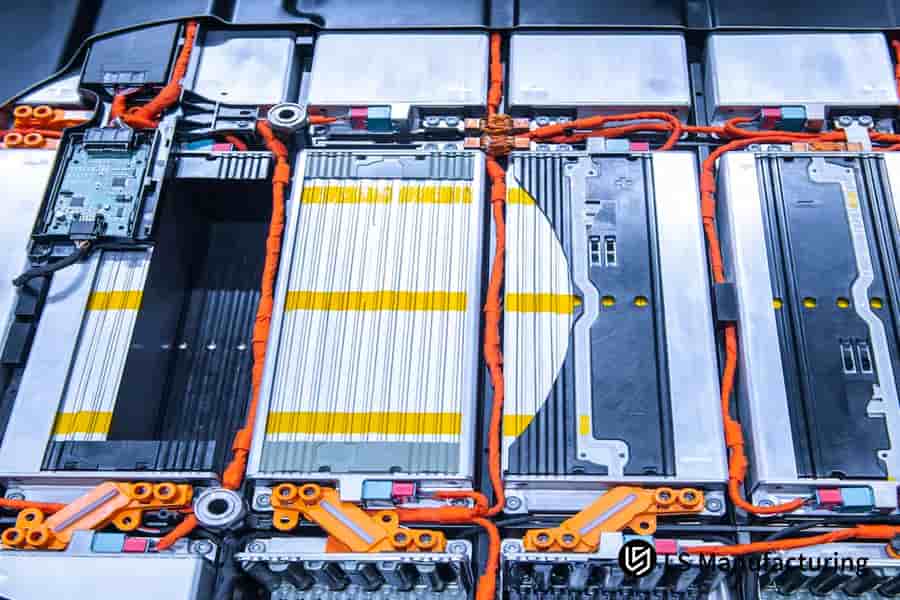
Figure 1: Close-up of assembled battery modules with cables in a custom EV battery enclosure.
Which Raw Material Optimizes Conductivity for EV Sheet Metal Fabrication Service?
Reliable EV sheet metal fabrication service always focus on the high thermal conductivity and corrosion resistance of AL3003 and AL5052 alloys as these features help in efficiently dissipating the heat generated when the battery module is being charged and discharged. One of the ways we enhance heat dissipation is through adjusting the grain orientation of the metal. The choice of material is the most direct factor impacting the life time and safety of a battery.
Core Material Property Comparison
The parameters of various raw materials differ quite drastically. You can use the table below as a straightforward guide for choosing materials, which are also very well suited for battery sheet metal machining operations.
| Material Type | Thermal Conductivity (W/(m·K) | Tensile Strength (MPa) | Salt Spray Test Performance | Applicable Scenarios | Electrical Conductivity (S/m) |
| AL3003 | 190 | 150 | 720 hours no red rust | Battery box base (liquid-cooled plate integrated) | 3.7×10⁷ |
| AL5052-H32 | 170 | 230 | 1000 hours no red rust | Battery box top cover, side panel | 3.2×10⁷ |
| SPCC Cold Rolled Steel | 50 | 300 | 480 hours no red rust | Non-core load-bearing component | 7.0×10⁷ |
| AL6061 | 160 | 310 | 800 hours no red rust | Battery box bracket | 3.0×10⁷ |
Materials Application and Quality Assurance
The base of the battery box of the liquid-cooled integrated battery is mainly made of AL3003 alloy. The excellent thermal conductivity of this material makes it possible to disperse heat very quickly. In addition, by high precision molding technology, the flatness error is controlled at 0.1mm. Sheet metal for battery housing takes good thermal conductivity and corrosion resistance. AL5052-H32 has become the main component that satisfies the sheet metal tolerance control standards.
As the professional EV sheet metal fabrication service provider, we supply complete MTR and spectral analysis reports. Raw materials are subjected to stringent testing. Research shows that proper material choice can boost the heat dissipation function of a battery module by 25% and lead to a battery module that has a lifespan of over 3 years more.
You may download our material selection manual if you want to have a good idea about the performance and cost of different materials. Do not hesitate to contact our engineers for free material selection advice to meet your project needs perfectly.
How Does Laser Welding Control Sealing Performance During Complex EV Battery Box Fabrication Processes?
For high-quality EV battery box fabrication, we use 3kW-6kW fiber laser plus robotic 3D welding system for very high efficiency in welding heat input reducing to only 30% of the traditional MIG welding, which also lead to the elimination of porosity and final IP67 sealing compromise. Key is tight management of the heat input during welding to avoid defects.
Core Welding Process Parameter Control
The sealing depends highly on the accurate setting of the welding parameters. Here is the main parameter range:
- Laser power: 3kW-6kW, the power is changed based on the thickness of the sheet metal. 4kW power is very suitable for 1.2mm thick AL5052 sheet metal, as it gives the best welding effect.
- Welding speed: 2.5-3.5m/min. With very high speed welding results may be incomplete penetration, conversely extremely slow speed is the cause of thermal deformation. 2.8m/min is the best speed.
- Shielding gas: 99.999% of high-purity argon gas, lateral shielding air flow of 5-8L/min keeps effectively the weld area from oxidation and helps to prevent porosity.
- Tooling and Fixtures: 12-point fully automatic pneumatic rigid alignment fixture with synchronous locking pressure of 0.3-0.5MPa welding deformation limiting and post-weld flatness guarantee 0.2mm.
Weld Quality Control and Defect Resolution
Welding thin-walled battery trays can easily lead to "melt pool collapse". Here are two simple methods we use to completely resolve the problem:
0.1mm laser focus control and an online weld tracking system. After weld, dual quality control is done by non-destructive testing and helium mass spectrometry leak detection ensuring weld is free of crack and porosity, further sheet metal welding quality improvement.
Exclusive Troubleshooting Tip: When micro-porosity is seen during welding, a slight increase in argon gas flow rate to 7L/min and decrease in welding speed by 0.2m/min can not only quickly get rid of defects but also avoid scrap.
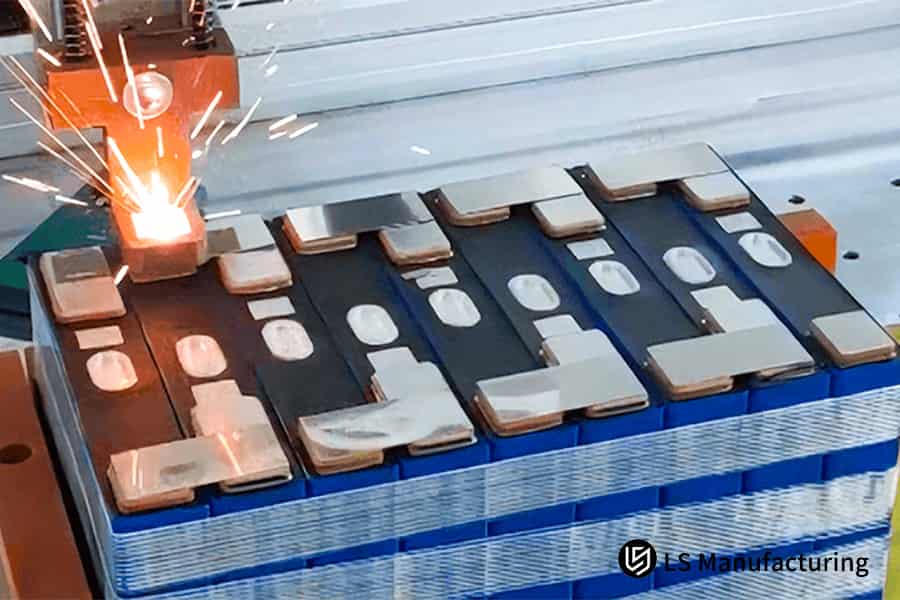
Figure 2: Laser welding head creating sparks on a battery module for sealing.
Why Do IP67 Standards Redefine Battery Housing Sheet Metal Production?
In order to meet IP67, and even IP69K standards the flatness of the battery housing sheet metal sealing surface has to be less than 0.1mm per 100mm. To fulfill this core requirement for battery safety, we rely on CNC continuous stamping and high-precision surface grinding to keep the adhesive groove dimensions stable.
Tolerance Cumulative Control and Structural Optimization
The battery box seal could be compromised by the accumulated tolerances of the mating surfaces. We manage this through:
- Employing Finite Element Analysis (FEA) to model the slight elastic deformation of the sheet metal flange induced by the tightening torque, and adjusting the deformation compensation. As a result to guarantee that the flatness will still comply with the standard after tightening, and that it will be suitable for the sheet metal precision bending process.
- CNC continuous stamping tolerances are maintained at 0.05mm. Following high-precision surface grinding, the sealing surface roughness is controlled to Ra 0.8-Ra 1.6, aiding the sealing strip adhesion.
- The dimensional tolerance of the dispensing groove is fixed at 0.1mm, the dispensing width is kept at 5-8mm, the adhesive strip compression is 30%-40%, and the bolt spacing is 50-70mm, all of which contribute to consistent sealing.
Relationship between Surface Roughness and Sealing Performance
Surface roughness directly affects the adhesive strength of the sealing strip. Our measured data are as follows:
| Surface Roughness (Ra) | Foamed Silicone Adhesive Strength (N/m) | EPDM Sealing Strip Adhesive Strength (N/m) | IP67 Sealing Test Pass Rate |
| 0.8 | 180 | 165 | 98.5% |
| 1.2 | 220 | 200 | 99.8% |
| 1.6 | 190 | 175 | 99.2% |
| 2.0 | 150 | 140 | 95.3% |
What Engineering Factors Affect Tolerance in Sheet Metal Fabrication for EV?
The different factors that contribute to tolerance control when making big sheet metal fabrication for EV projects are like stamping die clearance, laser bending with angular compensation, secondary positioning during machining, and so on. We set the tolerances of our key holes at 0.05mm. This will directly influence the assembly accuracy and the quality of mass production.
Core Engineering Factors Affecting Tolerance
The ability of production to stablely keep the tolerance mostly hinges on three main factors during mass production.
- Stamping Die Clearance: The clearance is decided at reasonable levels for the thickness of the material. For example, in case of AL5052 sheet metal (1.2mm thick), the die clearance is from 0.12 to 0.15mm and this is done to prevent the formation of burrs and distortion which will Then aid the achievement of dimensional accuracy of the stamped parts and meeting the criteria for the high precision sheet metal.
- CNC Bending Compensation: This is done using a laser angular compensation. By considering the bending angle and the material properties, a compensation amount preset as 0.5°-1° is used to control the springback error and this way ensure the bending accuracies.
- Secondary Precision Positioning: The machining center has a CCD vision positioning system with a positioning accuracy of 0.02mm.
Comparison of Mold Process and Tolerance Stability
When it comes to maintaining hole pitch Cpk values during mass production, the capability varies a lot between single-station dies and progressive dies.
| Die Process | Hole Pitch Cpk Value (Mass Production) | Tolerance Fluctuation Range | Suitable Annual Output | Maintenance Cost |
| Single-station Die | 1.0-1.2 | ±0.08mm | Below 500 pieces | Lower |
| Progressive Die | 1.33-1.67 | ±0.03mm | Above 5000 pieces | Higher |
Each batch includes SPC control charts to track tolerance changes. This uses the formula "Single Batch Tolerance Fluctuation Cost = Scrap Rate Unit Cost Batch Output," tighter control lowers scrap rates under 0. 5%, plus that cuts overall expenses noticeably.
How Can OEMs Avoid High Tooling Costs in Low-Volume Custom EV Sheet Metal Service?
When it comes to research, development, or small batch pilot production of custom EV sheet metal service, the optimal solution would be soft mold forming + laser cutting. We switch to flexible manufacturing lines, so even if we cancel tens of thousands of dollars in mold opening fees, we still manage to get our first-piece within 7 days, which totally changes the issue of a high mold cost.
Cost-Effective Production Paths at Different Scales
If you want to achieve the lowest cost possible, then your decision for process selection should be aligned with the annual volume of production, like this:
- 1-50 pcs (Research & Development Stage): For the beginning stage use of a product, soft mold forming + laser cutting method is excellent. It doesn't involve the costly production of hard molds, delivers the first piece inside 7 days, has a somewhat higher single piece cost, but the trial and error costs are minimized greatly. This strategy is ideal for testing product iteration and having low cost sheet metal fabrication.
- 50-500 pcs (Small-batch Pilot Production) : This stage, the soft mold method is combined with the use of a CNC turret punch press, the main purpose is keeping a reasonable balance between efficiency and costs.Unit cost, in this case, got reduced by 30% compared to the R&D stage, delivery cycle is 15-20 days.
- 5000+ units (Mass Production): Progressive die stamping + laser welding methods, a significant investment in hard mold costs (approx $20,000-$50,000). Yet, unit cost is brought down by 60% which is the best practice for regular mass production.
Cost Control Tips and Service Support
Adjusting the battery box bending radius to R=1.5-2.0mm and minimizing deep drawing structures will not only simplify the mold but also save 20%-30% of mold costs, we do free DFM analyses to help you structure the product in a cost effective manner and eliminate cost waste.
Being a professional custom EV sheet metal service provider, we are equipped with a flexible manufacturing line that can handle minimum order quantities of 5 pieces, which means that OEM customers can check the appropriateness of the battery box structure during the R&D stage with very low costs of trial and error. If your small batch trial production stage, please don't hesitate to contact us for a free cost calculation so that you can get the best processing solution and avoid high mold cost waste.
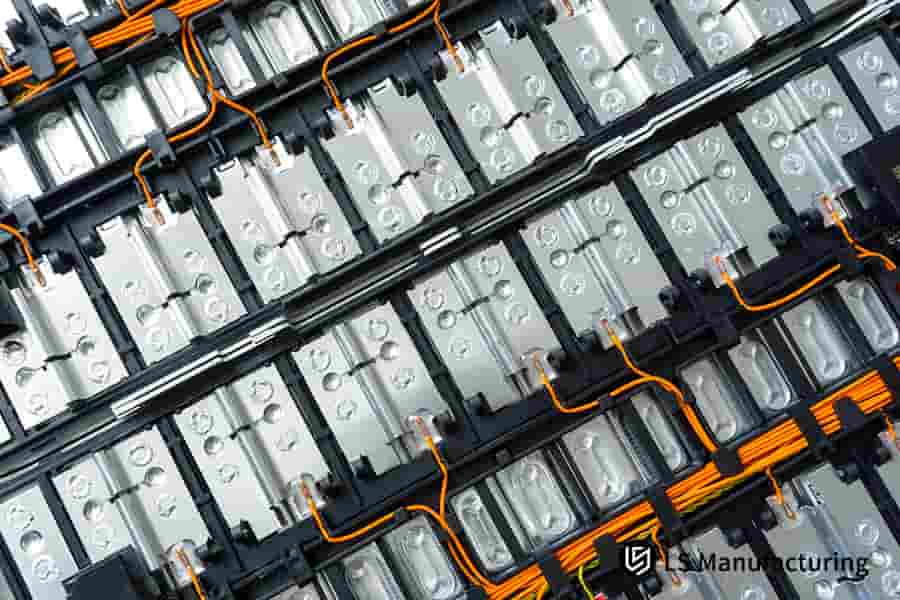
Figure 3: A battery module showing silver cells connected by orange wires.
Which QC Protocols Ensure Durability for Electric Vehicle Metal Parts?
Electric vehicle metal parts, in particular those operating with high voltage, need powder coating or insulating nylon powder coating that is very strong. Only in this way, the service life of these parts can be guaranteed to be over 10 years. Our insulation layer has a breakdown voltage of >5000V DC, That means the whole surface treatment process must be under quality control coverage.
Surface Treatment Process Quality Control
There are explicit quality control criteria for every point of the surface treatment process of Electric vehicle metal parts:
- Cleaning before treatment: Degreasing with an alkaline agent is done at 50-60℃, 10-15 minutes. Besides cleaning the surface from grease and other contaminants, the adhesion that is necessary for the subsequent steps is also achieved. This method is ideal for sheet metal surface finishing.
- Silane Passivation: This is a newer technique which is also replacing phosphating (environmentally friendly) and gives the passivation film at 0.5 to 1.0μm thickness that results in coating adhesion and protective ability against corrosion.
- ED (Electrophoretic Coating): The thickness of the electrophoretic layer is 20-30μm. The adhesion reaches the 5B level (cross-cut adhesion test) - absolute no peeling or flaking.
- Powder coating: The thickness of the insulation layer is 80-120μm, the online measurement of thickness error is 5μm, the breakdown voltage is >5000V DC, so high-voltage insulation requirements are considered to be met.
Weather Resistance and Insulation Performance Testing
We do very strict testing to check the weather resistance as well as the insulation capability of our surface-treated products. Key test data are as follows:
| Test Item | Test Standard | Test Result | Industry Requirements |
| Salt Spray Corrosion Test | SGS 1000 hours | No red rust, no corrosion | 720 hours,no red rust |
| Scratch Resistance Test | ASTM D3363 | Scratch depth ≤0.5mm, no coating peeling | Scratch depth ≤1.0mm |
| High Voltage Breakdown Test | IEC 60664 | Breakdown voltage >5000V DC | Breakdown voltage >3000V DC |
| Adhesion Test | ISO 2409 | 5B level | 4B level and above |
How to Find a Reliable Partner for Sheet Metal Enclosure Manufacturing?
When assessing a sheet metal enclosure manufacturing company's ability to supply automotive-grade parts the main criteria are their hardware facilities, IATF 16949 certification, and their knowledge of APQP/PPAP tools. Solid suppliers make it easier for Tier 1 customers to alleviate the risks involved in the supply chain.
Critical Aspects Of Supplier Qualification Review
Before deciding on a Tier 1 supplier, what comes next four points deserve in-depth discussion:
- System Certification: IATF 16949:2016 system certification is a must. This is the bare minimum qualification for automotive-grade parts supply as it confirms the production process is compliant.
- Tool Execution: Must be able to effectively implement the five core tools - APQP PPAP FMEA, SPC, and MSA - to help project risk minimization right from the starting stage.
- Hardware Equipment: Have make metrology equipment like Bystronic laser cutting machines and CNC bending machines to maintain a processing accuracy of 0.05mm.
- Testing Capabilities: Own testing devices like coordinate measuring machines (CMM) and helium mass spectrometer leak detectors, and provide full third-party testing reports.
Complete Compliant Supply Loop
We form an entire compliance loop starting from RFQ reception to PPAP submission, which ensures that the projects satisfy the customers' needs:
- RFQ Reception and Drawing Review: When a customer sends a quotation request, a complete 3D drawing review must be done within 24 hours and the DFM defect feedback must be given.
- Risk Analysis: The use of FMEA in analyzing the Risk Priority Number (RPN) enables the creation of precise risk control measures for manufacturing defects prevention.
- Production Control: We prepare in-depth control plans and keep track of the production activities continuously. For every batch, SPC control charts are given.
- PPAP Submission: The submission of PPAP documentation, complete with the samples, test reports, and control plans, etc. takes place after the production of parts, adhering to customer acceptance standards.
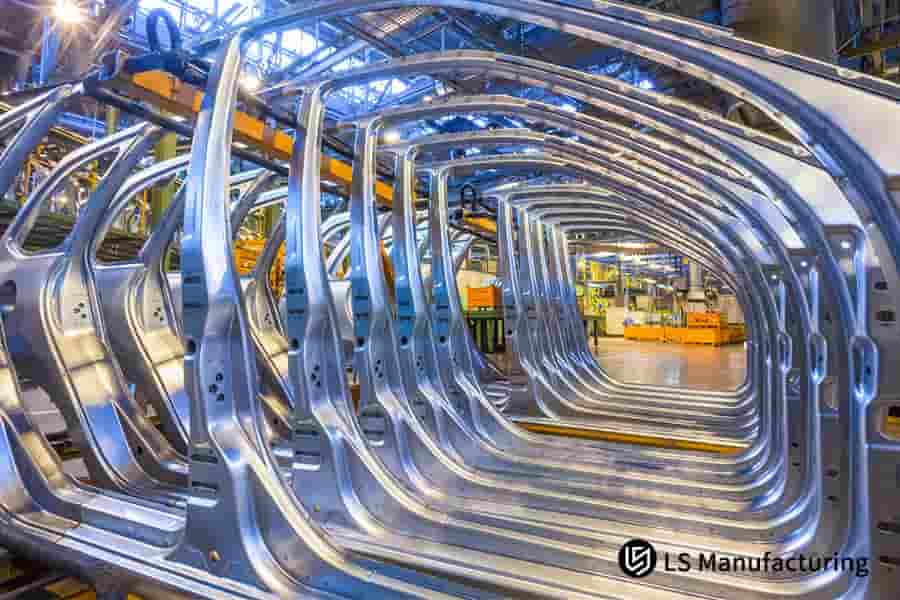
Figure 4: Rows of metal frames in a factory, likely for EV battery structures.
How did LS Manufacturing Deliver a High-Precision EV Battery Box Fabrication Solution?
Here is a detailed description of a case study illustrating our very accurate EV battery box fabrication solution provisioned to a top European electric bus company and reflecting our abilities in pain point addressing and the after effect. Also, it stands as a basis for similar works.
Customer Issue:
During creating a 350kW large capacity power battery pack, a European electric bus manufacturer experienced a difficulty: conventional welding methods caused the AL5052 substrate to be distorted by 1.8mm, thereby a 24% failure rate at the first attempt in the IP67 airtightness test was observed.
As a consequence, the customer was under the pressure of postponing the vehicle production line and facing the difficulties in meeting deadlines, which made the situation quite unbearable for them. So, they desired a skilled team that would be of great help to them in solving their problem.
LS Manufacturing Solution:
- First, after our technical experts got involved, by analyzing the drawings through DFM (Design for Manufacturing), we realized that the split-welding structure was the biggest reason behind the thermal deformation.
- We upgraded the design to a single unit operation combining CNC progressive die flexible forming and laser CMT (Continuous Metallurgy) welding. We also created a 12-point pneumatic rigid fixture which was used to pressurize the workpiece to 0.4MPa during welding, thereby restricting deformation and warping.
- To guarantee sealing, we chose an automated helium vacuum chamber mass spectrometer leak detector, and set a leak detection threshold of 1.0 10 mbarl/s so that 100% online leak detection was achieved.
- We changed the welding settings to this: laser power 4.5kW, speed 2.8m/min, argon gas flow rate 7L/min. These changes in parameters lowered thermal deformation and porosity, our experience also confirms that structural and process changes can resolve aluminum alloy welding warping issues.
Results and Value:
Thanks to process modification, flatness of the battery box sealing surface was kept within 0.15mm, IP67 pass rate reached 100%. Customer was saved $80,000 from scrap product, delivery cycle was shortened by 32 days, and the customer got a 5-year supply contract.
If your electric vehicle (EV) battery box fabrication project also encounters problems like welding deformation and airtightness failure, please reach out to our engineering professionals so that we can provide a personalized high-precision solution that fits your project requirements perfectly.

FAQs
Q1: What is the standard lead time for custom EV battery box fabrication prototype at LS Manufacturing?
By using our full CNC flexible machining line and with automotive-grade AL5052 aluminum alloy materials always ready in stock, we are able to make very precise prototype parts for you and also provide a detailed non-conformance report within 7 to 10 working days from you upload your drawings, which will allow R&D testing of the prototypes.
Q2: How does LS Manufacturing determine the initial tooling cost and unit price for an EV sheet metal fabrication service project?
We always aim at making our pricing system fair and understandable. The unit prices are calculated accurately based on material usage, total laser cutting length, bending steps, and welding time. To help customers at the R&D stage in small-batch trial production, we can offer them a soft mold transition without any hard mold fee, So cutting down on costs for them.
Q3: Will LS Manufacturing be able to produce low-volume custom battery enclosures for niche EV models?
Yes, In fact. In particular for R&D and racing/commercial vehicles, we even have a flexible, lightweight production line with the lowest order quantity requirements being only 5 to 10 units. This allows customers to verify the structural design of the battery enclosure in the early developmental stages and Much reduce the trial-and-error costs.
Q4: Which third-party testing reports do you provide to validate the quality of electric vehicle metal parts?
Upon every shipment, we are able to furnish comprehensive automotive-grade quality certification plus the original Material Test Record (MTR), coordinate measuring machine (CMM) dimensional measurement reports, hardness and tensile test reports, and SGS-certified 1000-hour salt spray corrosion and IP67 leak detection data.
Q5: How does LS Manufacturing protect the Intellectual Property (IP) and proprietary CAD designs of our EV battery housing sheet metal?
Our company considers intellectual property to be its very existence. We enter into a legally binding NDA (Non-Disclosure Agreement) before any technical data is given to us. We encrypt all CAD/STEP drawings and keep them on a separate secure offline server that only core project engineers can access.
Q6: What is the maximum thickness and processing tolerance of sheet metal fabrication for EV components at your facility?
Our company is capable of precision forming aluminum alloys, stainless steel, and high-strength steels ranging from 0.5mm to 6.0mm thick. With the aid of Bystronic laser cutting machines and CNC bending machines, we are able to keep control of critical batch processing tolerances at an impeccable 0.05mm level.
Q7: What is your method for leak testing finished custom EV sheet metal service enclosures to verify their compliance with IP67 standards?
We are not going to revert to the old and inefficient immersion method that can easily miss leaks. Instead, we rely on automated airtightness pressure drop testers and high-precision helium vacuum mass spectrometry leak detectors to make sure that every battery case manufactured undergoes a thorough leak-proof check at the molecular level.
Q8: Is LS Manufacturing able to carry out downstream surface finishing such as powder coating and busbar copper plating done simultaneously?
Yes, we offer a complete one-stop turnkey manufacturing service. Our factory boasts fully automated automotive-grade electrophoresis (ED) lines, electrostatic powder coating lines, and precision copper busbar heat shrink insulation tubing processing equipment. These ensure that high-voltage insulation and corrosion protection treatments are not compromised by quality control issues related to outsourcing.
Summary
EV battery box sheet metal fabrication involves numerous engineering activities like integrating precise dimensions, sealing and insulation etc. which can directly change the safety and mileage of the electric vehicles.
The main challenge of manufacturing lies in controlling the process parameters accurately, selecting the right materials scientifically and finally strict quality control. We use our practical hands-on experience and approved qualification to break down the barriers and provide cheap solutions throughout the entire supply chain.
Does your EV battery case project face pain points such as welding deformation, air tightness failure, or tooling budget overruns? Go ahead and send us your STEP, IGS or DXF 3D drawings and our senior experts will offer you a free DFM analysis and detailed cost quote by the next day with strong data to protect your project!
📞Tel: +86 185 6675 9667
📧Email: info@lsrpf.com
🌐Website: https://lsrpf.com/
Disclaimer
The contents of this page are for informational purposes only. LS Manufacturing services There are no representations or warranties, express or implied, as to the accuracy, completeness or validity of the information. It should not be inferred that a third-party supplier or manufacturer will provide performance parameters, geometric tolerances, specific design characteristics, material quality and type or workmanship through the LS Manufacturing network. It's the buyer's responsibility. Require parts quotation Identify specific requirements for these sections.Please contact us for more information.
LS Manufacturing Team
LS Manufacturing is an industry-leading company. Focus on custom manufacturing solutions. We have over 20 years of experience with over 5,000 customers, and we focus on high precision CNC machining, Sheet metal manufacturing, 3D printing, Injection molding. Metal stamping,and other one-stop manufacturing services.
Our factory is equipped with over 100 state-of-the-art 5-axis machining centers, ISO 9001:2015 certified. We provide fast, efficient and high-quality manufacturing solutions to customers in more than 150 countries around the world. Whether it is small volume production or large-scale customization, we can meet your needs with the fastest delivery within 24 hours. choose LS Manufacturing. This means selection efficiency, quality and professionalism.
To learn more, visit our website:www.lsrpf.com.